

MyCardCompareMyCardCompare
HomeCard comparison

Best crypto cards

The only crypto card comparison that covers every option. Independent ratings, real fee data, updated every month.

Crypto card list

Cards, filtered and ranked. Every annual fee, rewards rate and funding method in one table. Pick what matters, cut the rest.

OUR TOP PICKS

Showing 89 cards

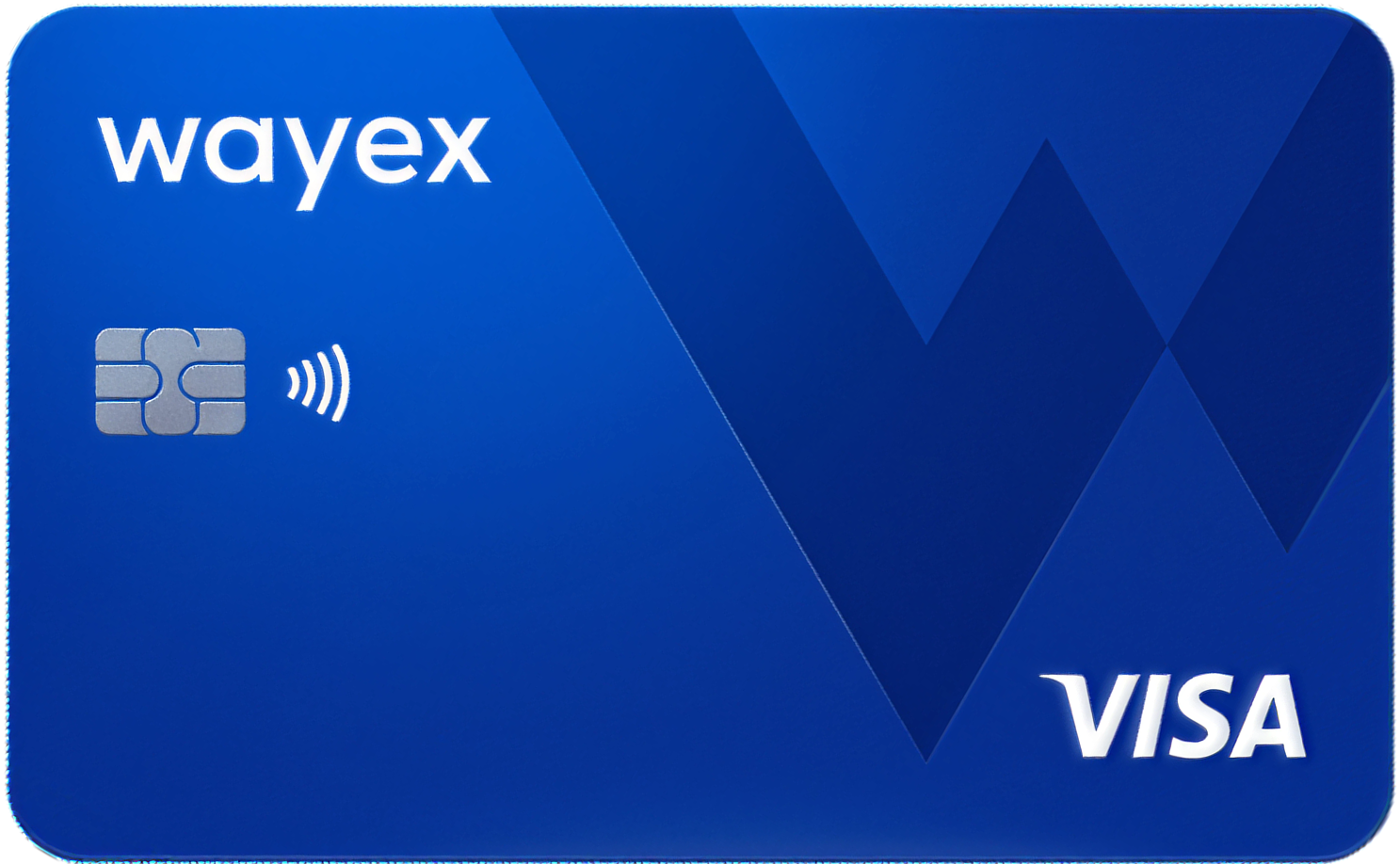
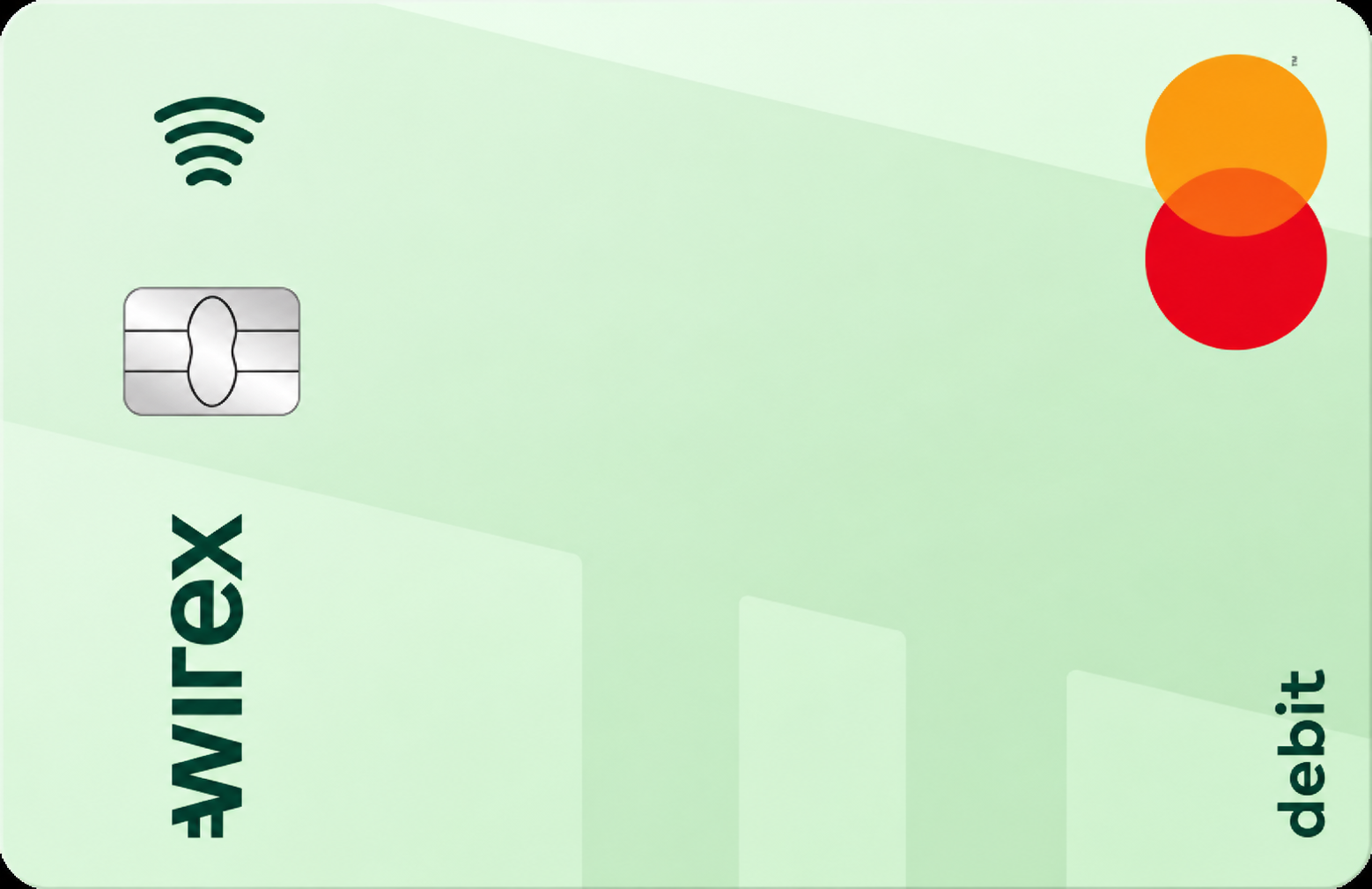
Wirex Card card
Wirex logo

Wirex Card

4.7· 0 reviewsDebit
Get this card

on Wirex Card’s secure site

Annual fee

$0

Rewards rate

Up to 8%

Monthly fee

None

Funding

+ 160 currencies

Bottom line

Wirex EU is a capable crypto debit card with a genuinely wide asset selection and zero FX fees, but meaningful cashback requires either a paid plan or a large WXT lockup. Best for active crypto spenders in Europe.

Wirex earns points for breadth: 150-plus supported cryptos, a Maltese IBAN, and no monthly fee at the base tier. The catch is that the headline 8% cryptoback is reserved for users willing to pay €29.99 a month and lock up over €11,000 in WXT. Free-tier users get a paltry 0.5% with a cap worth roughly €20 a month.

Wirex Ltd issues this card under a Lithuanian e-money licence on the Mastercard network. It is a custodial debit card denominated in euros. Both physical and virtual form factors appear unavailable at the time of writing, though Apple Pay is supported. Wirex auto-converts crypto holdings at the point of sale, charging a 2% conversion fee; FX fees are waived entirely. The card supports over 150 cryptocurrencies and is available across 37 countries including most of the EU, the UK, Australia, Singapore and Hong Kong. KYC is required. Cardholders receive a Maltese IBAN and a personal bank account, though third-party deposits are not accepted. Daily spend reaches 30,000 EUR and daily ATM withdrawals are capped at 500 EUR with a 2% ATM fee.

Wirex markets up to 8% cryptoback, but rewards are paid in WXT tokens rather than cash and the structure is heavily tiered. Free Standard users earn 0.5% cryptoback, capped at 10,000 WXT worth roughly 20 EUR per month. Reaching 1% requires either locking 150,000 WXT (around 300 EUR) or paying €9.99 a month for the Premium plan. The advertised 8% sits at the Elite-Ultimate tier, which costs €29.99 monthly plus a 7,500,000 WXT lockup worth approximately €11,400. A welcome bonus of 10 USD is offered. Typical free-tier users will see negligible real-world value from rewards given both the low rate and the WXT cap.

Annual fee

$0

Rewards rate

Up to 20%

Monthly fee

0

Funding

EURC · EURe · USDC · USDT

Bottom line

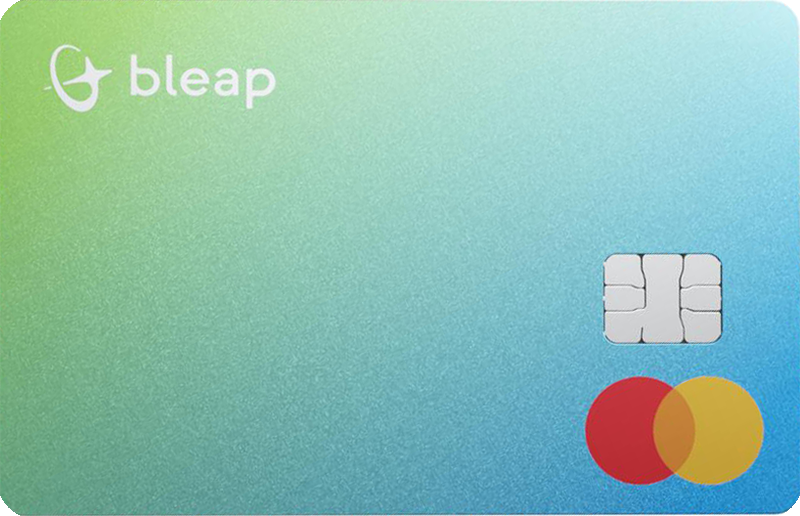
Bleap is one of Europe's strongest crypto debit cards for everyday spenders. It pays real cashback with no staking, charges 0% FX, and keeps you self-custodial. The catch: top rates are category-limited and it is EU-only.

Bleap is one of the few crypto cards that doesn't make you choose between rewards and control. You keep your own keys, pay nothing monthly, and still earn cashback. We would like to see wider coverage beyond the EU and broader top-rate categories, but for European spenders it is a genuinely strong pick.

Bleap is a Mastercard debit card available across 33 European countries. It is self-custodial, meaning you hold your own funds rather than handing them to the issuer, which is rare for a card on a major network. You can spend from a crypto or euro balance, and the card works with both Apple Pay and Google Pay, in physical and virtual form. Conversion happens automatically at checkout, so there is no need to preload or pre-convert. Identity verification (KYC) is required at sign-up. There is no monthly fee and no FX fee, with fee-free ATM withdrawals up to €400 a month.

Bleap pays cashback by spending category rather than by tier, and without any staking or paid subscription. The headline 20% applies to selected categories: AI subscriptions, gaming and streaming. Everyday spending earns less, with 2% at supermarkets and on ride apps, 1% at restaurants, and a 1% base rate elsewhere. Rewards are credited automatically on eligible spending. Because the top rate is category-limited, your real return depends on where you spend most, so a streaming and gaming heavy month earns far more than a groceries heavy one.

Annual fee

$0

Rewards rate

Up to 10%

Monthly fee

0

Funding

+ 6 currencies

Bottom line

Bybit Card is a fee-light Mastercard debit card backed by a major exchange, with low FX and a high ATM limit. The headline 10% cashback needs heavy trading or spend, most users get a tightly-capped 2%, and funds stay custodial.

Bybit Card gets the fundamentals right: no monthly fee, a low 0.5% FX rate, and a generous ATM limit, all backed by a large exchange. The cashback marketing oversells it though, since the standard rate is 2% capped at about $5 a month. It suits existing Bybit users who value low fees over rewards.

Bybit Card is a Mastercard debit card issued by Moorwand and offered through the Bybit exchange, available in 32 European countries. It is custodial, so Bybit holds the funds backing the card, and it does not come with a bank account. You can order both a physical and a virtual card, both compatible with Apple Pay. The card spends your crypto balance, converting to euros automatically at checkout with no preloading, at a total cost of around 1.15%. It is denominated in EUR and GBP, supports eight cryptocurrencies, and requires identity verification (KYC). Daily spending is capped at 5,000 EUR and daily ATM withdrawals at 2,000 EUR.

Bybit cashback is effectively a trading perk, not a flat card reward. Everyone starts at 2%, capped at about $5 a month. Higher rates come from your Bybit VIP status, earned by trading, or from very high monthly card spend: roughly 4% at $3,500 a month, 6% at $9,500, 8% at $12,500, and the headline 10% only at around $25,000 a month. Cardholders also earn Bybit reward points on spending, redeemable for crypto bonuses, coupons and merchandise. For a typical user, the realistic return is the 2% standard rate with that low monthly cap.
COCA Card card
COCA logo

COCA Card

4.2· 0 reviewsDebit
Get this card

on COCA Card’s secure site

Annual fee

$0

Rewards rate

Up to 8%

Monthly fee

None

Funding

EUR · EURC · USDC · USDT

Bottom line

COCA Card delivers a genuinely competitive 1% base cashback with no monthly fee, but higher rates require locking up substantial $COCA tokens. Best for stablecoin spenders across Europe and beyond who want real rewards without custody risk.

COCA Card stands out for pairing non-custodial control with a stablecoin-only spending model and 0% FX fees. The 1% free-tier cashback is honest and uncomplicated. The real catch is that meaningful rates start at 3% and climbing there requires staking thousands of euros in a native token, which adds both capital commitment and token price risk.

COCA Card runs on the Visa network and is denominated in EUR. It is a non-custodial debit card, meaning users retain control of their own funds. Both physical and virtual cards are available; the physical card costs a one-time €5, while the virtual card is free. Apple Pay is supported. The card accepts EURC, USDC, and USDT across seven blockchains, with preloading required rather than automatic conversion at point of sale. Conversion costs 0.6% and FX fees are 0%. The card is available in 75 countries. KYC is required. COCA also provides a personal IBAN and bank account held in Malta, with third-party deposits supported. Daily spend limits reach €30,000 and daily ATM withdrawals are capped at €850.

The free Starter tier pays 1% cashback in stablecoins, capped at €300 per month. Higher rates require staking $COCA tokens: 300 tokens unlocks 3% on the first €1,000 monthly then 1% above that; 1,000 tokens gives 4%; 3,000 tokens gives 5%; 10,000 tokens gives 6%; and 30,000 tokens (roughly €37,600) unlocks the headline 8% on the first €10,000 monthly. Cashback is distributed by the 10th of each month. Upper tiers also include 50% cashback on select subscription services such as streaming and AI tools, with more services unlocked at each level. A $10 welcome bonus applies to new users.

Annual fee

$0

Rewards rate

Up to 8%

Monthly fee

None

Funding

+ 49 currencies

Bottom line

Tap Card rewards loyal XTP holders generously but delivers only 0.5% cashback at the free tier. Best for European crypto users willing to hold XTP for meaningful returns. Casual spenders get little.

Tap Card stands out for its broad crypto support and fee-reducing tier structure, but the rewards story is almost entirely about XTP holdings. At the base level, 0.5% cashback capped at 150 EUR monthly is modest. The virtual card costing 15 EUR is an odd friction point for a supposedly accessible product.

Tap Card is issued by Transact Payments out of Lithuania and runs on the Mastercard network. It is a custodial prepaid card denominated in EUR. Both a physical card (5 EUR) and a virtual card (15 EUR) are available, and the card supports Apple Pay. There is no auto-conversion; users must manually preload the card. The conversion cost at the entry tier sits at 2.39% and the FX fee at 1.99%, both of which fall as you move up tiers. The card supports nearly 50 cryptocurrencies. Coverage spans 31 European countries including the UK. KYC is required. Cardholders receive a UK IBAN and personal bank account, though third-party deposits are not supported. The daily spend limit is 15,000 EUR and the daily ATM limit is 1,500 EUR. Card validity is three years.

Cashback is paid in XTP, Tap's native ecosystem token. The rate is entirely driven by how much XTP you hold. At the free Essential tier with no XTP holdings, you earn 0.5% cashback capped at 150 EUR per month. Holding 300 EUR in XTP unlocks 1.5%, 2,500 EUR unlocks 3%, 5,000 EUR unlocks 4%, 15,000 EUR unlocks 6%, and 25,000 EUR unlocks the headline 8%. The same tier structure also reduces your conversion fee and FX fee. For a typical user who holds no XTP, the honest earn rate is 0.5% with a monthly ceiling, and rewards arrive in a token whose value can fluctuate.

Bit2Me Card card
Bit2Me logo

Bit2Me Card

3.9· 0 reviewsDebit
Get this card

on Bit2Me Card’s secure site

Annual fee

$0

Rewards rate

Up to 9%

Monthly fee

None

Funding

+ 14 currencies

Bottom line

The Bit2Me Card suits committed B2M holders in Europe who can climb the loyalty tiers. Entry cashback is nearly symbolic at 0.25%, but heavy B2M stakers can reach 9%. The 2% FX fee stings for travel.

Bit2Me builds its entire value proposition around its own B2M token. Casual users get almost nothing from rewards, a hard monthly cap of 7.50 EUR at entry level, and cashback paid in B2M rather than cash. Only users already deep in the Bit2Me ecosystem will find the top tier rates realistic.

The Bit2Me Card runs on Mastercard and is issued as a custodial EUR-denominated debit card. It supports Apple Pay. Funding works via auto-conversion from crypto held on the Bit2Me platform, with a 1.2% conversion cost applied at the point of spend. The card carries a 2% foreign exchange fee on non-EUR transactions. Thirteen cryptocurrencies are supported, including BTC, ETH, SOL, XRP, USDC, USDT, and the platform's own B2M token. The card is available across 37 European countries spanning the EU, EEA, and several French overseas territories. KYC is required; there is no linked personal bank account or IBAN. Daily spend is limited to 2,500 EUR and daily ATM withdrawals to 300 EUR.

Cashback is structured across eight loyalty tiers, from 0% at Level 0 to 7% at Level 7, with a 9% rate available at Level 7 if cashback is taken in B2M tokens. Reaching any tier requires accumulating loyalty points by purchasing and holding B2M on the platform; points lapse if the required B2M balance drops. At the default entry level (Level 1), cashback sits at just 0.25%, capped at 7.50 EUR per month. All cashback is paid in B2M, not cash or a neutral stablecoin. A 15 EUR welcome bonus is available for new users. Realistic earnings for a typical user who does not hold substantial B2M are minimal.

Kolo Card card
Kolo logo

Kolo Card

3.8· 0 reviewsDebit
Get this card

on Kolo Card’s secure site

Annual fee

$0

Rewards rate

Up to 5%

Monthly fee

None

Funding

+ 16 currencies

Bottom line

Kolo Card rewards newcomers generously but drops to 1% after month one, capped at $100 monthly. No physical card yet. Best for crypto spenders who want Bitcoin cashback without monthly fees.

Kolo Card's 5% first-month cashback is a strong opening offer, but the permanent drop to 1% afterward is a significant step down. The $100 monthly cap limits value for heavy spenders. Virtual-only format and custodial setup are real constraints worth weighing.

The Kolo Card is issued by Rain out of Puerto Rico and runs on the Visa network. It is a custodial debit card available only as a physical card. The card supports Apple Pay. Funding works through auto-conversion from any of 15 supported cryptocurrencies across 7 blockchains, including BTC, ETH, SOL, USDC, and others. Conversion costs 0.32% per transaction, and a 1% FX fee applies to non-USD purchases. The card is denominated in USD and covers 172 countries. KYC is required to sign up. No personal bank account or IBAN is provided. Opening a card requires a 10 USDC deposit, which is fully spendable. Daily spend limit is $50,000. ATM withdrawals are not available.

Kolo Card pays Bitcoin cashback on all purchases. During your first month, every transaction earns 5% back in BTC, with a $5 cap per purchase and a $100 monthly cap. After that first month, the rate falls permanently to 1%, with a $1 cap per purchase and the same $100 monthly ceiling. A typical user spending $500 a month after the introductory period earns $5 in BTC cashback. The Bitcoin reward may appreciate over time if BTC rises, but that carries market risk. There are no tiers, staking requirements, or paid plans to unlock higher rates.

Tria Card card
Tria logo

Tria Card

3.7· 0 reviewsDebit
Get this card

on Tria Card’s secure site

Annual fee

$0

Rewards rate

Up to 6%

Monthly fee

2 USD/month

Funding

USD · USDC · USDT

Bottom line

The Tria Card pays genuine USD cashback with no cap at entry level, but rewards are locked until a future token event. Best for self-custody users who spend heavily enough to offset the $2 monthly fee.

Non-custodial Visa cards are rare, and Tria pairs that with uncapped 1.5% cashback, which beats most entry-level competitors. The real catch is that cashback is not paid immediately but held until the Token Generation Event, making the reward timeline uncertain. The $90 physical card fee also stings.

The Tria Card is issued by Rain out of Puerto Rico and runs on the Visa network. It is a non-custodial debit card denominated in USD. Both physical and virtual cards are available, priced at $90 and $20 respectively, and the card supports Apple Pay. Funding requires a manual preload rather than automatic conversion; a 0.4% conversion fee applies when moving crypto to cover spending. The card supports USDC and USDT across six blockchains. It is available in 223 countries with no foreign transaction fee. KYC is required and no linked bank account or IBAN is provided. Daily spend limit is $1,000,000 and daily ATM withdrawal is capped at $750, with ATM fees of $1 plus 1% per withdrawal.

On the default Virtual tier ($2 per month), cardholders earn 1.5% USD cashback on the first $100 spent each period, then 0.5% beyond that, with no monthly cap. Higher tiers unlock better rates: Signature ($9 per month) pays 4.5% on the first $1,000 then 1%, and Premium ($21 per month) pays 6% on the first $2,000 then 1%. A typical user on the free-entry tier realistically earns close to the 0.5% ongoing rate for most of their spending. One important caveat: cashback is not distributed immediately and is scheduled for release after the project's Token Generation Event, so the timing is not guaranteed.
Krak Card card
Krak logo

Krak Card

3.7· 0 reviewsDebit
Get this card

on Krak Card’s secure site

Annual fee

$0

Rewards rate

Up to 2%

Monthly fee

None

Funding

+ 595 currencies

Bottom line

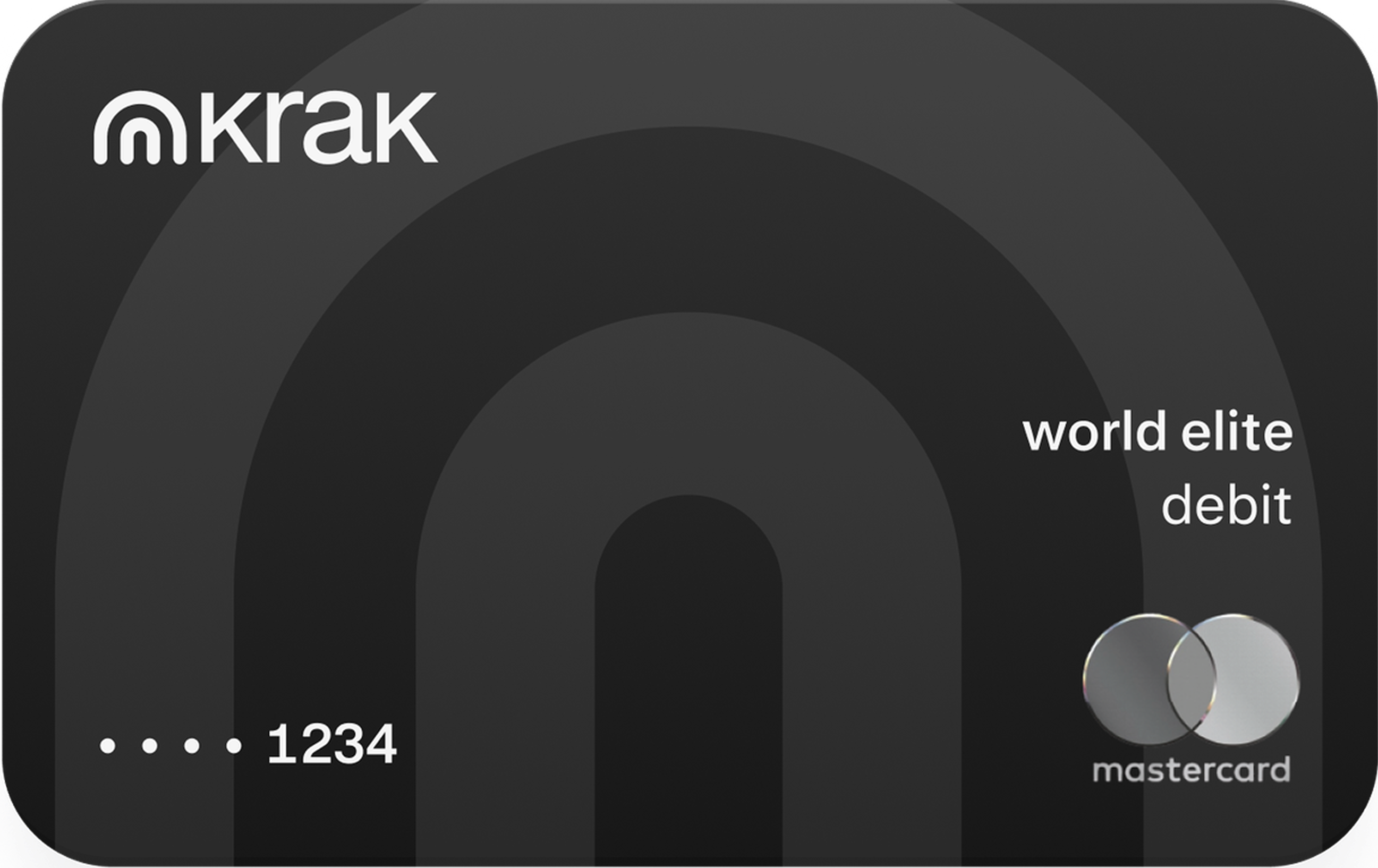
The Krak Card earns a flat 2% cashback from day one with no monthly fee, but custody stays with Kraken and the 1% conversion cost eats into savings. Best for European crypto holders who spend heavily each month.

A flat 2% cashback rate with no staking requirement or paid tier is genuinely rare. The catch is the 1% auto-conversion fee on every spend, which quietly offsets part of that reward. It works well for high spenders in Europe who want simplicity over self-custody.

The Krak Card runs on Mastercard and is issued for European residents across 31 countries including Germany, France, the UK, and most of the EU and EEA. It is a custodial debit card denominated in euros. Both a physical and virtual card are available, with Apple Pay supported. Kraken auto-converts crypto to euros at the point of spending, charging a 1% conversion fee. There is no foreign exchange fee on purchases. The card covers hundreds of cryptocurrencies across 16 blockchains. KYC is required. Cardholders receive a German IBAN and a personal bank account, though third-party deposits are not supported. Daily spend is capped at 12,000 EUR and daily ATM withdrawals at 900 EUR.

The Krak Card pays 2% cashback on eligible purchases with no staking requirement and no monthly fee. The cashback cap sits at 240 EUR per month, which corresponds to 12,000 EUR in monthly spending. There are no tiers: every cardholder starts at 2% immediately. Cashback can be received in euros or in bitcoin. If you choose bitcoin, the euro cashback amount is converted to BTC at the moment the transaction settles, so the value will move with the bitcoin price from that point. A 10 USD welcome bonus applies for new cardholders.

Gnosis Card card
Gnosis Pay logo

Gnosis Card

3.7· 0 reviewsDebit
Get this card

on Gnosis Card’s secure site

Annual fee

$0

Rewards rate

Up to 5%

Monthly fee

None

Funding

EUR · EURe · GBPe

Bottom line

A genuinely fee-free self-custody crypto debit card with competitive cashback tiers. The main catch is that rewards are paid in GNO and scale with token holdings. Best for Gnosis ecosystem users in Europe.

The Gnosis Card stands out because zero fees extend all the way to FX and conversion, which is rare. The self-custody structure adds real credibility. The honest critique: cashback is paid in GNO, not euros, so its real value moves with a volatile token price. Casual users who hold little GNO earn just 1%.

The Gnosis Card is issued by Monavate out of Lithuania and runs on the Visa network. It is a non-custodial debit card denominated in euros, meaning you retain control of your funds. A physical card is available and supports Apple Pay; no virtual card option is offered. The card auto-converts on spend with no conversion fee and charges zero foreign exchange fees. It works with EURe and GBPe stablecoins on a single blockchain. Coverage spans 38 countries across Europe including the UK, Switzerland, and Norway. KYC is required, and cardholders receive a personal IBAN linked to an Estonian bank account that accepts third-party deposits. Daily spend limit is 8,000 EUR and daily ATM withdrawal is capped at 500 EUR.

Cashback is paid in GNO tokens and scales with how much GNO you hold in your wallet. Holding 0.1 GNO earns 1%, 1 GNO earns 2%, 10 GNO earns 3%, and 100 GNO earns 4%. An additional 1% is added for holders of the Gnosis Pay OG NFT, bringing the ceiling to 5%. For a typical entry-level user holding at least 1 GNO (roughly 100 EUR worth), the realistic rate is 2% capped at 400 EUR of spend per month. That 400 EUR monthly cap is notably generous compared to most competing cards. Because rewards arrive as GNO, their euro value fluctuates with the token market.

Ether.fi Card card
Ether.fi logo

Ether.fi Card

3.5· 0 reviewsDebit
Get this card

on Ether.fi Card’s secure site

Annual fee

$0

Rewards rate

Up to 3%

Monthly fee

None

Funding

USD · frxUSD · liquidUSD · USDC · USDT

Bottom line

A genuinely non-custodial stablecoin Visa card with a strong 3% cashback headline, but that rate is capped at just $60 per month on the free tier, limiting real value for most spenders.

Ether.fi stands out for self-custody and zero conversion, FX, and monthly fees. The 3% cashback sounds impressive but the $60 monthly cap on the Core tier makes it largely symbolic. Unlocking meaningful cashback requires serious spending or a large $ETHFI stake.

The Ether.fi Card runs on the Visa network and operates as a non-custodial debit card denominated in USD. Both a physical card and a free virtual card are available, with the physical card costing $40. Apple Pay is supported. The card auto-converts stablecoins including USDC, USDT, frxUSD, and liquidUSD at zero conversion cost with no FX fee. It is available across 226 countries. KYC is required. Cardholders receive a US bank account and can accept third-party deposits, though no IBAN is provided. Daily spend limits are unlimited, and the daily ATM withdrawal limit is $750.

The Core tier pays 3% cashback on the first $2,000 of monthly spend, then drops to between 0.5% and 1% for the remainder, with a $1,000 monthly cashback cap overall. However, the entry cashback cap is effectively $60 per month, which means most everyday spenders will hit the ceiling quickly. Upgrading to Luxe or Pinnacle tiers raises the 3% window to $10,000 or $50,000 respectively, but access requires either accumulated points from heavy card spending or staking substantial amounts of $ETHFI tokens. A welcome promotion offers up to 15% cashback on dining, though this is time-limited. Cashback is paid in crypto.

Annual fee

$0

Rewards rate

Up to 5%

Monthly fee

None

Funding

EUR · USDC · USDG

Bottom line

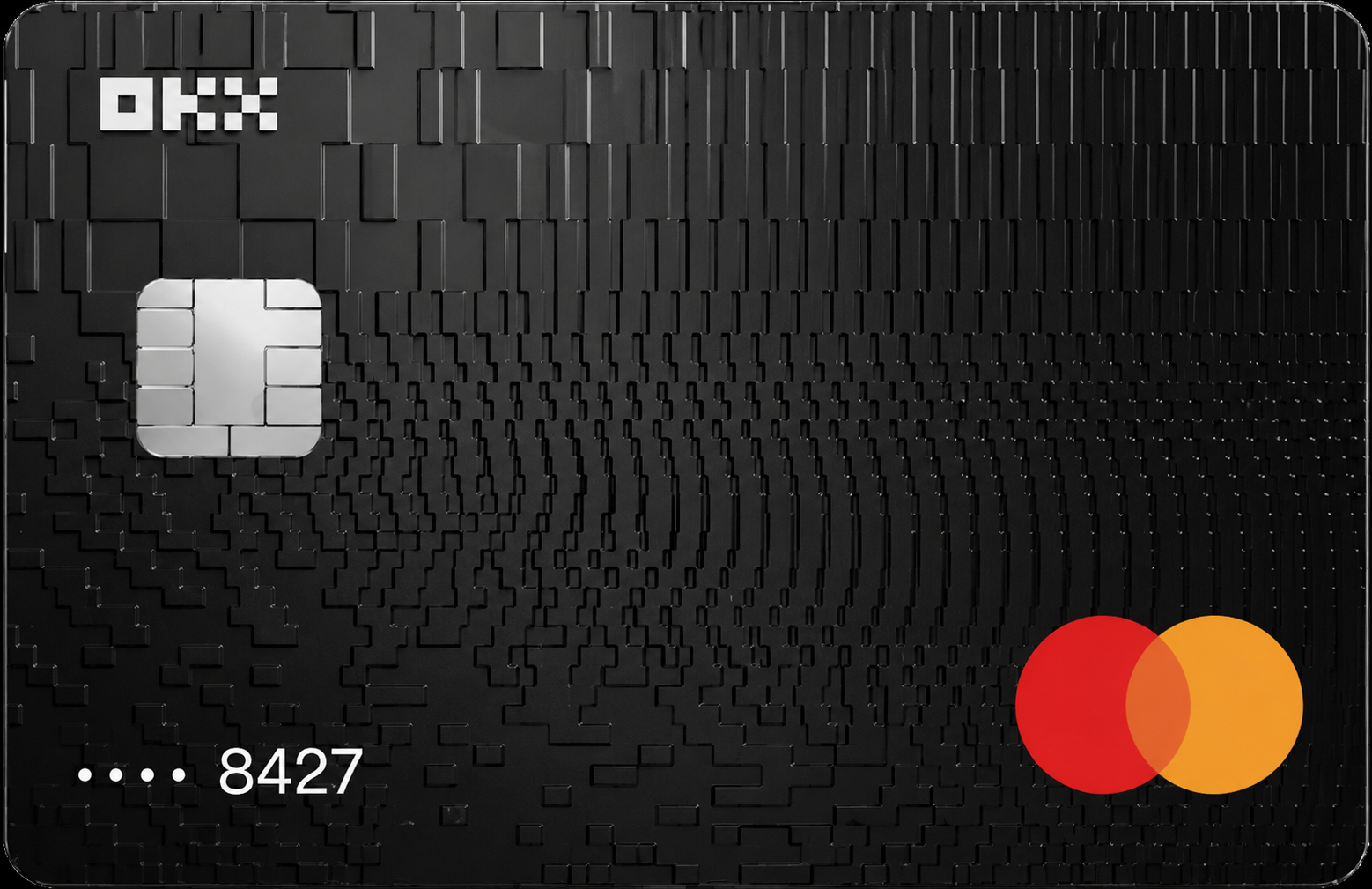
A solid no-fee European debit card with zero FX fees and a generous top cashback rate, but the 10 EUR monthly cap at entry level severely limits real-world rewards value for most users. Best for existing OKX high-volume traders.

The OKX Card stands out for its zero FX fee and clean fee structure, but the cashback story falls apart for ordinary users. A 2% rate capped at 10 EUR per month is underwhelming, and unlocking anything meaningful requires holding six-figure asset balances on OKX.

The OKX Card is issued by Monavate on the Mastercard network and is a custodial debit card denominated in EUR. It comes as a physical card only, valid for five years, and supports Apple Pay. Funding draws from USDC or USDG balances on a single supported blockchain, with auto-conversion at the point of spend at a 0.1% conversion cost. There is no FX fee on foreign currency transactions. The card is available across 28 European countries. KYC is required. Cardholders receive a German IBAN and a personal bank account, though third-party deposits are not supported. Daily spending is unlimited and the card has no ATM functionality.

OKX Card pays cashback in a tiered structure tied to asset holdings or trading volume on the OKX exchange. The default rate for non-VIP users is 2%, capped at 10 EUR per month. That cap is the main issue: a typical user earning 2% would hit the ceiling after spending just 500 EUR. Higher rates of 4%, 4.5%, and 5% are available at VIP tiers requiring 100,000 EUR, 200,000 EUR, and 2,000,000 EUR in assets respectively, with monthly caps rising to 300 EUR, 450 EUR, and 1,000 EUR. A 30 EUR welcome bonus is also available.

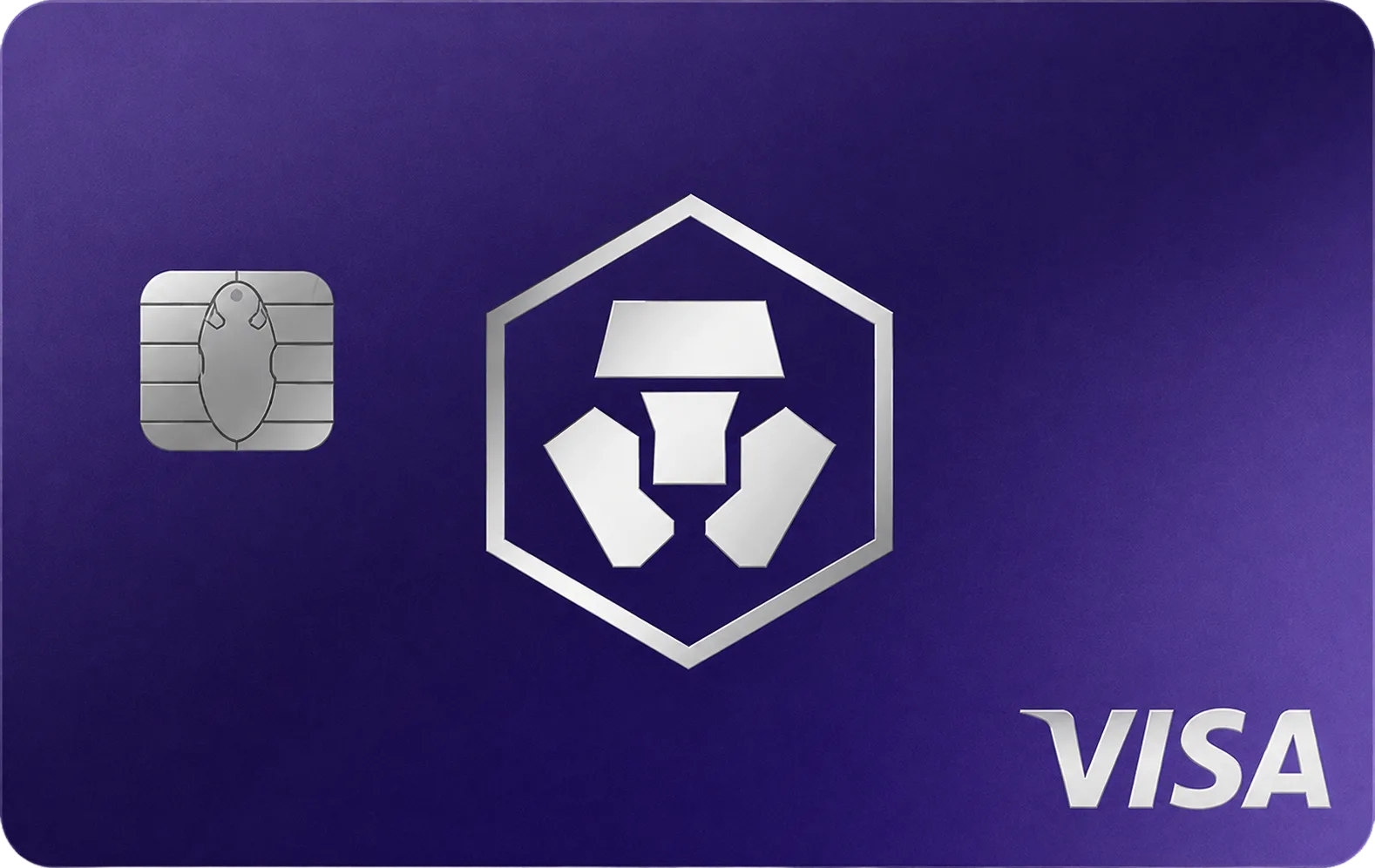
Crypto.com Midnight Blue card
Crypto.com logo

Crypto.com Midnight Blue

3.4· 0 reviewsDebit
Get this card

on Crypto.com Midnight Blue’s secure site

Annual fee

$0

Rewards rate

Up to 5%

Monthly fee

None

Funding

+ 24 currencies

Bottom line

A tiered crypto debit card where real rewards demand serious CRO lockups. The €25,000 daily spend limit impresses, but entry-level cashback is capped at €20 a month and the FX fee bites.

Crypto.com's card looks generous on paper, but the headline 5% cashback requires locking up €350,000 in CRO. Most users land on the Ruby Steel tier, earning 1% capped at €20 per month. That is modest, and the 2% FX fee makes it an expensive card abroad.

The Crypto.com Card is issued by Foris MT out of Lithuania and runs on the Visa network. It is a custodial debit card available in both physical and virtual form. The physical card costs €5 to issue; the virtual card is free. Both support Apple Pay. Cardholders preload the card manually from their Crypto.com wallet rather than relying on automatic conversion, and a 0.75% conversion fee applies. The card is denominated in EUR or GBP and is available across 29 European countries including Germany, France, Spain, Italy and the United Kingdom. KYC is required and the card does not come with a personal bank account or IBAN. Daily spend is capped at €25,000 and daily ATM withdrawals at €2,000. An inactivity fee of €5 per month applies after a period of no use.

Cashback is paid in CRO and scales across five tiers tied to CRO lockup amounts. The entry-level Ruby Steel tier, which requires locking €350 in CRO, pays 1% cashback capped at €20 per month. The Royal Indigo and Jade Green tiers require a €3,500 lockup for 2% cashback, capped at €45 per month. Frosted Rose Gold and Icy White require €35,000 locked for 3% with no cap. The top Obsidian tier demands €350,000 locked for 5% unlimited cashback. Higher tiers also include perks such as Spotify, Netflix, Amazon Prime and Priority Pass lounge access. A €25 welcome bonus is available for new users.

Trade Republic Card card
Trade Republic logo

Trade Republic Card

3.4· 0 reviewsDebit
Get this card

on Trade Republic Card’s secure site

Annual fee

$0

Rewards rate

Up to 1%

Monthly fee

None

Funding

+ 55 currencies

Bottom line

A disciplined saver's card that rewards commitment: 1% cashback is straightforward but locked behind a monthly investing requirement. Free ATM withdrawals and zero FX fees make it strong for Euro-zone travel. Best for active Trade Republic investors.

Trade Republic Card works well inside the Trade Republic ecosystem but demands a recurring savings plan just to unlock its headline cashback rate. That conditionality is a real hurdle. The 15 EUR monthly cap also limits upside for heavier spenders, despite the competitive headline rate.

Trade Republic Card is issued by Trade Republic Bank on the Visa network. It is a custodial debit card denominated in EUR. Both a physical card and a virtual card are available; the physical card costs a one-time 5 EUR, while the virtual card is free. Apple Pay is supported. The card requires manual preloading rather than auto-conversion from crypto holdings. Currency conversion carries a 0.7% cost, but there is no foreign exchange fee on spending. The card is available across 23 European countries. Full KYC is required, and the account includes a German IBAN and personal bank account. Daily spend limit is 10,000 EUR and daily ATM withdrawal limit is 1,500 EUR.

Trade Republic calls its cashback program "saveback" and sets the rate at a flat 1% on card transactions. To qualify, you must maintain an active recurring savings plan investing at least 50 EUR per month. Without that commitment, cashback does not activate. The monthly cashback cap is 15 EUR, meaning earnings top out at roughly 1,500 EUR of monthly card spend. There are no staking requirements or paid tiers. A 10 EUR welcome bonus is available for new users. For cardholders who already invest regularly through Trade Republic, the effective earn rate is competitive, but occasional users who cannot commit to the monthly savings plan earn nothing.

Annual fee

$0

Rewards rate

Up to 2%

Monthly fee

None

Funding

+ 11 currencies

Bottom line

A solid European crypto card with a genuine flat 2% cashback rate and a generous 4,800 EUR monthly cap, but the 2.1% conversion cost and custodial setup are real trade-offs. Best for active European spenders who hold BXX.

The 2% cashback headline is real, but only if you accept rewards in BXX, a token most users will not have heard of. Drop to BTC or USDT and you earn half that. The 4,800 EUR monthly cap is legitimately above average, yet the 2.1% conversion fee quietly erodes every spend.

The 1inch Card runs on the Mastercard network and is issued as a custodial prepaid card denominated in EUR and GBP. It is a physical card with Apple Pay support; there is no virtual card option. Crypto is auto-converted at the point of spend, with a 2.1% conversion cost applied. Supported assets include 1INCH, BTC, BXX, ETH, EURT, LTC, USDC, USDT, and XRP. The card is available across 31 European countries spanning the EEA and the United Kingdom. KYC is required to apply, and there is no linked IBAN or personal bank account. Daily spend is capped at 8,000 EUR. ATM withdrawals are not supported.

The card pays monthly cashback at a flat rate across all purchases with no tiering or staking requirement. The rate depends entirely on which crypto you choose to receive rewards in. Selecting BXX pays 2%, while BTC or USDT pays 1%. The monthly cap is 4,800 EUR in qualifying spend, which is meaningfully higher than most entry-level crypto card programmes. A typical cardholder spending 500 EUR per month who takes BXX earns roughly 10 EUR equivalent per month, falling to 5 EUR in BTC or USDT. There are no staking bonuses, welcome offers, or additional reward tiers mentioned.

Crypto.com Card card
Crypto.com logo

Crypto.com Card

3.4· 0 reviewsDebit
Get this card

on Crypto.com Card’s secure site

Annual fee

$0

Rewards rate

Up to 5%

Monthly fee

None

Funding

+ 24 currencies

Bottom line

A tiered crypto debit card where real rewards demand serious CRO lockups. The €25,000 daily spend limit impresses, but entry-level cashback is capped at €20 a month and the FX fee bites.

Crypto.com's card looks generous on paper, but the headline 5% cashback requires locking up €350,000 in CRO. Most users land on the Ruby Steel tier, earning 1% capped at €20 per month. That is modest, and the 2% FX fee makes it an expensive card abroad.

The Crypto.com Card is issued by Foris MT out of Lithuania and runs on the Visa network. It is a custodial debit card available in both physical and virtual form. The physical card costs €5 to issue; the virtual card is free. Both support Apple Pay. Cardholders preload the card manually from their Crypto.com wallet rather than relying on automatic conversion, and a 0.75% conversion fee applies. The card is denominated in EUR or GBP and is available across 29 European countries including Germany, France, Spain, Italy and the United Kingdom. KYC is required and the card does not come with a personal bank account or IBAN. Daily spend is capped at €25,000 and daily ATM withdrawals at €2,000. An inactivity fee of €5 per month applies after a period of no use.

Cashback is paid in CRO and scales across five tiers tied to CRO lockup amounts. The entry-level Ruby Steel tier, which requires locking €350 in CRO, pays 1% cashback capped at €20 per month. The Royal Indigo and Jade Green tiers require a €3,500 lockup for 2% cashback, capped at €45 per month. Frosted Rose Gold and Icy White require €35,000 locked for 3% with no cap. The top Obsidian tier demands €350,000 locked for 5% unlimited cashback. Higher tiers also include perks such as Spotify, Netflix, Amazon Prime and Priority Pass lounge access. A €25 welcome bonus is available for new users.

Annual fee

$0

Rewards rate

None

Monthly fee

None

Funding

+ 3512 currencies

Bottom line

Spritz Card is a solid spend-from-wallet option for non-custodial crypto users who want broad token support and zero FX fees, but the 2% conversion cost and no cashback limit its appeal.

Spritz stands out for its non-custodial model and support for an enormous range of tokens across 11 blockchains. The 0% FX fee is a genuine advantage for international spending. However, a 2% conversion fee eats into every transaction, and the complete absence of rewards makes it harder to justify over competing cards that pay cashback.

The Spritz Card is issued by Pathward on the Visa network. It is a prepaid card with non-custodial custody, meaning users retain control of their own wallets. The card is physical only and does not support Apple Pay. Funding requires a manual preload step with no auto-conversion; each crypto-to-USD conversion costs 2%. The card is denominated in US dollars and supports over 11 blockchains with an exceptionally wide range of tokens. It is available in 30 countries including the US, UK, most of Europe, Australia, Canada, and Brazil. KYC is required, and the card does not include a personal bank account or IBAN. Daily spend limit is $10,000 USD, and ATM withdrawals are not available as this is a physical card without ATM access noted.

Spritz Card offers no cashback, no points, and no staking rewards program. There are no tiered reward structures and no welcome bonus. The card does not compensate users for spending in any form. Users considering Spritz should weigh the non-custodial model and broad token support against the fact that every purchase yields nothing back beyond the convenience of spending crypto directly at Visa merchants.

Ready Card card
Ready logo

Ready Card

3.3· 0 reviewsDebit
Get this card

on Ready Card’s secure site

Annual fee

$0

Rewards rate

Up to 3%

Monthly fee

None

Funding

+ 10 currencies

Bottom line

Ready Card is a non-custodial Mastercard with genuine self-custody credentials and a points system that can reach 3%, but the full rate requires a paid tier plus extra hoops most users will not clear.

The non-custodial setup is a real differentiator, and 55 supported blockchains is unusually broad. The catch is that the headline 3% reward rate is gated behind a $10 monthly Metal subscription and either a referral boost or a top-100 usage ranking, so most free-tier users see nothing beyond 0% points and a 1% FX fee.

Ready Card runs on the Mastercard network and is issued as a non-custodial debit card denominated in USD. Both a free virtual card and a physical card are available; the physical card ships for $7 on the free tier and free on Metal. Apple Pay is supported. The card does not auto-convert crypto: users manage their own assets across up to 55 blockchains, with supported assets including BTC, ETH, USDC, USDT, WBTC, WETH, STRK, and wrapped variants. No FX fee applies on the Metal tier; the Lite tier carries a 1% FX fee. The card is available across 51 countries, primarily in Europe and EEA territories. KYC is required. A US-based personal bank account is provided, though no IBAN is issued. Daily spend is capped at $10,000 and daily ATM withdrawals at $500, with a 2% ATM fee on all withdrawals.

Ready Card moved from direct cashback to a points system called Ready Rewards in May 2026. On the free Lite tier, the rewards rate is 0%. Metal tier members earn between 1% and 3% back in Ready Points with no stated cap. To reach the full 3%, a Metal subscriber must also hold a boost, earned either by referring two friends to Metal or by ranking in the top 100 most frequent card users in a given month. Realistically, most Metal subscribers will land around 1% without a boost. Points are redeemed by applying them as refunds against past card transactions. A $15 welcome bonus is available for new users. Metal members also access Ready Travel, a white-labeled hotel discount program.

Gemini Card card
Gemini logo

Gemini Card

3.3· 0 reviewsCredit
Get this card

on Gemini Card’s secure site

Annual fee

$0

Rewards rate

Up to 3%

Monthly fee

None

Funding

+ 54 currencies

Bottom line

A solid US-only crypto credit card with a genuine 3% back on dining and no FX fee. The conversion cost and custodial setup are real trade-offs. Best for US crypto holders who eat out frequently.

Gemini Card earns well on dining and has a clean fee structure with no monthly or inactivity charges. The 1.74% conversion cost quietly erodes rewards for anyone spending outside bonus categories, and the custodial model means you never truly own the crypto until you move it.

The Gemini Card runs on the Mastercard network and is issued in the United States only. It is a credit card with custodial crypto rewards, meaning Gemini holds your earned crypto on your behalf. The card supports Apple Pay. There is no auto-conversion at point of sale; Gemini converts spending into USD credit while rewards are paid in crypto from your Gemini account. Crypto-to-fiat conversion carries a 1.74% cost. The card is available only to US residents and KYC verification is required. No personal bank account or IBAN is provided. Daily spend limit is $25,000 and daily ATM withdrawals are capped at $1,000, with ATM withdrawals costing 3%.

The card pays 3% crypto back on dining including restaurants, bars, and fast food, 2% on groceries at traditional and specialty food stores (wholesale clubs and some specialty retailers excluded), and 1% on all other qualifying purchases. A promotional rate of 10% crypto back applies to gas station pump and EV charging spend, capped at $200 per month and a total of $2,400 over the promotional period, dropping to 1% after the monthly cap. Unused monthly gas limits do not roll over. The 3% dining rate has a cap of $750 in rewards. A $15 welcome bonus applies. Rewards are paid in the crypto of your choice from Gemini's supported asset list.

Plasma One Card card
Plasma One logo

Plasma One Card

3.2· 0 reviewsPrepaid
Get this card

on Plasma One Card’s secure site

Annual fee

$0

Rewards rate

Up to 4%

Monthly fee

None

Funding

USD · USDC · USDT

Bottom line

Plasma One is a strong contender for stablecoin spenders who want uncapped cashback at entry level. The 1% FX fee stings for frequent travelers. Best suited to USD-based users who spend heavily.

A 2% uncapped base cashback rate is genuinely competitive, and the non-custodial setup is rare at this price point. The catch is real: rewards pay out in XPL tokens, not cash, and squeezing the best rates requires staking thousands of dollars worth of a native token most users have never heard of.

Plasma One is issued by Rain out of Puerto Rico and runs on the Visa network. It is a non-custodial prepaid card denominated in USD. The card ships as a physical card only, with no virtual card option, and supports Apple Pay. Funding is via manual preload using USDC or USDT across eight supported blockchains, with no auto-conversion from other crypto assets. There is no conversion cost, but a 1% FX fee applies at the base tier. The card is available in 227 countries and KYC is required. Cardholders receive a US bank account, enabling third-party deposits, though no IBAN is provided. The daily spend limit is a generous $1,000,000 USD. ATM withdrawals are not supported.

The base Lite tier pays 2% cashback on the first $500 of monthly spend, then drops to 0.1% with no cap beyond that threshold. Cashback is calculated in USD but paid weekly in XPL tokens, which must then be converted to access cash value. The Core tier at $10 per month raises the headline rate to 3% on the first $1,000 and adds AI-category cashback. The Platinum tier, gated behind roughly $9,000 in staked XPL, reaches 4% plus 10% on AI spend. A typical free-tier user realistically earns 2% on modest monthly spend, tapering sharply after $500. There are no fixed monthly earning caps beyond the tiered thresholds.

WhiteBIT Card card
WhiteBIT logo

WhiteBIT Card

3.2· 0 reviewsPrepaid
Get this card

on WhiteBIT Card’s secure site

Annual fee

$0

Rewards rate

None

Monthly fee

2.3 USD/month

Funding

+ 272 currencies

Bottom line

A zero-FX-fee virtual Visa with broad crypto support and a low conversion cost, but a monthly fee and no cashback make it hard to recommend over free-tier rivals. Best for active WhiteBIT exchange users in Europe.

The 0% FX fee is genuinely useful for cross-currency spending, and 0.28% conversion is competitive. The monthly fee of 2.30 EUR drags on light users, and the absence of any cashback or rewards removes a key reason to prefer it over alternatives. There is nothing here for savers or passive holders.

The WhiteBIT Card is a custodial, prepaid Visa denominated in EUR. It is a virtual-only card with no physical card option, but it does support Apple Pay for in-store and online payments. Cardholders must manually preload from their WhiteBIT exchange balance; there is no auto-conversion at the point of sale. The conversion cost is 0.28% and the FX fee is 0%. The card is available across 31 European countries including Germany, France, Italy, the UK, and Poland. KYC verification is required. No personal bank account or IBAN is attached to the card. Daily spend is capped at 2,750 EUR. ATM withdrawals are not available on this virtual-only card.

The WhiteBIT Card currently offers no cashback, no points, and no staking-linked rewards of any kind. WhiteBIT has indicated plans to introduce rewards in the future, but no structure, timeline, or rate has been confirmed. Until that changes, users receive no financial return on card spending. There are no welcome bonuses or in-app promotional credits noted for new cardholders either.

Revolut Card card
Revolut logo

Revolut Card

3.2· 0 reviewsDebit
Get this card

on Revolut Card’s secure site

Annual fee

$0

Rewards rate

Up to 1%

Monthly fee

None

Funding

+ 122 currencies

Bottom line

Revolut EU is a capable crypto-linked debit card for European residents who already use Revolut's ecosystem. The broad crypto selection stands out, but cashback is locked behind expensive paid tiers and fees add up fast.

Revolut's free tier gets you the infrastructure without the perks. Cashback only kicks in at Metal or Ultra, costing at least 13.99 EUR per month. For crypto spenders who stay within Revolut's app anyway, the card is convenient. For rewards hunters, the maths rarely works.

Revolut EU is issued by Revolut in Lithuania and runs on the Visa network. The card is custodial and operates as a debit product denominated in EUR or GBP. Both a virtual card, available free, and a physical card, costing 8 EUR, are offered. Apple Pay is supported. Funding draws from the Revolut balance with auto-conversion at point of sale; crypto-to-fiat conversion costs 1.49% on the Standard plan, dropping to 0.49% at Ultra tier. A 1% FX fee applies to foreign currency transactions. Over 110 cryptocurrencies are supported across 31 European countries. KYC is required. Revolut provides a personal IBAN-enabled bank account based in Lithuania with third-party deposit support. Daily spend is unlimited; daily ATM withdrawals are capped at 3,000 EUR, with a 2% fee applying beyond the free allowance.

Cashback is not available on the free Standard plan. Metal plan members (13.99 EUR per month) earn 0.1% cashback within Europe and 1% outside Europe, capped at 13.99 EUR monthly. Ultra members (50 EUR per month) earn the same rates with a 50 EUR monthly cap. Hotel cashback scales up to 10% at higher tiers. The realistic earn for a typical free-tier user is zero cashback. Paid members must spend heavily abroad to recoup the monthly subscription cost before cashback adds any net value. Higher tiers also include bundled subscriptions such as NordVPN and Freeletics, which partially offset costs for some users.

Nebeus Card card
Nebeus logo

Nebeus Card

3.1· 0 reviewsDebit
Get this card

on Nebeus Card’s secure site

Annual fee

$0

Rewards rate

None

Monthly fee

4.95 USD/month

Funding

+ 28 currencies

Bottom line

The Nebeus Card offers zero FX fees and broad crypto support across 25 assets, but a monthly fee and 2.15% conversion cost erode everyday value. Best for frequent international spenders who already use Nebeus.

Nebeus positions this card on its zero FX fee, which genuinely matters for international use. The problem is the 2.15% auto-conversion charge hits every time you spend crypto, and there are no cashback rewards to offset it. The monthly fee makes passive holders pay for nothing.

The Nebeus Card is issued by Dzing Finance in the United Kingdom and runs on the Mastercard network. It is a custodial debit card available in both physical and virtual form, with Apple Pay supported. Funding relies on auto-conversion from your Nebeus crypto balance, with a conversion cost of 2.15% applied at the point of spend. The card is denominated in EUR, GBP, and USD and is available across 194 countries. KYC is required at sign-up. Nebeus provides a personal bank account with a Luxembourg IBAN, though third-party deposits are not supported. The physical card is issued free of charge and valid for five years. Daily spend is capped at 5,000 EUR and daily ATM withdrawals at 2,000 EUR.

The Nebeus Card carries no cashback program and offers no points, miles, or staking-linked reward tiers. There are no welcome bonuses and no ongoing spending incentives of any kind. Nebeus has not published any in-app promotional cashback offers as a substitute. Users who want returns on card spending will need to look elsewhere, as this card provides no mechanism to earn on purchases regardless of spending volume.

NAGA Pay Card card
NAGA Pay logo

NAGA Pay Card

3.1· 0 reviewsDebit
Get this card

on NAGA Pay Card’s secure site

Annual fee

$0

Rewards rate

Up to 3%

Monthly fee

None

Funding

+ 24 currencies

Bottom line

A workable European crypto debit card with a respectable asset list, but the 3% cashback headline is misleading. Free-tier earners get 0.5% capped at 10 EUR monthly. Best for light NAGA platform users in the EEA.

NAGA Pay sits in the middle of the pack. The 22-coin selection and built-in IBAN are genuine positives. The problem is the cashback structure: the advertised 3% requires a 14.99 EUR monthly subscription, and even then a 60 EUR monthly cap limits real value. Free-tier rewards are below industry average.

NAGA Pay is a custodial Visa debit card available across 31 European countries including the UK, Germany, France, and most EEA states. Both a free virtual card and a physical card are available, with the physical card costing 10 EUR to issue. Apple Pay is supported. The card does not auto-convert crypto; users must manually preload fiat before spending. Crypto-to-fiat conversion carries a 3.59% fee at the free tier, and a 2.0% foreign exchange fee applies to non-base-currency transactions. The card is denominated in EUR and GBP. KYC is required. Cardholders receive a Lithuanian IBAN, enabling third-party bank deposits. Daily spend limit is 7,700 EUR. ATM withdrawals carry a 2% fee with a 300 EUR daily limit.

Cashback is paid in BTC and credited to a dedicated cashback wallet after transaction settlement. The free Basic tier earns 0.5% cashback, capped at 10 EUR per month. That is below the industry average of roughly 1% with a 30 EUR cap. Moving to the Premium tier (5.99 EUR per month) raises the rate to 1.5% with a 15 EUR cap. The Elite tier (14.99 EUR per month) delivers 3% cashback up to 60 EUR monthly. For most free-tier users spending a moderate amount, actual monthly BTC earnings will be minimal and well below competing cards at the same cost.

xPortal Card card
xPortal logo

xPortal Card

3· 0 reviewsPrepaid
Get this card

on xPortal Card’s secure site

Annual fee

$0

Rewards rate

Up to 5%

Monthly fee

None

Funding

+ 12 currencies

Bottom line

The xPortal Card suits MultiversX ecosystem users in Europe who already hold EGLD. Free virtual card and no monthly fee are genuine strengths, but the 2.5% FX fee and staking-gated cashback limit its broader appeal.

xPortal sits comfortably in the self-custody crypto card niche, and the no-monthly-fee entry point is real. The catch is that meaningful cashback demands significant EGLD holdings. At base tier, 0.2% capped at 10 EUR monthly is well below the industry norm, making this card most valuable only for committed MultiversX stakers.

The xPortal Card is issued by Capital Financial Services (Twispay) in Romania and runs on the Mastercard network. It is a prepaid card with non-custodial custody, available in both virtual and physical form. The virtual card is free; the physical card costs 23 EUR and is valid for three years. Apple Pay is supported. Cardholders must manually preload funds rather than relying on automatic conversion, and a 1% conversion cost applies. The card is denominated in EUR, covers 30 European countries across the EEA, and supports 11 cryptocurrencies including BTC, ETH, USDC, USDT, and the native EGLD token. KYC is required. No IBAN or personal bank account is provided. Daily spending is unlimited, and the daily ATM withdrawal limit is 500 EUR with no ATM fee charged.

Cashback is earned on card spending but is entirely conditional on staking EGLD. On the free Fresh Mint tier, users must hold at least 5 EGLD to earn any cashback at all, starting at 0.1%. Holding 25 EGLD unlocks 0.2%, capped at 10 EUR per month. Reaching 0.5% requires 2,000 EGLD, with a 30 EUR monthly ceiling. The headline 5% rate belongs exclusively to the paid Diamond tier at 19.99 EUR per month. For a typical entry-level user without a large EGLD position, effective monthly rewards are minimal. A 5 USD welcome bonus is available for new cardholders.

Wealthsimple Card card
Wealthsimple logo

Wealthsimple Card

3· 0 reviewsPrepaid
Get this card

on Wealthsimple Card’s secure site

Annual fee

$0

Rewards rate

Up to 1%

Monthly fee

None

Funding

+ 57 currencies

Bottom line

A solid Canadian crypto card with flat 1% cashback and no FX fee, but a 3% conversion cost and Canada-only availability limit its appeal. Best for Canadians who want simple cashback paid in crypto.

Wealthsimple Card punches above its weight on the cashback cap, offering 1,500 CAD monthly versus the typical 500 CAD at entry level. The 0% FX fee is a genuine perk, but the 3% conversion cost quietly erodes value for anyone spending outside CAD regularly.

The Wealthsimple Card is issued by KOHO Financial on the Mastercard network and is denominated in Canadian dollars. It is a custodial prepaid card available to Canadian residents only. The card supports Apple Pay. Funding is manual preload rather than automatic conversion; when crypto is converted to spend, a 3% conversion cost applies. There is no foreign exchange fee on international purchases. Cardholders get a Canadian personal bank account and can accept third-party deposits. KYC is required. The card is valid for five years. Daily spend limit is 5,000 CAD and daily ATM withdrawals are capped at 1,000 CAD with no ATM fee charged.

Every purchase earns 1% cashback with a monthly cap of 1,500 CAD in eligible spend, meaning up to 15 CAD back per month. Cashback can be received as traditional cash, stock, or crypto, with an option to auto-invest rewards into a chosen cryptocurrency from Wealthsimple's list of over 55 supported assets. There are no tiers or staking requirements to unlock this rate. A 25 CAD welcome bonus is available for new cardholders. The flat structure is straightforward, and the monthly cap is notably higher than most entry-level competitors.

Kinesis Card [EU] card
Kinesis logo

Kinesis Card [EU]

3· 0 reviewsPrepaid
Get this card

on Kinesis Card [EU]’s secure site

Annual fee

$0

Rewards rate

None

Monthly fee

None

Funding

+ 15 currencies

Bottom line

A virtual-only Mastercard that suits gold and silver holders best. Auto-conversion from 14 cryptocurrencies keeps things simple, but the 2.42% conversion cost and no cashback limit its appeal to non-Kinesis users.

Kinesis Card is purpose-built around KAU and KAG, its own tokenised gold and silver assets. Velocity Yield rewards only flow when those metals are set as primary spend currencies, so most crypto users get nothing back. The 1% FX fee and 2.42% conversion cost add up quickly for heavy spenders.

Kinesis Card runs on the Mastercard network and is issued as a custodial prepaid card denominated in EUR. It is virtual-only, with no physical card option, but it does support Apple Pay. No top-up is needed: the card auto-converts from your chosen crypto balance in your Kinesis account at the point of sale, at a cost of 2.42% per conversion. Fourteen supported assets include BTC, ETH, XRP, USDT, USDC, and Kinesis-native tokens KAU, KAG, and KVT. The card is available across 53 countries spanning Europe, Oceania, and Latin America. KYC is required, and no personal bank account or IBAN is provided. The daily spend limit is 15,000 EUR. No ATM withdrawals are available on this virtual card.

There is no cashback on this card. Instead, Kinesis operates a Velocity Yield programme that pays a share of Kinesis Monetary System transaction fees back to cardholders monthly, distributed in KAU and KAG. To qualify, users must set KAU and KAG as their primary spend currencies. The yield is proportional to usage and comes from a 57.5% fee-share pool, so the amount earned is variable and depends on network-wide activity, not a fixed percentage of spend. Users not holding or spending Kinesis metals receive no rewards at all. A 24 EUR welcome bonus is available for new cardholders.

Kinesis Card [Canada] card
Kinesis logo

Kinesis Card [Canada]

3· 0 reviewsPrepaid
Get this card

on Kinesis Card [Canada]’s secure site

Annual fee

$0

Rewards rate

None

Monthly fee

None

Funding

+ 14 currencies

Bottom line

A virtual-only, no-fee Mastercard that rewards gold and silver spenders with a share of network fees. Auto-conversion is convenient but costs 2.42%. Best for Canadian Kinesis ecosystem users already holding KAU or KAG.

Kinesis Card fits tightly within its own ecosystem. The fee-sharing yield model is genuinely different from standard cashback, but it only pays out if you spend KAU or KAG. The 2.42% conversion cost is a real drag, and the virtual-only format limits everyday usability.

Kinesis Card is a Mastercard prepaid card denominated in Canadian dollars, issued within the Kinesis Monetary System. It is custodial. The card is virtual-only with no physical version available, but it does support Apple Pay. No manual top-up is required: at the point of sale, funds auto-convert from your chosen crypto held in your Kinesis wallet to CAD, at a conversion cost of 2.42%. A 1% FX fee applies to foreign currency transactions. Supported assets include BTC, ETH, XRP, LTC, ADA, XLM, BCH, DASH, USDT, USDC, XDC, KVT, and the platform's own KAU and KAG tokens. The card is available across 54 countries. KYC is required, and no personal bank account or IBAN is provided. Daily spend limit is 15,000 CAD.

There is no standard cashback on this card. Instead, Kinesis operates a Velocity Yield program: users who set KAU (gold) and KAG (silver) as their primary spending currencies receive a monthly share of transaction fees generated across the entire Kinesis Monetary System. Kinesis distributes 57.5% of all network transaction fees back to participants, paid in KAU and KAG. Your individual yield scales with how much you spend relative to total network activity, so returns are variable and not guaranteed. A 39 CAD welcome bonus is available. This reward model suits committed Kinesis ecosystem users but is opaque for anyone expecting a predictable earn rate.

Cypher Card card
Cypher logo

Cypher Card

3· 0 reviewsPrepaid
Get this card

on Cypher Card’s secure site

Annual fee

$0

Rewards rate

None

Monthly fee

None

Funding

+ 773 currencies

Bottom line

The Cypher Card is a non-custodial Mastercard with exceptional token breadth and global reach, but fees stack up fast and there is zero cashback. Best for self-custody users who want wide crypto access.

Cypher Card stands out for non-custodial control and support for hundreds of tokens across 25 blockchains. The trade-off is real: a $50 physical card fee, a 1.5% FX fee, a 1% conversion cost, and still no cashback program despite one being promised since late 2024.

The Cypher Card is issued by Reap in Hong Kong and runs on the Mastercard network. It is a prepaid card with non-custodial custody, meaning users retain control of their own assets. Both a physical card and a virtual card are available; the virtual card is free while the physical card costs $50. Apple Pay is supported. Funding requires manual preload since auto-conversion is not available, and conversion carries a 1% cost. A 1.5% foreign exchange fee applies to non-USD transactions. The card is denominated in USD and available to residents of approximately 160 countries, including the United States, the United Kingdom, most of Europe, and large parts of Asia, Latin America, and the Middle East. KYC is required and no linked bank account or IBAN is provided. Daily spend is capped at $4,000 and daily ATM withdrawals are limited to $500, with a 1% ATM fee applied.

The Cypher Card currently offers no cashback and no ongoing rewards program. A cashback launch was indicated for around Q4 2024 but has not materialized as of mid-2026. New cardholders receive a one-time welcome bonus of 50 reward points, though the redemption value of these points is unclear. There are no spending tiers, no staking requirements, and no partner offers confirmed at this time. Users choosing this card should do so purely on its utility and non-custodial features rather than any expectation of earning rewards.

CEX.IO Card card
CEX.IO logo

CEX.IO Card

3· 0 reviewsDebit
Get this card

on CEX.IO Card’s secure site

Annual fee

$0

Rewards rate

None

Monthly fee

None

Funding

+ 193 currencies

Bottom line

A no-frills virtual Mastercard for European CEX.IO users. Auto-conversion from a vast crypto range is its standout feature. The 2.25% conversion cost and total absence of rewards make it hard to recommend over stronger rivals.

CEX.IO's card earns points for breadth of supported assets and zero monthly fees, but the 2.25% conversion fee is a real cost that compounds quickly for active spenders. No rewards, no ATM access, and custodial custody round out a card that does the basics and little else.

The CEX.IO Card is issued by Quicko Sp. Z Oo in Poland and runs on the Mastercard network. It is a custodial debit card denominated in EUR. The card is physical and supports Apple Pay. When you spend, CEX.IO auto-converts your chosen crypto to EUR at a 2.25% conversion cost, with a 1.0% FX fee applying to non-EUR transactions. Over 180 cryptocurrencies are supported as funding sources. The card is available across 30 European countries. KYC is required; no personal bank account or IBAN is provided. Daily spending is capped at 3,000 EUR. No ATM functionality is available.

The CEX.IO Card offers no cashback, no points, and no staking-linked rewards program of any kind. There are no tiered reward structures or welcome bonuses attached to the card. CEX.IO periodically runs in-app promotions on its broader platform, but these are not tied to card usage and should not be treated as a reliable benefit. Users choosing this card do so for spending convenience, not for earning returns.

Brighty Card card
Brighty logo

Brighty Card

3· 0 reviewsDebit
Get this card

on Brighty Card’s secure site

Annual fee

$0

Rewards rate

Up to 1.75%

Monthly fee

None

Funding

+ 18 currencies

Bottom line

Brighty is a capable Euro-denominated crypto debit card with a free tier that earns 1% cashback, but a tight $20 monthly cap and a 2% FX fee limit its appeal to moderate spenders across 36 European countries.

Brighty slots in as a solid entry-level option for European crypto users who want cashback without a monthly fee. The honest problem is that the $20 cap on the free tier makes the cashback largely symbolic, and unlocking meaningful rates requires paying €9 to €18 per month.

Brighty Card runs on the Mastercard network and is denominated in euros, with a Luxembourg IBAN and personal bank account included. The card is custodial and requires KYC. Both a free virtual card and a physical card are available; the physical card costs €15. Apple Pay is supported. Spending triggers auto-conversion from your crypto balance, with a conversion cost of 1.4%. A 2% FX fee applies on non-euro transactions. The card supports 17 cryptocurrencies across 8 blockchains, including BTC, ETH, SOL, USDC, and others. It is available in 36 European countries. The daily spend limit is 15,000 EUR, and the daily ATM withdrawal limit is 350 EUR.

The free plan pays 1% cashback on all eligible spend, capped at $20 per month. That cap is reached at just $2,000 in monthly spending, making it largely token for active spenders. Cashback is paid in USDC to a separate Cashback Balance, typically within five business days, then moved automatically to a Reward Box at the start of each month for withdrawal. Higher rates of 1.25% and 1.75% on selected categories are locked behind the Plus (€9/month) and Pro (€18/month) paid plans respectively, with caps of $60 and $100. A typical free-tier user will earn at most $20 in USDC monthly regardless of spend volume.

MetaMask Metal Card card
Metamask logo

MetaMask Metal Card

2.9· 0 reviewsCrypto
Get this card

on MetaMask Metal Card’s secure site

Annual fee

$199

Rewards rate

Up to 3%

Monthly fee

$199/year

Funding

+ 6 currencies

Bottom line

MetaMask Metal is the paid tier of MetaMask's Mastercard, spending straight from your self-custodial wallet on Linea, Base, Solana or Monad. It pays 3% back in mUSD on your first $10,000 each year, charges nothing on cross-border purchases and covers ATM withdrawals up to $1,200 a month. The catch: $199 a year, the rate drops to 1% after $10,000, and it can only be ordered in the US, where orders are currently paused.

Metal buys away the two weaknesses of the free card: the 1% cross-border fee and the 1% cashback rate. At $199 a year you need roughly $6,700 of annual spend before the 3% pays for itself. Worth it for heavy spenders in the US, and irrelevant everywhere else until it ships beyond it.

MetaMask Metal is provided by Baanx and issued by Monovate on the Mastercard network; MetaMask itself holds no funds. It draws on your self-custodial wallet across Linea, Base, Solana and Monad, spending mUSD, wETH, EURe, GBPe, USDC or USDT. Stablecoins matching your country or the merchant's carry no conversion fee, mismatched stablecoins cost 0.5% and volatile tokens such as wETH cost 0.875%. Limits are $20,000 per transaction and $30,000 daily, with ATM withdrawals capped at $5,000 a day. Replacement costs $99.

Metal pays 3% back in mUSD on the first $10,000 spent each year, then 1% above that, deposited automatically to a Money Account. Cross-border purchases carry no fee, subject to fair usage, and ATM withdrawals are free up to $1,200 a month before a 2% fee applies. Hotel bookings through MetaMask Card Travel earn 4% on top, taking Metal holders to 7% in total.

Tuyo Card card
Tuyo logo

Tuyo Card

2.9· 0 reviewsDebit
Get this card

on Tuyo Card’s secure site

Annual fee

$0

Rewards rate

None

Monthly fee

None

Funding

USD · USDC

Bottom line

The Tuyo Card is a solid fee-free non-custodial Visa debit for USDC spenders who want zero conversion costs and a high daily limit. Its rewards are speculative points with no redemption value yet, which is a real limitation. Best for active USDC users who value self-custody.

Tuyo stands out for combining non-custodial architecture with a genuinely fee-free structure: no monthly fee, no FX fee, no conversion cost. The $200,000 daily spend limit is exceptional. The honest catch is that its TUYO points system is effectively unredeemable right now, making rewards aspirational rather than real.

The Tuyo Card is issued by Rain out of Puerto Rico and runs on the Visa network. It is a non-custodial debit card, meaning users retain control of their funds rather than handing custody to the issuer. The card is physical only and supports Apple Pay. Funding works through auto-conversion of USDC across five supported blockchains, with zero conversion cost and no FX fee at point of sale. The card is USD-denominated and available in 226 countries. KYC is required, and cardholders gain access to a US bank account that accepts third-party deposits. There is no IBAN. The daily spend limit reaches $200,000, and ATM withdrawals are not available as this is a physical card without an ATM access feature noted.

Tuyo uses a proprietary points currency called TUYOs rather than cashback. Spending with the card earns roughly 0.50 TUYOs per dollar spent. Trading within the app earns about 0.05 TUYOs per dollar traded. Yield strategies earn points daily based on balance, and referrals return around 20 percent of a referred friend's TUYO earnings. The critical caveat is that TUYOs currently have no cash value and no redemption mechanism. They function as an activity tracker, with the suggestion that rewards will be introduced at a future date. Until that happens, the rewards program delivers nothing tangible to the cardholder.

Annual fee

$0

Rewards rate

None

Monthly fee

None

Funding

+ 6 currencies

Bottom line

ZEN Card is a competent EUR-denominated Mastercard for crypto holders across 60 countries, but its 2.5% conversion fee and cashback limited to a handful of partner stores undercut its value proposition for active spenders.

ZEN sits in a crowded mid-tier field and mostly holds its own: no monthly fee, a free virtual card, and a personal IBAN are solid foundations. The conversion cost of 2.5% is a real drag for anyone spending crypto regularly, and the cashback program is too thin and conditional to count as a genuine perk.

ZEN Card is issued by ZEN.COM, a Lithuanian fintech, and runs on the Mastercard network. It is a debit card denominated in EUR. Both a free virtual card and a physical card are available, the physical version costing a one-time EUR 10. Apple Pay is supported. The card does not auto-convert crypto at point of sale; users must manually preload EUR, with crypto-to-EUR conversion charged at 2.5%. A 0.5% FX fee applies to non-EUR transactions. Supported crypto assets include BTC, ETH, LTC, USDC, and USDT. The card is available across 60 countries spanning Europe, North America, Asia, and beyond. KYC is required. Cardholders receive a personal IBAN and Lithuanian bank account with third-party deposit support. Daily spend limit is EUR 10,000 and the daily ATM limit is EUR 30,000, with ATM withdrawals charged at 1.5%.

ZEN Card has no universal cashback on everyday purchases. Rewards exist only at a small selection of partner merchants, with examples including NordVPN at 11% and Travala at 4%. Free-tier cardholders receive only 50% of the advertised cashback rate at those stores, halving the headline figures immediately. The partner list is short and changes over time, so consistent earning is not realistic for most users. There are no staking requirements, no tiered token rewards, and no welcome bonus. Paid tiers starting at EUR 0.90 per month unlock the full displayed cashback rate at partner stores.

Utorg Card card
Utorg logo

Utorg Card

2.9· 0 reviewsDebit
Get this card

on Utorg Card’s secure site

Annual fee

$0

Rewards rate

None

Monthly fee

None

Funding

+ 6 currencies

Bottom line

A lean, no-frills crypto debit card with zero FX fees and a low 0.5% conversion cost. No cashback exists yet. Best for European crypto holders who spend heavily in euros and want simple, honest pricing.

Utorg keeps costs genuinely low with no monthly fee, no inactivity fee, and no FX markup. The conversion spread of 0.5% is competitive. The real weakness is the absence of any rewards program, and the card is physical-only, which limits flexibility for digital-first users.

The Utorg Card is issued by Quicko Sp Z Oo, a Polish entity, and runs on the Mastercard network. It is a non-custodial debit card denominated in euros, valid for five years. The card comes in physical form only and supports Apple Pay. Funding requires manual preloading rather than automatic conversion at point of sale, with a conversion cost of 0.5% and zero FX fees on spending. Supported assets include BTC, ETH, USDC, USDT, and USDCE across four blockchains. Availability covers 31 countries, primarily across Europe and including Ukraine. KYC is required. The card does not provide a personal bank account or IBAN. Daily spending is capped at 50,000 EUR, and ATM withdrawals are not supported.

The Utorg Card currently offers no cashback and no rewards program of any kind. The issuer has indicated that a cashback feature is planned for future release, but no timeline or rate has been confirmed. In the meantime, there are no in-app promotions, staking bonuses, or alternative incentive structures. Users choosing this card should do so purely on the basis of its fee structure, not any expectation of earning rewards.

Trustee Card card
Trustee logo

Trustee Card

2.9· 0 reviewsDebit
Get this card

on Trustee Card’s secure site

Annual fee

$0

Rewards rate

None

Monthly fee

None

Funding

EUR · BTC · ETH · USDT

Bottom line

The Trustee Card is a no-frills European crypto debit card with zero FX fees and no monthly cost. Auto-conversion is the core feature, but there are no rewards and the card is virtual-only. Best for cost-conscious EU spenders.

Trustee Card keeps costs low with no monthly fee and no FX markup, which is genuinely useful for everyday EU spending. The 1% conversion fee is acceptable but not exceptional. The absence of cashback, ATM access, and a physical card limits its appeal against stronger competitors.

The Trustee Card is issued by Quicko Sp Z Oo, a Polish entity, and runs on the Mastercard network. It is a custodial debit card denominated in EUR. The card is physical only with no virtual card option, and it supports Apple Pay. Funding works through auto-conversion of BTC, ETH, or USDT at the point of spend, with a 1% conversion cost applied. There is no FX fee on foreign currency transactions. The card is available across 31 European countries including major EEA markets and Ukraine. KYC is required, and no personal bank account or IBAN is provided. The daily spend limit is 5,000 EUR. ATM withdrawals are not supported.

The Trustee Card offers no cashback, no points, and no staking-based reward tiers. There are no welcome bonuses or incentive programs attached to the card. The value proposition rests entirely on cost savings through zero FX fees rather than any active reward structure. Users looking for crypto cashback or spend-based incentives will need to look elsewhere.

SpectroCoin Card card
S

SpectroCoin Card

2.9· 0 reviewsDebit
Get this card

on SpectroCoin Card’s secure site

Annual fee

$0

Rewards rate

None

Monthly fee

1.15 USD/month

Funding

+ 55 currencies

Bottom line

A solid EEA crypto debit card with unusually wide token support and a built-in IBAN, but monthly fees, a 1.5% conversion cost, and no cashback make it a functional rather than rewarding choice for European crypto spenders.

SpectroCoin positions itself on breadth: 54 supported tokens and a Lithuanian IBAN in one package is genuinely convenient. The honest catch is that you pay for the privilege at every turn, with a monthly fee, a conversion spread, and ATM charges stacked together. No cashback softens none of it.

The SpectroCoin Card is issued by Pervesk in Lithuania and runs on the Visa network. It is a custodial debit card denominated in EUR. The card supports Apple Pay. Funding requires manual preloading rather than automatic conversion at the point of sale, and each conversion carries a 1.5% cost. Foreign currency transactions add a 1.0% FX fee. The card is available across 27 EEA countries. KYC is required. Cardholders receive a Lithuanian IBAN and a personal bank account, and third-party deposits are accepted. The card is valid for three years. Daily spend limits reach 25,000 EUR and daily ATM withdrawals are capped at 2,500 EUR.

The SpectroCoin Card carries no cashback program for card spending. There is no base rate, no tiered rate, and no staking-linked reward structure. The welcome bonus concept references up to 10% cashback on trading fees within the SpectroCoin platform, but this relates to exchange activity rather than card use. For everyday card spending, a typical user earns nothing back. No loyalty points or other card-linked reward exists at this time.

Phantom Card card
Phantom logo

Phantom Card

2.9· 0 reviewsDebit
Get this card

on Phantom Card’s secure site

Annual fee

$0

Rewards rate

None

Monthly fee

None

Funding

+ 1383 currencies

Bottom line

The Phantom Card is a self-custody Solana debit card with massive token support and zero FX fees, but no cashback and US-only availability make it a niche pick for active Solana traders who spend domestically.

Phantom built this card around its existing wallet ecosystem, and the breadth of spendable Solana tokens is genuinely unmatched. The 0.95% conversion fee is reasonable, and self-custody is a real differentiator. The absence of any rewards program and the US-only footprint are meaningful limitations that hold it back for most users.

The Phantom Card runs on the Visa network and is issued as a physical debit card tied to the Phantom self-custody wallet. It supports Apple Pay for contactless payments. Funding works via manual preload from your Phantom wallet rather than automatic conversion at checkout, and a 0.95% conversion fee applies when spending crypto. The card operates exclusively within the United States and covers an enormous range of Solana-based tokens. KYC is required to activate the card. No linked bank account or IBAN is available. Daily spending is capped at $5,000. The card is virtual-only in terms of ATM access, meaning no ATM withdrawals are supported.

The Phantom Card currently offers no cashback, no points, and no staking rewards program. There are no tiered incentive structures or welcome bonuses. The card's value proposition rests entirely on its utility as a spending tool for Solana wallet holders rather than on any earn mechanics. Users looking for rewards on crypto card spending will need to look elsewhere, as Phantom has not announced any rewards launch timeline.

Metamask Card card
Metamask logo

Metamask Card

2.9· 0 reviewsDebit
Get this card

on Metamask Card’s secure site

Annual fee

$0

Rewards rate

None

Monthly fee

None

Funding

EUR · USDC · USDT · WETH

Bottom line

A rare non-custodial crypto debit card with zero fees across the board, but virtual-only and Europe-limited. No rewards whatsoever. Best for self-custody MetaMask users who want frictionless everyday spending without giving up wallet control.

MetaMask Card stands out by keeping fees at zero and custody with the user, which almost no competitor manages simultaneously. The honest drawback is the complete absence of rewards and the restriction to a single blockchain, leaving frequent spenders and reward-chasers with little incentive beyond the self-custody principle.

MetaMask Card runs on the Mastercard network and is issued as a non-custodial debit card, meaning funds stay in your MetaMask wallet until the moment of purchase. The card is physical and supports Apple Pay. At checkout, it auto-converts your held crypto to cover the transaction with no conversion fee and no foreign exchange fee. Supported assets are USDC, USDT, and WETH, all on a single blockchain. The card is available across 31 European countries. KYC is required to activate the card. No bank account or IBAN is provided. Daily spend is capped at 8,750 EUR. ATM withdrawals are not supported.

MetaMask Card offers no cashback, no points, and no staking rewards. There are no tiered reward structures, welcome bonuses, or earn rates of any kind. The card's value proposition is built entirely around zero fees and non-custodial access rather than incentives. Users looking for returns on everyday spending will need to look elsewhere, as there are no in-app promos or alternative reward mechanisms documented for this card.

Bitrefill Card card
Bitrefill logo

Bitrefill Card

2.9· 0 reviewsDebit
Get this card

on Bitrefill Card’s secure site

Annual fee

$0

Rewards rate

None

Monthly fee

None

Funding

+ 6 currencies

Bottom line

A no-frills EUR debit card for European crypto holders who spend online. Zero FX fees are the headline strength, but a 2.49% crypto conversion cost and no cashback make it a utility play, not a rewards card.

The Bitrefill Card suits Europeans who want a clean way to spend crypto at Visa merchants without worrying about FX markups. The 2.49% conversion fee is the real cost of entry, and the absence of any cashback or staking tier means you are paying for convenience, nothing more.

The Bitrefill Card is issued by Wallester, an Estonian fintech, and runs on the Visa network. It is a physical debit card denominated in EUR and is available to residents across 27 European countries. The card works with Apple Pay. There is no auto-conversion feature; users must manually preload the card from supported crypto holdings including BTC, ETH, BNB, USDC, and USDT, with each top-up incurring a 2.49% conversion fee. Foreign exchange transactions carry no additional FX fee. KYC verification is required to open an account. The card does not come with a personal IBAN or bank account. Daily spend is capped at 10,000 EUR. ATM withdrawals are not supported.

The Bitrefill Card offers no cashback and no ongoing rewards of any kind. There are no earn tiers, no staking bonuses, and no points program attached to card spending. A one-time welcome bonus of 5 USD is available to new cardholders, but beyond that, the card provides no financial incentive for regular use. Users should treat this purely as a spending instrument rather than an earning one.

Based Card card
Based logo

Based Card

2.9· 0 reviewsDebit
Get this card

on Based Card’s secure site

Annual fee

$0

Rewards rate

Up to 2%

Monthly fee

None

Funding

+ 6 currencies

Bottom line

Based Card suits Solana-ecosystem users who can stake $BASED tokens for cashback. The non-custodial setup is its clearest strength. ATM withdrawals are unavailable and staking requirements are steep.

Non-custodial custody on a Visa debit card is genuinely uncommon and worth noting. The catch is that useful cashback requires locking up roughly $941 to $9,400 in $BASED tokens, and even then the monthly caps are tight. The free tier earns nothing until the Orange tier launches.

Based Card is issued by Fazz (Xfers) in Singapore and runs on the Visa network. It is a non-custodial debit card denominated in USD. Both a virtual card (free) and a physical card ($50) are available, and the card supports Apple Pay. Supported assets are SOL, USDC, USDC.e, USDT, and XSGD across three blockchains. Spending triggers automatic conversion at a 1% conversion cost. A 1.5% FX fee applies at the Hype tier; Gold-tier stakers pay 0%. The card is valid for three years and available in 176 countries. KYC is required, and no personal bank account or IBAN is provided. Daily spend limit is $3,000 at Hype tier. ATM withdrawals are not enabled.

Cashback is paid in $BASED tokens at the start of each month and can be converted immediately to USDC or USDT. The entry live tier (Hype) requires staking 10,000 $BASED tokens (roughly $941) to earn 2% cashback, capped at $20 per month. That cap means maximum monthly cashback value is $20 regardless of spending. Gold tier requires staking 100,000 $BASED (roughly $9,412) for 4% cashback capped at $100 per month, plus Netflix credits, ChatGPT and Claude credits, and four airport lounge visits annually. The free Orange tier (coming soon) earns 0% cashback.

Banxe Card card
Banxe logo

Banxe Card

2.9· 0 reviewsDebit
Get this card

on Banxe Card’s secure site

Annual fee

$0

Rewards rate

Up to 2%

Monthly fee

None

Funding

+ 368 currencies

Bottom line

The Banxe Card offers a flat 2% cashback with no monthly fee, but a 50 GBP monthly cap limits real earnings. Best for UK crypto holders who want simple rewards without staking requirements.

Banxe keeps things simple: no monthly fee, no staking hoops, and a competitive 2% cashback rate from the start. The 50 GBP monthly cap is the honest ceiling though, capping annual cashback at 600 GBP no matter how much you spend. The 1% FX fee and 1.4% conversion cost add up for frequent travellers.

The Banxe Card runs on the Mastercard network and is a custodial debit card denominated in GBP. Both physical and virtual versions are available at no cost, and the card supports Apple Pay. Funding requires manual preloading rather than automatic conversion at point of sale, and converting crypto to GBP carries a 1.4% conversion fee plus a 1% foreign exchange fee on non-GBP transactions. The card supports an exceptionally wide range of cryptocurrencies. Availability is currently limited to the United Kingdom. KYC verification is required, and there is no linked personal bank account or IBAN. Daily spending is unlimited, while daily ATM withdrawals are capped at 10,000 GBP.

Banxe pays 2% cashback on all card transactions with no staking or paid tier required to access that rate. The single condition that matters is the monthly cap of 50 GBP, meaning a cardholder who spends more than 2,500 GBP in a month earns nothing extra. For typical everyday spending the cap is generous enough to be irrelevant, but high spenders will hit the ceiling quickly. There are no tiered multipliers or bonus categories. The cashback structure is flat and transparent, which suits users who prefer simplicity over complex reward programmes.

Annual fee

$0

Rewards rate

Up to 2%

Monthly fee

None

Funding

+ 87 currencies

Bottom line

The Nexo Card rewards loyalty to its own ecosystem heavily. The 2% cashback headline is real but demands 10%+ of your portfolio in NEXO tokens. Entry users get 0.5% capped at 50 EUR. Best for committed Nexo platform holders.

The card works well as a credit line against crypto assets with broad asset support and a usable EUR account. The cashback structure is the honest sticking point: the advertised 2% requires deep NEXO token exposure, and the base tier is modest compared to flat-rate competitors. Rewards also pay out in NEXO or BTC, not euros.

The Nexo Card is issued by DiPocket out of Bulgaria and runs on the Mastercard network. It is a custodial credit card denominated in euros, drawing on your crypto holdings as collateral rather than requiring a preload. Both physical and virtual cards are available at no cost, and Apple Pay is supported. Spending triggers auto-conversion of your crypto assets at a 0.75% conversion fee; a 2% foreign exchange fee applies to non-euro transactions. The card covers 25 European countries and requires full KYC. Cardholders receive a Malta-based IBAN and personal bank account, though third-party deposits are not supported. Daily spend limit is 10,000 EUR and daily ATM limit is 2,000 EUR.

Cashback is earned in either NEXO tokens or Bitcoin, your choice. The rate is tied entirely to your Loyalty level, which is determined by what percentage of your total Nexo platform holdings consists of NEXO tokens. Base tier (0 to 1% NEXO holdings) earns 0.5% in NEXO or 0.1% in BTC, capped at 50 EUR per month. Silver (1 to 5%) earns 0.7% or 0.2% BTC. Gold (5 to 10%) earns 1% or 0.3% BTC. Platinum (above 10%) reaches the advertised 2% or 0.5% BTC, capped at 200 EUR monthly. A 25 EUR welcome bonus applies to new cardholders. Most users will realistically sit at base tier, earning 0.5% with a tight monthly cap.

Annual fee

$0

Rewards rate

Up to 3%

Monthly fee

None

Funding

+ 6 currencies

Bottom line

The KAST Card delivers solid stablecoin spending with a clean free tier, but a $30 monthly cashback cap at entry level keeps real-world returns modest. Best for globally mobile stablecoin users who want no conversion fees.

KAST stands out for zero conversion costs and broad country support across 177 markets, but the free tier's $30 cashback cap is a hard ceiling that limits value for anyone spending seriously. Paid tiers unlock meaningfully higher caps, yet $85 to $850 per month is steep pricing to justify on cashback math alone.

KAST Card is issued by Rain out of Puerto Rico and runs on the Visa network. It is a custodial debit card denominated in USD. Both a free virtual card and a physical card are available; the physical card costs $40 to ship at the standard tier but ships free on paid tiers. Apple Pay is supported. The card auto-converts stablecoins including USDT, USDC, USDE, PYUSD, and RLUSD at the point of purchase across 13 blockchains, with zero conversion cost. Foreign currency transactions carry a 1.75% FX fee. The card is available in 177 countries and KYC is required. Cardholders receive a US bank account, enabling third-party USD deposits, though no IBAN is provided. Daily spend is unlimited; daily ATM withdrawals are capped at $750.

The free standard tier pays 1.5% cashback in USD, hard-capped at $30 per month, which means the cap is hit at $2,000 in monthly spending. Premium tier ($85/month) raises cashback to 2% with a $200 cap and adds 1% back in KAST Points with no cap. Private tier ($850/month) pays 3% cashback up to $1,500 plus 2% in KAST Points uncapped. One KAST Point is currently valued at $0.08, though KAST plans a token launch in Q4 2026 that could change point economics. Cashback becomes redeemable after 14 days and is applied automatically toward future card purchases. A task-based bonus system also exists for actions like deposits and card use, though specific bonus amounts are not fixed.

Ledger CL Card card
Ledger CL logo

Ledger CL Card

2.8· 0 reviewsPrepaid
Get this card

on Ledger CL Card’s secure site

Annual fee

$0

Rewards rate

Up to 2%

Monthly fee

None

Funding

+ 8 currencies

Bottom line

A no-monthly-fee crypto card with a genuinely generous 2% cashback cap, but the top rate requires choosing an obscure token, conversion costs bite, and there is no physical card form factor.

The 4,500 EUR monthly cashback cap is a real differentiator versus rivals that cap at 30 EUR. The catch is that 2% only lands if you accept rewards in BXX, Baanx's own token. BTC or USDT earners settle for 1%. The 2.25% conversion cost on top of a 1.5% FX fee also erodes everyday value fast.

The Ledger CL Card is issued by Optimus Cards in the United Kingdom and runs on the Mastercard network. It is a prepaid card with custodial custody of funds. Form factor details are limited as neither a confirmed physical nor virtual card variant is specified in available data, though Apple Pay is supported. Funding works via auto-conversion from your crypto balance, with a 2.25% conversion cost applied at the point of sale. A 1.5% foreign exchange fee applies to non-EUR transactions. Supported assets include BTC, ETH, EURT, LTC, USDC, USDT, and XRP. The card is available across 31 European countries. KYC is required, and no personal bank account or IBAN is provided. Daily spend limit is 15,000 EUR and daily ATM withdrawal limit is 2,000 EUR.

The card pays cashback on every purchase, with the rate determined by your chosen reward currency. Selecting BXX, Baanx's native token, earns 2% cashback. Choosing BTC or USDT drops the rate to 1%. There are no staking requirements or paid tiers to unlock these rates. Cashback is paid monthly and capped at 4,500 EUR per month, which is substantially higher than the 30 EUR caps common among entry-level competitors. A typical user sticking to BTC rewards earns 1% with the same cap, making the realistic ceiling respectable but the headline 2% dependent on accepting a less liquid, project-specific token.

Crypto.com Ruby Steel card
Crypto.com logo

Crypto.com Ruby Steel

2.7· 0 reviewsPrepaid
Get this card

on Crypto.com Ruby Steel’s secure site

Annual fee

$39.9

Rewards rate

2%

Monthly fee

€3.99/month

Funding

USD

Bottom line

Ruby Steel is the first paid tier of Crypto.com's prepaid Visa, at €3.99 a month or €39.90 a year, or a €450 CRO stake for twelve months. It pays 2% back in CRO on everyday spending, doubles free ATM withdrawals to €400 a month and adds three months of Spotify and Truth+ rebates. The catch: rewards are capped at $25 a month.

The $25 monthly reward cap is the number that matters. At 2% you reach it at $1,250 of spending, after which the card pays nothing while still charging €3.99. Below that threshold the maths works; above it you are paying a subscription for no marginal return.

Ruby Steel sits in the Plus tier of Crypto.com's Level Up programme, entered by subscription at €3.99 monthly or €39.90 yearly, or by staking €450 of CRO for twelve months. It is a prepaid Visa issued by Foris MT Limited (Malta, MFSA-authorised) and topped up from your wallet, cash account or another card. Monthly limits are €400 of free ATM withdrawals, a €10,000 ATM cap and €25,000 of top-ups. Pricing and tier eligibility depend on Crypto.com’s “Level Up” programme, which combines a subscription fee with a 12-month CRO staking commitment. European subscription pricing and CRO staking amounts come from Crypto.com’s official EUR pricing page. The monthly rewards caps are quoted in USD at source. Physical card issuance in Europe costs €24.99 as a one-time fee — this is an issuance charge, not a monthly subscription.

Everyday spending earns 2% back in CRO, capped at $25 per calendar month, which is reached at roughly $1,250 of spending. Travel spending is advertised at up to 5% but marked coming soon. The tier includes three months of rebates on Spotify and Truth+ subscriptions. Rewards are paid in CRO into your Crypto.com wallet and some merchant categories are excluded.

Payy Card card
Payy logo

Payy Card

2.7· 0 reviewsDebit
Get this card

on Payy Card’s secure site

Annual fee

$0

Rewards rate

None

Monthly fee

None

Funding

USD · USDC · USDC.E · USDT

Bottom line

The Payy Card is a capable stablecoin debit card with no monthly fee and self-custody, but its 1% FX fee and points-only rewards system with no confirmed redemption value limit its appeal to stablecoin spenders who want simplicity over earnings.

Payy sits in a growing crowd of stablecoin-backed Visa cards. Self-custody and zero conversion costs are genuine strengths. The 1% FX fee is a real cost for international spenders, and the points program is essentially speculative, offering no confirmed cash value at launch.

Payy Card is issued by Rain out of Puerto Rico and runs on the Visa network. It is a self-custodial debit card, meaning you retain control of your funds. The card is physical only, with no virtual card option, and supports Apple Pay. Funding is handled through auto-conversion from stablecoins across five blockchains, with USDC, USDC.E, and USDT supported and no conversion fee applied. Spending is denominated in USD. The card is available in 233 countries, KYC is required, and no linked bank account or IBAN is provided. Daily spend is unlimited, and ATM withdrawals are not available given the physical-only format.

The Payy Card offers no cashback. In its place sits a points system called Payy Points. Holding a balance earns roughly one point per dollar per day, and each successful referral adds 10,000 points to your account. At the time of writing, these points carry no confirmed cash or redemption value. They function as loyalty points with potential future utility. Until a clear redemption mechanism is published, typical users should treat this card as a zero-rewards product and plan accordingly.

Plutus Card card
Plutus logo

Plutus Card

2.7· 0 reviewsDebit
Get this card

on Plutus Card’s secure site

Annual fee

$0

Rewards rate

Up to 9%

Monthly fee

6.99 USD/month

Funding

EUR · GBP · ETH · PLU

Bottom line

Plutus rewards serious spenders who stake its own token, but the monthly fee and tight free-tier cap make it a poor fit for casual users. Best for European crypto holders committed to the PLU ecosystem.

Plutus stands apart by paying cashback in crypto rather than points, and the ceiling of 9% is genuinely high. The catch is that reaching anything above 3% demands both a paid plan and locking up PLU tokens. At entry level the €7.50 monthly cap barely covers the €6.99 fee.

Plutus is a non-custodial Visa debit card available across 26 European countries, denominated in EUR and GBP. Both physical and virtual cards are available; the physical card costs €10 while the virtual card is free. The card supports Apple Pay. Funding requires manual preloading rather than auto-conversion, with a 0.5% conversion cost. The FX fee is 2.5%. Supported assets are ETH and PLU on a single blockchain. KYC is required. Plutus provides a personal IBAN bank account based in the Netherlands, enabling direct bank-style deposits. Daily spend limit is 500,000 EUR. Daily ATM withdrawals are capped at 300 EUR and carry a 2.5% fee.

The base cashback rate is 3% paid in PLU crypto, capped at €7.50 per month on the entry Starter plan. Moving to the €9.99 Everyday or €19.99 Premium plans raises the cap to €15 and €30 respectively without changing the base rate. To earn above 3%, users must hold and lock PLU tokens in the app. Staking tiers range from 250 PLU for 4% up to 3,000 PLU for 9%, with monthly reward limits scaling by both plan and PLU locked. For a typical user on the free-tier plan, realistic monthly cashback is well under €8. A €10 welcome bonus applies to new accounts.

Holyheld Card card
Holyheld logo

Holyheld Card

2.7· 0 reviewsDebit
Get this card

on Holyheld Card’s secure site

Annual fee

$0

Rewards rate

Up to 1%

Monthly fee

None

Funding

+ 1202 currencies

Bottom line

Holyheld is a solid self-custody crypto card for European users. Its biggest strength is non-custodial spending across 20 blockchains. The 2.5% FX fee and capped cashback limit its value for heavy spenders.

Holyheld earns points for genuine self-custody and a surprisingly generous entry-level cashback cap compared to rivals. But a 2.5% FX fee undercuts that reward almost immediately for anyone spending outside the eurozone, and the virtual card costs a steep 29 EUR upfront.

Holyheld is issued by Unlimit, a Cyprus-based institution, and runs on the Mastercard network. It is a non-custodial debit card, meaning you retain control of your crypto until the moment of spending. Both physical and virtual cards are available. Physical card issuance costs 1 EUR and the card is valid for two years; the virtual card costs 29 EUR. Apple Pay is supported. Holyheld does not auto-convert; you preload the card manually, and conversion carries a 0.5% fee. The FX fee is 2.5%. The card is denominated in EUR and is available across 30 European countries including Germany, France, Spain, and Italy. KYC is required. Holyheld provides a personal IBAN and bank account based in Cyprus, and third-party deposits are accepted. Daily spend limit is 10,000 EUR and daily ATM limit is 1,000 EUR.

Holyheld pays cashback in USDC, credited 30 days after each qualifying purchase. At the entry Classic tier, the rate is 0.5% with a monthly cap of 125 EUR in cashback, implying a maximum rewarded spend of 25,000 EUR per month before the cap bites. The Metal tier raises the rate to 1% with a 250 EUR monthly cap, but requires paying a 199 EUR one-time card issuance fee. For a typical user on the free Classic tier, 0.5% with a 125 EUR cap is more generous than many competitors at this level, though the 30-day delay before claiming is worth noting. A 13 EUR welcome bonus is available.

Annual fee

$0

Rewards rate

Up to 1%

Monthly fee

None

Funding

+ 1884 currencies

Bottom line

The Gate Card delivers a flat 1% USDT cashback with a generous 150 EUR monthly cap, but the custodial setup, 2% FX fee, and EU-only availability limit its appeal. Best for active Gate.io users in Europe who spend primarily in euros.

Gate Card holds its own at the entry tier thanks to a 150 EUR cashback cap that beats most rivals, but the 2% FX fee makes it a poor choice for multi-currency spending. The absence of a physical card and no IBAN support are real gaps that reduce everyday usability.

The Gate Card is issued by Stanhope Financial in Austria and runs on the Visa network. It is a custodial prepaid card denominated in euros. The card supports Apple Pay. Funding requires manual preloading from a Gate.io account; there is no automatic conversion at point of sale, and a 1.15% conversion cost applies when converting crypto to spendable balance. The card is available across 24 European countries including Austria, Germany, Spain, and Poland, but not the UK or France. KYC is required. No personal IBAN or bank account is provided. The daily spend limit is 10,000 EUR and the daily ATM limit is 1,000 EUR. ATM withdrawals carry a 1% fee. The card has a three-year validity and no monthly fee, though a 2 EUR inactivity fee applies.

Every purchase earns 1% cashback paid in USDT, with no tiers or staking requirements at the entry level. The monthly cap sits at 150 EUR, which is well above the 30 EUR industry average for entry-tier crypto cards and allows a cardholder spending around 1,000 EUR per month to collect the full reward. There is no staking condition to qualify. Gate.io also advertises up to 10% cashback on trading fees as a separate promotional benefit, but this is tied to trading activity on the exchange platform rather than card spending and should not be conflated with the card cashback rate.

Bitsa Card card
Bitsa logo

Bitsa Card

2.7· 0 reviewsDebit
Get this card

on Bitsa Card’s secure site

Annual fee

$0

Rewards rate

None

Monthly fee

None

Funding

+ 18 currencies

Bottom line

Bitsa is a no-frills Euro prepaid crypto card for European residents who want broad coin support without a monthly fee, but a 3.8% conversion fee and no cashback limit its appeal to occasional users.

Bitsa covers an unusually wide range of cryptocurrencies and comes with a personal IBAN, which is genuinely useful. The trade-off is steep: a 3.8% conversion cost and a 2% FX fee stack up fast for active spenders. It suits low-frequency users who prioritize coin variety over cost efficiency.

Bitsa Card is issued by PecunPay, a Spanish payment institution, and runs on the Visa network. It is a custodial prepaid debit card denominated in EUR. Both a free virtual card and a physical card (one-time cost of 20 EUR) are available, and the card supports Apple Pay. Funding requires manual preloading with crypto; there is no auto-conversion, and each top-up carries a 3.8% conversion fee. Cross-currency purchases add a further 2% FX fee. Seventeen cryptocurrencies are supported, including BTC, ETH, SOL, XRP, USDT, USDC, and XMR. The card is available across 37 European countries. KYC is required. Cardholders receive a personal Spanish IBAN and can accept third-party deposits. The daily spend limit is 1,500 EUR and the daily ATM withdrawal limit is 350 EUR on the free tier.

Bitsa no longer offers any cashback program. The card previously advertised up to 15% cashback at participating stores, but that scheme has been discontinued. No ongoing rewards, points, or crypto-back exist at any account tier. In place of rewards, Bitsa offers higher limits on paid plans: a 0.99 EUR monthly plan raises the per-transaction cap to 5,000 EUR, and a 9.99 EUR monthly plan removes the account balance cap and raises the daily ATM limit to 900 EUR. These are limit upgrades, not earning incentives.

Bitpanda Card card
Bitpanda logo

Bitpanda Card

2.7· 0 reviewsDebit
Get this card

on Bitpanda Card’s secure site

Annual fee

$0

Rewards rate

Up to 2%

Monthly fee

None

Funding

+ 243 currencies

Bottom line

The Bitpanda Card rewards only those willing to lock up significant BEST token holdings. Its biggest strength is access to hundreds of cryptos, but high fees and staking requirements make it a poor fit for casual users.

Bitpanda's card looks appealing on paper with a 2% cashback headline, but that rate is gated behind 50,000 BEST tokens. Default users get zero cashback, a 2.99% conversion fee, and a 2.5% FX fee. The asset breadth is genuine, but the rewards structure is built to sell Bitpanda's own token.

The Bitpanda Card is issued by Contis on the Visa network, denominated in euros, and available across 26 European countries. It is a custodial debit card, meaning Bitpanda holds your assets. The card supports Apple Pay. Funding works through auto-conversion: when you spend, Bitpanda automatically liquidates your chosen crypto at a 2.99% conversion cost. The FX fee for non-euro transactions sits at 2.5% at the base level. Users do not receive a personal IBAN or bank account. KYC is required. Daily spend is capped at 10,000 EUR, and daily ATM withdrawals are limited to 350 EUR. The card is valid for three years.

Cashback is paid in BTC and scales entirely with how much BEST token you hold. At the default level, zero cashback is earned. You need to hold at least 5,000 BEST to unlock 0.5% cashback with one free ATM withdrawal per month. Holding 10,000 BEST gets you 1% and five free ATM withdrawals monthly. The advertised 2% rate and unlimited free ATM withdrawals require 50,000 BEST. For a typical user who does not hold BEST, there is no cashback at all, making this a fee-only card in practice.

Annual fee

$0

Rewards rate

None

Monthly fee

0

Funding

+ 6 currencies

Bottom line

RedotPay is a high-limit, widely available Visa debit card with a $1,000,000 daily ceiling and 200+ countries. The trade-off is real: no cashback at all, a 1.5% conversion cost, a $100 physical card, and only average support.

RedotPay's reach is its real selling point: a massive spending limit, a high ATM allowance, and availability in places most cards ignore. But it asks a lot in return. You earn nothing back, pay around 1.5% to convert crypto, and the $100 physical card stings. It suits high-volume spenders in under-served regions more than reward-seekers.

RedotPay Card is a Visa debit card issued by Fazz (Xfers) in Singapore, available in more than 200 countries. It is custodial, so RedotPay holds the funds linked to your chosen asset account. You can order a physical or a virtual card, and it supports Apple Pay. The card converts crypto to USD automatically at purchase, with no preloading, at a cost of around 1.5%. It is denominated in USD and supports nine cryptocurrencies, including BTC, ETH and stablecoins, across 10 blockchains. KYC is required, and RedotPay issues a German IBAN account in your name, though it accepts deposits only from accounts you own. Daily spending is capped at $1,000,000 and ATM withdrawals at $3,750 a day.

RedotPay has no cashback or points program, so there is no ongoing reward for spending. Instead, the company runs occasional promotions, such as discounted cards or bonus USD credited inside the app. These promo rewards sit in a special in-app USD balance, expire after 30 days, and can only be spent through the card, not withdrawn to an external wallet. For anyone choosing a card mainly to earn rewards, RedotPay is not the pick. Its value sits in spending limits and global reach, not in money back.

Annual fee

$0

Rewards rate

None

Monthly fee

None

Funding

USD · USDC

Bottom line

A self-custody USDC Visa card with a $50,000 daily spend ceiling and no conversion fees, but no cashback and a 1% FX fee. Best for non-custodial USDC spenders who want high limits.

Tangem's card earns points for genuine self-custody and an unusually high spend limit. The trade-off is stark: only USDC is supported, there is zero cashback, and the 1% FX fee will quietly add up for anyone spending across currencies regularly.

The Tangem Visa card is a physical prepaid card operating on the Visa network. It is non-custodial, meaning users hold their own keys rather than relying on a third-party custodian. The card supports Apple Pay. It accepts USDC as its sole supported currency, with no automatic conversion and no conversion fee when spending within that balance. A 1% foreign exchange fee applies to non-USD transactions. KYC verification is required to activate the card. No linked bank account or IBAN is provided. The card is available across 109 countries including the United States, Australia, Japan, Singapore, Brazil, and much of Africa and the Middle East. Daily spend limit reaches $50,000. ATM withdrawals are not available as this is a physical card without ATM functionality listed.

The Tangem Visa card carries no cashback program and no points or rewards scheme of any kind at this time. There are no welcome bonuses or tiered reward structures. Users receive no percentage back on purchases regardless of spending volume. The card offers no compensation for the 1% FX fee through offsetting rewards. The sole value proposition on the spend side is the absence of conversion fees when spending USDC directly, which functions as a cost saving rather than a reward.

Annual fee

$0

Rewards rate

None

Monthly fee

1.5 USD/month

Funding

+ 33 currencies

Bottom line

The OWNR Card is a non-custodial Visa prepaid card with broad crypto support across 30 European countries, but a steep 4.64% conversion cost and no rewards make it hard to recommend over cheaper rivals.

Non-custodial control is the real selling point here, and supporting 32 assets across 11 blockchains is genuinely broad. The problem is cost: a 4.64% conversion fee plus a 2% FX fee plus a monthly charge adds up fast. Users who prioritise wallet self-custody may accept that, but most will find better value elsewhere.

The OWNR Card runs on the Visa network as a prepaid product. Unusually for this category, it is non-custodial, meaning users retain control of their private keys. Card availability covers 30 European countries including Germany, France, the UK, Spain, Italy and Poland. The card supports Apple Pay. Funding requires a manual preload rather than automatic conversion at the point of sale; the conversion cost sits at 4.64% and a 2% foreign exchange fee also applies. Over 32 cryptocurrencies are supported spanning 11 blockchains. KYC is required. No personal bank account or IBAN is provided. Daily spend is capped at 2,500 EUR and daily ATM withdrawals at 500 EUR.

The OWNR Card offers no cashback and no rewards programme of any kind. There are no points, no crypto-back tiers, and no staking incentives linked to card use. The manufacturer has not publicised any in-app promotional offers as a substitute. For users focused on earning something back on everyday spending, this card comes up empty, and that absence is a meaningful disadvantage against competing crypto cards that offer at least baseline cashback.

Annual fee

$0

Rewards rate

None

Monthly fee

None

Funding

USD · USDC · USDT

Bottom line

The Offramp Card suits crypto holders in Latin America and emerging markets who want a no-monthly-fee USD prepaid card with zero conversion cost, but no cashback and a $100 physical card fee are real drawbacks.

Issued by Rain out of Puerto Rico, Offramp positions itself as a low-cost off-ramp for stablecoin spenders across 29 mostly non-Western markets. Zero conversion cost is a genuine standout. The 0.5% FX fee is modest but not free, and the $100 physical card fee is steep for what is ultimately a prepaid product with no rewards program.

The Offramp Card is issued by Rain, based in Puerto Rico, and runs on the Visa network. It is a custodial USD-denominated prepaid card available in both physical and virtual form. The virtual card is free; the physical card costs $100 and is valid for five years. Apple Pay is supported. Funding works through auto-conversion of USDC or USDT across nine supported blockchains, with zero conversion cost at the point of spend. A 0.5% foreign exchange fee applies to non-USD transactions. Third-party deposits are accepted, and cardholders receive a US bank account. No IBAN is provided. KYC is required. The card is available across 29 countries, concentrated in Latin America with additional coverage in Japan, Singapore, Thailand, Egypt, and Morocco. Daily spend limit is $10,000 and daily ATM withdrawal limit is $750, with ATM withdrawals costing 2%.

The Offramp Card currently offers no cashback program. The issuer has stated a cashback feature is planned for a future launch, but no rate, timeline, or structure has been confirmed. New users can receive a $20 welcome bonus, which is a one-time promotion rather than an ongoing reward. Beyond that bonus, there are no recurring earn mechanisms in place. Spenders who prioritize rewards should be aware this card offers none at present and should not factor a future unannounced program into their decision.

KuCoin Card card
KuCoin logo

KuCoin Card

2.6· 0 reviewsDebit
Get this card

on KuCoin Card’s secure site

Annual fee

$0

Rewards rate

Up to 3%

Monthly fee

0.83 USD/month

Funding

+ 7 currencies

Bottom line

A capable European crypto debit card with a competitive 1.2% base cashback rate, but the monthly cap of 10 EUR at entry level and ongoing fees limit its appeal to light spenders and KCS holders chasing higher tiers.

KuCoin Card works cleanly for EEA residents who already use the KuCoin exchange, and the Visa network plus Apple Pay make daily use straightforward. The honest problem is that meaningful cashback requires locking up substantial KCS amounts most users will not hold, leaving the base tier underwhelming by volume.

The KuCoin Card is issued by Wallester, an Estonian e-money institution, and runs on the Visa network. It is a custodial debit card denominated in EUR. Both a virtual card (free) and a physical card (10 EUR) are available, and the card supports Apple Pay. Funding works through auto-conversion from crypto held on the KuCoin exchange, with a 1.25% conversion fee applied at the time of spending. Supported assets include BTC, ETH, KCS, USDC, USDT, and XRP. The card is available across 29 European countries. KYC is mandatory and no personal IBAN or bank account is provided. The card carries a 0.83 EUR monthly fee, a 2% FX fee on non-EUR transactions, a 2% ATM withdrawal fee, a daily spend limit of 20,000 EUR, and a daily ATM limit of 350 EUR. Card validity is three years.

Cashback is paid in crypto and scales sharply with KuCoin VIP tier. At the entry level with no lockup, users earn 1% cashback when spending from BTC or ETH balances, or 1.2% when spending from KCS, capped at 10 EUR per month. That cap is genuinely restrictive: a user spending 833 EUR per month hits the ceiling at 1.2%. Higher tiers require locking 1,000 KCS or more and raise both the rate and the monthly cap, reaching 3% with a 250 EUR cap at the top tier. A new user welcome bonus of 13 EUR is available. Realistic earnings for a typical entry-level user are modest.

Fiat24 Card card
Fiat24 logo

Fiat24 Card

2.6· 0 reviewsDebit
Get this card

on Fiat24 Card’s secure site

Annual fee

$0

Rewards rate

None

Monthly fee

None

Funding

+ 13 currencies

Bottom line

Fiat24 is a non-custodial EU debit card with a Swiss IBAN and broad European reach. The self-custody model is its standout feature. Fees add up fast and no physical card limits real-world use.

Fiat24 earns its place among serious DeFi users who want self-custody without sacrificing a spendable card. The Swiss bank account and IBAN are genuinely useful. But a 1.75% conversion fee plus a 1.5% FX fee is a double hit on every cross-currency purchase, and the virtual-only format rules out ATMs entirely.

Fiat24 is issued by Wallester, an Estonian-licensed issuer, and runs on the Visa network. It is a non-custodial debit card denominated in EUR. The card is virtual only, with no physical option, and supports Apple Pay for contactless payments. Funding requires a manual preload rather than automatic conversion; converting crypto to fiat costs 1.75%, and foreign currency purchases carry a further 1.5% FX fee. Supported assets include ETH, WBTC, USDC, USDT, DAI, ARB, LINK, UNI and several others, all on Arbitrum. The card is available across 30 European countries including Germany, France, Spain, Italy and Switzerland. KYC is required. Holders receive a personal Swiss IBAN and can accept third-party deposits. Daily spending reaches up to 9,800 EUR. ATM withdrawals are not available on this virtual-only card.

Fiat24 offers no cashback. Instead, it awards proprietary F24 Loyalty Tokens: one token per 100 USDC loaded, and one to five tokens per 100 EUR spent depending on your tier. Accumulating tokens unlocks loyalty tiers that reduce the crypto-to-fiat conversion fee, from 1% at the standard tier down to zero at the highest tier requiring 1,500,000 tokens. For a typical user spending modest amounts, the fee reduction will take a very long time to materialize. The tokens also grant virtual land in a Fiat24 metaverse, which holds no obvious everyday value for most cardholders.

Annual fee

$0

Rewards rate

None

Monthly fee

None

Funding

USD · USDT

Bottom line

The Tevau Card is a wide-reaching USDT prepaid Visa with a massive spend ceiling and broad global access, but it offers no rewards and charges for every significant action. Best for high-volume USDT spenders who need global reach.

Tevau positions itself on access and scale rather than value. The $3,000,000 daily spend limit is genuinely unusual, and 203-country coverage is hard to beat. But USDT-only funding, a $100 physical card fee, a 1.2% FX fee, and zero cashback make it a purely functional tool with no loyalty upside.

The Tevau Card runs on the Visa network. It is a custodial prepaid card denominated in USD. Both a free virtual card and a physical card are available, with the physical card costing $100 upfront. Apple Pay is supported. Funding is USDT only across three supported blockchains, and conversion is not automatic. Users must manually preload the card, and conversion carries a 1% cost. A 1.2% foreign exchange fee applies to non-USD transactions. The card is available in 203 countries, making it one of the broader-coverage products in this category. KYC is required and no personal bank account or IBAN is provided. The daily spend limit reaches $3,000,000, while daily ATM withdrawals are capped at $3,000 with a 1.9% ATM fee per withdrawal.

The Tevau Card carries no cashback program and no ongoing reward structure of any kind. There are no points, no tiered incentives, and no staking bonuses linked to card spending. The only promotional element is a 50% discount on the $100 physical card fee available at signup, reducing the initial cost to $50. Beyond that one-time discount, users should expect no financial return on their card spending. The card competes purely on utility and access, not on rewards.

Coinbase Card card
Coinbase logo

Coinbase Card

2.5· 0 reviewsDebit
Get this card

on Coinbase Card’s secure site

Annual fee

$0

Rewards rate

None

Monthly fee

None

Funding

+ 236 currencies

Bottom line

A no-fee entry point to spending crypto across Europe, backed by Coinbase's vast asset selection. The 4% conversion cost is punishing for frequent spenders. Best for occasional crypto purchases where fee timing matters less.

Coinbase Card costs nothing to hold and supports a genuinely impressive range of assets, but the 4% conversion fee undercuts the value fast. The 2.49% FX fee on top makes it expensive abroad. No cashback means nothing offsets those costs.

The Coinbase Card is issued by Paysafe Payment Solutions out of Bulgaria and runs on the Visa network. It is a custodial debit card, meaning Coinbase holds your crypto until you spend. The card supports Apple Pay. At the point of sale, balances auto-convert from whichever crypto you select, with Coinbase charging a 2.49% FX fee on non-euro transactions and a 4% conversion cost on the crypto-to-fiat step. The card is denominated in euros and available across 31 European countries including Germany, France, Spain, Italy and the United Kingdom. KYC is required and there is no linked IBAN or personal bank account. Daily spend is capped at 2,500 EUR and daily ATM withdrawals at 1,000 EUR.

The Coinbase Card EU carries no cashback program and no points scheme. There are no earn rates to report at any tier. Coinbase has previously run in-app promotional offers tied to specific assets, but these are time-limited and not a structural card benefit. Users spending regularly should factor in that the card's fee structure produces a net cost rather than any return, and no staking or balance requirement unlocks rewards on the EU version.

Annual fee

$0

Rewards rate

None

Monthly fee

None

Funding

USDc · EURc

Bottom line

ARQ Business gives Latin American companies a multi-currency account with US and European details, corporate cards for the team, and bulk payouts to international contractors. Conversions run at institutional rates on the same infrastructure as the consumer app. The catch: ARQ publishes no pricing for the business account or its cards, so costs only become visible after signup.

This is treasury tooling rather than a rewards card. The value is paying overseas contractors at interbank rates and issuing controlled cards to a team without setting up foreign entities. There is no cashback and no published pricing, which makes it impossible to compare on cost before signing up.

ARQ Business is the company-facing side of ARQ, built for teams in Mexico, Colombia and Brazil. It provides business account details in the United States and Europe to send and receive USD and EUR as a local company, with all incoming transfers automatically converted into digital dollars or euros. Corporate cards can be issued to staff with per-card spend limits and real-time controls. Bulk payments go to vendors and contractors worldwide. Signup runs through a separate business portal.

There is no cashback on ARQ Business corporate cards, and ARQ publishes no fee schedule for the business account, card issuance or transfers. The stated benefit is the conversion rate: institutional pricing on USDc and EURc against local currency, which one customer testimonial describes as cutting total company expenses by around 2%. Treat that as marketing rather than a published figure. Real costs are only visible once an account is open.

Annual fee

$0

Rewards rate

None

Monthly fee

None

Funding

USDc · EURc

Bottom line

ARQ, formerly DolarApp, is a digital dollar and euro account for Latin America with an international Mastercard attached. Conversions run at the interbank rate with no hidden margin, balances earn up to 4.5% a year, and the card comes physical or virtual. The catch: ARQ advertises cashback without publishing the rate, and the card's fee schedule is not public either.

ARQ's pitch is the exchange rate, not the card. For someone in Brazil or Argentina paid in dollars, converting at interbank instead of a bank's spread is worth more than any cashback percentage. That said, a card sold on unparalleled cashback with no published rate is hard to compare honestly.

ARQ was DolarApp until its 2026 rebrand; accounts and balances carried over. It operates in Mexico, Brazil, Argentina and Colombia, holding balances in USDc and EURc, which are virtual assets rather than fiat currency. In Brazil, virtual asset services come from D.A. Prestadora de Servicos de Ativos Virtuais, local payments from Atlas Brasil Instituicao de Pagamento, and card services from Pier 5 S.A. de C.V. You top up by Pix, CLABE, CVU or PSE depending on country, and can receive US payments by ACH and wire.

ARQ advertises cashback on card purchases but publishes no rate on its website, app store listing or product pages, so this entry carries none. Separately, ARQ offers earnings accounts paying up to 4.5% a year on balances, alongside stocks and ETFs. Conversions between local currency, digital dollars and digital euros use the interbank rate with no stated margin. A Prestige credit card tier exists with additional benefits, also unpriced publicly.

Annual fee

$0

Rewards rate

None

Monthly fee

None

Funding

USD · EUR · COP

Bottom line

Littio Card is a Colombian Mastercard tied to a multi-currency account you can switch between US dollars, euros and Colombian pesos. Purchases in those three settle one to one with no markup, the virtual card is free and there is no monthly management fee. The catch: no cashback, $3 for the physical card, and the 1:1 promise covers only those three currencies.

Littio is aimed squarely at Colombians earning or holding dollars, and it does that one job cleanly: three currencies on one card, no markup between them, nothing to pay monthly. There is no cashback and no yield on the card itself, so the appeal is the exchange rate rather than the rewards.

Littio Card is a Mastercard operated by Selenio S.A.S., which states plainly that it is not a financial entity and that the digital assets behind the service are not legal tender in Colombia. The card holds US dollar, euro and Colombian peso balances, and you switch the active currency in the app at no cost. If a purchase exceeds the selected balance, another account covers the difference automatically. The virtual card is free and instant; the physical card costs $3. Account opening takes minutes with an ID document.

There is no cashback. Littio's value sits in the exchange rate: purchases in US dollars, euros or Colombian pesos are deducted one to one from the matching balance, so a $10 purchase costs exactly $10, with no conversion commission between the three currencies. Cardholders also receive promotional discounts through a Mastercard partnership, which vary and are not a fixed rate. Littio does not publish how currencies outside those three are converted.

Annual fee

$0

Rewards rate

None

Monthly fee

None

Funding

USDT · USDC

Bottom line

Bitget Wallet Card turns a self-custodial wallet into a Mastercard you can spend at 150 million merchants worldwide. Its monthly zero-fee quota refunds the FX, top-up and conversion charges on your first $400 of spending each month, which is where most crypto cards quietly make their money. The catch: the card is denominated in US dollars, so every euro or pound purchase above the quota carries a 1.7% conversion fee, and there is no ongoing cashback.

Most crypto cards advertise cashback and recover it through the FX spread. Bitget inverts that: no cashback at all, but a monthly quota that refunds the fees themselves. For anyone spending under $400 a month it is one of the cheapest ways to spend stablecoins. Above that, cards paying real cashback pull ahead.

Bitget Wallet Card is issued through the Bitget Wallet app, which is self-custodial and separate from the Bitget exchange; no exchange account is required. In Europe and Latin America the card is a Mastercard issued via Immersve and denominated in US dollars. You top up with USDT or USDC from your wallet and spend that balance. Activation costs 0.1 USD within 72 hours of KYC approval, or 10 USD after. The virtual card works with Apple Pay, Google Pay, WeChat Pay and Alipay. Limits are 12,000 USD daily and 150,000 USD annually.

There is no ongoing cashback. Instead, the first $400 of card spending each calendar month carries a zero-fee benefit: Bitget refunds the FX, top-up and conversion fees on those transactions as cashback to your card balance, reset on the first of each month. Physical cardholders and certain promotions raise the quota. Above it, spending in US dollars stays free while non-USD purchases carry a 1.7% conversion fee. Occasional launch promotions have paid genuine cashback in specific countries, but these are time-limited rather than a standing benefit.

Bitcoin.com V-Card card
Bitcoin.com logo

Bitcoin.com V-Card

2.4· 0 reviewsPrepaid
Get this card

on Bitcoin.com V-Card’s secure site

Annual fee

$0

Rewards rate

None

Monthly fee

1 USD/month

Funding

+ 9 currencies

Bottom line

A globally available EUR-denominated crypto card with broad asset support and Apple Pay, but recurring fees and a 3.5% conversion cost make it expensive for regular spending. Best for occasional international use.

Bitcoin.com V-Card reaches 171 countries and supports eight cryptocurrencies including BCH and VERSE, which sets it apart from narrower rivals. The real problem is cost: a monthly fee, a 3.5% conversion charge, a 2% FX fee, and ATM fees stack up fast. There is no cashback to offset any of it.

The Bitcoin.com V-Card runs on the Mastercard network and is issued as a custodial prepaid card, meaning Bitcoin.com holds the underlying funds. The card is physical only and supports Apple Pay. Funding requires a manual preload in one of eight supported cryptocurrencies: AVAX, BCH, BTC, ETH, TON, USDC, USDT, and VERSE. There is no auto-conversion at point of sale. The card is denominated in EUR and is available across 171 countries worldwide. KYC verification is required and no personal bank account or IBAN is provided. Daily spending is capped at 10,000 EUR and daily ATM withdrawals are capped at 2,000 EUR.

The Bitcoin.com V-Card offers no cashback, no points, and no staking rewards. There are no tier-based incentives or welcome bonuses attached to the card. Bitcoin.com has run occasional in-app promotions through its ecosystem, but nothing is built into the card itself. Users should treat this as a pure spending card with no return on purchases.

THORWallet Card card
THORWallet logo

THORWallet Card

2.4· 0 reviewsDebit
Get this card

on THORWallet Card’s secure site

Annual fee

$0

Rewards rate

None

Monthly fee

None

Funding

EUR · ARB · ETH · USDCE · USDT

Bottom line

A self-custody Visa debit for European crypto users with no monthly fee, but no cashback yet, a 1.75% conversion cost, and a 1.5% FX fee make it expensive for active spenders.

THORWallet stands out for being non-custodial, which is rare among crypto cards. The Swiss IBAN and third-party deposit support add genuine utility. The honest catch is that promised cashback has not arrived, and stacking conversion plus FX fees hurts anyone spending outside the eurozone regularly.

The THORWallet Card is issued by Wallester, an Estonian-licensed institution, and runs on the Visa network. It is a non-custodial debit card, meaning users retain control of their funds rather than handing them to the card provider. The card is virtual only, with no physical version available, and supports Apple Pay. Crypto must be preloaded manually since auto-conversion is not offered. Loading costs 1.75% for conversion. A 1.5% foreign exchange fee applies to non-euro transactions. Supported assets are ARB, ETH, USDC.e, and USDT, all on a single blockchain. The card is available across 30 European countries. KYC is required. Cardholders receive a Swiss IBAN and a personal bank account that accepts third-party deposits. The daily spend limit is 5,000 EUR. There is no ATM access as the card is virtual only.

The THORWallet Card currently offers no cashback. At launch, THORWallet promoted a plan to redistribute 50% of card program revenue as cashback rewards, and mentioned a potential 5% return on crypto swap fees. As of mid-2024 that program had not launched. Users should treat the card as a no-rewards product for now. There are no points, no staking tiers, and no sign-up bonus. The only relevant incentive is the absence of a monthly fee, which at least keeps baseline costs low while the cashback program remains pending.

Annual fee

$0

Rewards rate

None

Monthly fee

None

Funding

USD

Bottom line

Takenos is a dollarised wallet for Latin Americans paid from abroad, and TakeCard is its Visa card, issued in the United States. Your account balance is the card balance, US dollar purchases settle one to one, and other currencies use Visa's official rate with no markup. The catch: a 1% commission on every purchase, $5 for the virtual card, and physical cards only in Bolivia and Ecuador.

Most cards here are built for crypto holders. Takenos is built for freelancers in Argentina, Bolivia and Ecuador who are paid in dollars and want to spend them without the local exchange system taking a cut. No cashback, but no FX markup either. The 1% per purchase is the real price.

TakeCard is issued in the United States on the Visa network. Takenos is operated by Global Flow S.A.U., a virtual asset service provider registered with Argentina's Comision Nacional de Valores. Your Takenos balance is the card balance, so there is no separate top-up. The virtual card costs $5 and works with Apple Pay and Google Pay; the physical card is $20 plus $20 shipping in Bolivia and $12 in Ecuador. Although prepaid, merchants often process it as a credit card.

There is no cashback. Takenos competes on exchange rate rather than rewards: payments in US dollars settle one to one with no currency adjustment, and other currencies convert at Visa's official rate on the day of the transaction with no markup added. The cost is a flat 1% commission on every purchase, charged regardless of currency, plus roughly $5 for each ATM withdrawal. Takenos advertises yield on account balances but publishes no rate.

Annual fee

$0

Rewards rate

None

Monthly fee

None

Funding

USD · USDC · USDT

Bottom line

The Onboard Card suits stablecoin spenders who want a non-custodial Visa with wide global reach. Its biggest strength is self-custody. The 2% FX fee and virtual-only format limit everyday versatility.

Onboard stands out for pairing non-custodial control with a straightforward prepaid Visa setup. The 0.35% conversion cost is competitive, but the 2% FX fee eats into savings for frequent cross-currency spenders. The in-app promo rewards are capped and time-limited, not a reliable ongoing benefit.

The Onboard Card is issued by MVB Bank on the Visa network. It is a prepaid card with non-custodial custody, meaning users retain control of their funds. The card is physical and supports Apple Pay. Funding requires a manual preload rather than automatic conversion, with a 0.35% conversion cost applied when moving crypto to spend. Supported assets are USDC and USDT across four blockchains. The card is denominated in USD and available in 193 countries. KYC is required; no personal bank account or IBAN is provided. Daily spend limit is $5,000 USD. The card is virtual-only for ATM purposes, so no ATM withdrawals apply.

The Onboard Card carries no permanent cashback program. There is currently a promotional campaign offering 1 USDC per qualifying USD card transaction between $10 and $1,000, capped at five transactions per month. The maximum a user can earn is 5 USDC per month. Outside this campaign no ongoing rewards exist. A $10 USD welcome bonus is available to new users. Typical cardholders should treat rewards as a short-term promotion rather than a dependable long-term return.

Annual fee

$0

Rewards rate

None

Monthly fee

2 USD/month

Funding

+ 8 currencies

Bottom line

The Embily Card is a functional but fee-heavy crypto Visa for EEA residents. Its IBAN account is the standout feature. Conversion costs and a monthly fee hurt value. Best for occasional crypto spenders in Europe.

Embily earns its place as a straightforward European crypto card, and the built-in Lithuanian IBAN is genuinely useful. However, stacking a 2.5% conversion fee on top of a 1.5% FX fee and a monthly charge makes regular spending expensive. No cashback means nothing offsets those costs.

Embily is a Visa prepaid card denominated in EUR and serving 31 EEA countries including Germany, France, the UK, and Poland. The card is custodial and requires KYC. Cardholders get a Lithuanian IBAN and a personal bank account, and third-party deposits are accepted. Supported cryptocurrencies include BTC, ETH, USDT, USDC, DAI, BNB, and TRX. Funding requires a manual preload step; there is no auto-conversion at the point of sale. Each top-up carries a 2.5% conversion cost, and overseas transactions add a 1.5% FX fee. A monthly fee of 2 EUR applies. Apple Pay is supported. Daily spend is capped at 2,500 EUR and daily ATM withdrawals at 500 EUR.

The Embily Card offers no cashback and no ongoing rewards program. There are no earn rates, tiered incentives, or staking bonuses of any kind. New users can receive a 10 EUR welcome bonus, but beyond that one-time amount there is nothing to earn from regular card use. Cardholders looking to offset fees through rewards will not find that here.

Crypterium Card card
Crypterium logo

Crypterium Card

2.3· 0 reviewsPrepaid
Get this card

on Crypterium Card’s secure site

Annual fee

$0

Rewards rate

None

Monthly fee

2.99 USD/month

Funding

+ 32 currencies

Bottom line

The Crypterium Card suits European crypto holders who want wide asset support and a built-in IBAN, but its monthly fee, steep conversion costs, and zero rewards make it hard to recommend over stronger rivals.

Crypterium earns points for supporting 31 cryptocurrencies and bundling a Lithuanian IBAN, but the combination of a monthly fee, a 3.75% conversion spread, and a 2.5% FX fee is genuinely punishing. No cashback exists to offset any of it.

The Crypterium Card runs on the Visa network and is issued as a prepaid instrument. Custody is held by Crypterium, making this a custodial product. The card supports Apple Pay. Funding requires manual preload rather than automatic conversion at point of sale, and converting crypto to spendable EUR costs 3.75%. A separate 2.5% foreign exchange fee applies when spending outside the EUR zone. The card is denominated in EUR and available across 30 European countries including the UK, Germany, France, and most of the EEA. KYC is required. Cardholders receive a Lithuanian IBAN, enabling bank transfers and third-party deposits. Daily spending is capped at 5,000 EUR and daily ATM withdrawals at 500 EUR.

The Crypterium Card offers no cashback, no points, and no staking rewards. There are no tiered reward structures or earning programs of any kind. The platform has historically run short-term in-app promotions, but nothing tied to card spend. Users looking to earn on everyday purchases will need to look elsewhere. The card's value proposition rests entirely on its crypto coverage and IBAN access, not on any return for spending.

Annual fee

$0

Rewards rate

5%

Monthly fee

€450,000 CRO stake

Funding

USD

Bottom line

Obsidian is the top tier of Crypto.com's prepaid Visa, requiring a €450,000 CRO stake for twelve months. It pays 5% back in CRO with no monthly cap, permanent streaming rebates, lounge access with a guest and exclusive event invitations. The catch: €450,000 locked in a single volatile token for a year to hold it.

5% uncapped is the highest rate in this file, but the entry cost makes it a different kind of product: you are taking a €450,000 twelve-month position in CRO and receiving a card as a benefit. Judge it as a token commitment rather than as a card.

Obsidian is the highest Private tier, entered only by staking €450,000 of CRO for twelve months, with no subscription alternative. Benefits match Icy White and Rose Gold: voice and messaging support, exclusive F1, UFC and football experiences, permanent subscription rebates, and a private account manager listed as coming soon. Monthly limits are €1,000 of free ATM withdrawals, a €10,000 ATM cap and €25,000 of top-ups. Pricing and tier eligibility depend on Crypto.com’s “Level Up” programme, which combines a subscription fee with a 12-month CRO staking commitment. European subscription pricing and CRO staking amounts come from Crypto.com’s official EUR pricing page. The monthly rewards caps are quoted in USD at source.

Everyday spending earns 5% back in CRO with no monthly cap, the highest rate in the range. Travel spending is advertised at 15%, marked coming soon. Permanent rebates cover Spotify, Netflix and Truth+, and lounge access includes a guest. Rewards are paid in CRO into your wallet, certain merchant categories are excluded, and rates may change at Crypto.com's discretion.

Vancelian Card card
Vancelian logo

Vancelian Card

2.2· 0 reviewsDebit
Get this card

on Vancelian Card’s secure site

Annual fee

$0

Rewards rate

None

Monthly fee

None

Funding

EUR · BTC · ETH · EURC · USDC

Bottom line

The Vancelian Card works for EEA crypto spenders who want a no-monthly-fee debit card and a personal IBAN, but a 2% FX fee and no rewards program limit its appeal versus sharper rivals.

Vancelian keeps overheads low with zero monthly and inactivity fees, and the bundled Irish IBAN is a practical bonus. The 2% FX fee and 1.25% conversion cost are the honest weak spots, and the complete absence of cashback makes it hard to recommend over cards that reward everyday spending.

The Vancelian Card is issued by Modulr Finance in the Netherlands and runs on the Visa network. It is a custodial debit card denominated in EUR. No physical or virtual card format is explicitly offered as a distinct product, though Apple Pay is supported. Crypto balances in BTC, ETH, EURC, and USDC are auto-converted at point of sale, with a 1.25% conversion cost applied. A 2% foreign exchange fee applies to non-EUR transactions. The card is available across 30 EEA countries. KYC is required, and cardholders receive a personal IBAN through an Irish bank account, with third-party deposits accepted. Daily spend is capped at 10,000 EUR and daily ATM withdrawals at 300 EUR.

The Vancelian Card carries no cashback program and no tiered rewards structure. There is no earn rate on purchases at any level. The only incentive noted is a 10 EUR welcome bonus, which is a one-time credit rather than an ongoing reward. Users should not factor recurring rewards into any value calculation for this card. Those seeking cashback or crypto rewards on daily spending will need to look elsewhere.

Annual fee

$0

Rewards rate

4%

Monthly fee

€45,000 CRO stake

Funding

USD

Bottom line

Icy White and Frosted Rose Gold are the same tier in two finishes, requiring a €45,000 CRO stake for twelve months with no subscription alternative. They pay 4% back in CRO with no monthly cap, permanent Spotify, Netflix and Truth+ rebates, lounge access with a guest, and exclusive event invitations. The catch: €45,000 locked in a volatile token for a year.

Uncapped 4% is genuinely strong, and permanent streaming rebates plus lounge access with a guest are real money. But entry costs €45,000 of CRO locked for twelve months, so the card's value depends entirely on what that token does while you cannot touch it.

Icy White and Frosted Rose Gold are finishes of the same Private tier, entered only by staking €45,000 of CRO for twelve months; there is no subscription route. Benefits include voice and messaging support, invitations to F1, UFC and football events, and a private account manager listed as coming soon. Monthly limits are €800 of free ATM withdrawals, a €10,000 ATM cap and €25,000 of top-ups. Pricing and tier eligibility depend on Crypto.com’s “Level Up” programme, which combines a subscription fee with a 12-month CRO staking commitment. European subscription pricing and CRO staking amounts come from Crypto.com’s official EUR pricing page. The monthly rewards caps are quoted in USD at source.

Everyday spending earns 4% back in CRO with no monthly rewards cap, the first tier where the ceiling is removed. Travel spending is advertised at 15%, marked coming soon. Subscription rebates for Spotify, Netflix and Truth+ are permanent rather than time-limited, and airport lounge access includes one guest. Rewards are paid in CRO and some merchant categories are excluded.

Annual fee

$0

Rewards rate

None

Monthly fee

None

Funding

USD · BSC-USD · USDT

Bottom line

The Jam Card is a no-frills physical Visa for stablecoin spenders who want self-custody and global reach. Its 4.2% conversion cost is steep. Best suited to USDT users in emerging markets who prioritize control over rewards.

Reap-issued and non-custodial, the Jam Card has genuine appeal for users who refuse to hand over their crypto to a third party. The geographic reach is impressive. But a 4.2% conversion fee and 2.5% FX fee stack up fast, and the complete absence of rewards makes every transaction cost more than it should.

The Jam Card is issued by Reap out of Hong Kong and runs on the Visa network. It is a prepaid card with non-custodial custody, meaning users retain control of their funds. The card is physical only, with no virtual card option, and supports Apple Pay. Funding requires manual preloading rather than automatic conversion, and converting crypto to spendable balance costs 4.2%. Foreign currency transactions carry an additional 2.5% FX fee. Supported assets are BSC-USD and USDT across five blockchains. The card is available in over 227 countries. KYC is required, and no personal bank account or IBAN is included. Daily spend is unlimited, and ATM withdrawals are not supported on this physical-only card.

The Jam Card offers no cashback, no points, and no staking rewards program at this time. The issuer has indicated a cashback program is planned for a future launch, but no rate, timeline, or structure has been confirmed. Until that program goes live, users receive nothing back on purchases. There are no welcome bonuses, referral rewards, or in-app promotions documented. Cardholders should treat this purely as a spending tool and factor the conversion and FX fees into the total cost of each transaction.

Annual fee

$0

Rewards rate

None

Monthly fee

None

Funding

EUR · USDT

Bottom line

A bare-bones EUR prepaid card for European MEXC users. Its strongest point is zero monthly and inactivity fees. The 2% FX fee and USDT-only funding make it a limited option for casual spenders.

The MEXC Card does little beyond letting you spend USDT in Europe. No cashback, no physical card, and no ATM access keep it firmly in utility territory. The 2% FX fee is a meaningful ongoing cost that undermines the appeal of zero account fees.

The MEXC Card is issued by Paytend, a Lithuania-based institution, and runs on the Mastercard network. It is a custodial prepaid card denominated in EUR. The card is virtual-only, with no physical version available, and supports Apple Pay. Funding requires a manual preload rather than automatic conversion, and converting USDT to spendable EUR costs 1.25%. A separate 2% foreign exchange fee applies when spending outside EUR. The card supports only USDT and is available across 29 European countries. KYC is required to open an account. No personal bank account or IBAN is provided. Daily spend is capped at 3,000 EUR, and ATM withdrawals are not supported on this virtual-only card. The card has a three-year validity.

The MEXC Card offers no cashback and no ongoing rewards programme of any kind. There is a one-time 9 EUR welcome bonus available to new cardholders, but beyond that promotional amount, users earn nothing on their everyday spending. No tier-based incentives or staking requirements exist because the rewards structure simply does not exist. Cardholders looking for recurring value from spending will need to look elsewhere.

Annual fee

$0

Rewards rate

None

Monthly fee

None

Funding

USDC · USDT · AVAX · WAVAX

Bottom line

Avalanche Card is a crypto-backed Visa from Rain Liquidity that spends against USDC, USDT, AVAX and WAVAX you still own yourself. Virtual cards, the physical card and shipping are all free, there is no monthly fee and no credit check. The catch: a 1% FX fee, no cashback at all, and availability limited to parts of the US, Latin America and the Caribbean.

This is a plain, cheap way to spend Avalanche-ecosystem assets without handing them to anyone. Free cards, free shipping, no monthly fee and collateral you still custody. What it does not do is reward you: there is no cashback, so it competes on cost and custody rather than on what you earn back.

Avalanche Card is offered by Rain Liquidity, a financial technology company rather than a bank, and issued by licensed partners in each jurisdiction. Rain is not a custodian: the assets securing your account remain owned and custodied by you. Identity verification requires a government ID plus an SSN or national ID number and usually completes in seconds. You can hold up to three virtual cards and one physical card, with one of each active at a time. Physical cards arrive in 14 to 30 business days.

There is no cashback or rewards programme. Avalanche Card competes on cost instead: the monthly account fee, virtual card issuance, physical card and shipping are all zero, and Avalanche Card charges no gas or conversion fees of its own, though network gas may still be payable directly to the chain. The only running cost is a 1% FX fee on foreign currency spending. No staking or spending tier changes these figures.

Annual fee

$249.9

Rewards rate

3%

Monthly fee

€24.99/month

Funding

USD

Bottom line

Royal Indigo and Jade Green are the same tier in two colours, at €24.99 a month or €249.90 a year, or a €4,500 CRO stake. They pay 3% back in CRO, add priority support, six months of Spotify, Netflix and Truth+ rebates, and airport lounge access for annual subscribers. The catch: rewards are capped at $75 a month.

At €24.99 a month against a $75 reward cap, you need $2,500 of monthly spending simply to cover the subscription in rewards. The lounge access and streaming rebates are where the value actually sits, which makes this a lifestyle subscription with a card attached rather than a cashback card.

Royal Indigo and Jade Green are colour options for the same Pro tier, entered by subscription at €24.99 monthly or €249.90 yearly, or by staking €4,500 of CRO for twelve months. Airport lounge access is limited to annual subscribers and capped at four visits a year. Monthly limits are €800 of free ATM withdrawals, a €10,000 ATM cap and €25,000 of top-ups. Pricing and tier eligibility depend on Crypto.com’s “Level Up” programme, which combines a subscription fee with a 12-month CRO staking commitment. European subscription pricing and CRO staking amounts come from Crypto.com’s official EUR pricing page. The monthly rewards caps are quoted in USD at source.

Everyday spending earns 3% back in CRO, capped at $75 per calendar month, reached at about $2,500 of spending. Travel spending is advertised at up to 10%, marked coming soon. The tier adds six months of rebates on Spotify, Netflix and Truth+, priority customer support, and airport lounge access for annual subscribers with a four-visit yearly cap.

Annual fee

$0

Rewards rate

None

Monthly fee

None

Funding

+ 9 currencies

Bottom line

Zypto's Premium VISA Card is a prepaid card you top up from more than 100 cryptocurrencies, with no monthly fee, Visa Signature benefits and limits reaching $175,000 per transaction. Conversion happens when you load rather than at checkout, so you know your balance in advance. The catch: a 3% off-ramp fee on every load plus 1.75% FX, which makes it expensive for small, frequent spending.

Zypto is built for size, not thrift. The limits are the highest of any card here and the Visa Signature perks are real, but you pay 3% every time you load and 1.75% on foreign spending. That suits someone moving large sums occasionally, and punishes anyone buying coffee.

The Premium VISA Card comes in virtual and physical form, both prepaid and pre-funded from a non-custodial wallet. You convert crypto to a fixed USD balance at the moment you load, rather than at checkout. The physical card costs $50 including activation and international shipping; the virtual card requires a $10 first load. Physical Premium limits run to $175,000 per transaction and $1 million monthly across purchases, online and ATM. Blockchain gas is payable to the network on every load.

There is no cashback today; Zypto lists cashback and perks as launching soon. What exists is ZYP, an in-app rewards points scheme earned across the ecosystem, which can be used to load or partially load a card. Premium cards also carry Visa Signature benefits including concierge, lounge access and travel protection. Against that sit the running costs: 3% to off-ramp on each load and 1.75% on non-USD spending.

Annual fee

$0

Rewards rate

None

Monthly fee

None

Funding

USDC · ETH · wstETH · WBTC · OP

Bottom line

The Exa Card is a Visa Signature card that borrows against your crypto instead of spending it. Deposit USDC, ETH, WBTC, wstETH or OP, keep earning yield on it, and pay either instantly or in fixed-rate installments taken as an onchain loan at the moment of purchase. The catch: installments carry interest set at checkout, non-USD purchases cost 1.5%, and your collateral is exposed to the protocol.

Almost every crypto card sells your coins at the till. Exa borrows against them instead, so the position stays open and keeps earning while you spend. That is genuinely different. The trade is complexity and risk: you are taking an onchain loan at checkout, with interest and collateral exposure rather than cashback.

The Exa Card is a Visa Signature card from Exa Labs, powered by Exactly Protocol on non-custodial smart contracts; Exa Labs does not issue the card itself, licensed third parties do. Accounts use passkeys rather than seed phrases, and KYC takes minutes. Deposited USDC, ETH, wstETH, WBTC and OP earn a variable APR in Exactly's lending markets and double as collateral setting your credit limit. Purchases are paid instantly from balance or borrowed at a fixed rate and repaid every 28 days. Apple and Google Wallet are supported.

There is no cashback. The economics run the other way: deposits earn a variable APR from borrower interest in Exactly Protocol, while installment purchases borrow at a fixed rate locked in at checkout. The net effective rate can be positive, neutral or negative depending on whether deposit yield exceeds the loan rate. An origination fee may apply to loans, folded into the installment interest. Non-USD purchases carry a 1.5% FX fee inside the exchange rate.

Annual fee

$0

Rewards rate

None

Monthly fee

None

Funding

USDC · USDT · DAI · PYUSD

Bottom line

Wayex is a stablecoin account with a Visa card attached: deposit USDC, USDT, DAI, PYUSD or local fiat and it all becomes one USD balance you can spend anywhere Visa works. USD spending is free, the card is free, and an idle balance earns up to 5%. The catch: there is no cashback, anything bought in a currency other than dollars costs 1.5%, and card issuance is live in only around 18 regions so far.

Wayex is built around a single USD balance rather than a crypto portfolio, which makes it unusually simple: one number, five fiat rails, four stablecoins. The 5% yield on idle funds is its strongest benefit. But it pays no cashback, and Europeans pay 1.5% on every euro purchase, so it suits dollar earners best.

Wayex is a prepaid Visa card issued by Lead Bank, with Bridge, a Stripe company, as programme manager; Wayex itself is the platform provider, not a bank. Deposits in USDC, USDT, DAI or PYUSD across ten or more chains, or fiat via ACH, SEPA, Faster Payments, PIX and SPEI, all land in one USD balance. The virtual card is issued in seconds and pushes straight into Apple Pay or Google Pay. Card controls cover freezing, per-transaction limits and merchant categories. Applicants must be 18 or over and complete identity checks.

There is no cashback programme. The earning side is yield instead: Wayex pays up to 5% on liquid stablecoin balances, credited automatically and updated in real time, with fixed-term deposits of up to 20% advertised as coming soon through Kasu. On the cost side, spending in US dollars is free, non-USD purchases carry a 1.5% FX fee, and USDT deposits cost 0.1% while USDC and DAI convert one to one. Neither the yield rate nor the coming-soon products is guaranteed.

Xapo Card card
Xapo logo

Xapo Card

1.9· 0 reviewsDebit
Get this card

on Xapo Card’s secure site

Annual fee

$0

Rewards rate

Up to 1%

Monthly fee

85 USD/month

Funding

USD · BTC · USDC · USDT

Bottom line

A premium Bitcoin-rewards card with genuinely uncapped cashback and a massive spend ceiling, but an $85 monthly fee makes it hard to justify unless you spend heavily outside Europe on the metal card.

Xapo sits in a rare position: no cashback cap and a $750,000 daily spend limit signal serious intent for high-volume users. The problem is that $85 a month is a steep fixed cost, and EU-based cardholders earn only 0.2% cashback, which almost certainly does not cover the fee.

The Xapo Card runs on the Visa network and operates as a custodial debit card denominated in US dollars. Both physical and virtual cards are available at no issuance cost, and the card supports Apple Pay. Funding draws from BTC, USDC, and USDT balances across four supported blockchains, with auto-conversion at the point of purchase at a 0.1% conversion cost. There is no foreign exchange fee on spending. The card is available in 118 countries across Europe, the Middle East, Asia-Pacific, Latin America, and Africa. KYC is required. Cardholders receive a US bank account to receive third-party deposits. Daily spend limits reach $750,000, and ATM withdrawals are capped at $2,000 per day with a 2% ATM fee.

Cashback is paid in Bitcoin and credited automatically on the 5th of each month. The rate depends on merchant location and card type: EU merchants pay 0.2% on any card, non-EU merchants pay 0.5% on plastic or virtual cards, and non-EU merchants pay 1% on the metal card. There is no monthly cashback cap, which is uncommon. The practical ceiling is set by the $300,000 monthly spend limit, meaning a maximum of $3,000 in cashback per month at the top rate. A $500 welcome bonus is available. Typical users spending primarily in Europe will earn 0.2%, which is unlikely to offset the $85 monthly fee.

Blackcatcard card
Blackcatcard logo

Blackcatcard

1.9· 0 reviewsDebit
Get this card

on Blackcatcard’s secure site

Annual fee

$0

Rewards rate

Up to 0.5%

Monthly fee

None

Funding

EUR · BTC · ETH · USDT

Bottom line

A no-monthly-fee Euro debit card with modest cashback options and a personal IBAN, but a steep 3% FX fee and custodial crypto holding make it a narrow fit for EUR-spending Europeans only.

Blackcatcard earns its place as a low-barrier Euro account with real cashback structure and a personal IBAN. The honest catch is that outside the Eurozone it becomes expensive fast, and the 3% FX fee undercuts any cashback earned abroad. The inactivity fee punishes casual users.

Blackcatcard is issued by Papaya, a Malta-based institution, and runs on the Mastercard network. It is a custodial debit card denominated in EUR. The card supports Apple Pay. Funding requires manual preload; there is no auto-conversion, so crypto holdings in BTC, ETH, or USDT must be converted explicitly before spending. Conversion costs 2.1% and foreign-currency transactions carry a 3% FX fee. The card comes with a personal Maltese IBAN and supports third-party deposits, functioning as a genuine bank account substitute. KYC is required. The card is valid for three years. Daily spend is unlimited and the daily ATM limit is 5,000 EUR. ATM withdrawals incur a 1% fee. Availability covers 30 European countries.

Three cashback options let cardholders choose their structure. Option one pays 0.1% on all purchases, capped at 100 EUR per month, with a minimum 50 EUR monthly spend required. Option two pays 0.5% on all purchases with no cap, requiring a 300 EUR or higher monthly account balance. Option three pays 2% on Amazon purchases only, with 0% on everything else, capped at 50 EUR per month. A typical user spending broadly will find option two the most practical, though the 300 EUR balance requirement is a real condition. Alternatively, cardholders can opt for annual interest on their balance at 2.2% with no requirements or 4% with a 300 EUR balance, though at 1,000 EUR held constantly that yields only around 2 to 3 EUR per month.

Cryptopay Card card
Cryptopay logo

Cryptopay Card

1.8· 0 reviewsPrepaid
Get this card

on Cryptopay Card’s secure site

Annual fee

$0

Rewards rate

None

Monthly fee

1 USD/month

Funding

+ 20 currencies

Bottom line

A no-frills UK crypto prepaid card with a wide asset selection but zero rewards, a monthly fee, and a steep FX charge. Best for UK residents who already use the Cryptopay platform and want simple crypto-to-sterling spending.

Cryptopay covers the basics: Visa acceptance, Apple Pay, and 18 supported cryptocurrencies. But a £1 monthly fee, 1.95% conversion cost, and a punishing 3% FX fee stack up fast for anyone spending outside the UK. No cashback makes the fee burden harder to justify.

The Cryptopay Card runs on the Visa network and is issued as a custodial prepaid card denominated in EUR and GBP. It supports Apple Pay. Funding requires a manual preload step; there is no automatic conversion at the point of sale, so cardholders must convert crypto to fiat inside the app before spending. Conversion carries a 1.95% fee, and foreign currency transactions attract an additional 3% FX fee. The card supports 18 cryptocurrencies including BTC, ETH, USDC, USDT, and XRP. Availability is limited to the United Kingdom. KYC verification is required, and no personal bank account or IBAN is provided. Daily spend limit reaches 30,000 EUR, while daily ATM withdrawals are capped at 450 EUR.

Cryptopay offers no cashback, no points, and no staking rewards tied to card use. There are no tiered reward structures and no welcome bonus beyond access to the physical card itself. Users receive no financial return on everyday spending. The platform occasionally runs in-app promotions, but none are attached to the card as a standing benefit. For a card that carries a monthly fee and conversion costs, the absence of any rewards programme is a notable gap compared to competing crypto card products.

Annual fee

$0

Rewards rate

Up to 2%

Monthly fee

None

Funding

ARS · USD · BTC

Bottom line

Lemon Card is a free prepaid Visa from an Argentine crypto wallet, paying up to 2% cashback in Bitcoin on every purchase. Its standout feature is local: Lemon states that international purchases in foreign currency escape Argentina's 30% RG5617 perception that ordinary Argentine cards apply. The catch: Lemon publishes no FX or cash withdrawal fees, and the card is Argentine only.

For an Argentine, avoiding the 30% perception on foreign currency spending is worth far more than any cashback rate on this list. That single tax quirk is Lemon's real product; the 2% in Bitcoin is a bonus. Outside Argentina the card means nothing, which is precisely the point.

Lemon Card is a prepaid Visa. The account sits with Bay Treasure Caramel S.A., a virtual asset service provider registered with Argentina's CNV, while the payment account is run by Digifin S.A., which is explicitly not a financial institution, so balances are not guaranteed deposits. The virtual card is created in seconds and the physical card ships free with no maintenance charge. You can set daily spending limits, review monthly spending and pause the card. Cash is withdrawn at partner merchants rather than ATMs.

Cashback is up to 2%, paid in Bitcoin, on every purchase. Payments above 10,000 pesos also earn tickets for monthly prize draws covering travel and technology, which is a lottery rather than a rate. The larger financial benefit is not cashback at all: Lemon states that purchases in foreign currency are exempt from Argentina's 30% RG5617 perception, so a dollar costs a dollar. No FX spread or cash withdrawal fee is published against that.

Annual fee

$0

Rewards rate

Up to 2%

Monthly fee

None

Funding

ARS · USDT · BTC · ETH

Bottom line

Ripio Card is a prepaid Visa from one of Latin America's oldest exchanges, spending directly from your Ripio wallet in crypto or Argentine pesos. Paying with crypto earns 2% back in USDT, Bitcoin or Ether, the card has no maintenance cost and the physical version ships free. The catch: pesos earn only 0.5%, and Ripio publishes no FX or ATM fees.

The 2% on crypto spending is real cashback, not a fee refund, which puts Ripio ahead of most cards in this set. The gap is transparency: no published FX or ATM fees on a card built for Argentines who travel and shop abroad, which is exactly where those costs land.

Ripio Card is a prepaid Visa: amounts are taken from your Ripio wallet balance the moment you pay, in whichever currency you selected, so a balance must exist beforehand. Both virtual and physical cards are ordered in the app, and the physical one ships free. The virtual card covers online purchases and QR payments; the physical card works at any Visa merchant and at cash machines, supermarkets and service stations. Ripio has operated in Latin America since 2013.

Cashback is 2% when you pay with any cryptocurrency held on Ripio, credited in USDT, Bitcoin or Ether, and 0.5% when you pay with Argentine pesos. New cardholders get a higher rate for their first 30 days: 4% on crypto spending and 1% on pesos. Ripio also runs periodic promotions with extra cashback at selected merchants. Because the rate depends on which balance you spend from, the effective return varies with how you fund each purchase.

Annual fee

$0

Rewards rate

Up to 1.5%

Monthly fee

None

Funding

USD · BTC

Bottom line

Fold Card delivers Bitcoin rewards but only for paying subscribers. The spin-to-earn mechanic is novel, but free-tier users earn nothing. Best for US Bitcoin fans willing to pay for perks.

Fold carved a niche with its Bitcoin-back spin rewards and gamified app, but the free tier is essentially decorative. You must pay $10 a month to earn any cashback at all, which undercuts the value proposition for casual users. Competitors hand out 1% at no cost.

Fold Card runs on the Visa network and operates as a custodial prepaid card denominated in US dollars. Both a physical card and a virtual card are available at no issuance cost, and Apple Pay is supported. The card requires manual preloading rather than automatic conversion, and a 1% crypto-to-USD conversion fee applies on the paid Spin+ plan, rising to an effective cost on the free tier as well. Rewards are paid in Bitcoin, the only supported asset. The card is available exclusively in the United States and KYC verification is required. A personal US bank account can be linked, and third-party deposits are accepted. Daily spend limit is $10,000 and daily ATM limit is $1,000.

Free-tier cardholders earn zero cashback. The $10 per month Spin+ plan unlocks up to 1.5% back in Bitcoin on travel, dining, and entertainment purchases, and 0.5% on all other card spending. The signature feature is a spin mechanic in the Fold app where each transaction earns a spin for a chance at bonus Bitcoin rewards. A $12 welcome bonus is available for new users. Realistically, a typical free-tier user earns nothing, making the headline 1.5% rate misleading without the paid subscription factored into the net return.

Annual fee

$0

Rewards rate

None

Monthly fee

None

Funding

+ 6 currencies

Bottom line

belo Mastercard is a free prepaid card from an Argentine crypto wallet, letting you pay in pesos, dollars, USDT, USDC, Bitcoin or Ether and choose which balance is used first. Requesting and activating it costs nothing, there is no maintenance fee, and the physical card arrives in under three days. The catch: it is open only to Argentine users, and belo publishes no cashback rate, FX fee or ATM fee.

belo's appeal in Argentina is spending crypto without converting first, and choosing which balance funds each purchase. It is genuinely free to hold. But the card page has gone quiet on cashback, which belo once promoted heavily, so the headline benefit is now cost avoidance rather than rewards.

belo Mastercard is a prepaid card issued to users of belo Argentina S.A., a virtual asset service provider registered with Argentina's CNV. Both virtual and physical cards are requested in the app, and the physical one arrives in under three days at no cost. You set the order in which balances are used, and the merchant always receives local currency. Cash can be withdrawn from Argentine ATMs and participating shops. The virtual card covers online purchases, bill payments and platforms such as Google Play.

belo's current card page and help centre state no cashback rate, so none is recorded here. That is worth noting: belo launched this card in 2022 promoting up to 21% back, and third-party reviews still repeat that figure years later. Neither belo's product page nor its help article on card costs mentions cashback today. belo does advertise automatic yield on balances held in the app, again without publishing a rate on these pages.

Shakepay Card card
Shakepay logo

Shakepay Card

1.5· 0 reviewsPrepaid
Get this card

on Shakepay Card’s secure site

Annual fee

$0

Rewards rate

Up to 1%

Monthly fee

None

Funding

BTC · ETH

Bottom line

A no-frills Canadian BTC rewards card that delivers honest 1% cashback in Bitcoin with no monthly fee, but a 3% FX fee and Canada-only availability make it a domestic-use card only.

Shakepay keeps the structure simple: spend in CAD, earn Bitcoin, pay nothing monthly. The 1% rate is competitive at entry level, but the 500 CAD monthly cap limits real earning power. The 3% FX fee is a genuine penalty for anyone spending abroad.

The Shakepay Card is issued by Peoples Trust Company and runs on the Visa network. It is a prepaid card with custodial asset management, meaning Shakepay holds your crypto on your behalf. The card supports Apple Pay. Funding requires a manual preload rather than automatic conversion at the point of sale, with a conversion cost of 0.75%. The card is denominated in Canadian dollars and available exclusively to Canadian residents. KYC verification is required, and the card links to a Canadian bank account with third-party deposits supported. Daily spend is capped at 3,000 CAD and daily ATM withdrawals are capped at 1,000 CAD. The card has a four-year validity period.

The Shakepay Card pays 1% cashback on all purchases, with rewards delivered in Bitcoin directly to your Shakepay account. The earn rate applies from the first transaction with no staking or tier requirement. However, the monthly cashback cap sits at 500 CAD in spending, meaning maximum monthly Bitcoin earned tops out at 5 CAD worth. A signup bonus of 20 CAD is available for new cardholders. There are no additional reward tiers or staking multipliers. For moderate everyday spenders, the flat uncomplicated structure is straightforward, but high spenders will hit the cap quickly and earn nothing beyond it.

Annual fee

$0

Rewards rate

None

Monthly fee

None

Funding

AUD

Bottom line

CoinJar Card is the simplest way for Australians to spend crypto day to day: no monthly fee, a free physical card, and Apple Pay and Google Pay from the moment you're approved. Every purchase carries a 1% fee that comes back as Reward Points, so it's closer to fee-neutral than rewarding. The catch: it's Australia only, foreign spending costs 2.99% on top of that 1%, and CoinJar holds your crypto.

CoinJar Card's real distinction is longevity and simplicity: it comes from Australia's longest-running crypto exchange, costs nothing to hold, and lets you nominate any of 60+ cryptocurrencies as the account it spends from. But it is a payment tool rather than a rewards card. The 1% purchase fee comes back as points, so you break even instead of earning. If you are in Australia and want to spend crypto without thinking about it, it does that job well. If rewards are what you are after, several cards pay real cashback on purchases that cost you nothing to make.

CoinJar Card is a prepaid Mastercard issued by EML Payment Solutions and linked to your CoinJar account rather than a bank account. You nominate one spend account, either Australian dollars or any supported cryptocurrency, and CoinJar converts it to Australian dollars automatically at the point of sale. The digital card is issued instantly and works with Apple Pay and Google Pay; the physical card is free, and so are replacements. Spending is capped at A$5,000 and 25 transactions per day. ATM withdrawals are limited to A$1,000 across 5 withdrawals, counted inside that same daily total, with a A$20 minimum per withdrawal. Only physical cardholders can use ATMs, as the card does not support cardless cash. Identity verification is required and the card is issued only to Australian residents.

Every card purchase earns 1 CoinJar Reward Point per A$1 spent, and points are worth roughly A$0.01 each in the CoinJar Rewards Store, where A$10 of Bitcoin costs 1,000 points. That works out to about 1% back, which is exactly the 1% fee CoinJar charges on every purchase. In practice the points refund the fee rather than paying you on top of it. Points can be redeemed for crypto or gift cards, or used to cover trading and withdrawal fees. Foreign purchases add a 2.99% fee on top of the 1%, and points do not offset that.

Introducing CardIQ

See your approval odds and compare personalised offers in seconds.

Find your card

FAQs

Questions, answered

A crypto card lets you spend cryptocurrency (or crypto-backed balances) at any merchant that accepts Visa or Mastercard. Depending on the issuer, funds are either auto-converted to fiat at the time of purchase or held non-custodially and converted only when you spend.
Safety depends on custody model and issuer. Non-custodial cards (like Metamask Card or Ready Card) let you keep control of your private keys, while custodial cards hold funds on your behalf, so it's worth checking KYC requirements, supported jurisdictions, and whether the issuer is regulated before applying.
Debit and prepaid crypto cards spend funds you already hold, while crypto credit cards let you borrow against a credit line. Most cards compared on this page are debit or prepaid, meaning there's no interest charge but spending is capped by your balance.
It depends on the card and often the tier you're on. Some non-custodial cards waive FX fees entirely on their premium/paid tier, while free tiers and other issuers can charge 2% or more. Always check the FX fee for your specific tier, plus any separate ATM withdrawal fee, since the two aren't always aligned.
Most reputable crypto card issuers require KYC (identity verification) to comply with regulations, even for non-custodial cards. Fully anonymous crypto cards are rare and often signal higher risk or limited jurisdictional support.
It depends on the issuer. Some cards are limited to specific regions (e.g., Europe/EEA only), while others support 50+ countries. Always confirm your country is supported before applying, since coverage differs significantly between cards.
This varies by card: some support only stablecoins like USDT or USDC, while others support dozens of assets across many blockchains. Check each card's funding currencies and supported blockchain networks before choosing one.
Despite the category name, "crypto cards" don't only work with volatile assets like Bitcoin or Ethereum. That naming can actually mislead some users into assuming these cards are riskier or less stable than they really are. In practice, many crypto cards function just like a normal debit card day-to-day, because the balance behind them is often held in stablecoins, digital tokens pegged 1:1 to a fiat currency, such as USDC (tracking the US dollar) or EURC (tracking the euro). Because spending is backed by a stable-value asset rather than a fluctuating one, users avoid the swings and, in many cases, the extra conversion costs tied to volatile crypto-to-fiat exchanges. That combination of familiar, everyday usability plus lower friction on conversions is a big part of why these cards are gaining traction.