
HomeCard comparison

Best credit cards

Borrow on flexible terms with cards compared side by side.

Credit Cards

Borrow on flexible terms with cards compared side by side.

OUR TOP PICKS

Showing 9 cards

Annual fee

$388

Rewards rate

Up to 10%

Monthly fee

$388/year

Funding

USDT · USDC

Bottom line

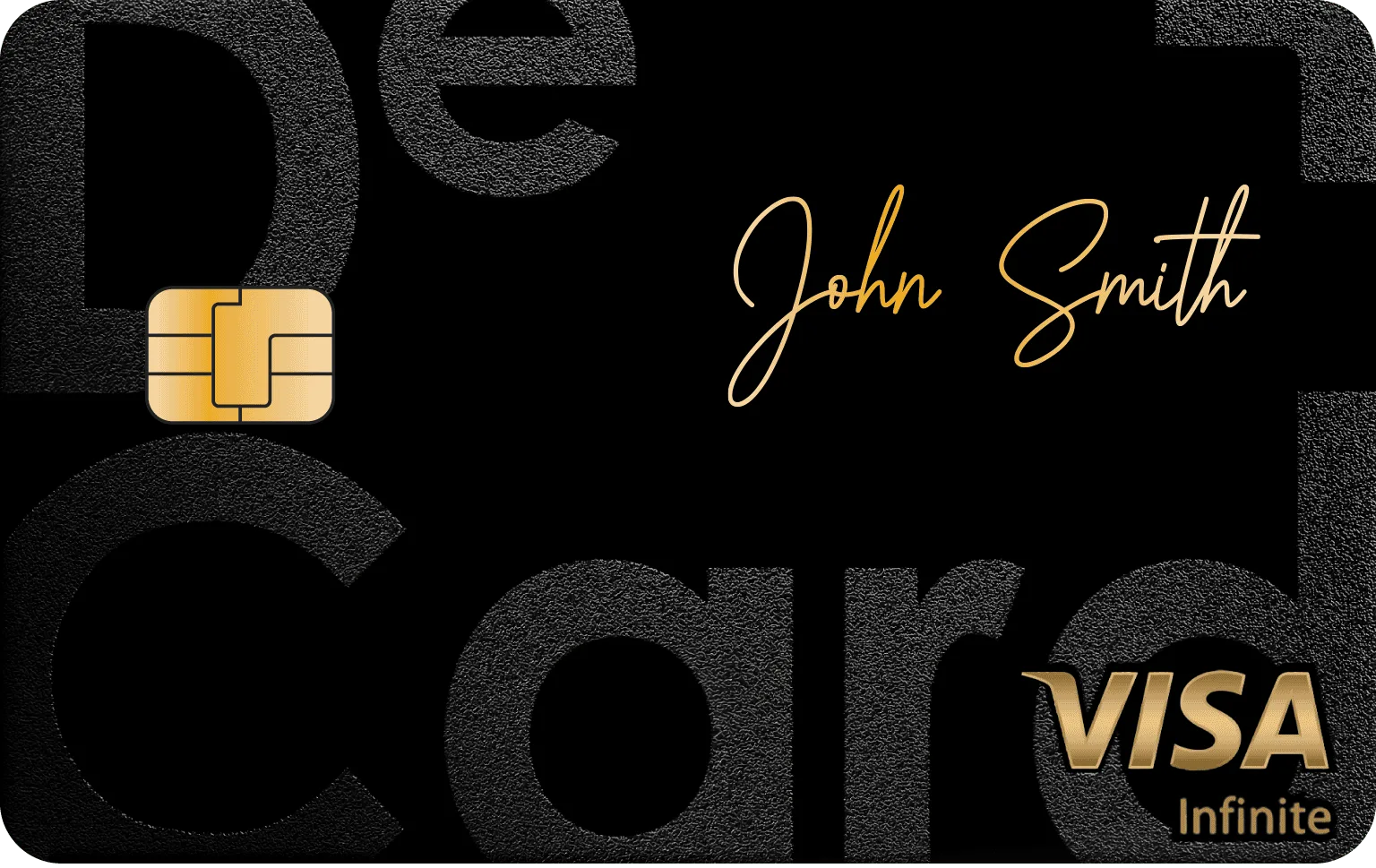
DeCard Luminaries is a metal stablecoin credit card from DCS Card Centre, the former Diners Club Singapore, spending USDT and USDC with 0% FX fees worldwide. Cashback runs from 2% to 10% by monthly spend, alongside lounge access at over 1,400 airports and up to US$1,000,000 of travel insurance. The catch: US$388 a year plus US$100 for the card, and cashback is capped at US$200 a month.

The 10% headline barely exists in practice. Cashback caps at US$200 a month, which you reach at about US$5,700 of spending, so the 10% band only covers roughly US$700 before it stops paying. Judge this card on the lounge access, insurance and 0% FX instead.

DeCard is issued by DCS Card Centre Pte Ltd in Singapore, which evolved from Diners Club Singapore and carries over fifty years of card-issuing heritage. Luminaries is the premium tier: a metal card with a credit limit powered by D-Vault, an account handling reconciliation, payment tracking and repayments. Benefits include 24/7 Visa concierge, lounge access at more than 1,400 airports, travel insurance to US$1,000,000 and Umy Diamond Membership giving 5% off hotels globally.

Each month you choose cashback or DePoints in-app before the 1st, Singapore time. Cashback pays 2% on the first US$2,000 of monthly spend, 3% on the next US$3,000 and 10% above US$5,000, capped at US$200 a month. DePoints pay 6, 10 and 30 per US dollar across the same bands, capped at 66,000 monthly and valid two years. Scan-and-Pay transactions earn neither. Rewards are credited by the 10th of the following month.

Annual fee

$0

Rewards rate

Up to 3%

Monthly fee

None

Funding

USD

Bottom line

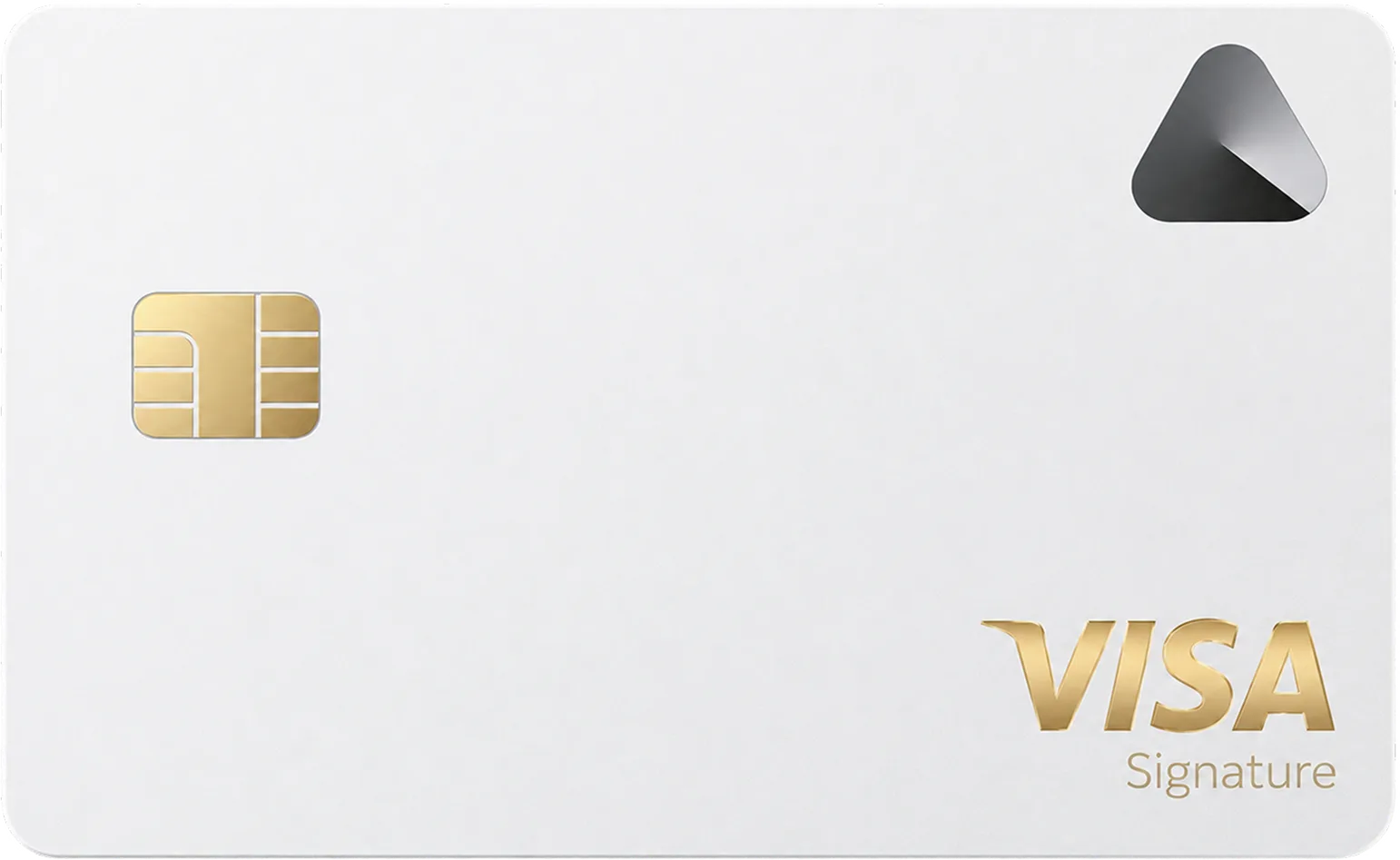
The Venmo Credit Card pays 3% on whichever category you spend most in each month, 2% on the next and 1% on everything else, with no annual fee and no foreign transaction fee. Cash back lands in your Venmo balance automatically and can be turned into crypto at no cost. The catch: it is available only in the United States, it requires a Venmo account, and buying crypto with the card itself counts as a cash advance.

Most tiered cashback cards make you pick a category or track a calendar. Venmo picks for you, every month, based on where you actually spent. Add no annual fee and no foreign transaction fee and it is a strong everyday card. The crypto link is real but small: free conversion of cash back, nothing more.

The Venmo Credit Card is issued by Synchrony Bank on the Visa network, as either a Visa or a Visa Signature depending on approval. Applicants must be 18 or over, live in the United States or its territories, and hold a Venmo account open at least 30 days. Purchase APR is 18.74%, 27.74% or 30.74% depending on creditworthiness, with cash advances at 30.74% and a penalty rate of 34.24%. Rates were current at 1 January 2026 and vary with the prime rate. Paper statements cost $1.99 a month.

Cash back is calculated each statement period across eight categories: Dining & Nightlife, Travel, Bills & Utilities, Health & Beauty, Grocery, Gas, Transportation and Entertainment. Your highest-spending category earns 3%, the second highest 2%, and everything else 1%, with no minimum spend and no cap on the 3% and 2% tiers. Rewards transfer automatically to your Venmo balance, where they can be spent, sent or withdrawn. Using them to auto-purchase crypto carries no transaction fee, though the exchange rate includes a spread.

Avici Signature card
Avici logo

Avici Signature

2.6· 0 reviewsCredit
Get this card

on Avici Signature’s secure site

Annual fee

$20

Rewards rate

None

Monthly fee

$20/year

Funding

USD

Bottom line

Avici Signature is the upper tier of Avici's secured Visa credit card, backed by crypto you hold in self-custody. It waives every ATM charge, carries Visa Signature travel benefits, and applies no transaction fees or currency markup. The catch: $30 for the first year and $20 annually after, plus $75 for the physical card, and Europe is not covered.

Signature earns its fee in one place: ATM withdrawals are free, where Platinum charges $1 plus 0.65% and $0.60 for declines. If you take cash out regularly the $20 a year pays for itself; if you never do, Platinum does the same job for nothing.

Avici Signature is the higher tier of Avici's secured Visa credit card, funded by crypto held in a self-custody smart wallet with passkeys. The virtual card costs $30 for the first year and $20 annually after; the physical card is $75 with $20 a year from the second year. Delivery is free and untracked in three to four weeks, or priority for $50 internationally and $15 in the US.

There is no cashback. Avici charges no transaction fees and no currency markup, though Visa may add 0.4% to 1% on non-USD spending. Signature's advantage over Platinum is at the cash machine: no withdrawal fee, no declined transaction fee and no balance enquiry fee, against $1 plus 0.65% and $0.60 charges on Platinum. Daily ATM limits are the same at $250 across three withdrawals.

Avici Platinum card
Avici logo

Avici Platinum

2.6· 0 reviewsCredit
Get this card

on Avici Platinum’s secure site

Annual fee

$0

Rewards rate

None

Monthly fee

None

Funding

USD

Bottom line

Avici Platinum is a secured Visa credit card backed by crypto you keep in self-custody, with no transaction fees and no markup on currency conversion. There are no spending limits, and you can create separate cards for subscriptions, groceries or travel. The catch: the card costs $15 virtual or $50 physical up front, ATM withdrawals cost $1 plus 0.65%, and Europe is not covered.

Avici's distinction is self-custody credit: your collateral stays under your control through passkeys and account abstraction rather than sitting with an exchange. Platinum is the cheaper entry point with no annual fee. Pay once, spend without markup, and accept the ATM charges that Signature waives.

Avici Platinum is a secured Visa credit card from Avici Inc of San Francisco, funded by crypto held in a self-custody smart wallet using account abstraction and passkeys. Cards are issued in about two minutes and work with Apple Pay and Google Pay. Virtual cards cost $15 for the first and $10 thereafter with no recurring fee; the physical card is $50 one-time. Free untracked delivery takes three to four weeks.

There is no cashback. Avici charges no transaction fees and applies no foreign exchange markup, though Visa may add 0.4% to 1% on non-USD transactions. The card carries Visa network benefits including airline miles, auto rental insurance, travel protection and emergency assistance rather than a cash rewards rate. ATM withdrawals cost $1 plus 0.65%, capped at $250 daily across three withdrawals, with $0.60 charges for declines and balance enquiries.

Annual fee

$30

Rewards rate

None

Monthly fee

$30/year

Funding

USD · USDT · USDC

Bottom line

OrbitX Lux is the upper tier at $30 a year, a Visa Signature card with a metal option, halving the foreign exchange fee to 1% and the conversion charge to 10 cents. Add-on cards are unlimited and daily spending is uncapped. The catch: OrbitX gives conflicting prices for the metal card, quoting both $350 and included.

For $18 more than Neo, Lux halves the FX fee to 1%, removes the daily spending cap and doubles the ATM limit. If you spend more than about $1,800 a year in foreign currency it pays for itself. The Signature tier perks are a bonus rather than the reason.

OrbitX Network Group Pte Ltd is registered in Singapore under UEN 202448623M and states it is a financial technology company, not a bank, with regulated services provided by unnamed partner banks. Lux is Visa Signature with unlimited add-on cards and a metal card option. Replacement costs $199. Deposits accept USDT or USDC on Polygon and Base, with Solana and Tron planned. Delivery takes one to four weeks.

There is no cashback. Lux reduces costs rather than paying rewards: 10 cents per fiat conversion against 20 on Neo, 1% on non-USD spending against 2%, and a 5 cent declined transaction fee. Deposits are free, withdrawals cost $2, and ATM use adds the operator's charge plus 2% plus $2. Daily spending is unlimited with a $1,000 ATM ceiling.

Annual fee

$0

Rewards rate

None

Monthly fee

None

Funding

USDC · ETH · wstETH · WBTC · OP

Bottom line

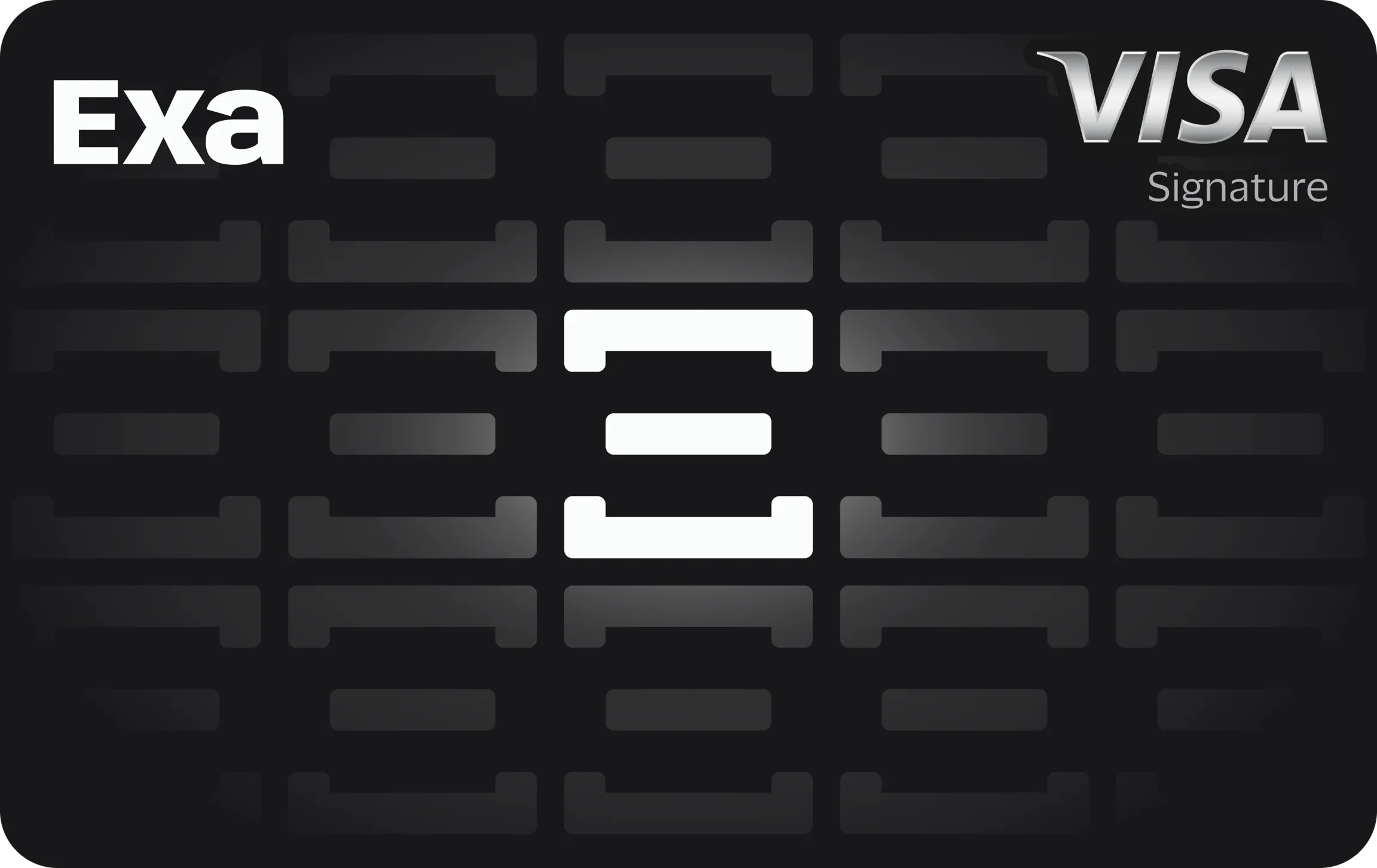
The Exa Card is a Visa Signature card that borrows against your crypto instead of spending it. Deposit USDC, ETH, WBTC, wstETH or OP, keep earning yield on it, and pay either instantly or in fixed-rate installments taken as an onchain loan at the moment of purchase. The catch: installments carry interest set at checkout, non-USD purchases cost 1.5%, and your collateral is exposed to the protocol.

Almost every crypto card sells your coins at the till. Exa borrows against them instead, so the position stays open and keeps earning while you spend. That is genuinely different. The trade is complexity and risk: you are taking an onchain loan at checkout, with interest and collateral exposure rather than cashback.

The Exa Card is a Visa Signature card from Exa Labs, powered by Exactly Protocol on non-custodial smart contracts; Exa Labs does not issue the card itself, licensed third parties do. Accounts use passkeys rather than seed phrases, and KYC takes minutes. Deposited USDC, ETH, wstETH, WBTC and OP earn a variable APR in Exactly's lending markets and double as collateral setting your credit limit. Purchases are paid instantly from balance or borrowed at a fixed rate and repaid every 28 days. Apple and Google Wallet are supported.

There is no cashback. The economics run the other way: deposits earn a variable APR from borrower interest in Exactly Protocol, while installment purchases borrow at a fixed rate locked in at checkout. The net effective rate can be positive, neutral or negative depending on whether deposit yield exceeds the loan rate. An origination fee may apply to loans, folded into the installment interest. Non-USD purchases carry a 1.5% FX fee inside the exchange rate.

Annual fee

$12

Rewards rate

None

Monthly fee

$12/year

Funding

USD · USDT · USDC

Bottom line

OrbitX Neo is a Visa Platinum card linked to a stablecoin balance, costing $12 a year with a personal IBAN for receiving local payments and no deposit fees. Ten add-on cards are included and daily transaction counts are unlimited. The catch: 2% on non-USD spending, $100 for the plastic card, and ATM withdrawals cost base charges plus 2% plus $2.

At $12 a year with a named IBAN and zero deposit fees, Neo is cheap to hold. The cost lands when you spend abroad: 2% foreign exchange, plus ATM withdrawals that stack the operator's charge, 2% and a flat $2. Lux halves the FX for $18 more.

OrbitX Network Group Pte Ltd is registered in Singapore under UEN 202448623M and states it is a financial technology company, not a bank, with regulated services provided by unnamed partner banks. Neo is Visa Platinum with a virtual card and up to ten add-on cards; the plastic card costs $100 and is not included, arriving in one to four weeks. Deposits accept USDT or USDC on Polygon and Base, with Solana and Tron planned.

There is no cashback. OrbitX charges on conversion and spending instead: 20 cents per fiat conversion, 2% on non-USD spending, $2 per withdrawal, and 10 cents for a declined transaction. Deposits are free. Daily spending caps at $50,000 with a $500 ATM limit, and daily transaction counts are unlimited. OrbitX advertises yield on USDC balances through on-chain strategies but publishes no rate.

Annual fee

$0

Rewards rate

None

Monthly fee

None

Funding

USDT · USDC · BTC · ETH

Bottom line

The BloFin Wallet Card is a Visa credit card issued by Rain, drawing a credit line against digital assets you deposit as collateral so your position stays open. There is no annual, issuance, dormancy or cancellation fee, and spending costs between 0% and 1% depending on VIP level. The catch: you cannot currently withdraw funds from the card, a feature BloFin says is still in development.

The fee structure is genuinely light and the collateral model keeps your assets invested. But money you put on this card cannot come back out yet: BloFin states withdrawals are unavailable while the feature is developed. Treat anything you load as committed to spending.

The card is issued by Rain, a Visa Principal Member, and operates on the Visa network. You create a mnemonic wallet first, then apply by selecting your country of residence, with identity verification possibly required. Deposited assets serve as collateral supporting a credit line in Credit mode, or facilitate transactions in Direct Pay mode. Top-ups work across multiple blockchain networks. There is no fixed spending limit; your available balance matches what you deposit.

There is no cashback or rewards programme. BloFin's pricing is unusually light instead: no annual fee, no dormancy fee, no cancellation fee and no issuance or replacement fee, with a spending fee ranging from 0% to 1% depending on your VIP level. No foreign exchange rate or ATM charge is published. Set against that, withdrawals from the card are currently unavailable, so deposited funds can only be spent.

Annual fee

$0

Rewards rate

None

Monthly fee

$0

Funding

+ 6 currencies

Bottom line

Hyperbeat Pay is a Visa card attached to a self-custodial account on HyperEVM, letting you spend directly from USDC and USDT or borrow against your portfolio so your holdings keep earning. Vault strategies advertise up to 8% APY. The catch: Hyperbeat publishes no card fees, no interest rate for Credit mode, and no list of supported countries.

The idea is strong: keep your position, spend against it, and let the collateral earn while you do. But this is a credit product with no published interest rate, which makes it impossible to judge what borrowing actually costs. Treat the numbers as unknown until you are inside the app.

Hyperbeat Pay is part of Hyperbeat's Liquid Banking stack, built on Hyperliquid and HyperEVM. Accounts are self-custodial smart wallets created with an email and a passkey, and you can deposit native BTC, ETH or SOL without a centralised exchange. The card runs in two modes: Direct Pay spends USDC or USDT balances, while Credit borrows against your portfolio. Virtual and physical cards work anywhere Visa is accepted. Hyperbeat publishes audits and proof of solvency for its vaults.

There is no cashback programme. The earning side comes from collateral rather than spending: Hyperbeat advertises vault strategies paying up to 8% APY with auto-compounding, and the card's pitch is that these keep running while you spend against them. Against that sits an unpublished cost of credit. No interest rate, borrowing fee, liquidation threshold or card fee appears on Hyperbeat's website or documentation, so the net economics cannot be calculated from public information.

Introducing CardIQ

See your approval odds and compare personalised offers in seconds.

Find your card