


Wayex Card
#76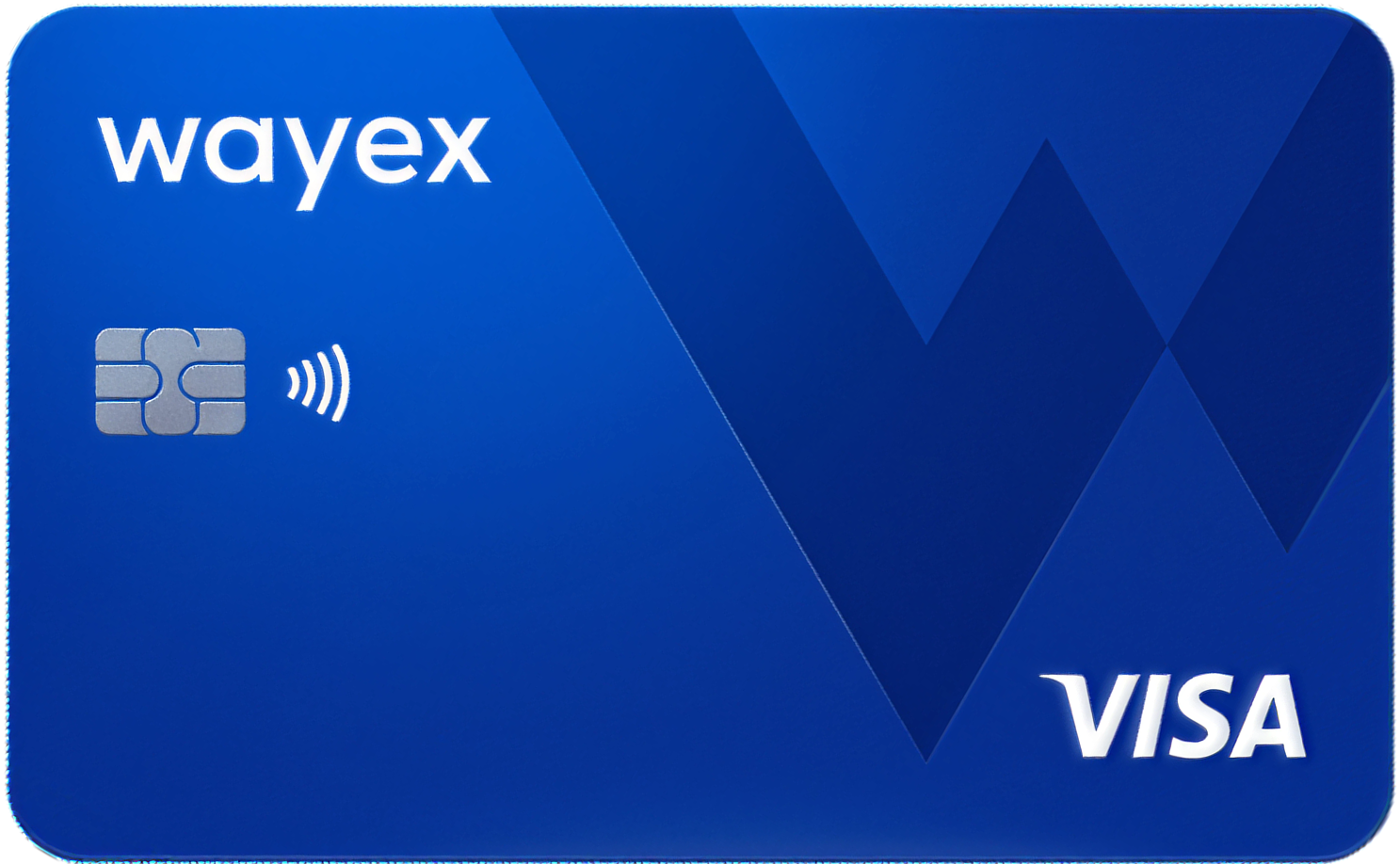
Wayex is a stablecoin account with a Visa card attached: deposit USDC, USDT, DAI, PYUSD or local fiat and it all becomes one USD balance you can spend anywhere Visa works. USD spending is free, the card is free, and an idle balance earns up to 5%. The catch: there is no cashback, anything bought in a currency other than dollars costs 1.5%, and card issuance is live in only around 18 regions so far.
Get Wayex CardAvailability
Rewards rate
None
FX fee
1.50%
Savings
Up to 5%
Availability
Coming soon
Wayex CardMain perks
Bonus offers
Rewards
Pros
Cons
Options to Wayex Card




FAQs
Questions, answered
The Wayex Card is a Visa debit card built around a unified USD stablecoin balance. Users can fund Wayex with supported stablecoins or fiat, and the balance is then used for ordinary Visa purchases online or in stores.
The current programme is issued by Lead Bank and managed by Bridge, a Stripe company, while Wayex provides the app and card-management experience.
Wayex currently describes the card as a Visa debit card. The card spends from the available Wayex balance rather than from a revolving credit line.
The legal disclosure also describes it as a Visa prepaid debit card in some regional materials, so users should treat it as balance-backed rather than unsecured credit. You need sufficient available funds before a purchase can be approved.
Wayex currently supports USDC, USDT, DAI and PYUSD for its unified stablecoin balance. Deposits are available across more than 10 supported blockchain networks, including Ethereum, Solana, Base, Arbitrum, Avalanche, Optimism, Polygon, Stellar and Tron.
Always confirm the token and network in the live app before sending funds, because supported routes can change.
Wayex combines supported deposits into one USD-denominated balance. When you pay with the Visa card, the merchant receives a normal fiat card payment rather than crypto.
This simplifies spending because you do not have to choose a blockchain asset at every checkout. Wayex currently states that DAI and USDC deposits are credited 1:1, while USDT deposits carry a 0.1% fee.
Wayex currently lists no issuance fee for the virtual card, no monthly maintenance fee and a 0% fee for card spending in USD. Purchases outside USD currently carry a 1.5% FX fee.
USDC and DAI deposits are listed as 1:1 with no Wayex fee, while USDT deposits have a 0.1% fee. Network or partner costs can still apply outside the card transaction itself.
Yes. Wayex supports both Apple Pay and Google Pay for eligible cards. The virtual card can be pushed directly from the Wayex app into a supported mobile wallet, allowing contactless payments shortly after onboarding.
Mobile-wallet payments use the same underlying Wayex balance, fees and limits as the card itself.
Yes, but physical-card availability depends on the region. Wayex currently promotes a free virtual Visa that can be issued quickly, while a physical card can be added in supported markets.
Wayex's Help Centre says physical cards can take around two to three weeks to arrive in markets where ordering is enabled. The app is the best place to confirm delivery availability and any shipping cost.
Yes. Wayex says users can withdraw supported stablecoins from the unified balance and can choose a supported blockchain network for the withdrawal, even if it differs from the network used for the original deposit.
This is useful for users who want the card for spending but still need to move stablecoins back on-chain. Check the live withdrawal screen for available networks, limits and any network cost.
Not fully. Wayex advertises optional self-custody for advanced users, but the card itself uses a regulated payment and banking stack involving Lead Bank and Bridge.
Funds used for the Visa card therefore pass through programme infrastructure rather than remaining entirely under private-key control throughout the transaction. Users who prioritise custody should distinguish the wallet features from the card balance.
The current global Wayex Visa programme identifies Lead Bank as the card issuer and Bridge as the programme manager. Bridge is a Stripe company, while Wayex acts as the platform provider through which users apply for, fund and manage the card.
This distinction is important because card issuance and regulated payment services are not provided by Wayex alone.
Wayex says the app can be downloaded in more than 160 countries, but card coverage is narrower. Its current global site says the card is live in more than 18 regions and expanding further.
Card availability should therefore be checked separately from app availability. Residence, KYC and the issuing programme determine whether a user can activate a Wayex Visa card.
Yes. Wayex requires identity verification before card issuance. The current product pages say KYC can take only a few minutes for eligible users, although approval time varies.
The exact document requirements depend on region. Use only Wayex's official app or website when submitting identification and never share wallet credentials or authentication codes with unsolicited contacts.
Wayex currently promotes an Everyday Yield feature of up to 5% on eligible liquid stablecoin balances. This sits alongside the card rather than being a Visa reward.
The rate can change and depends on the underlying product terms. Users should not treat the balance like a guaranteed bank savings deposit and should review the current risk disclosure before keeping significant funds solely for the advertised yield.
Download Wayex, create an account and complete the required identity verification. Fund the account with supported stablecoins or fiat, then open the Card section and request the virtual Visa if your region is supported.
The virtual card can be issued quickly and added to Apple Pay or Google Pay. A physical card can then be ordered where the programme supports delivery.
Use the official Wayex Help Centre at https://help.wayex.com and the support options available in the app for card, KYC, funding or transaction issues.
For a card problem, keep the merchant, amount, date and any decline message available. For a stablecoin transfer, keep the transaction hash and network. Never share private keys, seed phrases or one-time authentication codes with unsolicited contacts.