


Tuyo Card
#81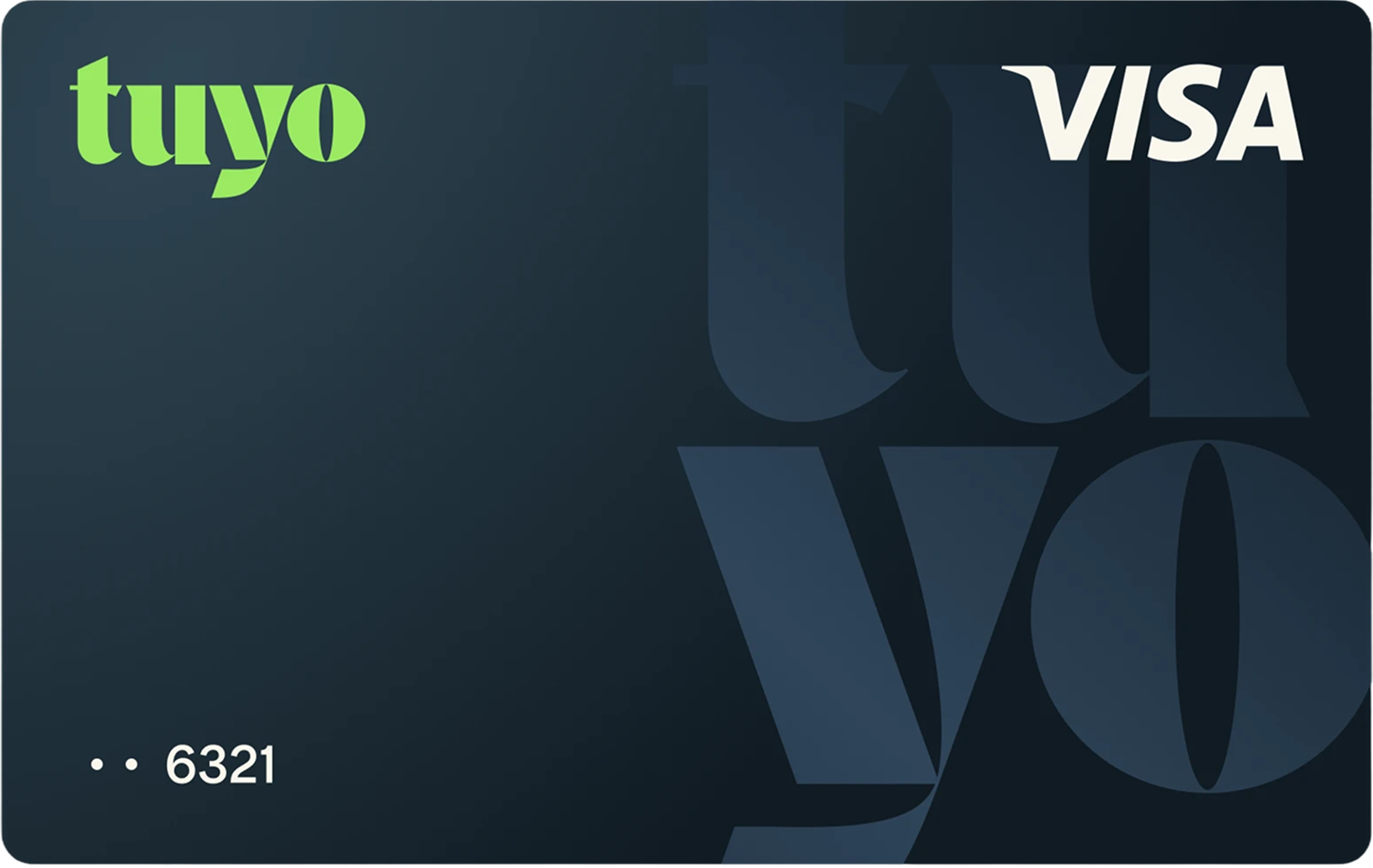
The Tuyo Card is a solid fee-free non-custodial Visa debit for USDC spenders who want zero conversion costs and a high daily limit. Its rewards are speculative points with no redemption value yet, which is a real limitation. Best for active USDC users who value self-custody.
Get Tuyo CardAvailability
Rewards rate
None
FX fee
0%
Savings
0.0
Availability
224 countries
Tuyo CardMain perks
Bonus offers
Rewards
Pros
Cons
Options to Tuyo Card




FAQs
Questions, answered
The Tuyo Card is a Visa card built into Tuyo, a self-custodial finance app. It lets eligible users spend USDC on Base at ordinary Visa merchants, while Tuyo converts the required value for the card payment.
The current card is virtual and supports Apple Pay and Google Pay. Tuyo says there is no issuance fee, no monthly or annual fee and no Tuyo fee on USD transactions. A physical card is still marked as coming soon.
The card is closely integrated with Tuyo's wallet and Earn features, so users can choose to spend from ordinary USDC or, if enabled, from USDC deposited in an Earn strategy.
Yes. Tuyo describes the core product as self-custodial, meaning users control their funds and private keys rather than depositing everything with Tuyo as a conventional custodian.
That does not mean every part of a Visa payment is on-chain. Card issuance, fiat settlement and other regulated payment services are handled through licensed partners. The self-custodial element applies to the crypto wallet and the assets held there before they are used for spending.
This distinction is important for users comparing Tuyo with exchange cards. Tuyo lets you keep direct control of crypto while still accessing a conventional Visa payment rail.
The Tuyo Card is currently powered by USDC on Base. Tuyo also supports deposits on networks including Ethereum, Base, Arbitrum, Optimism and Polygon, and users can convert supported assets into Base USDC inside the app.
This means a token being held in Tuyo does not necessarily mean the card spends that token directly. The practical card funding asset is Base USDC.
Tuyo says stablecoin conversion and bridging can be handled inside the app, but users should always confirm the supported token and network before sending funds. The card then uses the USDC value to settle an ordinary Visa purchase.
Tuyo currently lists no card issuance fee, no monthly or annual fee and no Tuyo transaction fee for purchases in USD. For purchases in other currencies, Tuyo says an FX spread of up to about 1% can apply.
The card fee is separate from other Tuyo activity. Swaps can have a 0.25% volume-based fee, while network costs may apply depending on the blockchain transaction. Earn strategies also have their own performance-fee structure.
For a card purchase, the most relevant cost is therefore the possible FX spread when the merchant charges outside USD. Check the live app before a large international purchase because card pricing can change.
Tuyo currently advertises a starting card limit of $10,000 per day. The company says limits can increase over time based on account history and usage.
That headline figure is not a guarantee that every transaction up to $10,000 will be approved. Merchant rules, risk controls, KYC status, available USDC and account-specific restrictions can still affect a payment.
Tuyo's Help Centre also provides tools for viewing and changing the limit available to a particular card. For a large purchase, the amount shown in the live card settings should be treated as the final limit for that account.
Yes. Tuyo officially supports both Apple Pay and Google Pay for eligible cardholders. This is particularly useful because the current Tuyo Card is virtual.
Once the card is added to a supported mobile wallet, it can be used for compatible contactless purchases in addition to normal online payments. The payment still draws from the same Tuyo card funding source and follows the same limits and FX rules.
Apple or Google can still reject provisioning based on their own device, location or account-risk checks. Tuyo's Help Centre provides separate guidance for Apple Pay and Google Wallet availability if a card cannot be added.
Tuyo's current Help Centre now includes ATM-withdrawal guidance and PIN-management instructions, which indicates ATM support has been introduced for eligible card configurations. This is newer than parts of the public card page that still say ATM withdrawals are not yet available.
Because Tuyo's public pages are not fully synchronised, users should rely on the live Card section and current Help Centre for their specific account. If a PIN and ATM option are available in the app, the card can be used at supported Visa ATMs subject to the account's limits and any ATM operator fee.
If those options are absent, ATM access is not enabled for that card yet.
Yes. Tuyo lets users choose whether the card can draw from USDC that is deposited in an Earn strategy. If this option is enabled, the USDC can continue generating strategy returns until it is needed for a card purchase.
Users can also disable Earn spending and make the card draw only from ordinary USDC that is not deposited in a strategy.
This is one of Tuyo's more unusual features because it connects card spending with DeFi-based yield. The trade-off is that Earn strategies carry smart-contract, stablecoin, liquidity and protocol risk, so money needed for essential spending should not be treated like a guaranteed bank deposit.
Buy Now, Pay Maybe is a Tuyo rewards concept where an eligible card purchase can be selected by Tuyo and effectively reimbursed or not charged to the user under the programme rules.
It should not be confused with traditional buy now, pay later credit. The feature is positioned as a promotional reward tied to card spending rather than an instalment loan that the user repays later.
The exact eligibility, frequency and selection mechanics can change, so users should check the current in-app terms rather than assuming a purchase will be covered. Treat it as a potential bonus, not as a guaranteed reduction in the cost of everyday spending.
Not as a broadly available standard product yet. Tuyo's current public card page still lists the physical card as coming soon.
The available experience is centred on the virtual Visa card, which can be used online and through Apple Pay or Google Pay. Tuyo's Help Centre has also introduced PIN and ATM guidance, so the card programme is clearly evolving, but this does not mean physical delivery is available in every supported market.
If a physical-card option appears inside the Tuyo app, follow the live order flow. Until then, users should not assume that a plastic card can be requested simply because they have a virtual card.
Tuyo Card eligibility depends on the countries supported by its current card issuer and on successful identity verification. The wider Tuyo wallet can be available in places where card issuance or mobile-wallet provisioning is more restricted.
Tuyo's Help Centre maintains a dedicated card-availability guide because the supported list changes as the programme expands. Applicants should use their real country of residence and complete the KYC process shown in the app.
If the Card section is unavailable after onboarding, that usually means the service is not currently offered to that account or region. Do not deposit funds solely for card use until the live app confirms eligibility.
Yes. The card uses regulated payment infrastructure, so users must complete the identity checks required for card issuance even though the underlying Tuyo wallet is self-custodial.
Tuyo notes that card KYC can sometimes be rejected because of document quality, unsupported occupation codes or inconsistent details. In many cases, users can resubmit corrected information.
A failed card KYC does not remove control of the user's self-custodial crypto. Tuyo says users remain able to withdraw their own funds on-chain. This separation between wallet control and regulated card eligibility is one of the key differences between Tuyo and a conventional custodial finance app.
Yes. Tuyo markets the card for global Visa spending and says it can be used at more than 175 million locations, subject to issuer, merchant and regional restrictions.
USD transactions currently have no Tuyo card fee. If the merchant charges another currency, Tuyo says an FX spread of up to about 1% can apply.
International Visa acceptance is different from card issuance. A Tuyo Card can work while travelling in a country where residents cannot necessarily apply for one. Users should also avoid merchant dynamic currency conversion when the offered rate is poor and should keep a backup payment method for merchants that do not accept the programme.
Download Tuyo, create or import the self-custodial wallet and complete the account setup. If card issuance is supported for your country, open the Card section and follow the identity-verification flow.
Once approved, the virtual card can be added to Apple Pay or Google Pay where supported. To fund spending, hold or convert assets into USDC on Base. Tuyo also lets users choose whether the card may draw from an eligible Earn strategy.
Before transferring a large amount, confirm the live card limit, network and current regional availability. Use only Tuyo's official app and website when completing KYC or moving funds.
For card, KYC, funding or wallet problems, start with the official Tuyo Guides at https://help.tuyo.com and the support route inside the Tuyo app. The Help Centre includes separate guides for card availability, ATM withdrawals, PINs, limits, Apple Pay, Google Wallet and Earn spending.
For a card transaction issue, keep the merchant, amount, date and any decline message available. For an on-chain issue, keep the transaction hash, token and network.
Because Tuyo is self-custodial, legitimate support should never need your recovery phrase or private keys. Never share those credentials with someone who contacts you first.