


Bitget Wallet Card
#77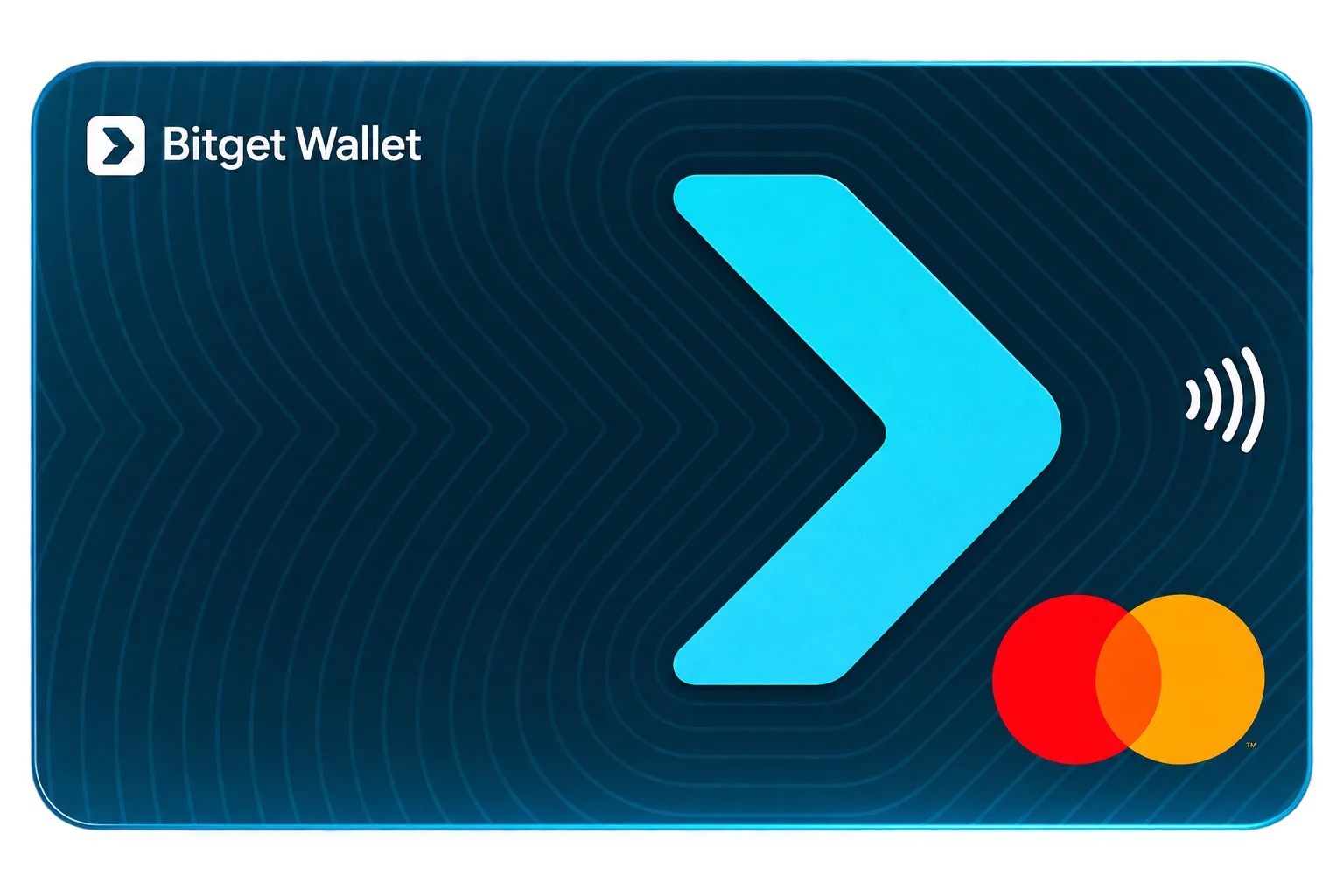
Bitget Wallet Card turns a self-custodial wallet into a Mastercard you can spend at 150 million merchants worldwide. Its monthly zero-fee quota refunds the FX, top-up and conversion charges on your first $400 of spending each month, which is where most crypto cards quietly make their money. The catch: the card is denominated in US dollars, so every euro or pound purchase above the quota carries a 1.7% conversion fee, and there is no ongoing cashback.
Get Bitget Wallet CardAvailability
Rewards rate
None
FX fee
1.70%
Savings
None
Availability
41 countries
Bitget Wallet CardMain perks
Bonus offers
Rewards
Pros
Cons
Options to Bitget Wallet Card



FAQs
Questions, answered
The Bitget Wallet Card is a crypto payment card issued through Bitget Wallet that lets eligible users top up with supported cryptocurrencies and spend at merchants that accept Visa or Mastercard. It is separate from the older Bitget exchange card application flow, which moved to Bitget Wallet for new applicants from 1 August 2026.
The card is available across supported markets in Europe, Latin America, Asia-Pacific and Africa. It can be used for online and in-store payments and supports major payment platforms including Apple Pay and Google Pay.
The product is designed around everyday crypto spending rather than trading. Users fund the card with assets such as USDT, USDC, ETH or SOL, then use the card through conventional payment networks. Card-issuing partners vary by region, so the exact issuer and local terms depend on where the user applies.
You apply inside the Bitget Wallet app, complete identity verification and then fund the card with supported cryptocurrencies. Once the card is active, those funds can be used for normal card purchases through the Visa or Mastercard network used by the issuing partner in your region.
The merchant does not receive crypto. The card provider handles the conversion and settlement needed for the payment, while the user manages funding and rewards from the Bitget Wallet interface.
The card can also be linked to Apple Pay, Google Pay and other supported payment platforms. This makes the experience closer to a normal digital payment card even though the funding source can be crypto. Because Bitget Wallet works with different card partners by region, some fees, card format options and local limits can vary. The live Card section in the app should therefore be treated as the final source for the terms that apply to your account.
The Bitget Wallet ecosystem is built around self-custodial wallets, but the card introduces a separate payment account and card infrastructure. Bitget Wallet's application guidance currently supports seed-phrase wallets and MPC wallets, while private-key-only wallets are not eligible for the card application flow.
This means users can start from a self-custodial wallet environment, but card funds and settlement are still subject to the rules of the card programme and issuing partner. The payment transaction itself does not remain purely on-chain from start to finish.
The distinction matters if custody is a priority. Holding assets in Bitget Wallet and loading funds into the card are not necessarily the same custody state. Users should review the current card funding and withdrawal rules before moving a large balance, particularly because card partners vary by region and may impose different operational requirements.
Bitget Wallet currently highlights major assets such as USDT, USDC, ETH and SOL as supported top-up options for the card. Its newer card materials also say users can top up with a broader range of mainstream tokens and selected memecoins.
The supported list is not identical in every region or card configuration. A token being available inside Bitget Wallet does not automatically mean it can fund the card. The final list is shown in the Card section of the app.
This is important because users should not transfer an asset solely on the assumption that it will be spendable. If the card does not support that token directly, an extra swap may be required before funding. Check the available top-up assets and network shown in the app before moving funds, especially for less common tokens or memecoins.
The Bitget Wallet Card currently offers up to 3% assetback on eligible spending. Bitget Wallet's latest card materials say cardholders receive 2% by default, while new cardholders and users who reach the monthly spending threshold can unlock 3% for the current and following month.
Assetback can be received in different assets, including options such as Bitcoin, USDC, gold and selected stock-linked assets, depending on current availability. The exact reward options and spending cap are shown inside the card interface.
This programme replaced the earlier 0-fee reimbursement model from August 2026. Users should therefore not rely on older references to permanent fee reimbursement. The current proposition is a rewards programme with a monthly eligible-spending cap, and standard fees can apply outside that allowance. Always check the live reward page before estimating the value of cashback.
Assetback is Bitget Wallet's current card rewards programme. Once you meet the relevant monthly spending threshold, eligible purchases can earn up to 3% back in an asset selected from the options available in the app.
Bitget Wallet currently highlights reward choices such as BTC, USDC, gold and stock-linked assets. The monthly spending amount eligible for rewards is capped, and the exact threshold and cap can vary by card configuration.
The programme replaced Bitget Wallet's earlier 0-fee benefit from August 2026. Under the old system, certain card fees were reimbursed as cashback. Under assetback, the focus is a percentage reward on eligible spending rather than simply refunding transaction costs. If you see older articles referring to 0-fee spending, check the current card page before relying on them because the reward structure has changed.
Bitget Wallet currently advertises no opening fee and no annual card fee. It also says it does not profit from exchange-rate spreads and that settlement rates generally track live market rates closely.
However, that does not mean every transaction is permanently fee-free. Bitget Wallet states that standard fees can apply once a user's monthly assetback allowance is exceeded. Depending on the card and region, costs can include top-up, conversion or foreign-exchange charges imposed through the card programme.
The previous 0-fee reimbursement benefit ended on 31 July 2026 and was replaced by assetback. Older articles can therefore make the card look cheaper than the current structure. For an accurate comparison, check the live Card page in the app for your monthly reward cap and the fees that apply beyond it, as issuing partners and pricing can vary by region.
The Bitget Wallet Card is currently available across the EEA and UK, selected Latin American countries, parts of Asia-Pacific, South Africa and some South Asian markets. The exact list can change as Bitget Wallet expands local issuing partnerships.
Current official materials include countries such as Argentina, Brazil, Chile, Colombia, Ecuador, Guatemala, Mexico, Panama and Peru in Latin America, alongside markets including Singapore, Japan, South Korea, Australia, Malaysia, Thailand and the Philippines in Asia-Pacific.
Applicants must complete identity verification and meet local eligibility requirements. Bitget Wallet's regional guidance also says the wallet should hold at least $10 in crypto and that an NFC-enabled phone may be needed for identity verification in some markets. Because physical-card availability is narrower than virtual-card availability, check the app before assuming both formats are offered where you live.
Yes. Applying for the Bitget Wallet Card requires identity verification even though Bitget Wallet itself is built around self-custodial crypto access.
The application is completed inside the latest Bitget Wallet app. Users submit the requested personal information and documents, and Bitget says verification can often be completed quickly when the information is clear. Some markets may require additional checks.
This is an important distinction between wallet access and card access. A self-custodial wallet can be used without the same onboarding process as a regulated payment card, but connecting crypto to a Visa or Mastercard payment service requires identity and residency checks. Bitget Wallet also currently supports card applications only from seed-phrase wallets and MPC wallets, not private-key-only wallets. The app will show any additional requirements that apply to your region.
Yes. Bitget Wallet officially supports both Apple Pay and Google Pay for eligible cardholders. It also promotes compatibility with other payment platforms such as Alipay and WeChat Pay in supported regions.
Adding the card to Apple Pay or Google Pay gives users a convenient way to make contactless payments without carrying the physical card. It does not change how the card is funded or how assetback and fees are calculated.
Bitget Wallet's Help Centre says Apple Pay and Google Pay themselves do not add an extra card fee. Availability can still depend on the issuing partner, country and device. If enrolment fails, check the Card section and regional Help Centre rather than assuming every Bitget Wallet Card configuration has identical mobile-wallet support.
Yes, but physical-card availability is currently more limited than virtual-card availability. Bitget Wallet says the physical card is available in selected Asia-Pacific markets including Singapore, South Korea, Japan, Vietnam, Malaysia, Taiwan, Australia, Thailand and the Philippines, with expansion planned.
Users in many other supported regions can still apply for the virtual Bitget Wallet Card and use it online or through supported mobile wallets.
This matters if ATM access or a plastic card is essential to you. Being eligible for the Bitget Wallet Card does not automatically mean you can order the physical version. Check the Card section of the app for your region before applying specifically for a physical card. The list can change as Bitget Wallet adds issuing partners and delivery coverage.
Yes. Bitget Wallet says the card can be used at online and in-store merchants worldwide that accept the Visa or Mastercard network attached to the card. Its current product page cites broad acceptance across major everyday merchants and payment platforms.
International use can still involve currency conversion and provider-specific fees, particularly once your monthly assetback-eligible spending allowance is exceeded. Bitget Wallet says its settlement rates generally track live market rates closely and that it does not profit from an exchange-rate spread.
Global merchant acceptance is different from application eligibility. You may be able to use an issued card while travelling in a country where residents cannot apply. Before travelling, check the card network, available balance, current fee rules and any region-specific restrictions shown in the app. Carrying a backup card remains sensible for merchant or network declines.
From 1 August 2026, new Bitget Card applications moved from the Bitget exchange to Bitget Wallet. Existing Bitget Cards continue to work as normal and were not automatically cancelled by the change.
However, Bitget says replacement cards for the older Bitget Card programme are no longer available once those cards expire. Users who need a new card are directed to apply for the Bitget Wallet Card instead.
This means there are now two situations to distinguish. Existing holders can continue using their old Bitget Card while it remains valid, while new applicants use Bitget Wallet. For MyCardCompare, the current product page should therefore focus on the Bitget Wallet Card rather than treating the older exchange application process as the default. Fees, benefits and eligible regions can differ between the two programmes.
Download or update the Bitget Wallet app, open Pay or Wallet depending on the current app layout, select Card and choose Apply Now. You then complete the requested identity verification and any region-specific onboarding steps.
Bitget Wallet says approval can be very fast when the submitted information is complete. Once the card is activated, the virtual card can be used immediately. You can then fund it with supported assets and add it to eligible payment platforms such as Apple Pay or Google Pay.
Applicants should use only the official Bitget Wallet app and website. The card rollout differs by country, and the physical version is not available everywhere. Check the current Card page before transferring crypto specifically for spending so you know which assets, limits and card formats are available to your account.
For card-specific help, use the support function inside Bitget Wallet or the official Bitget Wallet Help Centre. In the app, Bitget Wallet instructs users to open their profile and use the Support option for issues involving card security or transferring a card to a safer wallet.
The official card page is https://web3.bitget.com/card, and Bitget Wallet's Help Centre contains dedicated articles on application, fees, rewards and card management. Existing holders of the older Bitget exchange card can also use Bitget's main Support Center for programme-specific questions.
Never share a seed phrase, private key, wallet recovery credential or one-time verification code with someone claiming to be support. Legitimate support can investigate account and card issues without asking for the secret credentials that control your wallet.