


Avici Platinum Card
#61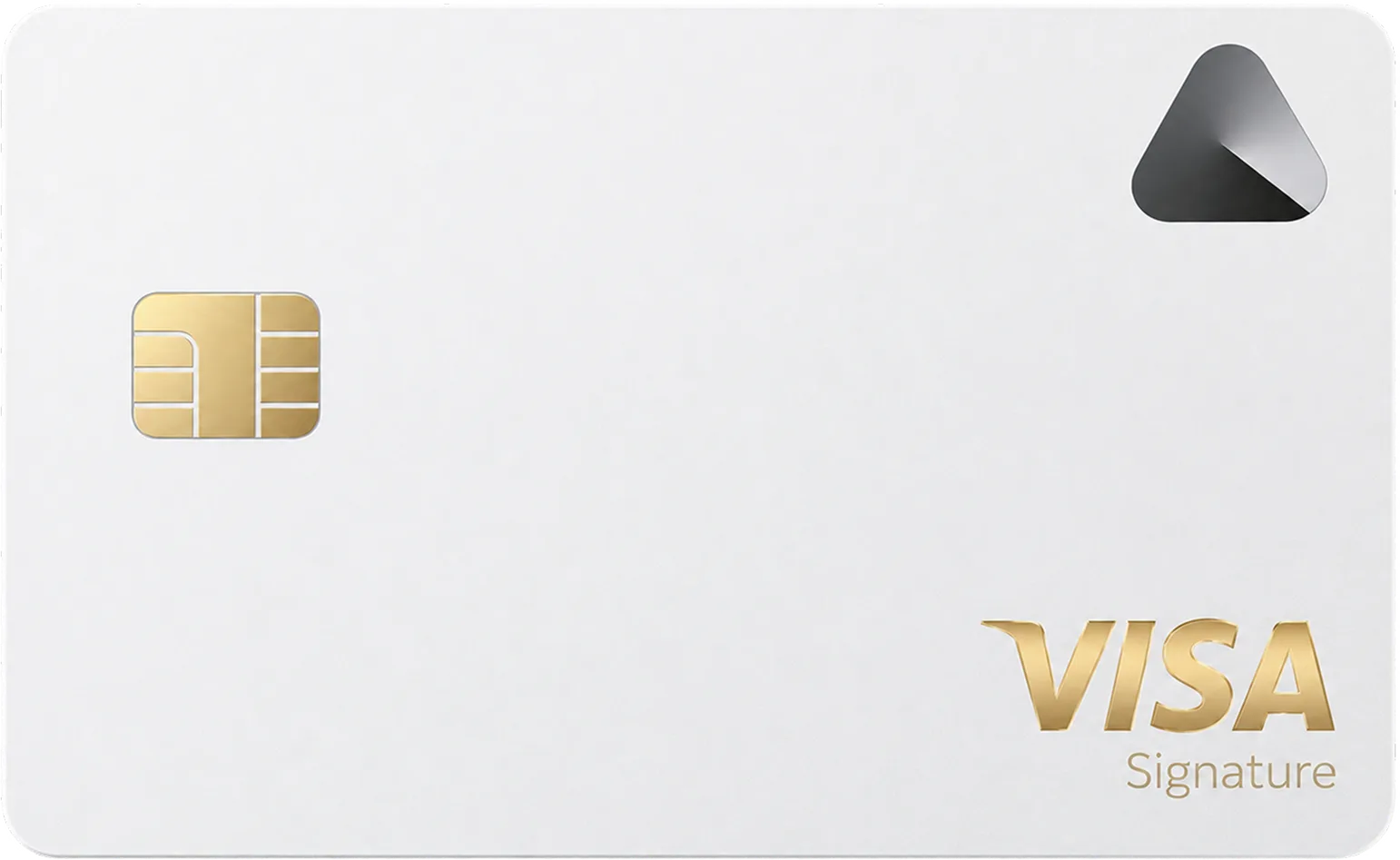
Avici Platinum is a secured Visa credit card backed by crypto you keep in self-custody, with no transaction fees and no markup on currency conversion. There are no spending limits, and you can create separate cards for subscriptions, groceries or travel. The catch: the card costs $15 virtual or $50 physical up front, ATM withdrawals cost $1 plus 0.65%, and Europe is not covered.
Get Avici Platinum CardAvailability
Rewards rate
None
FX fee
0% (Visa adds 0.4-1%)
Savings
None
Availability
50 countries
Avici Platinum CardMain perks
Bonus offers
Rewards
Pros
Cons
Options to Avici Platinum Card




FAQs
Questions, answered
The Avici Platinum Card is Avici's entry-level Visa card and can be created as either a virtual or physical card. Avici describes Platinum as its basic, lower-cost option, while its Signature card adds premium Visa benefits.
The card is connected to Avici's on-chain secured credit system rather than a conventional bank current account. Avici's card terms describe the product as linked to a decentralised self-custodial wallet and currently list 0% interest on purchases.
For users, the main proposition is self-custodial crypto-backed spending with normal Visa acceptance. The first Platinum virtual card is free for new customers under Avici's current pricing, while additional virtual cards cost $10. A physical Platinum card has a $50 one-time basic card fee. There is no recurring Platinum card charge listed in the current fee schedule.
Avici treats its card as a secured credit card rather than a standard debit card. The card is connected to Avici's self-custodial on-chain wallet and spending balance, with credit created against supported assets rather than through an unsecured bank credit line.
Avici's published card terms currently state a 0% APR and 0% interest on purchases, while also noting that the company and issuer reserve the right to introduce interest for future purchases with prior disclosure.
The secured structure matters because the economics and risks differ from a normal debit card. Users need to understand how collateral, credit creation, settlement and repayment work before funding the product. The Platinum designation refers to the Visa card tier, not to a revolving rewards programme. Avici also offers a more expensive Signature tier with additional Visa travel-related benefits.
Avici positions the card around a self-custodial wallet model. Its card terms state that the Avici Card is connected to a decentralised self-custodial wallet created on blockchain, while the main Avici site emphasises account abstraction and passkeys to make self-custody easier to manage.
This is different from an exchange card where the provider simply holds the user's crypto in a centralised account. The on-chain model gives users greater visibility over the assets supporting their spending.
Self-custody still requires care. Users should understand how their wallet, passkeys and recovery process work before depositing significant funds. Card settlement also involves the issuer and payment network, so self-custody of the underlying wallet does not mean every part of the Visa transaction is decentralised. Review Avici's current card and wallet terms for the exact custody and credit mechanics applicable to your account.
Avici currently gives new customers one free Platinum virtual card. After that first free card, additional Platinum virtual cards cost $10 each as a one-time fee with no recurring charge.
The physical Platinum card has a $50 one-time basic card fee. Avici lists free untracked delivery, which generally takes three to four weeks. Priority delivery costs $15 in the United States or $50 internationally and is listed at roughly one to two weeks.
These issuance costs are separate from transaction and ATM fees. Avici lists $0 card transaction fees and no Avici FX markup, while the Platinum ATM fee is $1 plus 0.65% per withdrawal. Before ordering, compare the Platinum tier with Signature because Signature has higher card costs but removes certain ATM fees and includes additional Visa benefits.
Avici's current fee page lists a $0 card transaction fee and a 0% Avici foreign-exchange markup. It also says there are no low-authorisation fees, no declined purchase fees outside ATM-specific cases, and no top-up or wallet-withdrawal fees.
For non-USD transactions, Avici notes that Visa may still charge a cross-border amount of roughly 0.4% to 1%. Its legal card terms also disclose that the payment network can apply a foreign-purchase fee, so users should not interpret 0% Avici markup as a guarantee that every international transaction has zero conversion cost.
For travellers, this distinction is important. Avici may not add its own FX margin, but network-level charges can still affect the final amount. Always check the live transaction disclosure and card terms because network pricing and issuer terms can change.
Avici's current Platinum documentation does not advertise a standard cashback rate. The Platinum tier is positioned as the basic lower-cost card and Avici explicitly says it offers no special card-tier benefits.
This contrasts with Avici Signature, which includes access to Visa Signature benefits such as travel-related offers, although the exact benefits and costs vary by region. Avici's broader website also refers to Visa rewards and benefits, but that should not be interpreted as a guaranteed Platinum cashback programme.
For comparison purposes, MyCardCompare would therefore treat the Platinum card as having no published recurring cashback unless Avici introduces a specific promotion or reward schedule. Its main value proposition is the self-custodial secured credit structure, low transaction pricing and broad Visa acceptance rather than purchase rewards.
Yes. Physical Avici Platinum cards can be used at ATMs, and Avici also says a virtual card can work at NFC-enabled ATMs after a PIN is set in the app.
The current Platinum ATM limit is $250 per day with up to three ATM transactions per day. Avici charges $1 plus 0.65% for each Platinum ATM withdrawal. A declined ATM transaction costs $0.60 and a balance inquiry also costs $0.60.
These charges make the Platinum card more expensive for frequent cash withdrawals than Avici's Signature tier, which currently lists $0 Avici ATM withdrawal fees. The ATM operator can also impose its own surcharge or currency conversion. Users who regularly need cash should therefore compare total withdrawal costs rather than focusing only on the card's $0 purchase transaction fee.
Avici states that there is no universal card transaction limit on the number or value of purchases. Users can make multiple transactions and can set their own individual spending limits for each card through card settings.
All virtual and physical cards on the same account share the same underlying spending balance, so creating additional cards does not create additional independent funds. Per-card limits are therefore mainly a control mechanism over that shared balance.
ATM withdrawals are different. The Platinum tier has a published ATM limit of $250 per day and a maximum of three ATM transactions per day. Users should also remember that their practical spending power depends on the amount of credit created and the assets supporting the account, even when Avici does not impose a separate point-of-sale transaction ceiling.
Yes. Avici documents support for both Apple Pay and Google Pay. Users can enter the card number, expiry date and CVV into the relevant wallet and complete verification using an OTP sent to the registered phone number or email.
There is no extra Avici charge for spending through Apple Pay or Google Pay. The mobile-wallet transaction uses the same card balance and the same underlying fees and limits as the physical or virtual card.
This is especially useful for physical-card buyers because Avici says card details become available before delivery in many cases, allowing the card to be used online or through a mobile wallet while the physical card is still in transit. Wallet availability can depend on device and region, so users should follow Avici's current troubleshooting guidance if enrolment fails.
Yes. Avici offers the Platinum tier in both virtual and physical form. The physical Platinum card currently has a $50 one-time basic card fee and no recurring Platinum card charge.
Avici lists free untracked delivery, generally taking three to four weeks. Priority delivery is available for $15 in the United States or $50 internationally and is listed at around one to two weeks. Once an order is placed, Avici says the card details may become available within a few days, allowing the card to be used virtually before the plastic arrives.
The physical card supports swipe, chip insertion and contactless tap-to-pay. It can also be used at ATMs. Avici says its physical cards are currently made from white polyvinyl plastic, while metal cards are planned separately.
Avici allows users to create multiple virtual cards and says there is no fixed maximum on how many can be created. The first Platinum virtual card is free for a new customer, while each additional Platinum virtual card currently costs $10 as a one-time fee.
Users can label cards individually and set separate spending limits for them. However, all cards in the account share the same overall spending balance, so additional cards are useful for organisation and security rather than multiplying available funds.
This can work well for separating subscriptions, online shopping, travel or other spending categories. If one card is compromised, a user can manage that card without necessarily changing every payment credential. Because each extra Platinum card has an issuance fee, users should balance the convenience of multiple virtual cards against the cost of creating them.
Avici says its cards are accepted at more than 100 million merchants worldwide and can be used anywhere an international Visa card is accepted, subject to normal merchant and regional restrictions.
Virtual cards can be used online or through Apple Pay and Google Pay. Physical cards add traditional point-of-sale use through swipe, chip and contactless payments, plus ATM access.
Broad acceptance does not mean Avici is available for onboarding or physical delivery in every jurisdiction. The company maintains separate regional and prohibited-country rules, and Visa or local regulation can restrict individual transactions. International non-USD purchases can also carry network-level cross-border charges even though Avici advertises a 0% own FX markup. Travellers should therefore check both regional eligibility and the live fee disclosure before relying on the card abroad.
Open the Cards section in Avici, choose Add Cards and select the Platinum tier. For a virtual card, confirm the creation and payment inside the app. Avici currently states that card purchases can be made using USDC on supported EVM Layer 2 networks and Solana.
For a physical card, select the physical option, choose Platinum, enter your delivery postcode and address, review shipping availability and complete payment. Once manufactured, the card details can become available before the physical card arrives.
Avici also supports referral or promotional codes during card purchase where applicable. Users should verify that they are using the official Avici app or website before sending USDC or approving wallet transactions. Network and regional support can change, so the checkout screen should be treated as the final source for the exact chain and delivery options available to the account.
Avici says refunds to the card are processed automatically and normally appear within up to five business days. Some refunds can take longer depending on the merchant and payment network.
If a refund is delayed, Avici recommends asking the merchant for an RRN, or Retrieval Reference Number. Support can use that reference to help trace the refund with the card partners.
A notable restriction is that money refunded to the card cannot be withdrawn back to the wallet. Avici states that the refunded card balance can only be spent. This matters if you make a large purchase and later return it, because the funds may remain inside the card spending balance rather than becoming freely transferable crypto again. Users should factor this into cash-flow planning before making large refundable purchases.
Platinum is Avici's basic lower-cost card tier. Avici says it has no special tier-specific benefits, making it the simpler option for users who mainly want access to the secured crypto-backed Visa card.
Signature costs more but adds Visa Signature benefits, which can include travel-related services depending on region. Avici currently charges $30 for a virtual Signature card in the first year and $20 annually thereafter, while the first Platinum virtual card is free and additional Platinum virtual cards are $10 one-time. Physical Signature also has higher issuance and recurring costs.
ATM pricing differs too. Platinum withdrawals currently cost $1 plus 0.65%, while Signature lists a $0 Avici ATM withdrawal fee. Users who travel frequently may therefore find Signature more attractive, while occasional card users may prefer Platinum's lower fixed cost. Visa benefit availability and third-party charges can vary by market.