

MyCardCompareMyCardCompare

Best Crypto Cards in Brazil

OUR TOP PICKS

Showing 24 cards

COCA Card card
COCA logo

COCA Card

4.2· 0 reviewsDebit
Get this card

on COCA Card’s secure site

Annual fee

$0

Rewards rate

Up to 8%

Monthly fee

None

Funding

EUR · EURC · USDC · USDT

Bottom line

COCA Card delivers a genuinely competitive 1% base cashback with no monthly fee, but higher rates require locking up substantial $COCA tokens. Best for stablecoin spenders across Europe and beyond who want real rewards without custody risk.

COCA Card stands out for pairing non-custodial control with a stablecoin-only spending model and 0% FX fees. The 1% free-tier cashback is honest and uncomplicated. The real catch is that meaningful rates start at 3% and climbing there requires staking thousands of euros in a native token, which adds both capital commitment and token price risk.

COCA Card runs on the Visa network and is denominated in EUR. It is a non-custodial debit card, meaning users retain control of their own funds. Both physical and virtual cards are available; the physical card costs a one-time €5, while the virtual card is free. Apple Pay is supported. The card accepts EURC, USDC, and USDT across seven blockchains, with preloading required rather than automatic conversion at point of sale. Conversion costs 0.6% and FX fees are 0%. The card is available in 75 countries. KYC is required. COCA also provides a personal IBAN and bank account held in Malta, with third-party deposits supported. Daily spend limits reach €30,000 and daily ATM withdrawals are capped at €850.

The free Starter tier pays 1% cashback in stablecoins, capped at €300 per month. Higher rates require staking $COCA tokens: 300 tokens unlocks 3% on the first €1,000 monthly then 1% above that; 1,000 tokens gives 4%; 3,000 tokens gives 5%; 10,000 tokens gives 6%; and 30,000 tokens (roughly €37,600) unlocks the headline 8% on the first €10,000 monthly. Cashback is distributed by the 10th of each month. Upper tiers also include 50% cashback on select subscription services such as streaming and AI tools, with more services unlocked at each level. A $10 welcome bonus applies to new users.

Kolo Card card
Kolo logo

Kolo Card

3.8· 0 reviewsDebit
Get this card

on Kolo Card’s secure site

Annual fee

$0

Rewards rate

Up to 5%

Monthly fee

None

Funding

+ 16 currencies

Bottom line

Kolo Card rewards newcomers generously but drops to 1% after month one, capped at $100 monthly. No physical card yet. Best for crypto spenders who want Bitcoin cashback without monthly fees.

Kolo Card's 5% first-month cashback is a strong opening offer, but the permanent drop to 1% afterward is a significant step down. The $100 monthly cap limits value for heavy spenders. Virtual-only format and custodial setup are real constraints worth weighing.

The Kolo Card is issued by Rain out of Puerto Rico and runs on the Visa network. It is a custodial debit card available only as a physical card. The card supports Apple Pay. Funding works through auto-conversion from any of 15 supported cryptocurrencies across 7 blockchains, including BTC, ETH, SOL, USDC, and others. Conversion costs 0.32% per transaction, and a 1% FX fee applies to non-USD purchases. The card is denominated in USD and covers 172 countries. KYC is required to sign up. No personal bank account or IBAN is provided. Opening a card requires a 10 USDC deposit, which is fully spendable. Daily spend limit is $50,000. ATM withdrawals are not available.

Kolo Card pays Bitcoin cashback on all purchases. During your first month, every transaction earns 5% back in BTC, with a $5 cap per purchase and a $100 monthly cap. After that first month, the rate falls permanently to 1%, with a $1 cap per purchase and the same $100 monthly ceiling. A typical user spending $500 a month after the introductory period earns $5 in BTC cashback. The Bitcoin reward may appreciate over time if BTC rises, but that carries market risk. There are no tiers, staking requirements, or paid plans to unlock higher rates.

Tria Card card
Tria logo

Tria Card

3.7· 0 reviewsDebit
Get this card

on Tria Card’s secure site

Annual fee

$0

Rewards rate

Up to 6%

Monthly fee

2 USD/month

Funding

USD · USDC · USDT

Bottom line

The Tria Card pays genuine USD cashback with no cap at entry level, but rewards are locked until a future token event. Best for self-custody users who spend heavily enough to offset the $2 monthly fee.

Non-custodial Visa cards are rare, and Tria pairs that with uncapped 1.5% cashback, which beats most entry-level competitors. The real catch is that cashback is not paid immediately but held until the Token Generation Event, making the reward timeline uncertain. The $90 physical card fee also stings.

The Tria Card is issued by Rain out of Puerto Rico and runs on the Visa network. It is a non-custodial debit card denominated in USD. Both physical and virtual cards are available, priced at $90 and $20 respectively, and the card supports Apple Pay. Funding requires a manual preload rather than automatic conversion; a 0.4% conversion fee applies when moving crypto to cover spending. The card supports USDC and USDT across six blockchains. It is available in 223 countries with no foreign transaction fee. KYC is required and no linked bank account or IBAN is provided. Daily spend limit is $1,000,000 and daily ATM withdrawal is capped at $750, with ATM fees of $1 plus 1% per withdrawal.

On the default Virtual tier ($2 per month), cardholders earn 1.5% USD cashback on the first $100 spent each period, then 0.5% beyond that, with no monthly cap. Higher tiers unlock better rates: Signature ($9 per month) pays 4.5% on the first $1,000 then 1%, and Premium ($21 per month) pays 6% on the first $2,000 then 1%. A typical user on the free-entry tier realistically earns close to the 0.5% ongoing rate for most of their spending. One important caveat: cashback is not distributed immediately and is scheduled for release after the project's Token Generation Event, so the timing is not guaranteed.

Ether.fi Card card
Ether.fi logo

Ether.fi Card

3.5· 0 reviewsDebit
Get this card

on Ether.fi Card’s secure site

Annual fee

$0

Rewards rate

Up to 3%

Monthly fee

None

Funding

USD · frxUSD · liquidUSD · USDC · USDT

Bottom line

A genuinely non-custodial stablecoin Visa card with a strong 3% cashback headline, but that rate is capped at just $60 per month on the free tier, limiting real value for most spenders.

Ether.fi stands out for self-custody and zero conversion, FX, and monthly fees. The 3% cashback sounds impressive but the $60 monthly cap on the Core tier makes it largely symbolic. Unlocking meaningful cashback requires serious spending or a large $ETHFI stake.

The Ether.fi Card runs on the Visa network and operates as a non-custodial debit card denominated in USD. Both a physical card and a free virtual card are available, with the physical card costing $40. Apple Pay is supported. The card auto-converts stablecoins including USDC, USDT, frxUSD, and liquidUSD at zero conversion cost with no FX fee. It is available across 226 countries. KYC is required. Cardholders receive a US bank account and can accept third-party deposits, though no IBAN is provided. Daily spend limits are unlimited, and the daily ATM withdrawal limit is $750.

The Core tier pays 3% cashback on the first $2,000 of monthly spend, then drops to between 0.5% and 1% for the remainder, with a $1,000 monthly cashback cap overall. However, the entry cashback cap is effectively $60 per month, which means most everyday spenders will hit the ceiling quickly. Upgrading to Luxe or Pinnacle tiers raises the 3% window to $10,000 or $50,000 respectively, but access requires either accumulated points from heavy card spending or staking substantial amounts of $ETHFI tokens. A welcome promotion offers up to 15% cashback on dining, though this is time-limited. Cashback is paid in crypto.

Annual fee

$0

Rewards rate

None

Monthly fee

None

Funding

+ 3512 currencies

Bottom line

Spritz Card is a solid spend-from-wallet option for non-custodial crypto users who want broad token support and zero FX fees, but the 2% conversion cost and no cashback limit its appeal.

Spritz stands out for its non-custodial model and support for an enormous range of tokens across 11 blockchains. The 0% FX fee is a genuine advantage for international spending. However, a 2% conversion fee eats into every transaction, and the complete absence of rewards makes it harder to justify over competing cards that pay cashback.

The Spritz Card is issued by Pathward on the Visa network. It is a prepaid card with non-custodial custody, meaning users retain control of their own wallets. The card is physical only and does not support Apple Pay. Funding requires a manual preload step with no auto-conversion; each crypto-to-USD conversion costs 2%. The card is denominated in US dollars and supports over 11 blockchains with an exceptionally wide range of tokens. It is available in 30 countries including the US, UK, most of Europe, Australia, Canada, and Brazil. KYC is required, and the card does not include a personal bank account or IBAN. Daily spend limit is $10,000 USD, and ATM withdrawals are not available as this is a physical card without ATM access noted.

Spritz Card offers no cashback, no points, and no staking rewards program. There are no tiered reward structures and no welcome bonus. The card does not compensate users for spending in any form. Users considering Spritz should weigh the non-custodial model and broad token support against the fact that every purchase yields nothing back beyond the convenience of spending crypto directly at Visa merchants.

Plasma One Card card
Plasma One logo

Plasma One Card

3.2· 0 reviewsPrepaid
Get this card

on Plasma One Card’s secure site

Annual fee

$0

Rewards rate

Up to 4%

Monthly fee

None

Funding

USD · USDC · USDT

Bottom line

Plasma One is a strong contender for stablecoin spenders who want uncapped cashback at entry level. The 1% FX fee stings for frequent travelers. Best suited to USD-based users who spend heavily.

A 2% uncapped base cashback rate is genuinely competitive, and the non-custodial setup is rare at this price point. The catch is real: rewards pay out in XPL tokens, not cash, and squeezing the best rates requires staking thousands of dollars worth of a native token most users have never heard of.

Plasma One is issued by Rain out of Puerto Rico and runs on the Visa network. It is a non-custodial prepaid card denominated in USD. The card ships as a physical card only, with no virtual card option, and supports Apple Pay. Funding is via manual preload using USDC or USDT across eight supported blockchains, with no auto-conversion from other crypto assets. There is no conversion cost, but a 1% FX fee applies at the base tier. The card is available in 227 countries and KYC is required. Cardholders receive a US bank account, enabling third-party deposits, though no IBAN is provided. The daily spend limit is a generous $1,000,000 USD. ATM withdrawals are not supported.

The base Lite tier pays 2% cashback on the first $500 of monthly spend, then drops to 0.1% with no cap beyond that threshold. Cashback is calculated in USD but paid weekly in XPL tokens, which must then be converted to access cash value. The Core tier at $10 per month raises the headline rate to 3% on the first $1,000 and adds AI-category cashback. The Platinum tier, gated behind roughly $9,000 in staked XPL, reaches 4% plus 10% on AI spend. A typical free-tier user realistically earns 2% on modest monthly spend, tapering sharply after $500. There are no fixed monthly earning caps beyond the tiered thresholds.

Nebeus Card card
Nebeus logo

Nebeus Card

3.1· 0 reviewsDebit
Get this card

on Nebeus Card’s secure site

Annual fee

$0

Rewards rate

None

Monthly fee

4.95 USD/month

Funding

+ 28 currencies

Bottom line

The Nebeus Card offers zero FX fees and broad crypto support across 25 assets, but a monthly fee and 2.15% conversion cost erode everyday value. Best for frequent international spenders who already use Nebeus.

Nebeus positions this card on its zero FX fee, which genuinely matters for international use. The problem is the 2.15% auto-conversion charge hits every time you spend crypto, and there are no cashback rewards to offset it. The monthly fee makes passive holders pay for nothing.

The Nebeus Card is issued by Dzing Finance in the United Kingdom and runs on the Mastercard network. It is a custodial debit card available in both physical and virtual form, with Apple Pay supported. Funding relies on auto-conversion from your Nebeus crypto balance, with a conversion cost of 2.15% applied at the point of spend. The card is denominated in EUR, GBP, and USD and is available across 194 countries. KYC is required at sign-up. Nebeus provides a personal bank account with a Luxembourg IBAN, though third-party deposits are not supported. The physical card is issued free of charge and valid for five years. Daily spend is capped at 5,000 EUR and daily ATM withdrawals at 2,000 EUR.

The Nebeus Card carries no cashback program and offers no points, miles, or staking-linked reward tiers. There are no welcome bonuses and no ongoing spending incentives of any kind. Nebeus has not published any in-app promotional cashback offers as a substitute. Users who want returns on card spending will need to look elsewhere, as this card provides no mechanism to earn on purchases regardless of spending volume.

Kinesis Card [EU] card
Kinesis logo

Kinesis Card [EU]

3· 0 reviewsPrepaid
Get this card

on Kinesis Card [EU]’s secure site

Annual fee

$0

Rewards rate

None

Monthly fee

None

Funding

+ 15 currencies

Bottom line

A virtual-only Mastercard that suits gold and silver holders best. Auto-conversion from 14 cryptocurrencies keeps things simple, but the 2.42% conversion cost and no cashback limit its appeal to non-Kinesis users.

Kinesis Card is purpose-built around KAU and KAG, its own tokenised gold and silver assets. Velocity Yield rewards only flow when those metals are set as primary spend currencies, so most crypto users get nothing back. The 1% FX fee and 2.42% conversion cost add up quickly for heavy spenders.

Kinesis Card runs on the Mastercard network and is issued as a custodial prepaid card denominated in EUR. It is virtual-only, with no physical card option, but it does support Apple Pay. No top-up is needed: the card auto-converts from your chosen crypto balance in your Kinesis account at the point of sale, at a cost of 2.42% per conversion. Fourteen supported assets include BTC, ETH, XRP, USDT, USDC, and Kinesis-native tokens KAU, KAG, and KVT. The card is available across 53 countries spanning Europe, Oceania, and Latin America. KYC is required, and no personal bank account or IBAN is provided. The daily spend limit is 15,000 EUR. No ATM withdrawals are available on this virtual card.

There is no cashback on this card. Instead, Kinesis operates a Velocity Yield programme that pays a share of Kinesis Monetary System transaction fees back to cardholders monthly, distributed in KAU and KAG. To qualify, users must set KAU and KAG as their primary spend currencies. The yield is proportional to usage and comes from a 57.5% fee-share pool, so the amount earned is variable and depends on network-wide activity, not a fixed percentage of spend. Users not holding or spending Kinesis metals receive no rewards at all. A 24 EUR welcome bonus is available for new cardholders.

Kinesis Card [Canada] card
Kinesis logo

Kinesis Card [Canada]

3· 0 reviewsPrepaid
Get this card

on Kinesis Card [Canada]’s secure site

Annual fee

$0

Rewards rate

None

Monthly fee

None

Funding

+ 14 currencies

Bottom line

A virtual-only, no-fee Mastercard that rewards gold and silver spenders with a share of network fees. Auto-conversion is convenient but costs 2.42%. Best for Canadian Kinesis ecosystem users already holding KAU or KAG.

Kinesis Card fits tightly within its own ecosystem. The fee-sharing yield model is genuinely different from standard cashback, but it only pays out if you spend KAU or KAG. The 2.42% conversion cost is a real drag, and the virtual-only format limits everyday usability.

Kinesis Card is a Mastercard prepaid card denominated in Canadian dollars, issued within the Kinesis Monetary System. It is custodial. The card is virtual-only with no physical version available, but it does support Apple Pay. No manual top-up is required: at the point of sale, funds auto-convert from your chosen crypto held in your Kinesis wallet to CAD, at a conversion cost of 2.42%. A 1% FX fee applies to foreign currency transactions. Supported assets include BTC, ETH, XRP, LTC, ADA, XLM, BCH, DASH, USDT, USDC, XDC, KVT, and the platform's own KAU and KAG tokens. The card is available across 54 countries. KYC is required, and no personal bank account or IBAN is provided. Daily spend limit is 15,000 CAD.

There is no standard cashback on this card. Instead, Kinesis operates a Velocity Yield program: users who set KAU (gold) and KAG (silver) as their primary spending currencies receive a monthly share of transaction fees generated across the entire Kinesis Monetary System. Kinesis distributes 57.5% of all network transaction fees back to participants, paid in KAU and KAG. Your individual yield scales with how much you spend relative to total network activity, so returns are variable and not guaranteed. A 39 CAD welcome bonus is available. This reward model suits committed Kinesis ecosystem users but is opaque for anyone expecting a predictable earn rate.

Cypher Card card
Cypher logo

Cypher Card

3· 0 reviewsPrepaid
Get this card

on Cypher Card’s secure site

Annual fee

$0

Rewards rate

None

Monthly fee

None

Funding

+ 773 currencies

Bottom line

The Cypher Card is a non-custodial Mastercard with exceptional token breadth and global reach, but fees stack up fast and there is zero cashback. Best for self-custody users who want wide crypto access.

Cypher Card stands out for non-custodial control and support for hundreds of tokens across 25 blockchains. The trade-off is real: a $50 physical card fee, a 1.5% FX fee, a 1% conversion cost, and still no cashback program despite one being promised since late 2024.

The Cypher Card is issued by Reap in Hong Kong and runs on the Mastercard network. It is a prepaid card with non-custodial custody, meaning users retain control of their own assets. Both a physical card and a virtual card are available; the virtual card is free while the physical card costs $50. Apple Pay is supported. Funding requires manual preload since auto-conversion is not available, and conversion carries a 1% cost. A 1.5% foreign exchange fee applies to non-USD transactions. The card is denominated in USD and available to residents of approximately 160 countries, including the United States, the United Kingdom, most of Europe, and large parts of Asia, Latin America, and the Middle East. KYC is required and no linked bank account or IBAN is provided. Daily spend is capped at $4,000 and daily ATM withdrawals are limited to $500, with a 1% ATM fee applied.

The Cypher Card currently offers no cashback and no ongoing rewards program. A cashback launch was indicated for around Q4 2024 but has not materialized as of mid-2026. New cardholders receive a one-time welcome bonus of 50 reward points, though the redemption value of these points is unclear. There are no spending tiers, no staking requirements, and no partner offers confirmed at this time. Users choosing this card should do so purely on its utility and non-custodial features rather than any expectation of earning rewards.

Tuyo Card card
Tuyo logo

Tuyo Card

2.9· 0 reviewsDebit
Get this card

on Tuyo Card’s secure site

Annual fee

$0

Rewards rate

None

Monthly fee

None

Funding

USD · USDC

Bottom line

The Tuyo Card is a solid fee-free non-custodial Visa debit for USDC spenders who want zero conversion costs and a high daily limit. Its rewards are speculative points with no redemption value yet, which is a real limitation. Best for active USDC users who value self-custody.

Tuyo stands out for combining non-custodial architecture with a genuinely fee-free structure: no monthly fee, no FX fee, no conversion cost. The $200,000 daily spend limit is exceptional. The honest catch is that its TUYO points system is effectively unredeemable right now, making rewards aspirational rather than real.

The Tuyo Card is issued by Rain out of Puerto Rico and runs on the Visa network. It is a non-custodial debit card, meaning users retain control of their funds rather than handing custody to the issuer. The card is physical only and supports Apple Pay. Funding works through auto-conversion of USDC across five supported blockchains, with zero conversion cost and no FX fee at point of sale. The card is USD-denominated and available in 226 countries. KYC is required, and cardholders gain access to a US bank account that accepts third-party deposits. There is no IBAN. The daily spend limit reaches $200,000, and ATM withdrawals are not available as this is a physical card without an ATM access feature noted.

Tuyo uses a proprietary points currency called TUYOs rather than cashback. Spending with the card earns roughly 0.50 TUYOs per dollar spent. Trading within the app earns about 0.05 TUYOs per dollar traded. Yield strategies earn points daily based on balance, and referrals return around 20 percent of a referred friend's TUYO earnings. The critical caveat is that TUYOs currently have no cash value and no redemption mechanism. They function as an activity tracker, with the suggestion that rewards will be introduced at a future date. Until that happens, the rewards program delivers nothing tangible to the cardholder.

Based Card card
Based logo

Based Card

2.9· 0 reviewsDebit
Get this card

on Based Card’s secure site

Annual fee

$0

Rewards rate

Up to 2%

Monthly fee

None

Funding

+ 6 currencies

Bottom line

Based Card suits Solana-ecosystem users who can stake $BASED tokens for cashback. The non-custodial setup is its clearest strength. ATM withdrawals are unavailable and staking requirements are steep.

Non-custodial custody on a Visa debit card is genuinely uncommon and worth noting. The catch is that useful cashback requires locking up roughly $941 to $9,400 in $BASED tokens, and even then the monthly caps are tight. The free tier earns nothing until the Orange tier launches.

Based Card is issued by Fazz (Xfers) in Singapore and runs on the Visa network. It is a non-custodial debit card denominated in USD. Both a virtual card (free) and a physical card ($50) are available, and the card supports Apple Pay. Supported assets are SOL, USDC, USDC.e, USDT, and XSGD across three blockchains. Spending triggers automatic conversion at a 1% conversion cost. A 1.5% FX fee applies at the Hype tier; Gold-tier stakers pay 0%. The card is valid for three years and available in 176 countries. KYC is required, and no personal bank account or IBAN is provided. Daily spend limit is $3,000 at Hype tier. ATM withdrawals are not enabled.

Cashback is paid in $BASED tokens at the start of each month and can be converted immediately to USDC or USDT. The entry live tier (Hype) requires staking 10,000 $BASED tokens (roughly $941) to earn 2% cashback, capped at $20 per month. That cap means maximum monthly cashback value is $20 regardless of spending. Gold tier requires staking 100,000 $BASED (roughly $9,412) for 4% cashback capped at $100 per month, plus Netflix credits, ChatGPT and Claude credits, and four airport lounge visits annually. The free Orange tier (coming soon) earns 0% cashback.

Annual fee

$0

Rewards rate

Up to 3%

Monthly fee

None

Funding

+ 6 currencies

Bottom line

The KAST Card delivers solid stablecoin spending with a clean free tier, but a $30 monthly cashback cap at entry level keeps real-world returns modest. Best for globally mobile stablecoin users who want no conversion fees.

KAST stands out for zero conversion costs and broad country support across 177 markets, but the free tier's $30 cashback cap is a hard ceiling that limits value for anyone spending seriously. Paid tiers unlock meaningfully higher caps, yet $85 to $850 per month is steep pricing to justify on cashback math alone.

KAST Card is issued by Rain out of Puerto Rico and runs on the Visa network. It is a custodial debit card denominated in USD. Both a free virtual card and a physical card are available; the physical card costs $40 to ship at the standard tier but ships free on paid tiers. Apple Pay is supported. The card auto-converts stablecoins including USDT, USDC, USDE, PYUSD, and RLUSD at the point of purchase across 13 blockchains, with zero conversion cost. Foreign currency transactions carry a 1.75% FX fee. The card is available in 177 countries and KYC is required. Cardholders receive a US bank account, enabling third-party USD deposits, though no IBAN is provided. Daily spend is unlimited; daily ATM withdrawals are capped at $750.

The free standard tier pays 1.5% cashback in USD, hard-capped at $30 per month, which means the cap is hit at $2,000 in monthly spending. Premium tier ($85/month) raises cashback to 2% with a $200 cap and adds 1% back in KAST Points with no cap. Private tier ($850/month) pays 3% cashback up to $1,500 plus 2% in KAST Points uncapped. One KAST Point is currently valued at $0.08, though KAST plans a token launch in Q4 2026 that could change point economics. Cashback becomes redeemable after 14 days and is applied automatically toward future card purchases. A task-based bonus system also exists for actions like deposits and card use, though specific bonus amounts are not fixed.

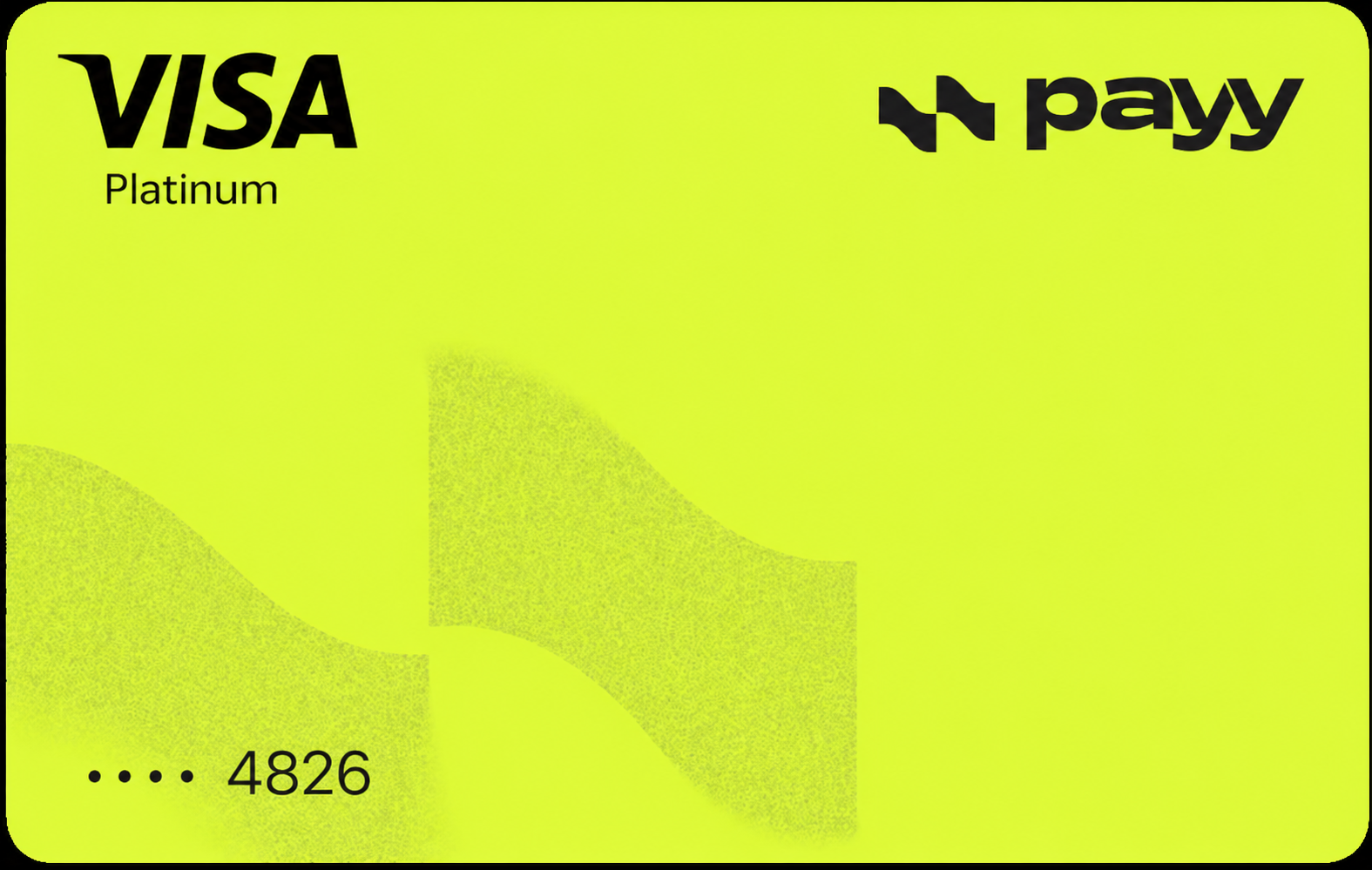
Payy Card card
Payy logo

Payy Card

2.7· 0 reviewsDebit
Get this card

on Payy Card’s secure site

Annual fee

$0

Rewards rate

None

Monthly fee

None

Funding

USD · USDC · USDC.E · USDT

Bottom line

The Payy Card is a capable stablecoin debit card with no monthly fee and self-custody, but its 1% FX fee and points-only rewards system with no confirmed redemption value limit its appeal to stablecoin spenders who want simplicity over earnings.

Payy sits in a growing crowd of stablecoin-backed Visa cards. Self-custody and zero conversion costs are genuine strengths. The 1% FX fee is a real cost for international spenders, and the points program is essentially speculative, offering no confirmed cash value at launch.

Payy Card is issued by Rain out of Puerto Rico and runs on the Visa network. It is a self-custodial debit card, meaning you retain control of your funds. The card is physical only, with no virtual card option, and supports Apple Pay. Funding is handled through auto-conversion from stablecoins across five blockchains, with USDC, USDC.E, and USDT supported and no conversion fee applied. Spending is denominated in USD. The card is available in 233 countries, KYC is required, and no linked bank account or IBAN is provided. Daily spend is unlimited, and ATM withdrawals are not available given the physical-only format.

The Payy Card offers no cashback. In its place sits a points system called Payy Points. Holding a balance earns roughly one point per dollar per day, and each successful referral adds 10,000 points to your account. At the time of writing, these points carry no confirmed cash or redemption value. They function as loyalty points with potential future utility. Until a clear redemption mechanism is published, typical users should treat this card as a zero-rewards product and plan accordingly.

Annual fee

$0

Rewards rate

None

Monthly fee

0

Funding

+ 6 currencies

Bottom line

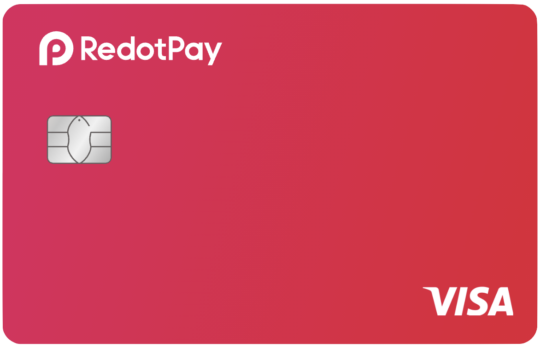
RedotPay is a high-limit, widely available Visa debit card with a $1,000,000 daily ceiling and 200+ countries. The trade-off is real: no cashback at all, a 1.5% conversion cost, a $100 physical card, and only average support.

RedotPay's reach is its real selling point: a massive spending limit, a high ATM allowance, and availability in places most cards ignore. But it asks a lot in return. You earn nothing back, pay around 1.5% to convert crypto, and the $100 physical card stings. It suits high-volume spenders in under-served regions more than reward-seekers.

RedotPay Card is a Visa debit card issued by Fazz (Xfers) in Singapore, available in more than 200 countries. It is custodial, so RedotPay holds the funds linked to your chosen asset account. You can order a physical or a virtual card, and it supports Apple Pay. The card converts crypto to USD automatically at purchase, with no preloading, at a cost of around 1.5%. It is denominated in USD and supports nine cryptocurrencies, including BTC, ETH and stablecoins, across 10 blockchains. KYC is required, and RedotPay issues a German IBAN account in your name, though it accepts deposits only from accounts you own. Daily spending is capped at $1,000,000 and ATM withdrawals at $3,750 a day.

RedotPay has no cashback or points program, so there is no ongoing reward for spending. Instead, the company runs occasional promotions, such as discounted cards or bonus USD credited inside the app. These promo rewards sit in a special in-app USD balance, expire after 30 days, and can only be spent through the card, not withdrawn to an external wallet. For anyone choosing a card mainly to earn rewards, RedotPay is not the pick. Its value sits in spending limits and global reach, not in money back.

Annual fee

$0

Rewards rate

None

Monthly fee

None

Funding

USD · USDC

Bottom line

A self-custody USDC Visa card with a $50,000 daily spend ceiling and no conversion fees, but no cashback and a 1% FX fee. Best for non-custodial USDC spenders who want high limits.

Tangem's card earns points for genuine self-custody and an unusually high spend limit. The trade-off is stark: only USDC is supported, there is zero cashback, and the 1% FX fee will quietly add up for anyone spending across currencies regularly.

The Tangem Visa card is a physical prepaid card operating on the Visa network. It is non-custodial, meaning users hold their own keys rather than relying on a third-party custodian. The card supports Apple Pay. It accepts USDC as its sole supported currency, with no automatic conversion and no conversion fee when spending within that balance. A 1% foreign exchange fee applies to non-USD transactions. KYC verification is required to activate the card. No linked bank account or IBAN is provided. The card is available across 109 countries including the United States, Australia, Japan, Singapore, Brazil, and much of Africa and the Middle East. Daily spend limit reaches $50,000. ATM withdrawals are not available as this is a physical card without ATM functionality listed.

The Tangem Visa card carries no cashback program and no points or rewards scheme of any kind at this time. There are no welcome bonuses or tiered reward structures. Users receive no percentage back on purchases regardless of spending volume. The card offers no compensation for the 1% FX fee through offsetting rewards. The sole value proposition on the spend side is the absence of conversion fees when spending USDC directly, which functions as a cost saving rather than a reward.

Annual fee

$0

Rewards rate

None

Monthly fee

None

Funding

USD · USDC · USDT

Bottom line

The Offramp Card suits crypto holders in Latin America and emerging markets who want a no-monthly-fee USD prepaid card with zero conversion cost, but no cashback and a $100 physical card fee are real drawbacks.

Issued by Rain out of Puerto Rico, Offramp positions itself as a low-cost off-ramp for stablecoin spenders across 29 mostly non-Western markets. Zero conversion cost is a genuine standout. The 0.5% FX fee is modest but not free, and the $100 physical card fee is steep for what is ultimately a prepaid product with no rewards program.

The Offramp Card is issued by Rain, based in Puerto Rico, and runs on the Visa network. It is a custodial USD-denominated prepaid card available in both physical and virtual form. The virtual card is free; the physical card costs $100 and is valid for five years. Apple Pay is supported. Funding works through auto-conversion of USDC or USDT across nine supported blockchains, with zero conversion cost at the point of spend. A 0.5% foreign exchange fee applies to non-USD transactions. Third-party deposits are accepted, and cardholders receive a US bank account. No IBAN is provided. KYC is required. The card is available across 29 countries, concentrated in Latin America with additional coverage in Japan, Singapore, Thailand, Egypt, and Morocco. Daily spend limit is $10,000 and daily ATM withdrawal limit is $750, with ATM withdrawals costing 2%.

The Offramp Card currently offers no cashback program. The issuer has stated a cashback feature is planned for a future launch, but no rate, timeline, or structure has been confirmed. New users can receive a $20 welcome bonus, which is a one-time promotion rather than an ongoing reward. Beyond that bonus, there are no recurring earn mechanisms in place. Spenders who prioritize rewards should be aware this card offers none at present and should not factor a future unannounced program into their decision.

Annual fee

$0

Rewards rate

None

Monthly fee

None

Funding

USD · USDT

Bottom line

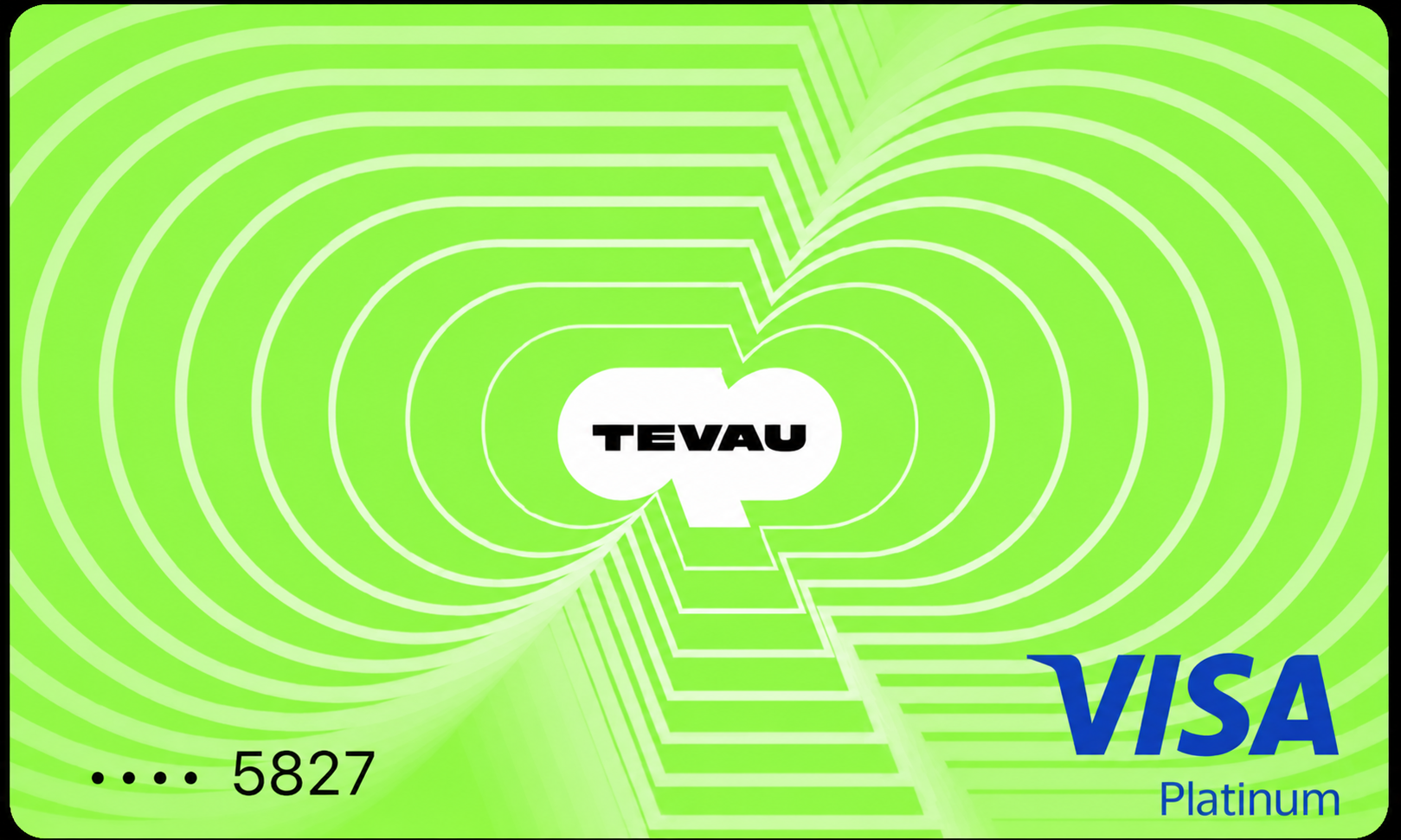
The Tevau Card is a wide-reaching USDT prepaid Visa with a massive spend ceiling and broad global access, but it offers no rewards and charges for every significant action. Best for high-volume USDT spenders who need global reach.

Tevau positions itself on access and scale rather than value. The $3,000,000 daily spend limit is genuinely unusual, and 203-country coverage is hard to beat. But USDT-only funding, a $100 physical card fee, a 1.2% FX fee, and zero cashback make it a purely functional tool with no loyalty upside.

The Tevau Card runs on the Visa network. It is a custodial prepaid card denominated in USD. Both a free virtual card and a physical card are available, with the physical card costing $100 upfront. Apple Pay is supported. Funding is USDT only across three supported blockchains, and conversion is not automatic. Users must manually preload the card, and conversion carries a 1% cost. A 1.2% foreign exchange fee applies to non-USD transactions. The card is available in 203 countries, making it one of the broader-coverage products in this category. KYC is required and no personal bank account or IBAN is provided. The daily spend limit reaches $3,000,000, while daily ATM withdrawals are capped at $3,000 with a 1.9% ATM fee per withdrawal.

The Tevau Card carries no cashback program and no ongoing reward structure of any kind. There are no points, no tiered incentives, and no staking bonuses linked to card spending. The only promotional element is a 50% discount on the $100 physical card fee available at signup, reducing the initial cost to $50. Beyond that one-time discount, users should expect no financial return on their card spending. The card competes purely on utility and access, not on rewards.

Annual fee

$0

Rewards rate

None

Monthly fee

None

Funding

USDc · EURc

Bottom line

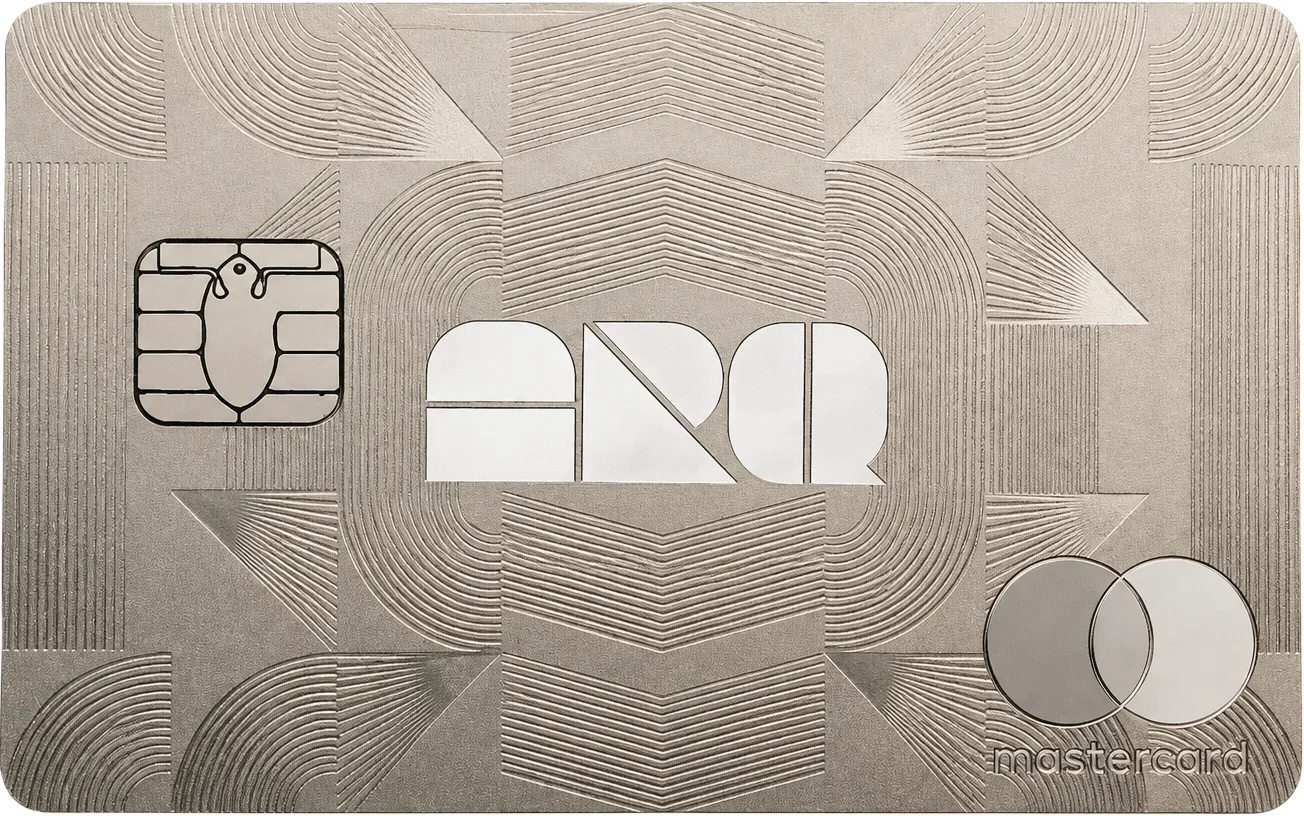
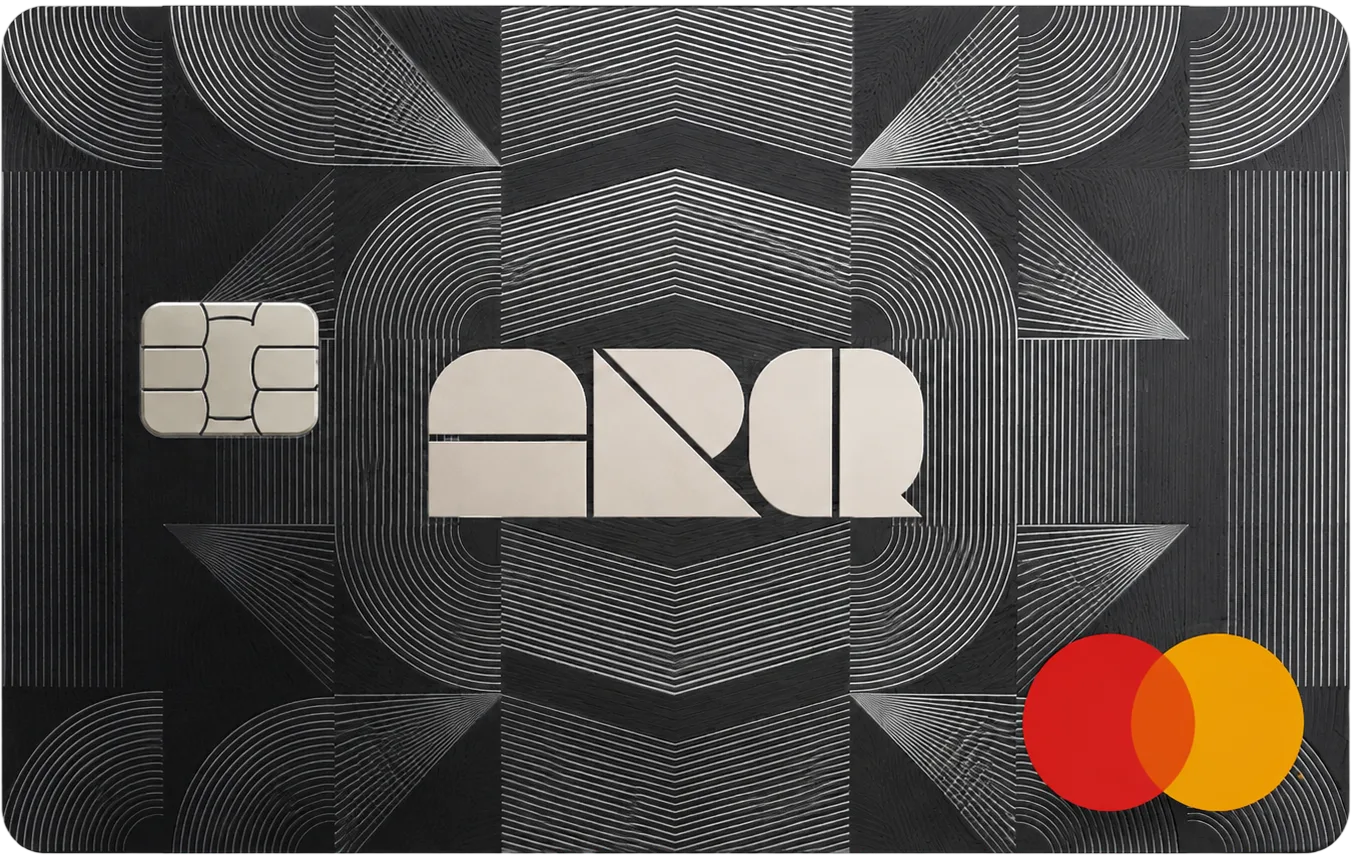
ARQ, formerly DolarApp, is a digital dollar and euro account for Latin America with an international Mastercard attached. Conversions run at the interbank rate with no hidden margin, balances earn up to 4.5% a year, and the card comes physical or virtual. The catch: ARQ advertises cashback without publishing the rate, and the card's fee schedule is not public either.

ARQ's pitch is the exchange rate, not the card. For someone in Brazil or Argentina paid in dollars, converting at interbank instead of a bank's spread is worth more than any cashback percentage. That said, a card sold on unparalleled cashback with no published rate is hard to compare honestly.

ARQ was DolarApp until its 2026 rebrand; accounts and balances carried over. It operates in Mexico, Brazil, Argentina and Colombia, holding balances in USDc and EURc, which are virtual assets rather than fiat currency. In Brazil, virtual asset services come from D.A. Prestadora de Servicos de Ativos Virtuais, local payments from Atlas Brasil Instituicao de Pagamento, and card services from Pier 5 S.A. de C.V. You top up by Pix, CLABE, CVU or PSE depending on country, and can receive US payments by ACH and wire.

ARQ advertises cashback on card purchases but publishes no rate on its website, app store listing or product pages, so this entry carries none. Separately, ARQ offers earnings accounts paying up to 4.5% a year on balances, alongside stocks and ETFs. Conversions between local currency, digital dollars and digital euros use the interbank rate with no stated margin. A Prestige credit card tier exists with additional benefits, also unpriced publicly.

Annual fee

$0

Rewards rate

None

Monthly fee

None

Funding

USDT · USDC

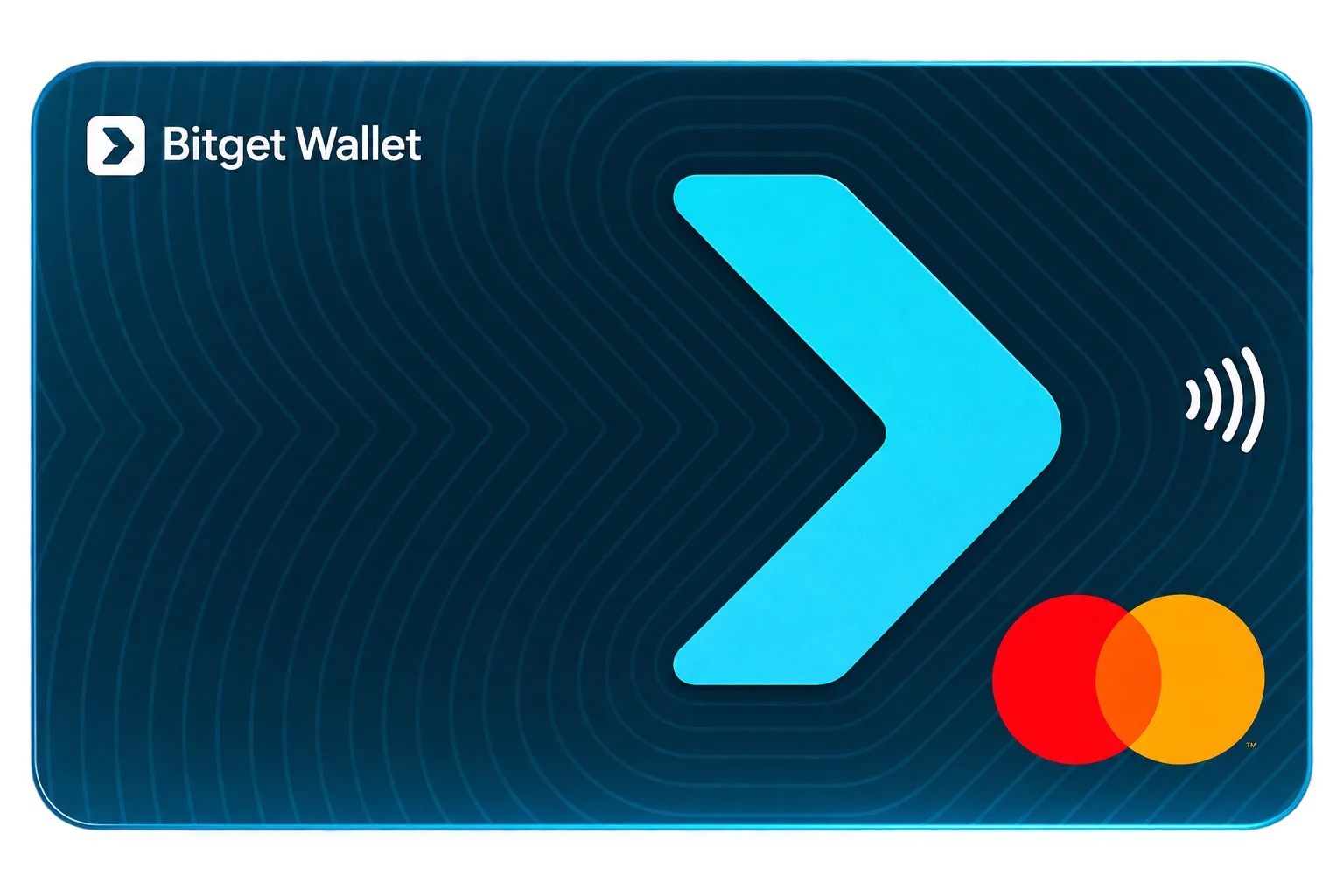
Bottom line

Bitget Wallet Card turns a self-custodial wallet into a Mastercard you can spend at 150 million merchants worldwide. Its monthly zero-fee quota refunds the FX, top-up and conversion charges on your first $400 of spending each month, which is where most crypto cards quietly make their money. The catch: the card is denominated in US dollars, so every euro or pound purchase above the quota carries a 1.7% conversion fee, and there is no ongoing cashback.

Most crypto cards advertise cashback and recover it through the FX spread. Bitget inverts that: no cashback at all, but a monthly quota that refunds the fees themselves. For anyone spending under $400 a month it is one of the cheapest ways to spend stablecoins. Above that, cards paying real cashback pull ahead.

Bitget Wallet Card is issued through the Bitget Wallet app, which is self-custodial and separate from the Bitget exchange; no exchange account is required. In Europe and Latin America the card is a Mastercard issued via Immersve and denominated in US dollars. You top up with USDT or USDC from your wallet and spend that balance. Activation costs 0.1 USD within 72 hours of KYC approval, or 10 USD after. The virtual card works with Apple Pay, Google Pay, WeChat Pay and Alipay. Limits are 12,000 USD daily and 150,000 USD annually.

There is no ongoing cashback. Instead, the first $400 of card spending each calendar month carries a zero-fee benefit: Bitget refunds the FX, top-up and conversion fees on those transactions as cashback to your card balance, reset on the first of each month. Physical cardholders and certain promotions raise the quota. Above it, spending in US dollars stays free while non-USD purchases carry a 1.7% conversion fee. Occasional launch promotions have paid genuine cashback in specific countries, but these are time-limited rather than a standing benefit.

Bitcoin.com V-Card card
Bitcoin.com logo

Bitcoin.com V-Card

2.4· 0 reviewsPrepaid
Get this card

on Bitcoin.com V-Card’s secure site

Annual fee

$0

Rewards rate

None

Monthly fee

1 USD/month

Funding

+ 9 currencies

Bottom line

A globally available EUR-denominated crypto card with broad asset support and Apple Pay, but recurring fees and a 3.5% conversion cost make it expensive for regular spending. Best for occasional international use.

Bitcoin.com V-Card reaches 171 countries and supports eight cryptocurrencies including BCH and VERSE, which sets it apart from narrower rivals. The real problem is cost: a monthly fee, a 3.5% conversion charge, a 2% FX fee, and ATM fees stack up fast. There is no cashback to offset any of it.

The Bitcoin.com V-Card runs on the Mastercard network and is issued as a custodial prepaid card, meaning Bitcoin.com holds the underlying funds. The card is physical only and supports Apple Pay. Funding requires a manual preload in one of eight supported cryptocurrencies: AVAX, BCH, BTC, ETH, TON, USDC, USDT, and VERSE. There is no auto-conversion at point of sale. The card is denominated in EUR and is available across 171 countries worldwide. KYC verification is required and no personal bank account or IBAN is provided. Daily spending is capped at 10,000 EUR and daily ATM withdrawals are capped at 2,000 EUR.

The Bitcoin.com V-Card offers no cashback, no points, and no staking rewards. There are no tier-based incentives or welcome bonuses attached to the card. Bitcoin.com has run occasional in-app promotions through its ecosystem, but nothing is built into the card itself. Users should treat this as a pure spending card with no return on purchases.

Annual fee

$0

Rewards rate

None

Monthly fee

None

Funding

USD · USDC · USDT

Bottom line

The Onboard Card suits stablecoin spenders who want a non-custodial Visa with wide global reach. Its biggest strength is self-custody. The 2% FX fee and virtual-only format limit everyday versatility.

Onboard stands out for pairing non-custodial control with a straightforward prepaid Visa setup. The 0.35% conversion cost is competitive, but the 2% FX fee eats into savings for frequent cross-currency spenders. The in-app promo rewards are capped and time-limited, not a reliable ongoing benefit.

The Onboard Card is issued by MVB Bank on the Visa network. It is a prepaid card with non-custodial custody, meaning users retain control of their funds. The card is physical and supports Apple Pay. Funding requires a manual preload rather than automatic conversion, with a 0.35% conversion cost applied when moving crypto to spend. Supported assets are USDC and USDT across four blockchains. The card is denominated in USD and available in 193 countries. KYC is required; no personal bank account or IBAN is provided. Daily spend limit is $5,000 USD. The card is virtual-only for ATM purposes, so no ATM withdrawals apply.

The Onboard Card carries no permanent cashback program. There is currently a promotional campaign offering 1 USDC per qualifying USD card transaction between $10 and $1,000, capped at five transactions per month. The maximum a user can earn is 5 USDC per month. Outside this campaign no ongoing rewards exist. A $10 USD welcome bonus is available to new users. Typical cardholders should treat rewards as a short-term promotion rather than a dependable long-term return.

Annual fee

$0

Rewards rate

None

Monthly fee

None

Funding

USD · BSC-USD · USDT

Bottom line

The Jam Card is a no-frills physical Visa for stablecoin spenders who want self-custody and global reach. Its 4.2% conversion cost is steep. Best suited to USDT users in emerging markets who prioritize control over rewards.

Reap-issued and non-custodial, the Jam Card has genuine appeal for users who refuse to hand over their crypto to a third party. The geographic reach is impressive. But a 4.2% conversion fee and 2.5% FX fee stack up fast, and the complete absence of rewards makes every transaction cost more than it should.

The Jam Card is issued by Reap out of Hong Kong and runs on the Visa network. It is a prepaid card with non-custodial custody, meaning users retain control of their funds. The card is physical only, with no virtual card option, and supports Apple Pay. Funding requires manual preloading rather than automatic conversion, and converting crypto to spendable balance costs 4.2%. Foreign currency transactions carry an additional 2.5% FX fee. Supported assets are BSC-USD and USDT across five blockchains. The card is available in over 227 countries. KYC is required, and no personal bank account or IBAN is included. Daily spend is unlimited, and ATM withdrawals are not supported on this physical-only card.

The Jam Card offers no cashback, no points, and no staking rewards program at this time. The issuer has indicated a cashback program is planned for a future launch, but no rate, timeline, or structure has been confirmed. Until that program goes live, users receive nothing back on purchases. There are no welcome bonuses, referral rewards, or in-app promotions documented. Cardholders should treat this purely as a spending tool and factor the conversion and FX fees into the total cost of each transaction.

Xapo Card card
Xapo logo

Xapo Card

1.9· 0 reviewsDebit
Get this card

on Xapo Card’s secure site

Annual fee

$0

Rewards rate

Up to 1%

Monthly fee

85 USD/month

Funding

USD · BTC · USDC · USDT

Bottom line

A premium Bitcoin-rewards card with genuinely uncapped cashback and a massive spend ceiling, but an $85 monthly fee makes it hard to justify unless you spend heavily outside Europe on the metal card.

Xapo sits in a rare position: no cashback cap and a $750,000 daily spend limit signal serious intent for high-volume users. The problem is that $85 a month is a steep fixed cost, and EU-based cardholders earn only 0.2% cashback, which almost certainly does not cover the fee.

The Xapo Card runs on the Visa network and operates as a custodial debit card denominated in US dollars. Both physical and virtual cards are available at no issuance cost, and the card supports Apple Pay. Funding draws from BTC, USDC, and USDT balances across four supported blockchains, with auto-conversion at the point of purchase at a 0.1% conversion cost. There is no foreign exchange fee on spending. The card is available in 118 countries across Europe, the Middle East, Asia-Pacific, Latin America, and Africa. KYC is required. Cardholders receive a US bank account to receive third-party deposits. Daily spend limits reach $750,000, and ATM withdrawals are capped at $2,000 per day with a 2% ATM fee.

Cashback is paid in Bitcoin and credited automatically on the 5th of each month. The rate depends on merchant location and card type: EU merchants pay 0.2% on any card, non-EU merchants pay 0.5% on plastic or virtual cards, and non-EU merchants pay 1% on the metal card. There is no monthly cashback cap, which is uncommon. The practical ceiling is set by the $300,000 monthly spend limit, meaning a maximum of $3,000 in cashback per month at the top rate. A $500 welcome bonus is available. Typical users spending primarily in Europe will earn 0.2%, which is unlikely to offset the $85 monthly fee.

Introducing CardIQ

See your approval odds and compare personalised offers in seconds.

Find your card