

1. What Is a Crypto Card and How Does It Work?
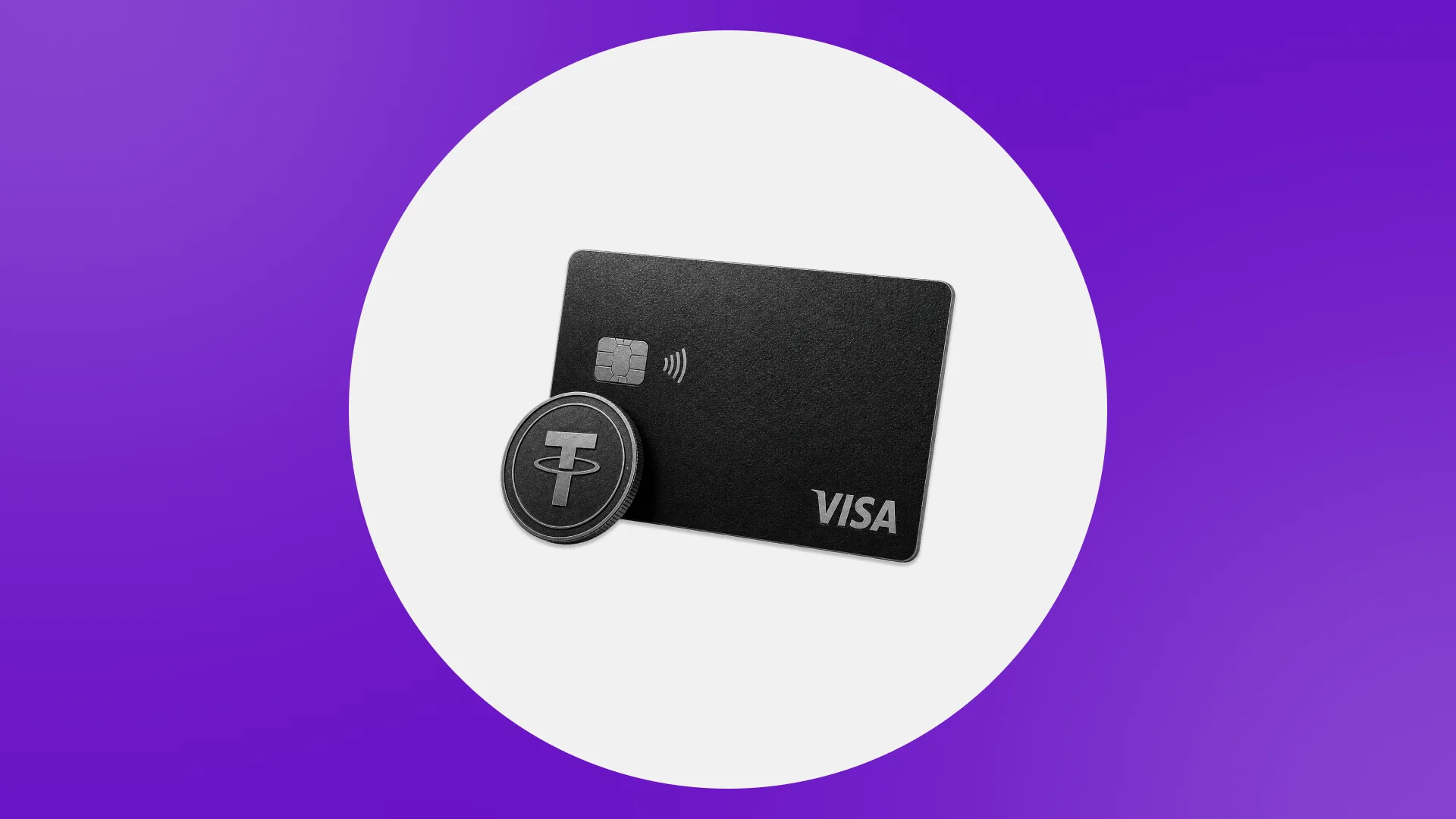
A crypto card is a payment card, usually a Visa or Mastercard, that lets you spend cryptocurrency at ordinary shops, websites, and ATMs. To the merchant, it behaves like any other card. The difference sits on the back end, where your crypto is converted to fiat so the store receives euros, pounds, or dollars as normal.
The Convert-and-Spend Flow
There are two main models. With the pre-loaded (prepaid) model, you top up a card balance with fiat or crypto in advance, then spend down that balance. With the real-time conversion model, the card is linked to a wallet or exchange account and converts only the amount you spend at the moment of purchase.
Bybit's card, for example, runs off your Bybit Funding Account, uses fiat first at checkout, and converts selected crypto automatically if your balance runs short. Crypto.com takes the prepaid route: top up the prepaid balance with fiat or crypto, add the card to Apple Pay or Google Pay, and spend at any Visa merchant. Either way, the merchant is always paid in fiat, the crypto step is invisible to them.
Crypto Cards vs. Traditional Debit Cards
The everyday experience is identical to a bank debit card: tap-to-pay, chip-and-PIN, online checkout, and mobile wallets such as Apple Pay and Google Pay. Three things differ:
- Rewards are paid in crypto rather than airline miles or fiat points.
- Custody matters, some cards hold your assets for you, others are non-custodial and keep you in control of the wallet.
- Exchange rates and conversion spreads apply when crypto becomes fiat.
Because most of these products sit on the Visa or Mastercard network, acceptance is close to universal. You will see the same product described as a "crypto debit card," a "prepaid crypto card," a "bitcoin card," or a "Visa crypto card", these are largely marketing variants of the same underlying idea.
9 Reasons to Start Using a Crypto Card in 2026
2. Reason 1: Spend Cryptocurrency Anywhere in the World
The first reason is reach. Because crypto cards run on established card networks, they inherit global acceptance instantly.
Visa and Mastercard Network Coverage
Visa is accepted at more than 130 million merchant locations across over 200 countries and territories, and Mastercard offers comparable scale. A crypto card riding these rails gives you the same spending footprint as any traditional bank customer, in-store, online, and through mobile wallets. Wirex illustrates the point: it is a multicurrency debit card that lets you spend from fiat, stablecoin, and crypto balances through one app, and runs on Visa or Mastercard depending on your region.
Acceptance in 2026 spans contactless payments, online checkout, and both major mobile wallets. Crypto.com, for instance, is available in 96 countries as of July 2026.
Why Global Acceptance Matters More in 2026
For people with international lives, travellers, cross-border freelancers, and shoppers buying from overseas stores, a crypto card can consolidate spending into one app. Several cards now pair crypto spending with multi-currency fiat accounts, which reduces foreign transaction costs abroad. Wirex, running since 2014, supports over 150 cryptocurrencies and fiat currencies in one place, letting you hold local fiat for daily spending and convert crypto only when needed.
One caveat: acceptance and availability still vary by card and country, and prepaid programmes can be restricted in some regions. Always check the issuer's supported-country list for your location before applying, availability is the single most common reason an otherwise attractive card will not work for you.
3. Reason 2: Earn Crypto Cashback and Rewards on Every Purchase
For most users, cashback is the headline draw. A crypto card can return a slice of every purchase as cryptocurrency, and in 2026 the competitive rates are genuinely meaningful, if you read the conditions.
How Crypto Cashback Works
Cashback is a percentage of each transaction returned to you, usually in a specific token. Rates in 2026 span a wide band, roughly 0.5% to 10%, depending on card tier, staking or holding requirements, and sometimes the spending category. Cards split broadly into flat-rate cashback (the same percentage on everything) and category-based rewards (higher rates on travel, dining, or subscriptions).
The important nuance is that headline rates almost always come with conditions. Wirex advertises up to 8%, but that headline rate requires an Elite subscription at €29.99/month plus locking 7.5 million WXT for 180 days, while its free tier gives 0.5% and includes 0% FX. Crypto.com's model changed sharply: under the Level Up structure for cards issued from 2 September 2025, the free Basic tier earns nothing, and card rewards require either a paid subscription or a CRO lockup, Plus at 2%, Pro at 3%, Private at up to 5%.
Comparing Cashback Rates Across Leading Cards
Here is how the leading cards compare qualitatively before the detailed table further down:
- Crypto.com, up to 5% CRO on prepaid Private tiers, with an 8% Prime tier added in 2026; rewards paid in CRO and gated behind staking or subscription.
- Bybit, published cashback rates from 2% to 10% depending on tier, with the base rate available without a staking or lock-up requirement, though higher tiers require holding BIT/MNT tokens.
- Nexo, up to 2% cashback in NEXO (or up to 0.5% in BTC), tiered by loyalty level and generally tied to a portfolio above $5,000.
- Wirex, 0.5% base in WXT, up to 8% with paid plans and large token lockups.
- Coinbase, a minimum of 1% cashback, with rewards up to 4% when you choose promoted tokens like Stellar (XLM) or The Graph (GRT).
A structural advantage of crypto cashback is that rewards paid in BTC or ETH can appreciate, unlike fiat cashback, which never grows. The mirror risk is that a token can also fall after it is credited, so the fiat value of your rewards is never guaranteed.
Stacking Rewards and Additional Perks
Premium tiers often bundle extras: airport lounge access, subscription rebates for services like Netflix and Spotify, and travel benefits. Crypto.com's higher tiers still carry Spotify and Netflix rebates, and Bybit users report that subscription cashback alone can return $35 or more per month from services like Netflix and ChatGPT for active users.
The trade-off is locked capital. Many issuers require you to stake or hold a minimum amount of their native token to unlock the best rates, capital that is exposed to that token's price. When you calculate a net reward rate, subtract the opportunity cost and price risk of the assets you have to lock up. A 5% rate that requires €50,000 in a volatile token is not the same as a flat 2% that requires nothing.
Weighing cashback tiers against the tokens you have to lock up? View card →
4. Reason 3: Spend Crypto Without Fully Liquidating Your Holdings
Long-term holders often resist selling because of tax events and the fear of missing future appreciation. Crypto cards speak directly to that tension by letting you convert only what you spend.
Micro-Liquidation: Only Convert What You Spend
A crypto card enables selective, transaction-by-transaction conversion. A holder of 1 BTC does not need to sell the whole position to buy a coffee, the card converts just the amount required at the till. Compare that with the traditional route: sell crypto on an exchange, withdraw fiat to a bank account, wait for settlement, then spend. That process can take days and stacks up multiple fees along the way.
Most cards also let you set a spending priority, which asset to draw from first, in what order, and whether to exhaust a fiat balance before touching crypto. Nexo, for example, lets you spend from 60+ cryptocurrencies including BTC, ETH, and USDT, with spending priority changed via drag-and-drop functionality to move assets to the top.
Protecting Long-Term Portfolio Strategy
Framed this way, the card becomes a tool for funding everyday life from gains or stablecoin balances without disturbing a core BTC or ETH stack. Spending stablecoins such as USDC or USDT is the near-zero-volatility option, you avoid currency risk entirely while still using the crypto-card rails. Bleap, for instance, pays its cashback in USDC and settles spending from stablecoin balances.
Some cards go further and let you borrow against collateral rather than sell at all. Nexo's dual-mode design is the clearest example: in Credit Mode, it lets you spend against your crypto collateral as a credit line, which means no taxable events when you spend. Purchases are deducted automatically from your available credit line while your portfolio remains intact. The obvious risk with any collateralised model is liquidation: if prices drop significantly, your collateral can be liquidated. That is a meaningful trade-off, not a free lunch.
5. Reason 4: Access Multi-Asset Flexibility Across Dozens of Cryptocurrencies
A modern crypto card is rarely a single-coin product. The best options in 2026 let you fund spending from a broad menu of assets.
Which Cryptocurrencies Are Supported in 2026?
Leading cards typically support Bitcoin (BTC), Ethereum (ETH), major stablecoins (USDC, USDT, DAI), and a growing list of altcoins such as SOL, XRP, BNB, LTC, and MATIC. Wirex supports over 150 cryptocurrencies and fiat currencies, while Bleap supports 5,000+ crypto assets across Arbitrum, Solana, and Base.
Platform-native tokens usually sit at the centre of the rewards design. CRO for Crypto.com, NEXO for Nexo, and WXT for Wirex generally earn the highest cashback when held or used as the primary spending or staking asset, which is precisely why the top advertised rates are gated behind those tokens. That structure rewards ecosystem loyalty, but it also concentrates your rewards value in one volatile asset.
Matching Assets to How You Spend
Multi-asset flexibility lets you tailor spending to your goals: keep volatile crypto for long-term exposure, hold stablecoins for predictable budgeting, and draw from fiat balances for day-to-day purchases without any conversion at all. This is where a genuine comparison pays off, a card that supports your specific coins, in your region, on the network you prefer, will always beat a higher headline rate you cannot actually use. MyCardCompare's crypto-card category lets you filter by these details rather than guessing from a single product page.
6. Reason 5: Choose Between Custodial and Non-Custodial Control
A defining shift in 2026 is that you no longer have to hand custody of your crypto to a company to get a card. You can pick the control model that matches your risk tolerance.
Custodial Cards
Most exchange-issued cards are custodial: the provider holds your assets, and you spend from a balance on their platform. Crypto.com, Bybit, Wirex, and Coinbase all operate this way. The upside is convenience, funding, conversion, and rewards all happen inside one app. The downside is counterparty risk: your spendable balance depends on the provider remaining solvent and operational, and access can be paused. Bybit's own reviewers note that the card works best as a secondary card rather than a replacement for your main bank account.
Non-Custodial Cards
Non-custodial cards leave the assets in a wallet you control, converting on-chain only when you spend. Bleap is a clear example, a self-custodial Mastercard with 0% FX fees, up to 20% cashback, and no monthly subscription. For holders who prize the "not your keys, not your coins" principle, this model keeps you in control until the moment of purchase.
Neither model is universally better. Custodial cards tend to be simpler for newcomers and often bundle richer perks; non-custodial cards reduce counterparty exposure but ask more of you in wallet management. The right pick depends on how much control you want and how comfortable you are self-managing a wallet. This is exactly the kind of trade-off worth comparing side by side before committing.
7. Reason 6: Benefit From Stronger Regulation and User Protections
Crypto cards in 2026 sit inside a far more defined regulatory environment than in the early hype cycles. In the EU and EEA, the MiCA framework has pushed issuers toward clearer disclosures, licensed structures, and consumer safeguards. Cards are issued through regulated payment institutions rather than opaque intermediaries, Bybit's EEA card, for example, is issued through named entities including Moorwand Ltd in the UK and Harmoniie SAS in EEA countries.
Practically, this maturation shows up as clearer fee schedules. Bybit's EEA programme discloses an FX fee of 0.5% and a crypto conversion fee of 0.9% clearly rather than hidden in spreads. Cards on the Visa and Mastercard networks also inherit standard payment protections, dispute rights, fraud monitoring, and the ability to freeze a card in-app.
Two honest caveats. First, regulation varies enormously by country, and a card that is fully compliant in the EEA may be unavailable or unregulated elsewhere. Second, several major programmes still exclude the United States or route US users to separate products, Nexo, Wirex, and Bybit are not available in the US, and Crypto.com runs a separate US card. A "regulated crypto card" is only as protective as the specific licence covering your region, so treat availability and issuer details as part of your due diligence.
8. Reason 7: Understand and Manage Tax Implications More Clearly
Tax is where crypto cards are most misunderstood, and where the right card design can genuinely simplify your life.
Why Spending Crypto Can Be a Taxable Event
In most jurisdictions, converting crypto to fiat is a disposal, which can trigger a capital gains event. That means every time a convert-and-spend card sells your BTC or ETH at the till, you may be creating a small taxable transaction, and dozens of coffees can become dozens of line items at tax time. This is not a reason to avoid crypto cards; it is a reason to choose the right model and keep good records.
How Different Card Models Change Your Tax Position
Three approaches reduce the tax friction:
- Spend stablecoins. Because USDC or USDT track fiat, the gain or loss on disposal is typically negligible, which keeps your reporting simple while still using card rails.
- Use a credit-line card. Borrowing against collateral is generally not a disposal. Nexo's credit model is built on this: no taxable events when you spend, because you are borrowing rather than selling. The trade-off is interest and liquidation risk.
- Keep exportable records. Custodial cards that log every conversion in-app make it far easier to reconcile transactions at year-end than manual off-ramping through a bank.
MyCardCompare provides comparative information, not tax advice, rules differ by country and change over time, so confirm your obligations with a qualified professional or your national tax authority. The point for this article is narrower: the card model you choose materially affects how many taxable events you generate, and that is worth weighing before you pick one.
9. Reason 8: Pay Lower, More Transparent Fees Than Off-Ramping
Every crypto card has costs, but the relevant comparison is not "card vs. free", it is "card vs. manually off-ramping through an exchange and bank." On that basis, a well-chosen card often wins on both speed and total cost.
The Fees to Watch
Four cost categories matter:
- Conversion spread / crypto conversion fee, the markup when crypto becomes fiat. Bybit's EEA programme charges 0.9% on crypto conversion, while Nexo charges 0.75% for crypto-to-fiat swaps.
- Foreign exchange (FX) fee, applied when you spend in a currency other than your card's. This varies widely: several cards advertise 0% FX on standard spending, while Crypto.com's lower tiers carry a 3% FX fee that hurts international spenders, and Nexo charges 0.2% for EEA, UK, and Switzerland transactions and 2% for the rest of the world on weekdays, rising to 0.7% and 2.5% on weekends.
- Annual and monthly fees, many leading cards charge €0 annually, though premium tiers can cost up to €29.99/month.
- ATM fees, usually free up to a monthly allowance, then a percentage. Wirex offers free ATM withdrawals up to 200 GBP/EUR/SGD monthly, then 2%.
Exchange Rate and Net Cost
The exchange rate you receive at checkout is the sum of the network's rate plus the card's conversion spread. Transparent programmes now publish these components separately rather than burying them in an unfavourable rate. The practical lesson: a card with a 0% headline FX fee but a wide conversion spread can cost more than a card that discloses a small explicit fee. Read all four cost lines together, not just the one the marketing emphasises. Because these figures change on refresh, checking a current comparison beats relying on a rate you saw last year.
Want the current fee lines, FX, conversion, and annual cost, for each card in one view? Compare cards →
10. Reason 9: Compare and Choose From a Mature, Competitive Market
The final reason is the market itself. In 2026 there are dozens of credible crypto cards competing on rates, fees, custody, and regions, which means the leverage sits with you, not the issuer. The catch is that no single card is best for everyone, and headline numbers routinely hide conditions. The only way to choose well is to compare on the dimensions that match your spending.
A Side-by-Side Comparison of Leading Crypto Cards
The table below shows verified figures gathered this month. Rates and availability change frequently, so treat it as a starting point and confirm the current terms on each card's page.
Card | Cashback (paid in) | Annual fee | FX fee | Availability |
|---|---|---|---|---|
Crypto.com Visa | Up to 5% CRO (8% Prime tier); Basic 0% (CRO) | $0 | Up to 3% on lower tiers¹ | ~96 countries; not US² |
Nexo Card | Up to 2% (NEXO) or 0.5% (BTC) | $0 | 0.2%–2.5%³ | Europe + UK; not US |
Wirex Card | 0.5%–8% (WXT) | $0 (paid plans €9.99–€29.99/mo)⁴ | 0% on standard day-to-day | UK, most EEA, select APAC |
Bybit Card | 2%–10% (BIT/MNT) | $0 | 0.5% + 0.9% conversion (EEA) | EEA, Switzerland, Australia, others; not US |
Coinbase Card | 1%–4% (XLM, GRT, DOGE, etc.) | $0 | 0% (US); ~2.49% foreign⁵ | US + select Europe |
Bleap | Up to 20%; 2% base (USDC) | $0 | 0% | EEA and select markets |
¹ Crypto.com's top prepaid rate requires a paid subscription or CRO lockup; the free Basic tier earns 0%. The Prime tier added in 2026 pays 8% CRO back. ² Not available in the US, where a separate US credit card exists. ³ Weekend FX rates are higher than weekday rates. ⁴ Wirex's 8% rate requires an Elite plan at €29.99/month plus locking 7.5 million WXT for 180 days. ⁵ One 2026 review notes Coinbase charges a 2.49% FX fee on foreign purchases, though its US card has no annual fees or foreign transaction fees domestically.
How to Read the Table for Your Situation
- Highest ceiling, most conditions: Bleap's up-to-20% and Wirex's up-to-8% look largest, but both depend on categories, plans, or token lockups. Bybit's up-to-10% is notable because its base 2% needs no staking.
- Simplest for long-term holders: Nexo's credit-line model avoids selling entirely, at the cost of interest and liquidation risk.
- Best fee transparency for travel: cards advertising 0% standard FX, Bybit (EEA), Wirex standard tier, and Bleap, reduce the sting of spending abroad.
- Custody-first: Bleap for non-custodial control; the exchange cards for all-in-one convenience.
MyCardCompare publishes an independent editorial rating for each of these cards, refreshed regularly and kept separate from any commercial relationship. Where a card carries a special offer through a direct issuer relationship, that relationship funds the offer for users, it never changes the card's score or its ranking. Check each card's page for its current rating and any live offer with its exact terms and expiry date.
See the two most-compared crypto cards head to head on fees, rewards, and custody: Compare cards →
Key Takeaways
- A crypto card lets you spend digital assets on Visa and Mastercard rails worldwide, with the merchant always paid in fiat.
- Cashback is real but conditional: 2026 rates run from about 0.5% to 10%, and the top figures usually require staking, holding a native token, or a paid subscription.
- Micro-liquidation and credit-line models let you spend without selling your core holdings, useful for long-term holders and for managing tax events.
- Custody is now a choice: custodial exchange cards for convenience, non-custodial cards for control.
- Fees and availability decide everything. A lower headline rate you can actually use in your country beats a higher one you cannot.
- No single card wins for everyone. Match the card to your region, your assets, and your spending pattern.
The sensible next step is not to pick a card from a headline number but to compare the current fees, cashback conditions, custody model, and country availability side by side. MyCardCompare's crypto-card category keeps those figures updated so you can find the card that fits how you actually spend.
Compare the current crypto cards on fees, rewards, custody, and availability in one place. Compare cards →
Frequently Asked Questions
Are crypto card rewards taxable?
In many countries, the cashback itself and the act of converting crypto to fiat can both have tax implications, because spending crypto is often treated as a disposal. Card models that spend stablecoins or borrow against collateral, such as Nexo's Credit Mode, which creates no taxable events when you spend, can reduce this friction. Rules vary by jurisdiction and change over time, so confirm your obligations with a qualified tax professional. MyCardCompare offers comparative information, not tax advice.
Do crypto cards work everywhere Visa and Mastercard are accepted?
Largely, yes, because most crypto cards run on those networks, they are accepted at the same merchants. The real constraint is not merchant acceptance but issuer availability by country. Crypto.com lists availability in 96 countries as of July 2026, while several cards exclude the US or specific regions. Always check the card's supported-country list for your location before applying.
Which crypto card has the highest cashback in 2026?
The largest advertised rates come with the heaviest conditions. Bleap advertises up to 20% on select categories, Bybit up to 10%, and Wirex up to 8%, but Wirex's top rate requires an Elite plan at €29.99/month plus locking 7.5 million WXT for 180 days. Bybit's base 2% is notable because it needs no staking. The "highest" rate is rarely the best net value once you account for locked capital and token volatility, so compare realistic tiers rather than headline ceilings.
What is the difference between a custodial and a non-custodial crypto card?
A custodial card, such as Crypto.com, Bybit, or Wirex, holds your assets on the provider's platform and spends from that balance, which is convenient but adds counterparty risk. A non-custodial card, such as Bleap's self-custodial Mastercard, keeps assets in a wallet you control until you spend. Custodial suits newcomers who want simplicity; non-custodial suits holders who prioritise control of their keys.
Can I spend crypto without selling my long-term holdings?
Yes. Convert-and-spend cards let you liquidate only the small amount you spend, rather than your whole position. Credit-line cards go further: Nexo lets purchases be deducted from your available credit line while your portfolio remains intact, so your assets are never sold. The trade-off with any collateralised model is that your collateral can be liquidated if prices drop significantly.
Do crypto cards charge foreign transaction fees?
It depends heavily on the card and region. Several advertise 0% FX on standard spending, while others charge more, Nexo applies 0.2% within the EEA, UK, and Switzerland and 2% elsewhere on weekdays, rising to 0.7% and 2.5% on weekends, and Crypto.com's lower tiers carry a 3% FX fee. Because the effective cost also includes the crypto conversion spread, compare all fee lines together on each card's page before choosing.