

Tria Card Review: Fees, Cashback, Tiers & Is It Worth It in 2026?
The Tria Card is a self-custodial Visa card that lets you spend 1,000+ cryptocurrencies at 130 million+ merchants, without handing custody to an exchange. Three tiers are available: Virtual ($25, 1.5% cashback), Signature ($109, 4.5%), and Metal/Premium ($250, up to 6%), all with one-time fees and no recurring monthly charges. Under Season 3 rules, headline cashback rates apply only up to a monthly spend cap, then drop to 0.5%–1% above the cap. However, cashback is paid in TRIA tokens, not cash, with 20% unlocking immediately, a 3-month cliff, then 80% vesting linearly over 6 months. Since TRIA is a volatile token, the real value of those rewards will fluctuate.
We compared the Tria Card against 200+ cards on MyCardCompare, covering fees, cashback, FX rates, and availability, to see where it stands for crypto-native spenders in 2026. This review breaks down every tier, fee, and reward mechanic so you can decide whether it fits your spending profile.
See how the Tria Card stacks up against other self-custody crypto cards on MyCardCompare. View card →
1. What Is the Tria Card?
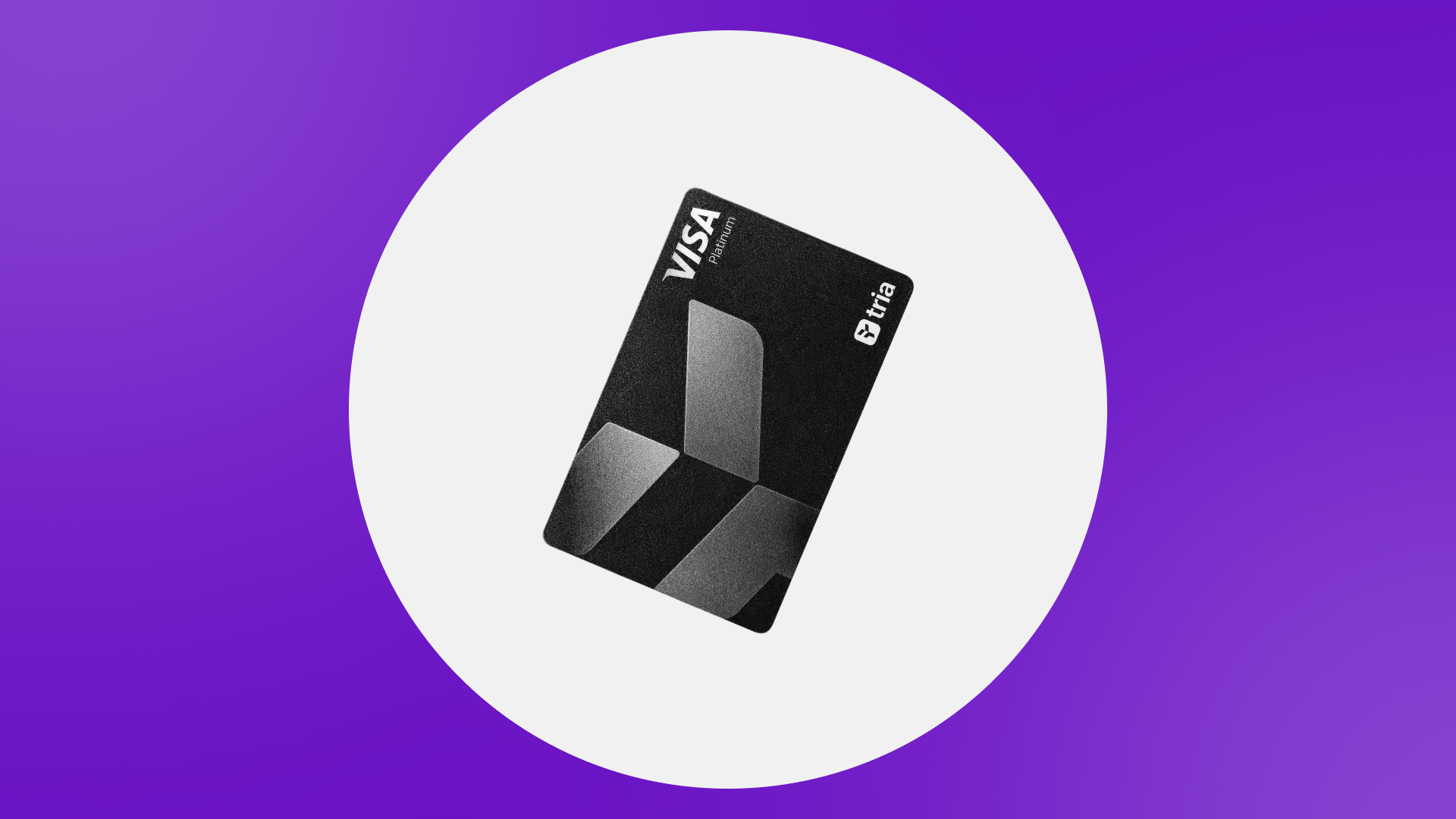
The Tria Card is a Visa prepaid card issued by Nimbus, LLC (a Delaware company) that lets you spend cryptocurrency at over 130 million merchants worldwide, without ever moving your assets to a centralized exchange. The card is developed by Threely Dimensions Inc., and its defining feature is genuine self-custody: your crypto sits in a TSS (Threshold Signature Scheme) wallet, not a Tria-controlled custodial account.
In plain English, self-custody means your funds stay in a wallet you control until the exact moment you make a payment. With a self-custodial card, no company can freeze your balance or fail with your money inside it, because the money never leaves your wallet until you use it.
The Tria platform uses account abstraction, a technology that removes the usual seed-phrase and gas-fee friction of crypto wallets, running on Optimism, Arbitrum, and Solana, supporting 1,000+ crypto assets for spending. When you tap your card at a merchant, Tria's BestPath AI system routes through 200+ blockchains and 70+ DeFi protocols to settle the payment in the merchant's required currency.
This differs from custodial crypto cards (such as the Crypto.com Visa or Coinbase Card), where you deposit your coins into the platform's wallet, hand them custody, and spend from their balance. With Tria, the conversion happens at the point of sale, reducing counterparty risk.
Tria has raised $12 million in pre-seed funding from investors including P2 Ventures, Aptos, Polygon executives, Ethereum Foundation executives, and Wintermute. By April 2026, Tria had surpassed 500,000 users and processed over $100 million in transactions.
2. Tria Card Tiers Compared
Tria offers three card tiers, all with one-time fees and no recurring monthly charges. The differences come down to cashback rate, card format, and perks.
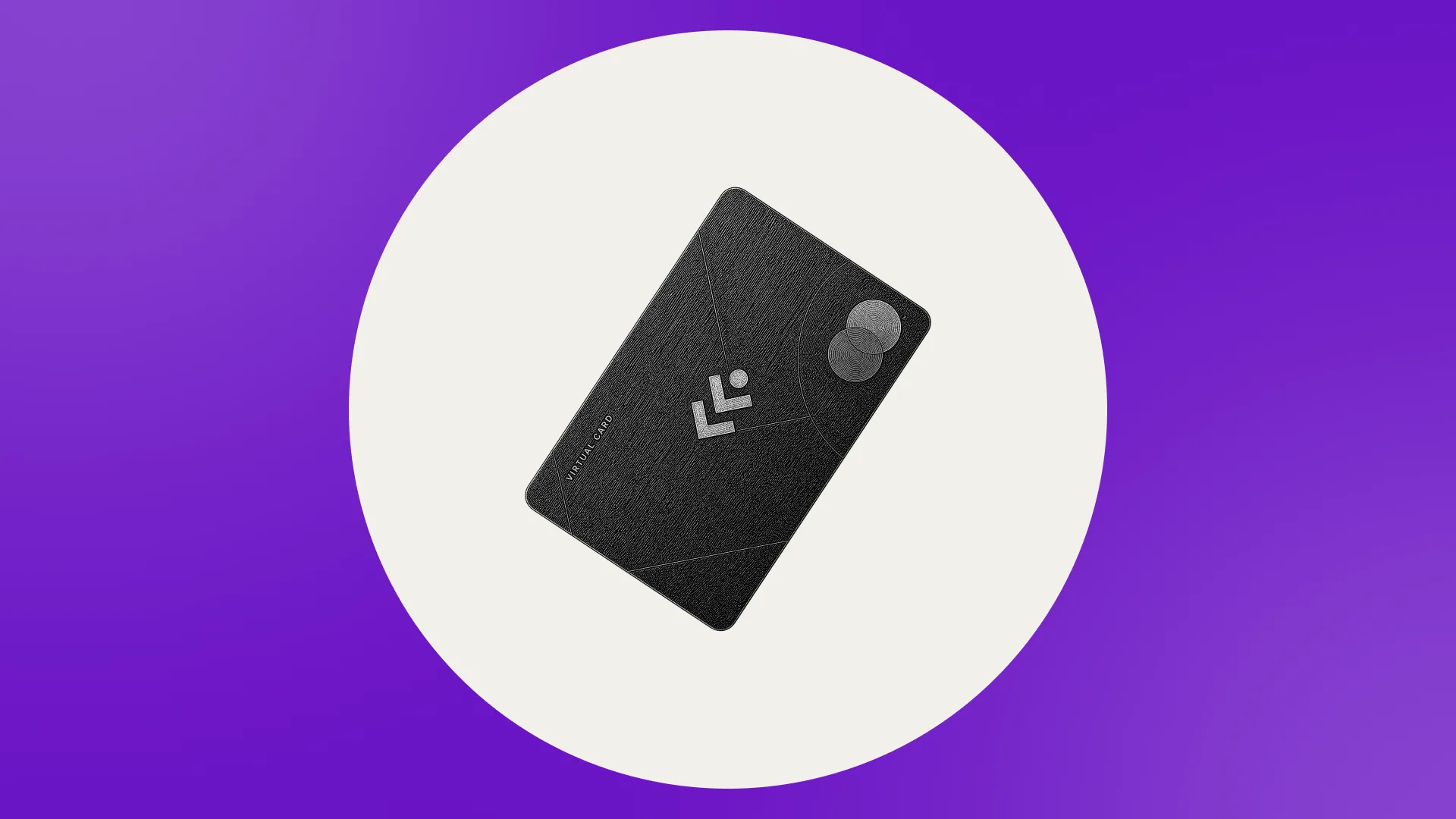
Virtual Card
The entry-level tier costs $25 and provides a digital-only card that activates instantly. It offers 1.5% cashback on the first $100/month of spend, then 0.5% above that cap. It supports Apple Pay and Google Pay for contactless payments. There is no physical card and no ATM access. The monthly spending limit is $10,000.
Signature Card
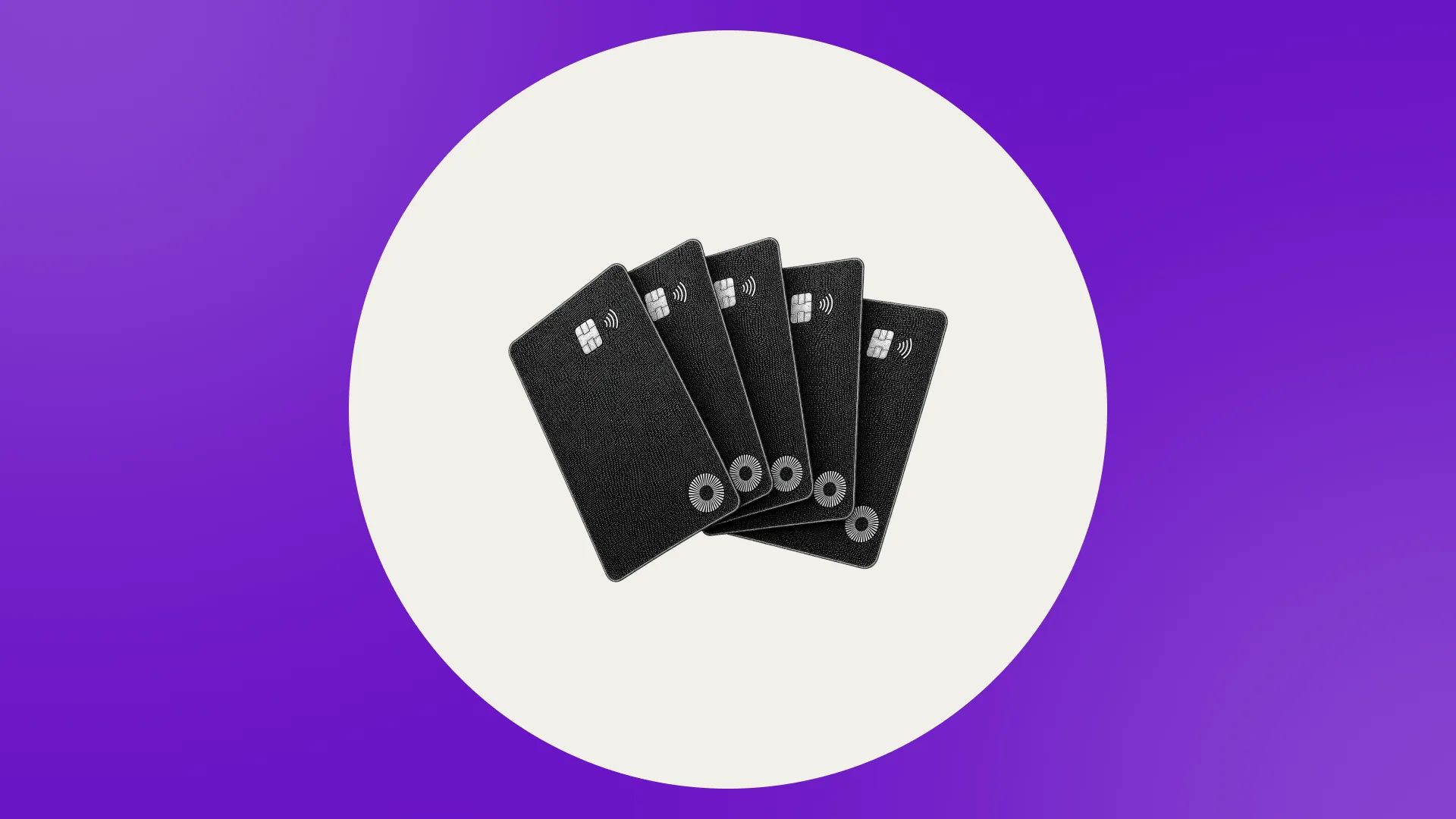
The mid-tier costs $109 and includes a physical plastic card shipped within 2–4 weeks. It offers 4.5% cashback on the first $1,000/month of spend, then 1% above the cap. Visa Signature perks on this tier include Auto Rental CDW, Baggage Delay ($500), Baggage Loss ($1,000), Visa Digital Concierge, Visa Luxury Hotel Collection, and Visa Airport Companion. ATM access is included.
Premium (Metal) Card
The top tier costs $250 and ships as a metal card. It offers 6% cashback on the first $2,000/month of spend, then 1% above the cap. ATM withdrawals carry 0% Tria ATM fees, with a $750/day limit. It includes the full Visa Signature travel and lifestyle perks, plus priority support.
Break-even analysis: At 6% on $2,000/month spend, Premium earns up to $120/month ($1,440/year) in headline cashback, well above the $250 fee. At Signature's 4.5% on $1,000/month, you earn up to $45/month ($540/year) against the $109 fee. Keep in mind that cashback is paid in TRIA tokens, and the real-world value depends on the token's market price at the time of unlock.
Feature | Virtual ($25) | Signature ($109) | Premium ($250) |
|---|---|---|---|
Card format | Digital only | Physical plastic | Physical metal |
Cashback rate | 1.5% up to $100/mo, then 0.5% | 4.5% up to $1,000/mo, then 1% | 6% up to $2,000/mo, then 1% |
ATM access | No | Yes | Yes (0% Tria ATM fee) |
Visa tier perks | Basic | Visa Signature | Visa Signature |
Daily spend limit | Up to $1,000,000 | Up to $1,000,000 | Up to $1,000,000 |
Apple Pay / Google Pay | Yes | Yes | Yes |
All fees are one-time issuance fees. Cashback paid in TRIA tokens, crypto values fluctuate. Season 3 caps verified June 2026.
3. Tria Card Fees & Rates
Issuance & Monthly Fees
All tiers carry one-time fees with no recurring monthly charges. The Virtual card costs $25, Signature $109, and Premium $250. The Virtual tier is currently free for a limited time (normally $25). No ongoing subscription or annual renewal fee is charged on top of the issuance cost.
Foreign Exchange (FX) Fees
Sources conflict on FX fees. Tria's marketing claims 0% FX fees across all tiers. However, the FX fee can be up to 3% per the card terms, and a standard 1% Visa network and FX markup may apply on top of Tria's zero-markup claim. In practice, the Visa interbank rate plus any network spread can add 0.5%–1% to non-USD transactions, even when Tria itself charges 0%.
Hidden & Miscellaneous Fees
Foreign transaction fee: up to 3%. ATM Withdrawals: up to $2 + 3%. Balance Inquiry/Decline: $2. Small transaction fees can reach up to $0.50. Additional costs may include Visa/Mastercard network spread (typically 0.5%–0.9%), crypto-to-fiat conversion spread at point of sale, and blockchain gas fees for on-chain top-ups.
Fee type | Amount |
|---|---|
Monthly/annual fee | $0 (one-time issuance only) |
FX markup (Tria) | 0% claimed; up to 3% per card terms |
ATM withdrawal | Up to $2 + 3% (Signature/Premium only) |
Top-up fee (crypto) | 0% |
Decline/balance inquiry | $2 |
Small transaction fee | Up to $0.50 |
Fees sourced from Tria's Card Terms International (effective October 31, 2025) and independent reviews. Always verify current fees in the Tria app.
4. Cashback & Rewards Structure
Earn Rates by Tier
Under Season 3 rules (June 2026), each tier earns its headline rate only up to a monthly spend cap, then drops: Virtual 1.5% to $100 (then 0.5%), Signature 4.5% to $1,000 (then 1%), Premium 6% to $2,000 (then 1%).
Cashback is paid in TRIA tokens, not cash, with 20% unlocking immediately, a 3-month cliff, then 80% vesting linearly over 6 months. The actual value depends on TRIA's market price, which can be volatile. The TRIA token launched on February 3, 2026 at $0.0158, tokens at this price point can swing significantly. Crypto values fluctuate, and your effective cashback in fiat terms may differ materially from the headline rate.
Travel Cashback
There is no separate elevated travel-category cashback rate. All purchases earn the same tiered rate regardless of merchant category. The travel benefit comes from the Visa Signature perks (hotel, airline, and rental car coverage) on Signature and Premium tiers, not from a bonus earning rate.
VIP Trading Badge Boosts
Tria's new VIP Trading Badges offer higher card cashback rewards reaching as much as 9.5%, plus increased monthly cashback-eligible spending limits scaling to as much as $102,000 per month. VIP status is determined using rolling 30-day executed futures trading volume across Hyperliquid and Decibel. Cashback is capped at 10% across all tiers.
For example, a Premium cardholder spending $2,000/month at the base 6% earns up to $120/month in headline cashback. With a VIP Trading Badge boosting that to 9.5%, the same spend could earn up to $190/month, though this requires significant futures trading volume to maintain.
5. Points System & Loyalty Programme
Season Points
The Season 3 points program awards points on card spend: 1 point per $1 on Virtual, 1.5 points per $1 on Signature and Premium. Points can also be earned trading Decibel and Hyperliquid perps inside the app, which is separate from card spend.
Mystery Boxes & Additional Rewards
The mystery boxes climb from small, vague rewards to thresholds only the largest accounts will reach. Lower boxes pay out surprise cashback or small travel credits. The top of the ladder is steep: the Legendary box requires 5,000,000 points to unlock, and the Infinity box requires a minimum of $50,000 in Tria equity held at season end.
Maximising the Points System
For most everyday spenders, the mystery-box programme adds modest supplementary value on top of capped cashback. The top boxes require millions of points or $50,000+ in Tria equity, so for ordinary spenders it adds little over the capped cashback. The practical strategy is to treat base cashback as the core reward and view Season Points as a bonus, not a reason to overspend.
Compare the Tria Card's reward tiers side by side with competing crypto cards. View card →
6. Crypto Capabilities
Supported Chains & Assets
Tria supports 1,000+ cryptocurrencies including BTC, ETH, USDT, USDC, and major altcoins across multiple networks including Ethereum, Polygon, Optimism, Arbitrum, and others. The platform added support for self-custodied Bitcoin top-ups for card spending in December 2025. You can top up via the Tria Wallet (on Optimism, Arbitrum, and Solana) or external wallets like MetaMask and Coinbase.
Self-Custody Architecture
"TRIA" (all caps) is the native ecosystem token used for cashback rewards. Owning the card does not mean you are investing in TRIA the token. They are separate products with different risk profiles.
TSS (Threshold Signature Scheme) and MPC (Multi-Party Computation) are related but distinct. Both distribute key management across multiple parties. TSS implements this at the signature layer, the private key is never assembled in any single location, even during signing. MPC implementations vary more widely. Tria explicitly uses TSS, not MPC.
Account abstraction removes the traditional seed-phrase requirement. You sign up with an email or social login, and the wallet is created without exposing a raw seed phrase, though this also means recovery depends on Tria's infrastructure rather than a traditional 12-word phrase you back up yourself.
Cross-Chain Swaps
The BestPath routing engine uses AI to optimize conversion paths across dozens of DEXes and bridges, abstracting complexity while minimizing slippage and gas costs. Swaps happen in-app, and BestPath selects the cheapest, fastest route automatically. Network fees and slippage may still apply depending on token and chain, but Tria absorbs gas on supported assets.
7. Supported Countries & Availability
The Tria Card is available in 150+ countries worldwide. According to Tria's official documentation, the platform restricts service in: Russia, Belarus, Venezuela, Cuba, Iran, Syria, North Korea, Ukraine, Turkey, Israel, Mainland China, India, Vietnam, Nepal, and Iraq.
There is conflicting information regarding US availability. One detailed independent review states Tria is NOT available to US, Russian, Turkish, Indian, Vietnamese, Israeli, or Ukrainian residents. However, some aggregator sites list the US as supported. If you are a US resident, verify eligibility directly in the Tria app before paying any non-refundable card fee.
Card availability also depends on issuing bank policies and KYC outcomes. Users should confirm eligibility through the signup process as supported countries may change over time.
8. How to Apply for the Tria Card
Step-by-Step Sign-Up Process
- Download the Tria app (iOS/Android) or visit the website.
- Create an account using email or social login via account abstraction, no seed phrase required.
- Select your tier: Virtual ($25), Signature ($109), or Metal ($250). Payment options include cryptocurrency (USDT, USDC on multiple chains) or credit card.
- Complete KYC verification after payment.
KYC Requirements
Tria uses Sumsub for identity verification. You will need a government-issued photo ID (passport, national ID, or driver's license), a selfie/liveness check (done in-app, takes about 2 minutes), and proof of address may be required for higher tiers (utility bill or bank statement). Most KYC approvals happen within minutes.
Due to high application volumes, the review process may take up to around 10 days. Some users report initial rejections due to regional processing queues, if rejected, wait a few days before resubmitting rather than immediately retrying.
Prerequisites Before Applying
You pay the card fee before identity verification. If Sumsub rejects your application, due to your country, document quality, or liveness check failure, the fee is not refunded. This is an important caveat: for the $25 Virtual tier, this is a manageable risk; for the $250 Metal tier, it is a significant gamble if you are unsure about your KYC eligibility. There is no published minimum age, but KYC requires a government-issued ID, which typically means 18+.
9. ATM Access & Transaction Limits
ATM Withdrawals
ATM access is available only on Signature and Metal tiers. ATM withdrawals incur a fee of up to $2 + 3% per transaction. On a $200 withdrawal, that is up to $8 in fees. The Virtual tier does not support ATM access. The Premium tier lists 0% Tria ATM fees with a $750/day limit, though the Visa network ATM surcharge from the terminal operator may still apply.
Spending Limits
All tiers share the same spending limit of up to $1,000,000 per day. However, in practice this is determined by screening, collateral, and issuer discretion. You will often start with a lower limit, which may increase based on your usage history.
Limit | Virtual | Signature | Premium |
|---|---|---|---|
Daily spend (max) | $1,000,000 | $1,000,000 | $1,000,000 |
Monthly spend cap (capped cashback) | $100 | $1,000 | $2,000 |
ATM withdrawal | N/A | Up to $2 + 3% fee | 0% Tria fee, $750/day |
Actual daily limits may be lower initially, based on collateral and account history. Cashback monthly cap refers to the spend amount eligible for the headline rate.
10. Is Tria Safe and Legitimate?
Security Model
Your funds remain in your own wallet until each transaction is authorised. The card provider does not hold your assets. This self-custody model eliminates the centralized-exchange insolvency risk that affected users of other platforms in recent years. BestPath AVS (Actively Validated Service) is an additional security layer, a decentralized routing system built on EigenLayer that processes cross-chain transactions.
Regulatory Standing
The card is issued under a binding agreement with Nimbus, LLC, a Delaware U.S. corporation. Nimbus LLC (dba Third National) is licensed as a Money Transmitter by the Commissioner of Financial Institutions of Puerto Rico (NMLS #2612780). Tria has raised $12 million from institutional investors including P2 Ventures, Aptos, Polygon executives, and Wintermute.
Addressing Scam Concerns
Tria went public beta in November 2025, a long-term security track record does not exist yet. Security audits have been conducted, but a relatively new platform has not been stress-tested by the market the way older protocols have. Transparent fee disclosures in the Card Terms International document, the Visa-network licensing, and verifiable on-chain transaction volume serve as positive signals. However, its short operating history, under a year, warrants caution. Tria states it is fully self-custodial, audited, and compliant.
11. Tria Card vs. Competing Crypto Cards
The crypto debit card market is crowded in 2026. Here is how Tria compares to the main alternatives that MyCardCompare tracks:
Feature | Tria Card (Premium) | Crypto.com Visa | Gnosis Pay | Coinbase Card |
|---|---|---|---|---|
Self-custody | Yes (TSS wallet) | No (custodial) | Yes (Safe smart account) | No (custodial) |
Max cashback | Up to 6% (capped) | Up to 5% (CRO stake required) | Up to 4% (GNO holding) | Up to 4% |
FX fee (Tria-side) | 0% (up to 3% per terms) | 0% | 0% | 2.49% conversion |
Issuance cost | $250 (Premium) | Free (top tier: $400k CRO stake) | Free | Free |
Availability | 150+ countries (exclusions apply) | 40+ countries | EEA | US |
Figures verified July 2026. All rates subject to change. Crypto cashback values fluctuate with token prices.
Tria vs. Crypto.com Visa: Tria's advantage is self-custody with no token-staking requirement. Crypto.com's top-tier cashback requires staking approximately $400,000 in CRO, a significant capital lockup. However, Crypto.com has 7+ years of operational track record.
Tria vs. Coinbase Card: Coinbase is US-focused and custodial. For readers outside the US who want self-custody, Tria is the more direct fit. For US residents, Coinbase remains one of the few options.
Tria vs. Gnosis Pay: Both are genuinely self-custodial. Gnosis Pay is limited to the EEA and supports fewer assets. Tria's 1,000+ asset breadth is unmatched, most self-custodial competitors support a handful of tokens.
You can run a detailed head-to-head on MyCardCompare to compare specific dimensions that matter to your spending.
12. Who Should (and Shouldn't) Use the Tria Card?
Ideal User Profile
- Crypto-native users who want to spend without surrendering custody of their assets
- Holders of diverse multi-chain portfolios (the 1,000+ asset support matters most here)
- Frequent travellers in supported countries who benefit from the Visa Signature perks on Signature or Premium tiers
Who Should Look Elsewhere
- Residents of the US, Russia, Turkey, India, Vietnam, Israel, or Ukraine, these are currently restricted markets (verify before paying)
- Users who want cashback in fiat or stablecoins, TRIA token vesting introduces price risk
- Low spenders who will not exceed the monthly cashback cap often enough to justify the $109 or $250 fee
- Users who need frequent ATM cash withdrawals, the up to $2 + 3% fee makes this expensive on lower tiers
Compare Tria alongside other crypto cards, ranked by fees, cashback, and availability. Compare cards →
Frequently Asked Questions About the Tria Card
What countries does the Tria Card support?
The Tria Card is available in 150+ countries. Restricted jurisdictions include Russia, Belarus, Venezuela, Cuba, Iran, Syria, North Korea, Ukraine, Turkey, Israel, Mainland China, India, Vietnam, Nepal, and Iraq. US availability is disputed across sources, verify directly in the Tria app before paying any fee.
How does the Tria cashback system work?
Each tier earns its headline rate only up to a monthly spend cap: Virtual 1.5% to $100 (then 0.5%), Signature 4.5% to $1,000 (then 1%), Premium 6% to $2,000 (then 1%). Cashback is paid in TRIA tokens with a vesting schedule: 20% immediate, 3-month cliff, then 80% over 6 months. Crypto values fluctuate, so the fiat value of rewards is not guaranteed.
Is the Tria Card a true self-custody card?
Yes. With Tria Card, your funds remain in your own wallet until each transaction is authorised. The card provider does not hold your assets. Tria explicitly uses TSS (Threshold Signature Scheme), where the private key is never assembled in any single location, even during signing.
What KYC documents does Tria require?
You will need a government-issued photo ID (passport, national ID, or driver's license) and a selfie/liveness check done in-app. Proof of address may be needed for higher tiers. Approval may take up to 10 days during high-volume periods. You can reset and retry KYC up to 2 times on your own; after that, contact in-app support.
How do Tria Points and Mystery Boxes work?
Season 3 awards 1 point per $1 of card spend on Virtual, and 1.5 points per $1 on Signature and Premium. Points unlock mystery boxes on a tiered ladder, with lower boxes paying out surprise cashback or small travel credits. The upper tiers are gated behind very high point thresholds or significant Tria equity holdings.
Are there any hidden fees on the Tria Visa card?
The disclosed fee schedule includes: Foreign transaction fee up to 3%, ATM withdrawals up to $2 + 3%, and balance inquiry/decline at $2. Additional costs may include Visa network spread (typically 0.5%–0.9%) and blockchain gas fees for on-chain top-ups. Tria claims 0% on its own conversion and top-up fees, but the Visa-layer charges can still apply.
Conclusion: Is the Tria Card Worth It in 2026?
The Tria Card occupies a distinct niche: it is one of the few crypto cards offering genuine self-custody alongside meaningful cashback rates. The 3-tier structure, Virtual at $25, Signature at $109, Premium at $250, makes it accessible to testers and appealing to committed crypto spenders alike.
The standout advantages are real: a self-custodial TSS wallet, support for 1,000+ tokens across multiple chains, 0% Tria FX markup, and headline cashback rates up to 6%. The Visa Signature perks on upper tiers add genuine travel value.
The drawbacks matter too. Cashback is paid in TRIA tokens on a multi-month vesting schedule, your effective return depends on a volatile token's price. The monthly spend caps introduced in Season 3 significantly reduce returns for high spenders. The pay-before-KYC policy makes the $250 Premium tier a risky upfront commitment if you are unsure of your eligibility. And the platform, launched in November 2025, is still early-stage.
For crypto-native users who prioritise self-custody and hold diverse portfolios, Tria is among the strongest options available in 2026. For users who want fiat-denominated rewards or live in restricted countries, other cards will serve better. You can check your eligibility and compare all 3 tiers on the Tria Card's profile on MyCardCompare.
This article provides comparative information only. MyCardCompare is not a bank, card issuer, lender, or financial advisor. Card terms, fees, and availability may change, always verify directly with the issuer. Cryptocurrency values fluctuate; cashback paid in crypto tokens may be worth more or less than the stated rate.