

12 Reasons to Start Using the Bleap Crypto Card Today
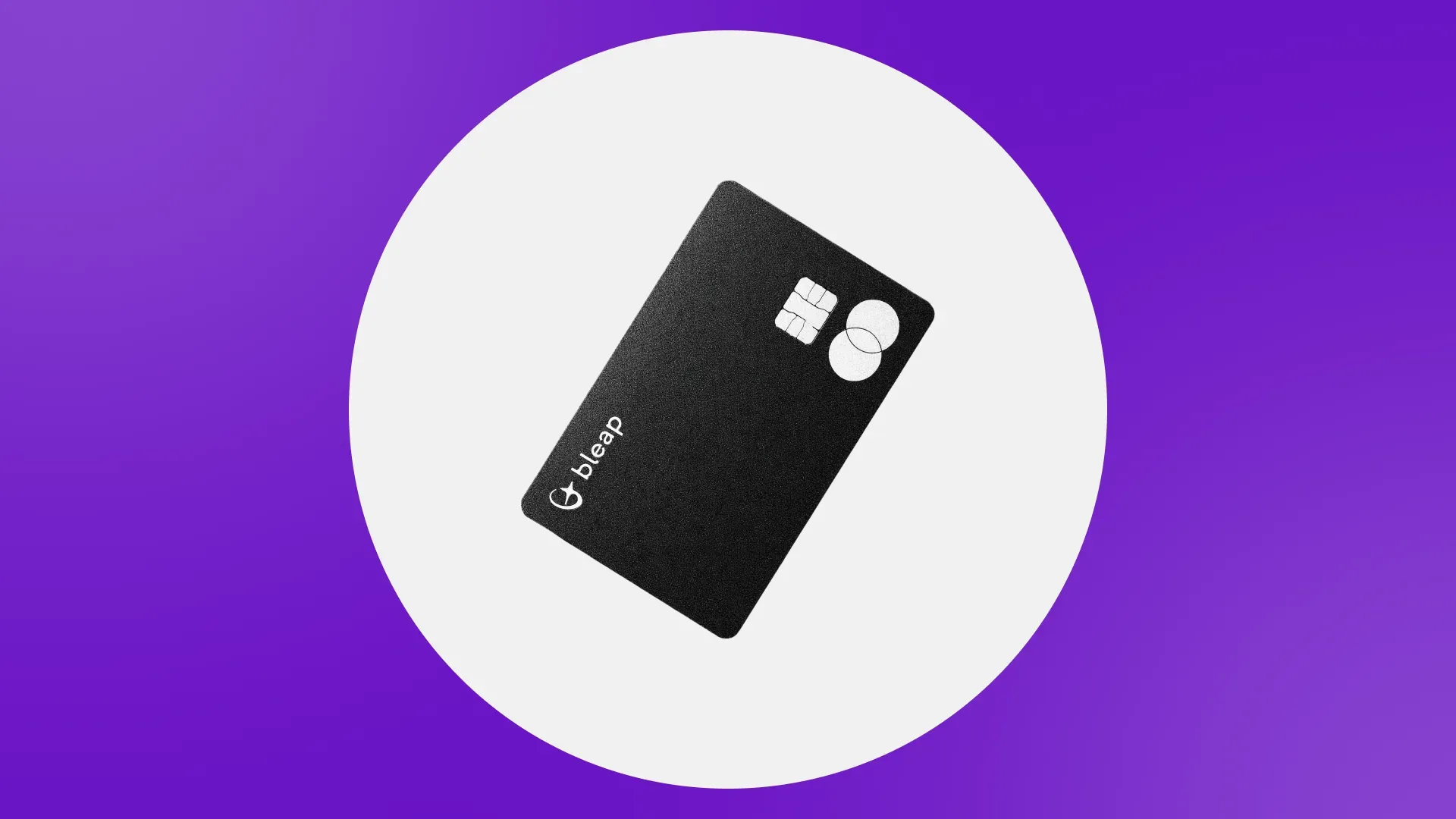
Bleap is a self-custodial Mastercard debit card that charges 0% foreign exchange (FX) fees, pays up to 20% cashback in USDC on select categories, and never takes custody of your crypto. It is a self-custodial Mastercard with 0% FX fees, up to 20% cashback, fee-free trading, and savings vaults at 3.65-3.83% AER in USD, all with a $1 minimum deposit and no lock-ins. That combination is what sets it apart from most crypto cards. Keep in mind, though, that Bleap's availability is regional, it is currently offered across the EEA with Latin America expansion underway, so it will not suit everyone everywhere.
Most crypto holders still live two parallel financial lives: one on-chain, where their assets grow, and one in the real world, where paying for coffee, a flight, or a gaming subscription means selling on an exchange, waiting for a bank transfer, and absorbing fees along the way. Bleap is built to close that gap. This article walks through 12 concrete, evidence-backed reasons the Bleap card stands apart, every figure verified in 2026, and where it sits when compared against other crypto cards on MyCardCompare. Bleap is one crypto card among many we track, so treat this as a detailed starting point, not a personalized recommendation.
See how Bleap's fees, cashback, and custody model stack up against other crypto cards. View card →
1. Industry-Leading Cashback and Rewards Up to 20%
Bleap's headline draw is its cashback. Cashback runs up to 20% on gaming, streaming, and everyday spending, with no trading fees. Independent card trackers list a base rate of 2% cashback, earn 2% back on most categories, paid in stablecoins (e.g. USDC). The 20% ceiling is reserved for specific merchant categories rather than every purchase, so it is important to read the rate as tiered, not flat.
How the Bleap Rewards Programme Works
Rewards are assigned by spending category, and the elevated rates apply to a defined set of merchants. Bleap cashback rates vary by merchant, reaching up to 20% on categories such as Artificial Intelligence, gaming and streaming. Crucially, the reward is paid in a stable asset: up to 20% cashback, paid in USDC so its value is stable on receipt. That matters because many competing programmes pay rewards in a volatile platform token whose value can fall before you spend it. Rewards are applied automatically, there is no manual claim step.
Which Spending Categories Earn the Most?
The top-tier rate concentrates on digital-first categories, AI subscriptions, gaming, and streaming, while general retail earns the standard rate. This is a meaningful structural difference from rivals. Bleap gives cashback in stable USDC and keeps your funds non-custodial, whereas Crypto.com pays in CRO and requires staking, exposing users to token volatility. The ether.fi Cash card, another non-custodial option, sits lower on headline cashback: the ether.fi Cash card offers 3% cashback and a non-custodial Visa model, but it charges a 1% FX fee, limits higher tiers to significant ETHFI staking, and remains unavailable in several EU countries.
Card | Base cashback | Headline max | Reward asset | Staking required? |
|---|---|---|---|---|
Bleap | 2% | Up to 20% (select categories) | USDC | No |
Crypto.com | Tiered | Up to 3% (Jade tier) | CRO | Yes |
ether.fi Cash | N/A | 3% | Protocol rewards | Higher tiers require ETHFI staking |
Cashback rates and staking thresholds change frequently; figures reflect data verified in 2026. Always confirm current terms on each issuer's site.
The verdict on this dimension: for stable-value rewards without a staking commitment, Bleap leads. If you want the very highest custodial reward tier and accept token-price risk, Crypto.com's staked model may earn more.
2. Zero FX Fees and No Hidden Charges
Bleap's second differentiator is fee transparency. Bleap charges 0% FX fees on every transaction, anywhere Mastercard is accepted, with up to 20% cashback, no monthly subscription, and full control of your funds. The mechanism behind the zero FX claim is a 1:1 conversion model: Bleap operates at 1:1 conversion rates between fiat and stablecoins, meaning 0% FX markup.
The True Cost of Competing Cards
The typical crypto or traditional debit card layers several charges: an FX markup of 1–3%, ATM surcharges, conversion spreads, and sometimes inactivity fees. Many crypto cards bury the cost in the spread. Most competitors still embed hidden spreads of 0.5%–1.75% per transaction or gate their best rates behind staking requirements and paid subscriptions.
Consider a concrete example. Spend €500 abroad on a card carrying a 2% FX markup and you lose €10 to the markup alone, before any ATM fee. Do that repeatedly across a trip and the erosion compounds. Every year, international travelers lose hundreds of euros to foreign transaction fees, ATM surcharges, and conversion spreads they never asked for. With Bleap's 0% FX policy, that €10 stays with you.
What Bleap's Fee Transparency Looks Like in Practice
The fee list is short. Both the virtual and physical Mastercards are free, with no monthly or issuance fees. On ATMs, you can withdraw up to $400/month for free at any ATM worldwide. There is no FX markup, no crypto-to-fiat conversion spread, and no staking requirement. Bleap charges 0% FX fees, 0% conversion spreads, and requires no staking or subscription, with up to 20% cashback on every eligible purchase and self-custody from day one.
So how does Bleap make money if spending is effectively free? The business model leans on optional yield products (savings vaults), trading flow, and the economics of the rewards programme rather than nickel-and-diming cardholders at the point of sale. For readers researching the best crypto card in 2026, this matters: hidden costs are the single biggest reason a "free" card turns out expensive.
3. True Asset Ownership Through a Self-Custody Model
Perhaps the most consequential reason to consider Bleap is that it is genuinely self-custodial. Bleap is a self-custodial Mastercard debit card with no monthly subscription, you hold your own keys and spend anywhere Mastercard is accepted.
What Self-Custody Means: and Why It Matters More Than Ever
Self-custody means the user, not the provider, controls the private keys to their funds. The principle crypto users repeat, "not your keys, not your coins", captures the stakes. When assets sit on a provider's balance sheet, they can, in principle, be frozen or lost if that provider fails. A self-custody model removes that exposure. Self-custody means you retain control of your funds; no third party can freeze your assets or lose them in an insolvency event. After several high-profile exchange collapses, crypto asset ownership has moved from a niche preference to a mainstream priority.
How Bleap Preserves Your Ownership While Enabling Card Spending
Bleap uses multi-party computation (MPC) wallet technology rather than a traditional custodial account. Bleap uses MPC wallet technology, splitting private keys into multiple encrypted shares so your funds remain secure and under your full control. In practice, your non-custodial wallet is MPC-based and automatically created, so you keep full control of your funds with no seed phrases or custodians involved, Bleap never holds your crypto, and only you can access it. Your assets stay in your wallet until the moment of spend, when they are converted on-chain. That is the opposite of the custodial card model, where crypto asset ownership effectively transfers to the provider the moment you top up. For anyone whose top concern is crypto asset ownership, this architecture is the reason to look closely at Bleap.
4. High-Yield Savings on Your Crypto Holdings
Bleap pairs spending with yield, so idle balances can earn rather than sit still. Bleap pairs a self-custodial Mastercard with USDC cashback of up to 20%, fee-free trading, and USD savings vaults at 3.65% AER (Steady) and 3.83% AER (Dynamic), no lock-ins, with EUR coming soon.
Which Assets Are Eligible and What Rates Apply?
The core savings product is USD-denominated and comes in two risk tiers. Bleap offers 2 USD savings vaults: Steady at 3.65% AER (lowest risk, powered by Sky/Lido) and Dynamic at 3.83% AER (low risk, powered by Yo). For users comfortable with more DeFi exposure, higher rates are available: Bleap's non-custodial savings account offers up to 10% AER using trusted DeFi protocols like Angle, Sky, and Lido. One aggregator lists savings plans at up to 8% APY/AER, which reflects the range between the standard and higher-risk vaults. Note that AER (annual equivalent rate) expresses the return with compounding factored in, and the vaults carry a low entry point: a $1 minimum deposit and 0% withdrawal fees, with EUR savings coming soon.
How Bleap Yield Compares to Traditional Savings Accounts
Against a typical bank account, the gap is stark. For context, one analysis notes a US national average savings rate of just 0.38% APY. Bleap's Steady and Dynamic vaults sit well above that, and the higher-risk DeFi vaults higher still. The trade-off is risk profile: yields come from real DeFi activity, not a bank guarantee. Yields come from real DeFi activity, staking, lending, and liquidity provision, and Bleap integrates Angle, Sky, and Lido, not speculative or unverified projects.
Did You Know? Crypto and DeFi yields are not covered by traditional deposit-protection schemes, and rates plus underlying values can change. This is educational information, not financial advice, always do your own research or consult a licensed adviser.
5. Virtual and Physical Card Availability for Every Scenario
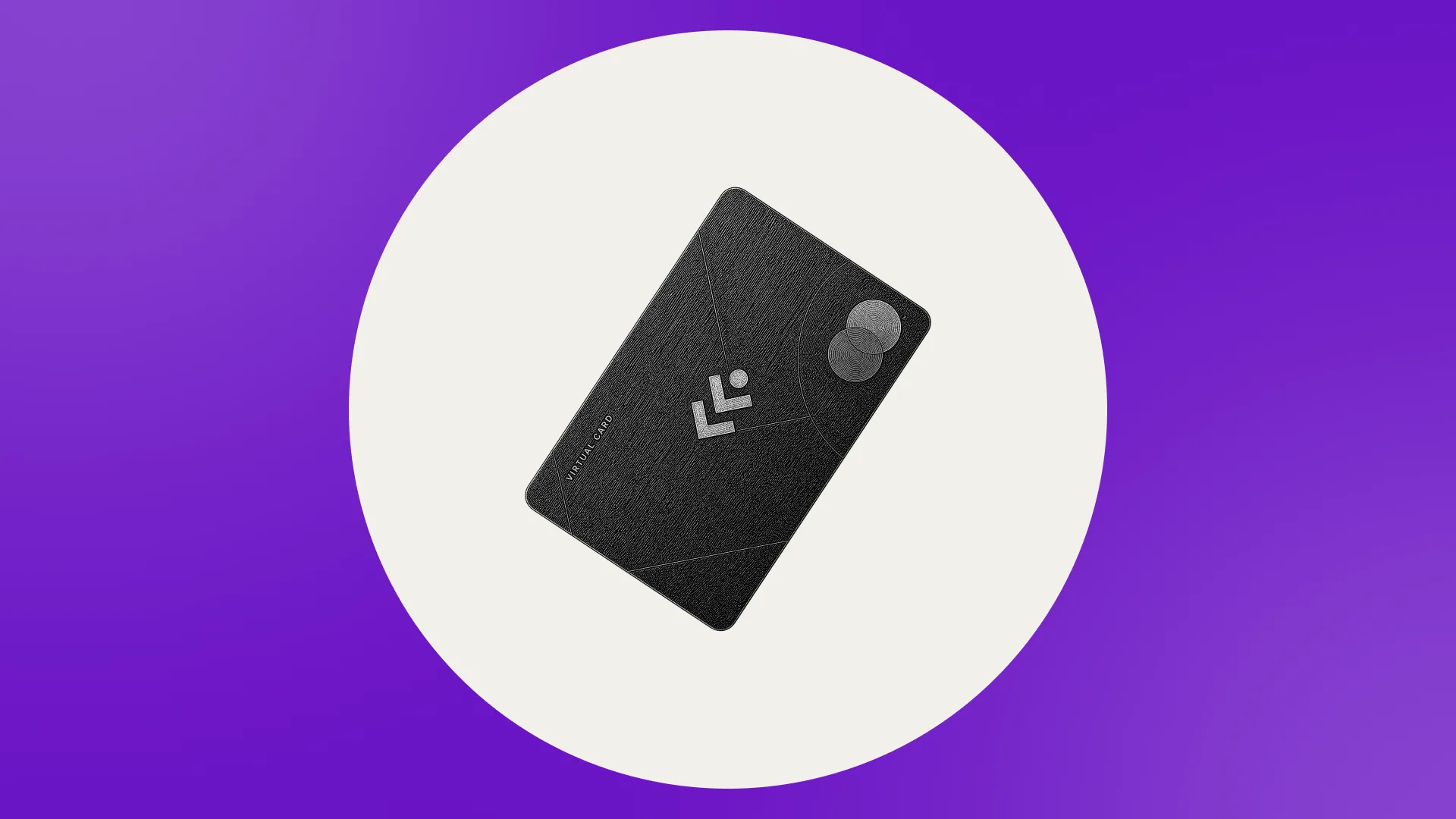
Bleap issues both a virtual and a physical card, and both are free. Instant virtual and physical cards, use the virtual card immediately via Apple Pay / Google Pay; physical plastic or metal cards are available.
Get Spending Immediately With an Instant Virtual Card
The virtual card is issued during onboarding, so there is no waiting period before your first purchase. It works with mobile wallets for contactless payments, which makes it well suited to online shopping, subscription services, and last-minute travel bookings. In 2026, nearly every crypto card issuer offers a virtual card for instant online spending, and most top options support NFC/contactless via Apple Pay or Google Pay.
The Physical Card for In-Store and ATM Use
The physical Mastercard covers in-store payments and ATM withdrawals, where a virtual card alone falls short. Physical cards are still necessary for in-store payments and ATM withdrawals. Because Bleap runs on Mastercard, acceptance is broad, and the free ATM allowance (up to $400 per month worldwide) covers routine cash needs. Having both card types means occasional online spenders and heavy in-person users are each catered for.
6. Seamless Global Spending and International Travel Usability
Bleap behaves like an ordinary debit card at checkout, which is exactly what makes it practical for travel. Bleap runs on the Mastercard network, so you can use it anywhere Mastercard is accepted.
Accepted Wherever Major Card Networks Are Taken
There are no special instructions for the merchant, you tap or insert as usual, and the conversion happens behind the scenes. Because it operates on the Mastercard network, the card can be used at merchants worldwide. On availability, be precise rather than assuming universal coverage: Bleap is available in the EEA, with expansion actively underway across Latin America, including Brazil, Mexico, Colombia, and Argentina. A common travel trap is dynamic currency conversion (DCC), where a terminal offers to bill you in your home currency at a poor rate, always choose to pay in the local currency so Bleap's 0% FX applies.
Practical Tips for Using Bleap on an International Trip
Before you travel, update the app, review your spending limits, and confirm your card controls are set the way you want them. Bleap's limits are generous for most trips: the card spend limit is €10k per single transaction, €15k daily, and €30k monthly (rolling).
Here is a concrete scenario. You are spending a week in Japan, funding purchases from a Bitcoin holding. At a Tokyo restaurant, you tap your phone; Bleap converts the required amount from your designated asset at the market rate and settles the bill in JPY. Because there is no FX markup, the yen amount you pay maps directly to the market rate, no 2–3% surcharge quietly stacked on top. Over hotels, dining, and transport, that difference adds up to real euros kept in your pocket rather than surrendered to conversion spreads.
Travelling soon and want to see how Bleap's 0% FX policy compares to other travel-ready crypto cards? View card →
7. Real-Time Crypto-to-Fiat Conversion at the Point of Sale
The engine underneath every Bleap purchase is instant crypto-to-fiat conversion. When you pay, the app identifies your designated spending asset, applies a real-time market rate, and transmits the fiat equivalent to the merchant, all in the moment of the tap.
How Instant Conversion Works Behind the Scenes
Conversion happens fast enough that it does not interfere with the transaction, and the 1:1 stablecoin model means there is no conversion markup to erode the amount. Bleap's self-custodial Mastercard hits 0% FX fees, no crypto-to-fiat conversion markup, and up to 20% cashback on every purchase. For users funding from stablecoins, the arithmetic is essentially transparent, since the conversion is one-to-one against fiat.
Choosing Which Asset to Spend From
Bleap lets you decide which asset is sold first when you spend, and you can top up flexibly from a wide range of tokens. You can top up by swapping any ERC-20 or SPL token directly to your card balance using the Relay Protocol integration. A practical use case: a DeFi user earning yield in stablecoins can route those earnings straight through the card without a separate off-ramp. One important caveat, spending crypto can be a taxable event in many jurisdictions, and the treatment varies by country. This is not tax advice; consult a qualified tax adviser about your own situation.
8. Support for 50,000+ Assets Across a Multi-Chain Wallet
Bleap is a multi-chain wallet as well as a card, which means it handles a far wider range of assets than single-chain competitors. Bleap supports 50,000+ tokens across Arbitrum, Solana, and Base, plus fee-free trading with no gas costs.
Which Blockchains and Token Standards Does Bleap Support?
The supported chains span EVM-compatible networks and Solana, and the "50,000+ assets" figure reflects that breadth in practice, effectively any recognised ERC-20 or SPL token on a supported chain. Bleap supports fee-free crypto trading across 50,000+ assets on Arbitrum, Solana, and Base, with savings vaults paying up to 3.83% AER in USD. Gas handling is a real convenience here: gas is sponsored on all L2 chains and Solana (5 free daily transactions), while Ethereum mainnet requires user-paid gas. Many rivals support only a handful of tokens, so a portfolio spread across chains would normally require several apps.
Managing a Diverse Portfolio From One Interface
The multi-chain wallet consolidates spending, saving, and trading in a single interface, removing the need to juggle exchanges and separate wallets. Bleap is designed for people who want one app that handles spending, saving, and trading. If you hold assets across, say, a Solana-based token, a Base-native asset, an Arbitrum position, plus mainstream holdings like ETH and USDC, they can all live in, and fund, the same card. That single-pane view of portfolio value and allocation is a genuine day-to-day UX advantage for active on-chain users.
9. Robust Security Features and Card Controls
A self-custody card still needs strong operational security, and Bleap's controls sit alongside its MPC key architecture.
In-App Controls That Put You in Charge
The app gives you direct control over the card: freeze and unfreeze instantly, set spending parameters, toggle online and contactless use, and manage your PIN. App access is protected by biometric authentication, and real-time notifications flag each transaction as it happens, so anomalies surface immediately. These are the controls most cardholders reach for first when something looks wrong, and having them one tap away reduces the window for misuse.
What Happens If Your Card Is Lost or Compromised?
This is where the self-custody model offers real reassurance. A lost or stolen card does not put your holdings at risk, because your assets never leave your wallet, the card is a spending rail, not a vault. Your crypto stays in your wallet until you spend, and Bleap does not hold your funds. You can freeze the card immediately in-app and arrange a reissue, and online card-not-present purchases are protected by 3D Secure (3DS) authentication. For security-conscious readers, the combination of instant freeze, 3DS, and non-custodial fund storage addresses the two biggest fears at once: card fraud and provider failure.
10. Effortless Setup, Onboarding, and Everyday Usability
For a product aimed at both newcomers and experienced DeFi users, onboarding is deliberately quick. You set up your on-chain account in less than 30 seconds.
Getting Started in Under 10 Minutes
The flow is short: download the app, sign up, verify, and receive your virtual card. You click "Create account" in the Bleap app, sign up with Google or Apple, enter your phone number and confirm the code, and your MPC-based non-custodial wallet is created automatically, so you keep full control with no seed phrases or custodians. Standard identity verification (KYC) applies, in line with regulated card programmes, and no crypto expertise is required to complete it. The design intent is that a mainstream user can onboard as easily as an experienced on-chain participant.
The Day-to-Day User Experience
Once set up, the app centralises spending, rewards tracking, and savings in one dashboard, and topping up is straightforward via token swaps. You can start earning and spending in minutes, without giving up control of your assets.
Picture a typical day. You buy your morning coffee and earn cashback paid in stable USDC. At lunch, you send a quick transfer to a friend abroad from the same app. In the evening, you make an online purchase funded from stablecoin holdings that were quietly earning yield until the moment you spent them. All three actions, spend, send, and save, happen in one interface, on one card, without moving funds between an exchange, a bank, and a separate wallet.
11. Regulatory Compliance and Counterparty Risk Transparency
Trust in a crypto card comes down to two things: how it is regulated, and where residual risk lives.
How Bleap Approaches Regulatory Compliance
Bleap operates as a regulated card programme on the Mastercard network, which means standard KYC and anti-money-laundering (AML) checks apply at onboarding, and the card is issued through established payment infrastructure. Availability is defined by that regulatory footprint, currently the EEA, with Latin American expansion underway and deposits supported in EUR, USD, and MXN. Bleap offers savings vaults, fee-free crypto trading, and deposits in EUR, USD, and MXN with no fees. Because regulatory status and licensing details evolve, confirm the specifics for your country on Bleap's official terms before relying on them.
Understanding Counterparty Risk With a Self-Custody Model
The self-custody architecture meaningfully reduces the classic counterparty risk, the danger that a provider becomes insolvent and takes your funds with it. No third party can freeze your assets or lose them in an insolvency event. That does not eliminate all risk. Yield vaults route through DeFi protocols, so smart-contract and network risks remain, and Bleap addresses these by integrating established, audited protocols rather than untested ones. Bleap integrates Angle, Sky, and Lido, not speculative or unverified projects. The honest framing: custody risk is reduced, but crypto and DeFi carry their own risks, including possible loss of capital. Bleap itself states that its yield content is for educational purposes only and should not be considered financial advice, and that crypto investments carry risks, including loss of capital.
12. Global Money Transfers and Cross-Border Send Capability
Beyond spending, Bleap supports cross-border crypto payments directly from the app. It offers virtual and physical cards, USDC cashback, zero FX markups, fee-free on-chain crypto trading, global money transfers, and savings plans.
Sending Money Internationally With Bleap
Transfers move over crypto rails, so settlement is measured in seconds to minutes rather than the 1–5 business days typical of traditional bank wires. Because Bleap is non-custodial and wallet-based, you can send to another wallet without routing through a separate exchange or bank account. Supported destinations follow the card programme's regional availability, so check whether a specific corridor is covered before relying on it.
How Bleap Compares to Traditional Remittance Services
The cost contrast with legacy remittance is the clearest argument. Sending $500 through a traditional money-transfer service can cost a flat fee plus an FX margin; the World Bank's long-cited global average remittance cost sits around 6%, which on $500 is roughly $30 lost to fees and spread. A crypto-rail transfer through Bleap incurs a network fee with no FX markup, which for stablecoin sends can be a fraction of that. As crypto-rail adoption grows, cross-border payments through cards like Bleap are positioned to get faster and cheaper still, one reason self-custody, low-fee cards feature so heavily in "best crypto card 2026" discussions. The broader trend across the industry is moving toward self-custody as the default, not the exception, with more issuers offering non-custodial options, fee-free trading integrations, and yield-bearing wallets connected directly to spending.
Ready to compare Bleap against every other crypto card on fees, cashback, custody, and availability? Compare cards →
Key Takeaways
- Rewards: 2% base cashback, up to 20% on select categories (AI, gaming, streaming), paid in stable USDC, no staking required.
- Fees: 0% FX, no monthly or issuance fees, free virtual and physical cards, and up to $400/month in free ATM withdrawals.
- Custody: Genuinely self-custodial via MPC wallet technology, your keys, your coins, from day one.
- Yield: USD savings vaults at 3.65% AER (Steady) and 3.83% AER (Dynamic), with higher-risk DeFi vaults reaching up to 10% AER; $1 minimum, no lock-ins.
- Reach: Runs on Mastercard, supports 50,000+ assets across Arbitrum, Solana, and Base, and is available across the EEA with Latin America expanding.
Bleap suits crypto holders who prioritise self-custody, stable-value rewards, and genuinely fee-free international spending, and who live in a supported region. It is a weaker fit if you need a high ATM allowance, a crypto-backed credit line, or availability outside its current markets, cases where a custodial card may serve you better. Because a single-card view is only a starting point, the natural next step is to weigh Bleap against the alternatives on the same criteria, fees, cashback, custody, and availability, on the crypto cards comparison page. This is comparative information, not personalized financial advice.
Frequently Asked Questions About the Bleap Crypto Card
What is a self-custody crypto card, and how is Bleap different from other crypto debit cards?
A self-custody card lets you keep control of your private keys, so no provider holds your funds. Bleap uses MPC wallet technology to split keys into encrypted shares, and your crypto stays in your wallet until you spend, unlike custodial cards, which hold assets on the platform's own infrastructure.
Does the Bleap card work for international travel with no foreign transaction fees?
Yes. Bleap charges 0% FX fees and runs on the Mastercard network, so it is accepted worldwide with no cross-border surcharge. To keep that benefit, always pay in the local currency and decline dynamic currency conversion at the terminal. Availability is currently the EEA, with Latin America expanding.
How much cashback does Bleap actually pay?
Bleap pays a 2% base rate on most categories and up to 20% on select categories such as AI subscriptions, gaming, and streaming. Rewards are paid in USDC, so their value is stable on receipt, and no staking is required to earn them.
What yield can I earn on savings with Bleap?
Bleap's two USD vaults pay 3.65% AER (Steady) and 3.83% AER (Dynamic), with a $1 minimum and no lock-ins. Higher-risk DeFi vaults reach up to 10% AER through audited protocols like Angle, Sky, and Lido. EUR savings are noted as coming soon. Yields come from DeFi activity and can change, so this is not a guaranteed return.
Is my money safe if Bleap fails?
Because Bleap is non-custodial, it never holds your crypto, which sharply reduces the insolvency risk that affects custodial providers. Residual risks remain, chiefly smart-contract and network risk on yield vaults, which Bleap addresses by integrating established, audited DeFi protocols. Crypto carries risk of capital loss regardless of custody model.
Which cards should I compare Bleap against?
That depends on your priorities. If cashback and self-custody matter most, compare it with ether.fi Cash and Gnosis Pay; if you want the highest custodial reward tier, weigh Crypto.com and Nexo. You can line them up side by side on the crypto cards category page.
Card fees, rates, and availability were verified in 2026 and can change on refresh. Always confirm current terms on the issuer's official site before applying.