
Payy Card Review 2026: Fees, Rewards, and How It Compares
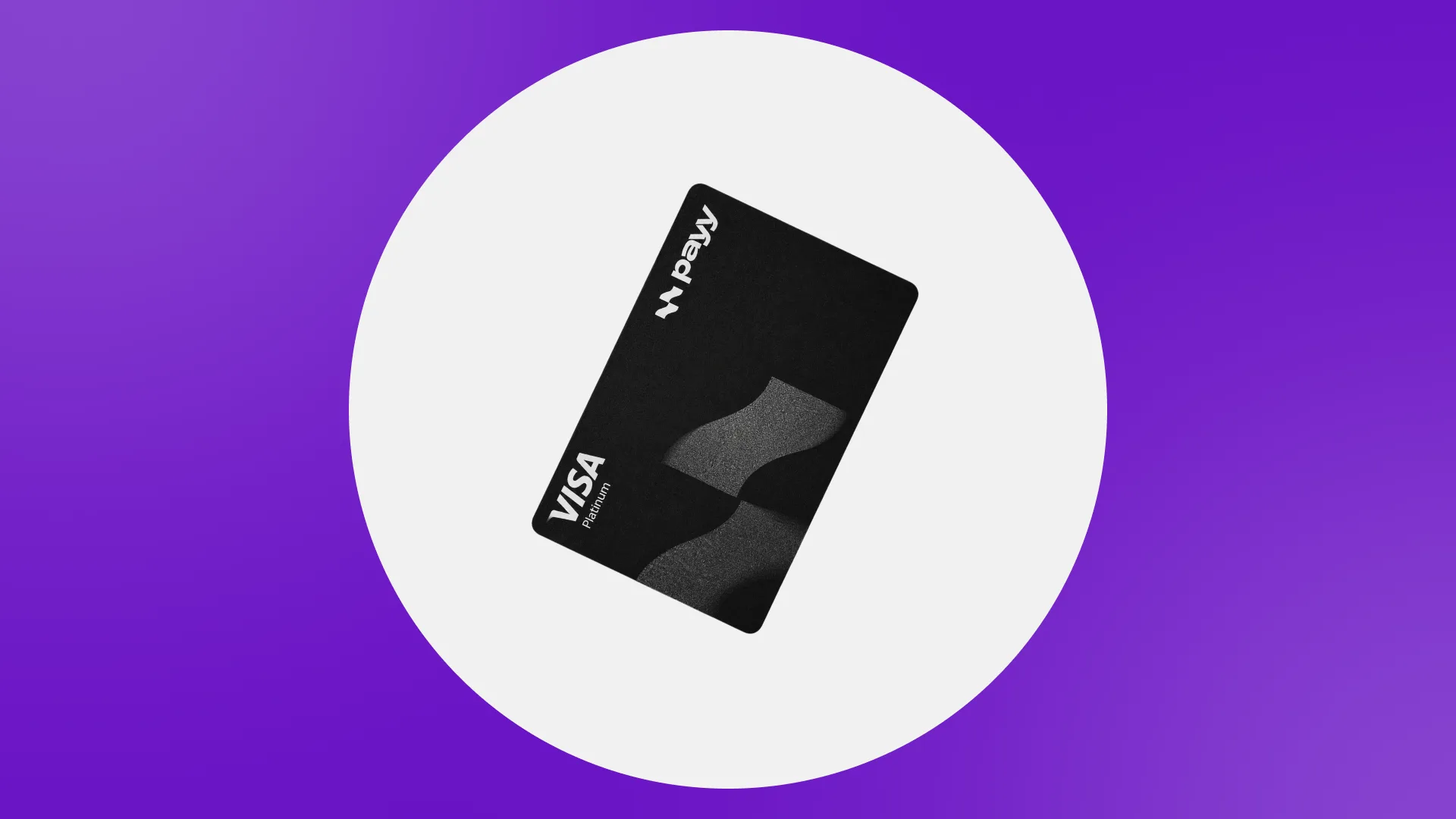
The Payy Card is a self-custodial, privacy-focused Visa card issued by Polybase Labs that lets users spend USDC stablecoins anywhere Visa is accepted, with $0 annual fees, $0 transaction fees, and no credit check required. There are no fees to apply, no transaction or top-up fees, and no monthly fees, though a 1% bank fee applies to non-USD transactions. Despite the lean fee structure, the card offers no traditional cashback rewards and is still a relatively young product, already live with over 100,000 users across 120 countries, so potential users should weigh its privacy-first design against the absence of earning features. That said, keep in mind that the card requires you to hold and spend cryptocurrency (USDC), so its value fluctuates with the broader crypto ecosystem and regulatory landscape.
MyCardCompare compared over 200 crypto cards on fees, rewards, privacy features, and availability. Below is an independent, data-driven verdict on the Payy Card, covering costs, eligibility, the application process, security, and how it stacks up against alternatives in the crypto card category.
The Payy Card is one of over 200 cards compared on MyCardCompare, see how it scores against the competition. View card →
1. What Is the Payy Card?
The Payy Card is a crypto-enabled Visa card that lets users spend stablecoins (USDC) directly at merchants while maintaining privacy through zero-knowledge proofs on the Payy Network blockchain. It is built by Polybase Labs, a blockchain infrastructure company founded in 2022 by Sid Gandhi (a former Apple iOS engineer) and Calum Moore.
The target audience is stablecoin holders, privacy-conscious crypto users, and individuals in high-inflation economies who want to spend USD-denominated stablecoins in everyday life. The self-custodial model gives users full control of their funds via the Payy Wallet app. Unlike a standard credit card or a BNPL service, the Payy Card is a secured card, spending is limited to your Payy Wallet balance. You load USDC first, then spend. The card works with platforms that many crypto cards don't support, including OpenAI, Netflix, and Spotify, and is accepted anywhere Visa is taken, both online and in-store.
2. Payy Card Fees and Costs
Annual and Monthly Fees
There are no fees to apply, no transaction or top-up fees, and no monthly fees. The Payy Card has an annual fee of $0. There is no paid subscription tier and no trial period, the zero-fee structure applies to all users from day one.
Foreign Exchange Fees
The only recurring cost is on non-USD purchases. Foreign exchange on non-USD purchases is handled by Visa and the user's bank, with Payy referencing Visa's FX calculator and instructing users to set a 1% bank fee for estimates. For cardholders spending primarily in EUR, this means approximately 1% is added to every transaction. On an estimated monthly spend of $500 (approx. €460), the estimated monthly cost is around $7.50, for a total drag of roughly 1.5% of spend.
Hidden Charges to Watch Out For
Additional fees break down as: conversion fee $0, FX fee approximately 1% (Visa/bank pass-through), ATM $0 Payy fee (though operator fees apply), top-up $0, and inactivity $0. No late-payment fees or over-limit charges exist because you can only spend what you have loaded. The fee structure is transparent; the only variable cost is Visa's own FX markup on international purchases.
Fee Category | Amount |
|---|---|
Annual / Monthly Fee | $0 |
Issuance Fee | $0 |
Transaction Fee | $0 |
Top-up Fee | $0 |
FX Fee (non-USD) | ~1% (Visa/bank pass-through) |
ATM Withdrawal | $0 Payy fee; operator fees may apply |
Inactivity Fee | $0 |
Cashback / Rewards | None (save-to-earn points only) |
3. Key Features and Benefits
Self-Custody and Privacy Architecture
The Payy Card's main differentiator is not rewards or cashback, it is privacy. Transactions are settled on Payy Network using zero-knowledge proofs, and on-chain wallet balances and activity cannot be linked to card transactions. Users control their funds at all times, with no custodial risk.
The spending limit is determined entirely by your wallet balance. The card is classified as a secured credit card, meaning spending is limited to your Payy Wallet balance. Early user feedback notes "unlimited daily spend" up to the deposited balance, there is no fixed cap from Payy itself.
The card is accepted anywhere Visa is taken. The physical card cannot be used at terminals requiring chip insertion or magstripe reading, contactless only.
Rewards, Cashback, and Perks
The Payy Card does not offer traditional cashback rewards or staking programs; instead, the card focuses on privacy protection and fee minimisation as its primary value propositions.
The only reward mechanism is a "save-to-earn" points system. You earn 1 Payy Point per $1 held in your account balance per day, and spending does not generate points. Referrals earn 10,000 points, and 100,000 Payy Points unlocks the physical light-up Payy Card. Points have no confirmed monetary redemption value beyond the physical card unlock at the time of writing, an honest limitation compared to cards that offer 1–5% cashback.
See how the Payy Card's fee structure and features compare to other crypto cards, updated this month. Compare cards →
4. Payy Card Application Process and Eligibility
Eligibility Requirements
There are no minimum income thresholds or credit-history requirements. Identity verification is required to receive a card; information collected generally includes your name, birth date, address, government ID number, and ID photo. The card is available in all countries where the Apple App Store and Google Play Store are accessible. It cannot be used in OFAC-sanctioned countries including North Korea, Iran, Syria, Cuba, Crimea, and related territories.
Does the Payy Card Do a Credit Check?
No. Applying only requires identity verification. No credit history is pulled. This means the application has zero impact on your credit score. There is no soft or hard credit search, the card is funded entirely by your deposited USDC balance, so traditional creditworthiness is not assessed. This makes it accessible to users with thin, poor, or no credit file at all.
How to Apply Step by Step
Setup involves only basic KYC (ID and address verification) with no credit check required, and you get an instant virtual card upon approval. The process takes approximately 2 minutes. You can then add the virtual card to Apple Pay or Google Pay. To request a physical card, you need to earn 100,000 Payy Points via balance holding or referrals. Fiat deposits are currently available in the United States (ACH, in beta) and Argentina (local bank transfer), with EUR (SEPA), INR (UPI), BRL (PIX), and KES (M-Pesa) planned.
5. Security and Fraud Protection
The Payy Card uses Visa's standard payment rails, which means purchases are processed through Visa's dispute-resolution and chargeback systems. You can freeze and unfreeze your card at any time in the app.
On the crypto side, cryptographic keys are generated and stored locally on the user's device, with no login, email, or password required, the wallet is generated locally. This means Payy (the company) cannot access, freeze, or recover your on-chain funds without your backup phrase. The self-custody design eliminates counterparty risk from centralised platforms, but it also means you bear full responsibility for securing your recovery phrase.
Payy was focused from the beginning on doing private stablecoin transactions in a regulatory-compliant manner, maintaining existing AML and compliance operations. However, the Payy Card is a U.S.-issued card and does not carry FCA authorisation or FSCS coverage. It does not offer Section 75 protection in the way that a UK-regulated credit card does. Cardholders rely on Visa's standard dispute process rather than statutory consumer credit protections.
6. Payy Card Customer Service
For any issues, billing info updates, card not working, and similar, users contact support directly in the app. There is no phone line or email address published on the Payy website; in-app messaging is the sole support channel.
Community feedback on customer service is mixed. One Trustpilot reviewer noted "slow customer service with quirks", while a Google Play reviewer described customer support as "useless" after an unresolved withdrawal issue. On the other hand, some users praised the onboarding experience, with one writing that they had their card issued in 2 minutes.
Because Payy is not FCA-authorised, UK-based users currently cannot escalate complaints to the Financial Ombudsman Service. The absence of multiple support channels, no phone, no email, is a notable limitation for users who prefer direct human contact.
7. Credit-Building Potential
The Payy Card does not report payment history to any credit reference agency, UK or otherwise. It does not pull credit history at application, and because it operates as a pre-loaded secured card funded by stablecoins, there is no lending relationship to report.
This means the Payy Card is not a credit-building tool. If your primary goal is to improve your credit score through responsible use and bureau reporting, you would need a dedicated credit-builder card or a traditional credit card that reports to Experian, Equifax, or TransUnion. The Payy Card removes credit risk entirely, which is a benefit for some users, but it also removes the opportunity to demonstrate creditworthiness.
8. Real User Reviews and Reputation
On Trustpilot, Payy has only 4 reviews at the time of writing, too few to draw a meaningful conclusion, though early sentiment is mixed. On Google Play, the app is rated 4.12 out of 5 based on 340 ratings.
Common praise includes fast onboarding, a clean app interface, and the ability to use the card with services like Netflix and Spotify. One reviewer noted they had been using the app for a couple of months without issues and praised the Google Pay integration.
Common complaints centre on withdrawal issues and transparency around small deductions during crypto deposits. One Google Play reviewer described depositing $1.80, only for the credited amount to decrease to $1.25 without clear explanation. Another flagged a verification loop where the app alternated between "approved" and "verification in progress."
Total funding stands at $8 million, with investors including Robot Ventures, DBA Crypto, 6th Man Ventures, Orange DAO, and Protocol Labs. The venture backing and association with Protocol Labs offer some trust signals, but the product remains early-stage.
9. Pros and Cons Summary
Pros
- $0 annual, monthly, transaction, and top-up fees
- No credit check, accessible to anyone who passes KYC
- Self-custodial: users retain full control of private keys and funds
- Privacy-preserving transactions via zero-knowledge proofs
- Available in 120+ countries (excluding OFAC-sanctioned regions)
- Apple Pay and Google Pay compatible
- Light-up physical card design (at 100,000 Payy Points)
Cons
- No cashback, no traditional rewards, save-to-earn points have limited utility
- 1% FX fee on all non-USD purchases (impacts EUR spenders)
- No credit-bureau reporting, cannot help build a credit score
- Contactless-only physical card, unusable at chip-and-PIN or magstripe terminals
- Fiat deposits currently limited to U.S. (ACH beta) and Argentina
- Customer support limited to in-app messaging only
- Not FCA-authorised, no Section 75 protection or FOS escalation
10. Payy Card vs. Alternatives
Payy Card vs. Crypto.com Visa
The Crypto.com Visa card offers up to 5% cashback (depending on CRO staking tier) and supports a wide range of cryptocurrencies, while the Payy Card charges $0 fees but offers no cashback. Crypto.com requires staking its native token and operates a custodial model, whereas Payy emphasises self-custody and privacy over rewards. For users who prioritise earning on spend, Crypto.com leads; for privacy and fee minimisation, Payy is the leaner option.
Payy Card vs. Gnosis Pay
Both cards target self-custody users. Gnosis Pay operates on the Gnosis Chain and offers a decentralised approach, while Payy is built on an Ethereum L2 zero-knowledge rollup with a focus on hiding transaction data. Gnosis Pay is EEA-focused, while Payy issues a U.S.-based Visa card usable in more countries. The choice depends on whether privacy (Payy) or decentralised governance and EEA availability (Gnosis Pay) matters more.
Payy Card vs. Ether.fi Card
The Ether.fi card has gained attention for its self-custody model and reported 3% crypto cashback. However, the Ether.fi card has been criticised for insufficient privacy protection, on-chain spending can be traced publicly, which Payy addresses with zero-knowledge proofs. Users choosing between the two are effectively weighing cashback rewards (Ether.fi) against transaction privacy (Payy).
Payy Card vs. Traditional Credit Cards
A traditional credit card with a 0% purchase period and Section 75 protection is the smarter choice for large purchases (over £100/€100) where buyer protection matters, for users who want to build a credit history, or for anyone who does not hold stablecoins. The Payy Card is designed for crypto-native users spending existing USDC holdings, not as a general-purpose lending product.
11. Who Should: and Shouldn't: Use the Payy Card?
Ideal Candidates
- Stablecoin holders who want to spend USDC at merchants without converting to fiat first
- Privacy-conscious users who do not want on-chain spending data publicly visible
- Users in high-inflation economies (particularly Argentina) looking for USD-denominated spending
- Crypto-native individuals who value self-custody over earning rewards
Who Should Look Elsewhere
- Users who want cashback, points, or travel rewards, the Payy Card offers none
- Anyone whose goal is building a credit score through responsible card use
- EUR-based spenders who want to avoid the 1% FX markup on every purchase
- Shoppers seeking Section 75 or other statutory consumer protections
- Users who need chip-and-PIN acceptance or prefer phone-based customer support
Considering whether the Payy Card is right for your spending habits? Compare it side by side with other crypto cards on MyCardCompare. Compare cards →
Frequently Asked Questions
Does the Payy Card do a credit check?
No. Applying only requires identity verification, no credit history is pulled. The application has no impact on your credit score, as there is no soft or hard search.
What are the Payy Card fees?
No fees to apply, no transaction or top-up fees, and no monthly fees, the only cost is Visa/bank FX, which is approximately 1% on non-USD purchases. The full fee schedule is published in Payy's official documentation at payy.network.
Can the Payy Card help build my credit score?
No. The Payy Card does not report payment activity to any credit reference agency. Because it is a pre-funded secured card with no lending component, there is no credit relationship to report. If credit building is your goal, a dedicated credit-builder card or regulated credit card would be more appropriate.
How does the Payy Card compare to other crypto cards?
The Payy Card stands out on privacy (zero-knowledge proofs shield on-chain data) and fees ($0 across the board except FX). It falls behind cards like Crypto.com or Ether.fi on rewards, and behind Gnosis Pay on decentralised governance. You can compare all three and 200+ other cards on the MyCardCompare crypto cards page.
What happens if I have a complaint about my Payy Card?
You can contact support directly in the app for billing, card, or account issues. Because Payy is not FCA-authorised, UK users cannot currently escalate to the Financial Ombudsman Service. Dispute resolution follows Visa's standard chargeback procedures.
What is the Payy Card spending limit?
Spending is limited to your Payy Wallet balance. There is no fixed daily or monthly cap imposed by Payy beyond what you have deposited. Your effective limit increases as you add more USDC to your wallet.
Conclusion: Is the Payy Card Worth It?
The Payy Card is a niche product that does one thing well: it lets stablecoin holders spend USDC privately, with minimal fees, and without surrendering custody of their funds. The $0 annual fee and absence of transaction charges make it one of the cheapest crypto cards available. It is the first self-custodial Visa card using ZK cryptography to conceal payment amounts on-chain, which is a genuine technical differentiator.
However, it is not a card for everyone. The lack of cashback, the 1% FX fee on EUR and other non-USD spending, the absence of credit-bureau reporting, and limited customer support channels are real trade-offs. Users who want rewards, buyer protection, or credit-building features will find better options among traditional credit cards or cashback-focused crypto cards.
If you hold USDC and value on-chain privacy above all else, the Payy Card is worth serious consideration. For everyone else, the smarter move is to compare alternatives across the full crypto card category before making a decision.
This article is comparative information, not personalised financial advice. Card terms and crypto values can change, verify all details on the issuer's site before applying.
See the Payy Card's independent rating alongside 200+ cards compared, updated weekly. View card →