

Kast Card Review 2026: Is This Crypto Visa Card Worth It?
Kast Card is a custodial prepaid Visa that converts stablecoins to USD at the point of sale, with 1.5-3% cashback across 3 tiers priced from €0 to roughly €9,300/year. It lets you spend through a virtual or physical card in over 170 countries, and the free Standard tier is a genuinely low-friction entry point for stablecoin holders. However, non-USD spending adds a 0.5% to 1.75% FX fee on every transaction, the custody model means your crypto is no longer yours once deposited, and premium tiers require serious capital commitment to justify the annual cost.
If you are evaluating crypto cards in 2026, the landscape has matured considerably. This review covers Kast's tiers, fees, rewards, staking mechanics, KYC process, and competitive positioning. We also compare it against Nexo, Bybit, MetaMask Card, Bleap and others.
What Is Kast Card and How Does It Work?
The Kast Card Concept: Stablecoin-First Spending
Kast is based out of Singapore with a strong presence in Singapore, UAE, and global markets, positioning itself as a bridge between the crypto ecosystem and everyday spending. It was founded by a former Circle executive, the company behind USDC, and operates as a fintech company, not a bank.
The core concept is simple: you deposit USDC, USDT, or other supported crypto into your Kast account. Your crypto assets remain in your Kast account until you swipe, at which point the exact amount needed is converted to fiat at the current market rate. There is no need to manually sell on an exchange, wait for a bank transfer, or manage conversion timing.
That said, this is not a self-custodial setup. When a user transfers crypto into Kast, the transfer is treated as a sale to Kast. Once confirmed, the user no longer retains any ownership interest in those assets, which are managed at the corporate treasury level. This is a critical distinction. Your balance is a USD-denominated ledger entry, not crypto you control.
The Visa Network and Banking Infrastructure
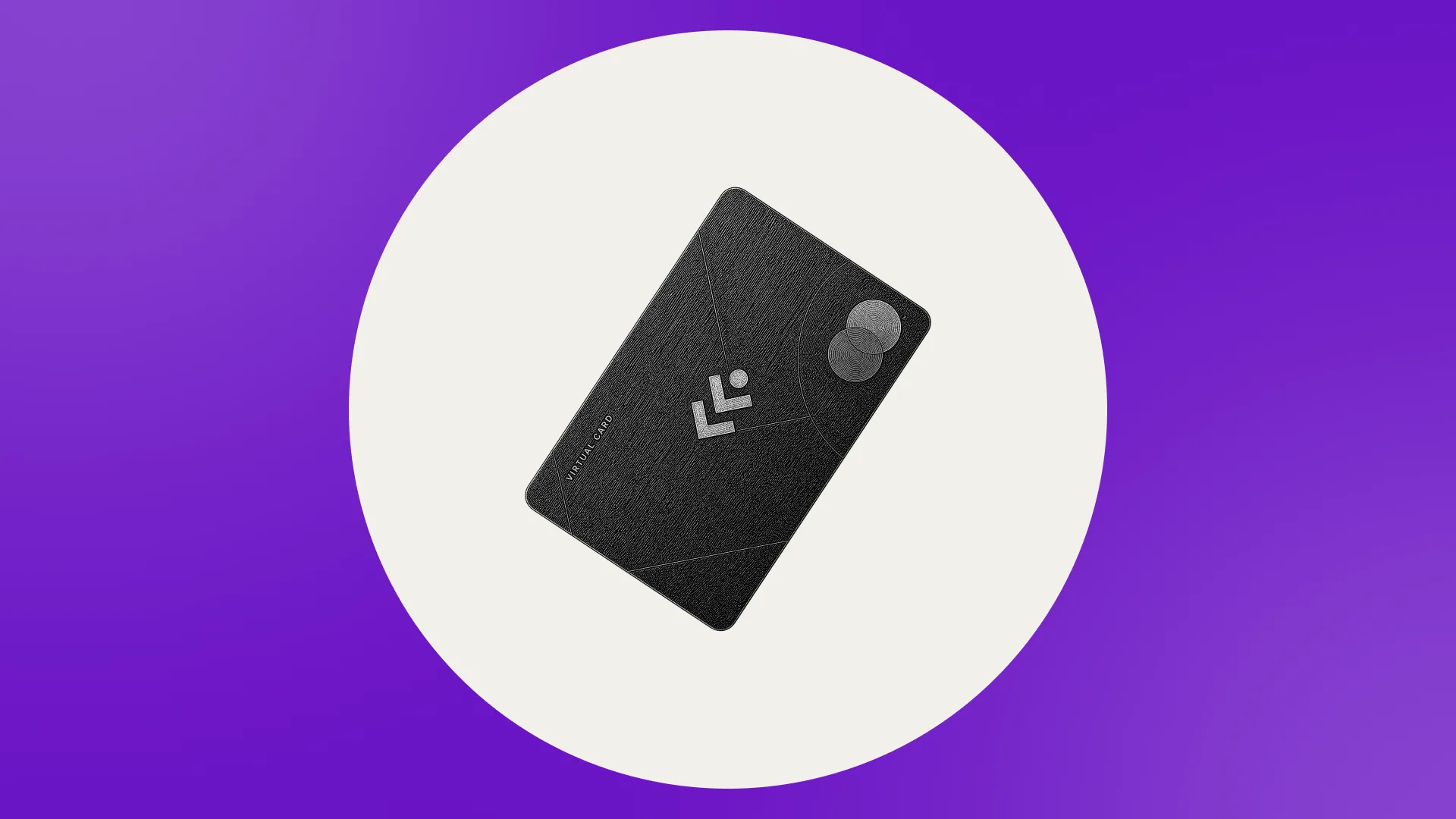
Kast cards work anywhere Visa is accepted worldwide, both online and in person. Users can get virtual US and EU bank account numbers, IBAN, and routing details, and share them with employers, clients, or anyone who owes them. This makes Kast function as a pseudo-banking layer for crypto-native freelancers who receive payments in fiat but want to keep their financial operations inside one platform.
Global Account services are powered by Bridge, leveraging banking services provided by Lead Bank, Member FDIC. However, the digital assets held in your Kast account are not FDIC insured.
Multi-Chain and Stablecoin Support
All cards support USDC, USDT, and USDe spending. Kast also supports BTC, ETH, SOL, XRP, BNB, and 20+ additional cryptos, which are auto-converted to stablecoins upon deposit.
Kast accepts Solana network for direct deposits: SOL, USDC (Solana), and USDT (Solana). Sending assets on unsupported networks like ERC-20 may result in permanent loss. Stablecoin deposits are converted to USD at a 1:1 rate with 0% spread.
Kast Card Tiers Breakdown: Which Card Is Right for You?
Overview of the Tier Structure
Kast restructured its rewards in May 2026, replacing the previous Season 5 points and $MOVE cashback program with USD cashback as the primary reward stream. The current lineup is: Standard 1.5% (free), Premium 2% ($1,000/year), Private 3% ($10,000/year).
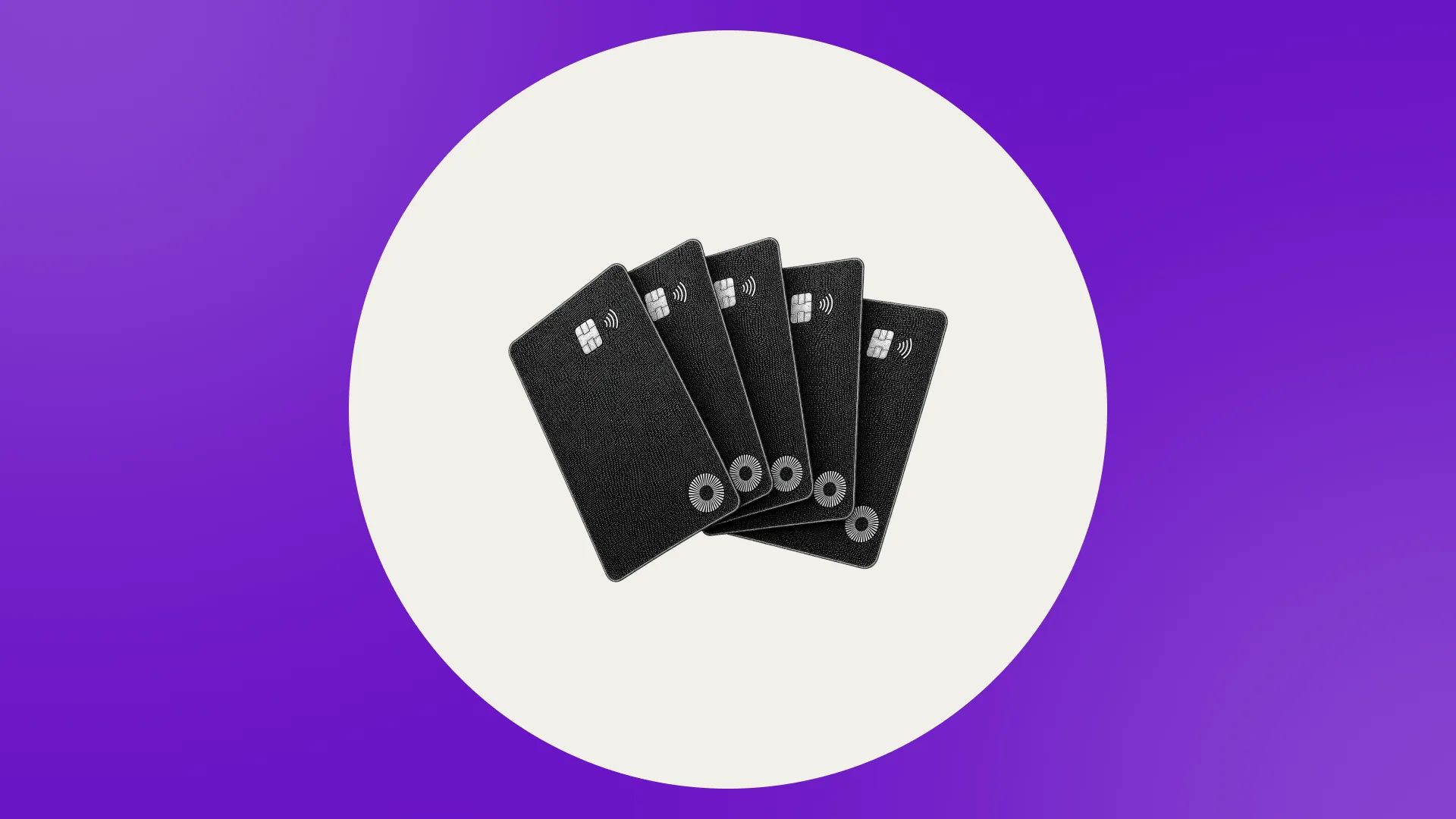
Among crypto card lineups, Kast operates one of the most extensive programs: 10 distinct Visa variants spanning price points from $0 to $10,000/year. These include the regular Kast designs, the Solana-branded cards, Bitcoin-branded variants, and the Pudgy Penguins (Pengu) co-branded line. All designs at the same tier share identical economics: same USD cashback rate, same caps, same fees, same Kast Points rate.
K-Card (Standard, Free)
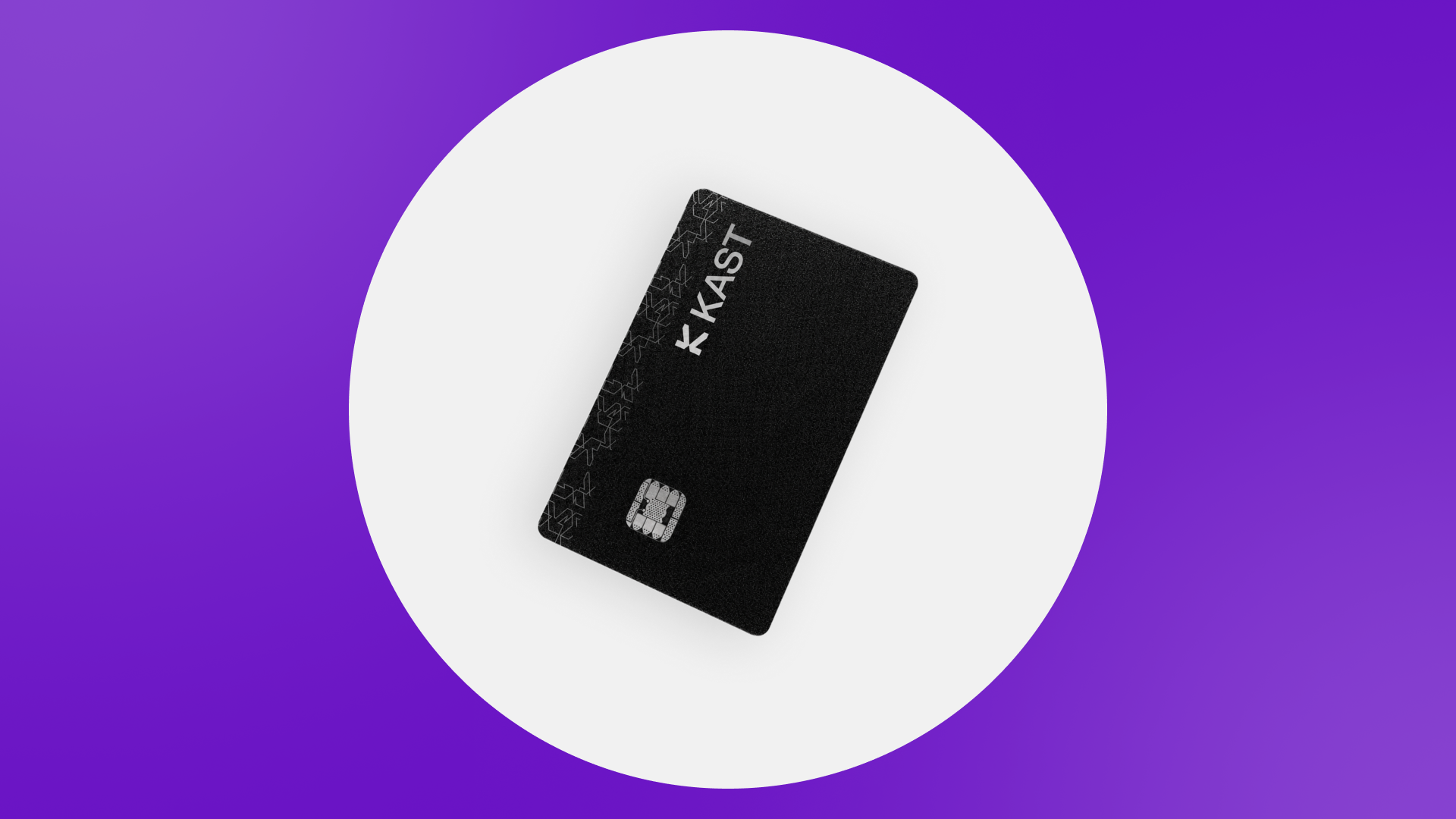
The K-Card is the entry point. The free Standard tier is most useful for users who spend at or below the $2,000/month cap, where it earns a solid 1.5% in USD. The Standard tier earns 0% Kast Points on card spend. However, SOL staking can earn bonus Kast Points even at this level.
Cashback accrues at the moment a transaction is authorized, sits in your Rewards Balance for a 14-day timelock, and then must be manually redeemed in-app. Cashback cannot be withdrawn to fiat or to an external wallet; it must be spent through the card.
Notable limitations: At 1.75% FX on non-USD spend, the Standard-tier K-Card costs you money on international purchases. The net effect is negative once FX fees exceed the 1.5% cashback.
Who it is for: USD-dominant spenders under $2,000/month who want zero commitment and a fast onboarding process.
X Card (Premium, $1,000/Year)
The Premium tier bumps cashback to 2% on the first $10,000/month in spending. Kast Points are an additional reward stream on Premium (1%) tiers, on top of the USD cashback. Premium cardholders receive Visa Infinite benefits: lounge access, global concierge, travel insurance, and purchase protections.
Premium at $1,000/year makes sense if your monthly card spend consistently exceeds roughly $2,200. Below that threshold, the cashback uplift does not cover the annual cost.
Who it is for: Regular spenders above $2,200/month who value Visa Infinite perks and Kast Points exposure.
Solana Illuma (Premium Tier, Solana-Branded)
The Solana Illuma shares the same economics as the X Card but comes in a distinct Solana-branded design with an LED-illuminated logo. The Solana Illuma offers substantial staking rewards that differentiate it from the standard X Card, making it the clear choice for SOL holders.
Who it is for: SOL holders who want the Premium tier with a Solana-native identity.
Solana Gold / Private ($10,000/Year)
The top tier offers 3% USD cashback + 2% Kast Points, with a $50,000/month cashback cap. Beyond the heavy metal construction and gold plating, the card offers personalized concierge services and custom limit arrangements.
Who it is for: High-volume spenders and SOL ecosystem participants who will use $5,000+ per month and value VIP concierge access.
Cost-Benefit Summary
Tier | Annual Fee | USD Cashback | Cashback Cap | Kast Points | Card Level |
Standard (K-Card) | €0 | 1.5% | $2,000/mo | 0% | Visa Platinum |
Premium (X Card) | ~€930 | 2% | $10,000/mo | 1% | Visa Infinite |
Private (Gold) | ~€9,300 | 3% | $50,000/mo | 2% | Visa Infinite |
The honest math: at $1,500/month in spending, the K-Card earns roughly $22.50/month, or $270/year. Premium tiers only make sense above the break-even point, and the Private tier demands extreme volume to justify the cost.
Kast Points and SOL Staking Rewards Explained
How Kast Points Are Earned
Kast's reward system runs on 2 parallel tracks: spend-based Kast Points and SOL staking Points. Both accumulate simultaneously, and Kast Points ultimately redeem for SOL, not fiat.
Track 1, Spend-Based Kast Points: every dollar charged to your Kast Card earns Kast Points at your tier's rate. Standard earns 0%, Premium earns 1%, and Private earns 2%. Note that Standard cardholders earn zero Kast Points from spending, only the USD cashback.
SOL Staking Integration
The Kast Validator (powered by KILN) offers both 0% commission and 100% MEV kickback. Users can earn up to 3.5% APY through SOL staking in 2026.
Staking bonus Kast Points scale with your card tier:
- Standard Solana Card: 0.125 points per SOL per epoch
- Premium Solana Illuma: 0.25 points per SOL per epoch
- Private Gold: 0.5 points per SOL per epoch
You can undelegate your SOL at any time, but there is a mandatory unbonding period of approximately 2 days before you regain full access.
Risk consideration: Staking SOL ties your rewards to SOL's price volatility. If SOL drops 30%, your accumulated Kast Points are worth 30% less in dollar terms. This is a real cost that many reward calculators overlook.
Redeeming Kast Points
Kast Points are redeemed for SOL. The redemption rate fluctuates with SOL's USD price. Kast has not published a token conversion ratio or TGE timeline post-May-2026. Treat Kast Points as a platform loyalty stream rather than a guaranteed future asset.
Effective Cashback Rates Across Tiers
Here is a realistic monthly breakdown at different spending levels (Standard tier, USD transactions only):
Monthly Spend | USD Cashback (1.5%) | Kast Points | Total Value |
€500 | ~€7.50 | 0 | ~€7.50 |
€1,500 | ~€22.50 | 0 | ~€22.50 |
€2,000 (cap) | ~€30 | 0 | ~€30 |
Kast Card Fees and Spending Limits
Transaction and Spending Fees
Fees break down as follows: Standard/Premium/Private annual fees of $0/$1,000/$10,000 per year; stablecoin top-up fee is 0%; ACH deposit is $2; FedWire is $15.
There is an inactivity fee of $1/month after 12 months of no use and a declined transaction fee of $0.50. The declined transaction fee is unusual in the crypto card space and can add up if your balance management is not precise.
First 2 virtual cards are free. Additional cards are $2 each.
Foreign Exchange (FX) Fees
FX fees on non-USD transactions range from 0.5% to 1.75% depending on your country and the merchant's currency. For USD-denominated transactions, there is no FX fee.
ATM Withdrawal Fees
All tiers share identical ATM withdrawal restrictions: $250 per withdrawal, 3 per day, $750 total per 24 hours. Each withdrawal costs $3 plus 2%, plus any ATM operator fees.
ATM access is not Kast's strength. On a $200 withdrawal, you pay $3 + $4 (2%) = $7, a 3.5% effective cost. Cash-heavy lifestyles should look elsewhere.
Spending Limits and KYC Tier Upgrades
You can make transactions of any size, and you have unlimited transaction limits and unlimited balance and deposit limits, regardless of card tier. This is genuinely generous compared to many competitors that cap daily spending.
Kast structures verification into 3 levels: Level 1 happens during signup with basic personal details; Level 2 involves ID photos and a liveness check for card creation; Level 3 targets users needing USD bank accounts. Level 1 and 2 reviews usually wrap up in a few hours, while Level 3 might take business days.
Key Features of the Kast Card
Apple Pay and Google Pay Integration
Adding the Kast card to Apple Pay takes less than 30 seconds, and many users find themselves using this option more frequently than the physical card for everyday purchases. For Android users, Google Pay works equally well.
This is one of Kast's genuine strengths. The contactless spending experience is indistinguishable from any traditional card, which removes the friction that plagued earlier crypto card products.
Instant Virtual Card Activation
Setup is fast: the virtual card can be live within minutes of approval. This means you can go from download to first spend in a single sitting, assuming KYC clears quickly.
Physical card delivery varies by region and may take 1-3 weeks. Physical V2 Infinite card shipping was scheduled to begin at the end of April 2026.
The app includes instant freeze/unfreeze functionality. The freeze feature locks the card in under 2 seconds with no confirmation delay.
Fiat Banking Integration
Kast provides users with virtual USD bank accounts. Friends, family, and businesses can send payments via ACH or Fedwire, which automatically convert to USDC in the Kast account. Third-party senders are able to deposit funds into your bank account, meaning you can receive fiat withdrawals from exchanges, receive salary payments, or get paid by clients.
This is a practical feature for freelancers and remote workers who get paid in fiat but want to manage spending through a stablecoin-denominated card.
App and User Experience
The Kast App gives you full in-app control over your card settings, including freeze/unfreeze, PIN management, and real-time spend notifications. App store ratings as of mid-2026: Apple Store 4.0/5.0 (96 ratings), Google Play 3.1/5.0 (834 ratings).
The Google Play rating gap is worth noting. A 3.1 average typically indicates a subset of users encountering meaningful issues, even if the majority have positive experiences.
Kast Card Pros and Cons
Key Advantages
- Stablecoin-native model removes the need for manual crypto-to-fiat conversions before spending
- Competitive USD cashback at 1.5-3% depending on tier, paid in real USD rather than a volatile governance asset
- SOL staking integration turns idle SOL into Kast Points, adding a passive income layer
- Visa acceptance across 170+ countries and 150M+ merchants makes it practical nearly everywhere
- Instant virtual card activation with 2-minute KYC for fast onboarding
- Unlimited spending limits on all tiers, with no per-transaction caps
- Fiat banking integration with USD account numbers for salary deposits
Notable Drawbacks
- Fully custodial model means your crypto is legally sold to Kast upon deposit, creating counterparty risk
- FX fees of 0.5-1.75% on all non-USD transactions eat into cashback for international spenders
- Premium tiers are expensive: $1,000/year (Premium) and $10,000/year (Private) demand high volume to justify
- Cashback is platform-locked: it cannot be withdrawn as cash or moved to an external wallet
- ATM fees are steep: $3 + 2% per withdrawal on a $750/day cap
- Customer support concerns: Kast holds a 3.3/5 on Trustpilot with a sharply polarized distribution, approximately 53% five-star and 43% one-star.
- Rewards structure has changed multiple times: May 2026 was the third major restructure, meaning the terms you sign up under today may not be the terms a year from now.
Kast Card vs. Top Crypto Card Competitors in 2026
Crypto Card Comparison Table
Feature | Kast Card (Standard) | Kast Card (Private) | Bybit Card | Nexo Card | MetaMask Card (Virtual) | Crypto.com Visa (Ruby) | Bleap |
Network | Visa | Visa | Mastercard | Mastercard | Mastercard | Visa | Mastercard |
Best Cashback Rate | 1.5% USD | 3% USD + 2% Kast Points | Up to 10% (USDT) | Up to 2% (NEXO) | 1% mUSD | 2% (CRO) | Up to 20% (USDC) |
Monthly Fee | €0 | ~€775/mo | €0 | €0 | €0 | ~€4.60/mo | €0 |
FX Fee | 0.5-1.75% | 0.5-1.75% | 0.5% (EEA) | 1.35%+ | 1% (Virtual) | 0% (card currency) | 0% |
ATM Limit | $750/day | $750/day | First €100 free, then 2% | Up to €2,000/mo | Virtual: N/A | $200-$1,000/mo free | N/A |
Staking Required | No | No | No | No (but $5K+ for cashback) | No | $400 CRO | No |
KYC Required | Yes | Yes | Yes (Level 2) | Yes | Yes | Yes | Yes |
Custody | Custodial | Custodial | Custodial | Custodial | Self-custodial | Custodial | Self-custodial |
Supported Regions | 170+ countries | 170+ countries | EEA, AU, AR, BR, others | EEA + UK | US, EU, UK, LATAM | 40+ countries | EEA, expanding LATAM |
Kast Card vs. Nexo Card
Nexo Card is a Europe-only Mastercard that runs 2 modes: Debit Mode for spending from balances, and Credit Mode for borrowing against your crypto. That dual-mode setup is Nexo's core differentiator.
Cashback: Nexo offers up to 2% cashback in NEXO (or up to 0.5% in BTC), tiered by Loyalty level, and generally tied to having a $5,000+ portfolio. Kast's Standard tier matches Nexo's cashback (1.5% vs Nexo Base 0.5%) without requiring any portfolio minimum. At free tiers, Kast wins on cashback.
Fees: Nexo Card's fees for debit purchases include 0.75% for crypto swaps, then up to 2.5% in FX fees. Kast's 0.5-1.75% FX is lower on average.
Availability: Nexo is EEA and UK only. Kast covers 170+ countries. For users outside Europe, Kast is the clear choice.
Verdict: Nexo suits crypto holders who want to borrow against their portfolio without selling. Kast is better for straightforward stablecoin spending with broader geographic reach.
Kast Card vs. Bybit Card
Bybit Card is a Mastercard debit card available in EEA, Switzerland, Australia, and a handful of other regional programs. It runs off your Bybit Funding Account.
Cashback: Bybit cashback ranges from 2% (Tier 1/Base) to 10% (Tier 6/Infinite), paid out in USDT. However, EEA countries (EU, Iceland, Liechtenstein, Norway) are not supported for the main rewards program. Kast's 1.5% free-tier cashback is more universally available.
Fees: Bybit's EEA program discloses FX fees of 0.5% and a crypto conversion fee of 0.9%. Kast's stablecoin deposits are 0% conversion, giving it an advantage when funding with USDC/USDT.
Platform dependency: Bybit Card requires an active Bybit exchange account. The card works best as a complement to an active Bybit account, not as a standalone crypto spending tool. Kast is more independent.
Verdict: Bybit is a strong choice for existing Bybit traders who can reach VIP status for higher cashback. Kast is more accessible for standalone stablecoin spenders. For users who want independence from any exchange.
Kast Card vs. MetaMask Card
The MetaMask Card is a non-custodial Mastercard debit card that spends directly from your self-custody wallet: funds stay in your MetaMask wallet until the moment of payment. The free virtual tier offers 1% cashback, a 1% cross-border fee, and spending from Linea, Base, or Solana wallets.
Overall Competitive Positioning
Kast occupies a clear niche: it is the strongest stablecoin-first, Solana-native card for users who prioritize USD spending and are comfortable with custodial risk. Its unlimited spending limits and fiat banking integration give it an edge for freelancers and remote workers.
Where Kast falls short is FX costs, cashback flexibility, and custody. Users who spend in multiple currencies, want self-custody, or prefer cashback they can actually withdraw should compare carefully against self-custodial alternatives.
8. Availability, KYC, and the Kast Card Sign-Up Process
Supported Countries and Regions
Kast Card is available to residents of the United States, United Kingdom, Europe, Canada, Latin America, Asia-Pacific, and Middle East and Africa, covering 170+ countries.
However, Kast markets broad global availability, but supported countries vary in practice. Residency support, partner-level approval, and compliance checks can turn a fast virtual-card flow into a slower verification process. Country support is not confirmed until onboarding begins.
KYC Requirements and Identity Verification
Kast uses verification levels to unlock different features. You do not need every level from day one. You can complete the level that matches what you want to use now, then upgrade later.
- Level 1: Basic personal details during signup, grants fund reception
- Level 2: Government-issued photo ID + liveness check, required for card creation and spending
- Level 3: Additional documentation for USD bank account features
The KYC process uses Sumsub for ID verification and claims to take less than 2 minutes. In practice, most approvals happen within a few hours, though some users report longer waits during high-volume periods.
Step-by-Step Kast Card Sign-Up Process
- Search "Kast Finance" on the App Store or Google Play.
- Tap Sign Up, enter your email and password, confirm via OTP. Account creation takes under 2 minutes.
- Tap Verify Identity, select your country, upload a government-issued photo ID.
- Fund your wallet with stablecoins (USDC, USDT via Solana) or crypto
- Select your card tier
- Activate the virtual card and add to Apple Pay or Google Pay
- Order the physical card where available (delivery varies by region)
Estimated total time from download to first spend: 10-30 minutes, depending on KYC processing speed.
Security and Custody Model
Custodial Structure Explained
Kast Card operates a fully custodial model where deposited crypto is legally sold to Kast and managed at the corporate treasury level. Users no longer retain ownership of transferred assets, creating counterparty risk distinct from self-custody solutions.
This means that in an insolvency scenario, your balance would be treated as a corporate liability, not segregated client assets. This is a real risk that every user should weigh against the convenience Kast provides.
Fund Protection and Insurance
Kast partners with Fireblocks, BitGo, and enterprise security leaders for institutional-level asset custody. However, there is no publicly disclosed insurance arrangement equivalent to FDIC or FSCS protections.
Stablecoin-specific risks also apply: de-peg risk (if USDC or USDT loses its dollar peg) and issuer risk (if the stablecoin issuer faces regulatory action) are inherent to any stablecoin-first card, not unique to Kast.
Card Security Features
Kast uses identity verification, encryption, device-level security, and real-time fraud monitoring. Users can enable biometric login and multi-factor authentication in the app. Merchants only see a secure token. Your real card number stays hidden.
Card freeze/unfreeze is instantaneous, and the virtual card number masking provides an additional layer of protection for online transactions.
Customer Support and Platform Reliability
Support Channels and Response Quality
Kast's help center covers most common questions. Human resolution runs through Concierge and email support, and the gap between help center coverage and actual resolution speed shows up most when a deposit is missing or a card payment is disputed.
Support is available through: - In-app Concierge - Email (support@kastcard.com) - Community channels (Discord, Telegram, Twitter/X)
Several users report multi-week waits for customer support responses during account reviews. This is a significant consideration if you plan to use Kast as your primary payment method.
Platform Uptime and Reported Issues
The Trustpilot distribution is sharply polarized: approximately 53% five-star and 43% one-star, with very few in between. This bimodal spread typically signals that the product works well for most users, but when it fails, the failures are severe.
Positive themes include fast transaction approvals, near-instant top-up confirmations, and stable app performance. Negative themes center on account freezes, difficulty restoring frozen accounts, and regional policy changes affecting existing premium users.
Community and Reputation
Kast raised an $80M Series A at a $600M valuation in March 2026 and has surpassed 1M+ users with approximately $5B in annualized volume. These numbers suggest meaningful traction, though a short track record (the company is 2 years old) means long-term reliability is still being established.
Who Is the Kast Card Best For?
Ideal User Profiles
- The Solana ecosystem participant: Already holds SOL, wants SOL staking rewards while spending stablecoins day to day
- The stablecoin saver: Keeps funds in USDC/USDT and needs a practical way to spend without manual off-ramping
- The USD-dominant spender: Lives or transacts primarily in USD, where Kast's 0% USD FX fee and 1.5% cashback deliver clean value
- The crypto-native freelancer: Receives crypto income and needs a banking-compatible spending card with virtual account numbers
- The casual crypto user: Wants a free entry-level card (K-Card) with no upfront cost
Who Should Look Elsewhere
- Users uncomfortable with custodial platforms: Kast takes full ownership of deposited assets. If self-custody is non-negotiable.
- International spenders in non-USD currencies: The 0.5-1.75% FX fee makes Kast expensive for EUR, GBP, or other currency spending.
- Users who need large ATM access: $750/day cap with a $3 + 2% fee is restrictive
- Users who want flexible cashback: Kast's cashback is platform-locked with a 14-day hold.
- Users who prioritize support reliability: The polarized Trustpilot reviews suggest meaningful support friction for some users
Final Verdict: Kast Card Rating and Recommendation
Overall Rating Breakdown
Category | Score |
Feature set | 4/5 |
Fees and value | 3/5 |
Rewards and cashback | 3.5/5 |
Ease of use | 4/5 |
Security | 3/5 |
Overall | 3.5/5 |
Recommendation by Spending Level and Profile
- Light spenders (<€900/month): The K-Card is a solid no-cost entry point. USD spending earns 1.5% cashback with zero commitment. Just watch the FX fees if you spend outside USD.
- Mid-range spenders (€900-€4,500/month): The Premium tier offers decent value if you consistently spend above ~€2,000/month and use the Visa Infinite perks. Below that threshold, the €930 annual fee does not pay for itself.
- High spenders (>€4,500/month): The Private tier at ~€9,300/year delivers 3% cashback + 2% Kast Points, but the capital commitment is substantial. Run the math against your actual spending pattern.
- SOL ecosystem participants: Kast is a clear option. The staking integration adds meaningful value beyond card spending alone.
Is the Kast Card Worth It in 2026?
Kast has carved out a legitimate niche as a stablecoin-first Visa with broad global reach, instant onboarding, and a tiered reward system that works well for USD-dominant spenders.
The strengths are real: unlimited spending limits, fiat banking integration, and a free tier that requires zero commitment. The $80M Series A and 1M+ user base signal a company that is actively building, not coasting.
The weaknesses are equally real: fully custodial model with counterparty risk, FX fees that penalize non-USD spenders, platform-locked cashback with a 14-day hold, and a rewards structure that has changed 3 times in its short history. Premium tiers demand high spending to justify, and support quality remains inconsistent.
Frequently Asked Questions About Kast Card
What are the Kast Card fees, and is there a monthly charge?
The current fee structure is: Standard is free ($0/year), Premium is $1,000/year, and Private is $10,000/year. There is no monthly fee, but there is an inactivity fee of $1/month after 12 months of no use and a $0.50 declined transaction fee. Stablecoin top-ups carry 0% fee, while ACH deposits cost $2 and FedWire costs $15. FX fees of 0.5-1.75% apply on non-USD purchases. ATM withdrawals cost $3 + 2%.
How does Kast SOL staking work, and what are the risks?
Native staking delegates your SOL to a validator on the Solana network responsible for verifying transactions and maintaining security. Kast's validator offers 0% commission and 100% MEV kickback. Rewards are distributed approximately every 2 days (one Solana epoch). The main risks are SOL price volatility (your staked value drops if SOL drops) and a 2-day unbonding period when you want to unstake. There is no guarantee that Kast Points will maintain or increase in dollar value.
Is the Kast Card available in the US and EU?
Kast Card is available to residents of the United States, United Kingdom, Europe, and many other regions. However, actual availability depends on passing KYC and partner approval. US users should note that spending crypto via Kast is a potential taxable event under IRS guidance, which treats crypto as property.
How does Kast Card compare to the Nexo Card and Bybit Card in 2026?
Kast offers higher free-tier cashback (1.5%) than Nexo's Base (0.5%) without requiring a $5,000 portfolio minimum. Bybit offers higher potential cashback (up to 10%) but requires VIP status or high spending tiers, and its main rewards program excludes EEA users. Kast's 170+ country coverage exceeds both Nexo (EEA/UK only) and Bybit (limited regions). All 3 are custodial.
What are the Kast Card spending limits and how do I increase them?
All tiers have unlimited transaction limits and unlimited balance and deposit limits. ATM withdrawals are capped at $750/day across all tiers. To access card creation and spending, you need Level 2 KYC (photo ID + liveness check). Level 3 KYC unlocks USD bank account features and requires additional documentation. Processing typically takes a few hours for Level 1-2, potentially days for Level 3.
Is Kast Card safe? How are funds protected?
Kast partners with Fireblocks, BitGo, and enterprise security leaders for custody. Card security includes 2FA, biometric login, instant freeze/unfreeze, and virtual card number masking. However, the fully custodial model means your funds are treated as assets sold to Kast, not segregated client holdings. There is no FDIC insurance on the crypto balance. Users should keep only near-term spending funds in the account and maintain KYC documents accessible for re-verification.
Conclusion: Should You Get the Kast Card in 2026?
Kast Card has a clear value proposition for a specific audience: stablecoin holders who want hassle-free USD spending with Visa acceptance across 170+ countries. The free Standard tier is a low-risk way to test the product. The SOL staking integration adds a genuine passive income angle that no other card in this comparison provides.
The caveats are equally clear. The custodial model is a hard trade-off for anyone who entered crypto because they valued financial sovereignty. The FX fees make non-USD spending expensive. The premium tiers are only worth it for high-volume spenders. And the 3 rewards restructures in 2 years mean the deal you sign up for today may look different a year from now.
Before committing to any single card, consider what you actually need. If it is stablecoin spending in USD with no annual fee, Kast's K-Card is a solid free option.