

1. The Solflare Card Shutdown: What Happened and Why
A Brief History of the Solflare Wallet Card
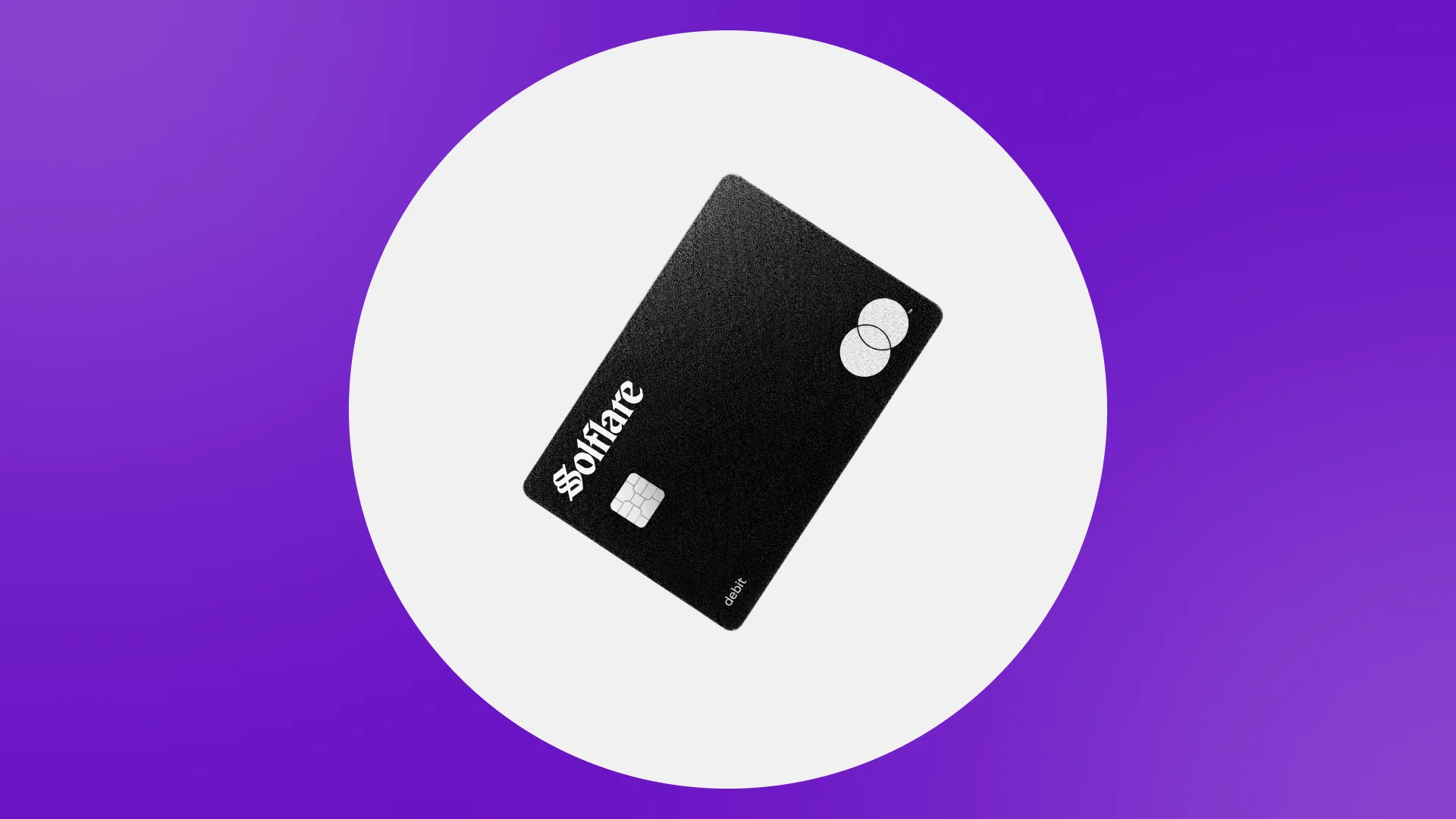
The Solflare Card was a Solana-native crypto debit card tied to the non-custodial Solflare wallet. Its defining feature set it apart from nearly every competitor: the Solflare Card is described as the first true self-custody crypto debit card on Solana. Users kept their own keys while Solflare handled the payment rails. It was self-custodial end to end, so there was no deposit, no top up, and no balance parked with the card provider, the card spent straight from your wallet at the moment of purchase.
Why the Solflare Card Was Discontinued
The shutdown was not a Solflare failure, it was a supplier collapse. Kulipa, a stablecoin card issuance infrastructure provider to roughly 20 wallets and fintechs, went bankrupt, forcing Ready and Solflare to suspend crypto card services. The incident highlights the fragility of third-party dependencies in the crypto card space. Solflare's team stated it previously tried to help Kulipa find a buyer and explore continuation plans, but without success. Community reaction leaned frustrated, with the most common complaint being the abrupt, no-warning cutoff mid-checkout.
Is the Solflare Wallet Card Discontinued for Good?
Not permanently. A new version of Solflare Card is under development, integrating with Apple Pay and Google Pay, offering higher limits and cashback while maintaining self-custody, expected to launch within a few weeks. Keep in mind that relaunch dates in this sector slip often, because migrating to a new issuer involves compliance onboarding and testing that rarely lands on schedule. For anyone who spends daily, waiting is not a plan, hence this comparison.
2. User Fund Safety After the Shutdown
What Happened to Funds on the Solflare Card
This is the reassuring part of an otherwise disruptive event. Because of the self-custody architecture, not one cent of user money was ever held by the issuer, so your USDC is sitting exactly where it always was and you can move it or spend it right now. This contrasts sharply with typical custodial programs. With a typical card program the issuer holds your balance, and when that issuer fails your money gets frozen behind a bankruptcy estate while you wait in line as a creditor for your own funds.
Steps to Confirm Your Funds Are Secure
Open your Solflare wallet and confirm your SOL and SPL token balances directly, they are unaffected by the card's status. Back up your seed phrase if you have not done so recently, since self-custody means you alone are responsible for key security. If any balance looks wrong, contact Solflare's official support channels rather than acting on unofficial links. The core principle holds: in a genuine self-custody model, the card going offline does not touch the assets in your wallet.
3. Why Users Are Actively Seeking Alternatives
The Gaps the Solflare Card Left Behind
The Solflare Card filled a narrow but valuable niche: seamless SOL and SPL token-to-fiat conversion at the point of sale, on-chain self-custody linked to a spend card, a genuinely rare combination, and competitive fees for a Solana-native audience. Very few products replicate all three at once, which is why the market has no perfect drop-in replacement today.
Common Complaints That Were Already Pushing Users Away
Even before the shutdown, friction existed. Availability was limited: cards were available to the EEA, UK, and other countries decided on a case-by-case basis. Some users also encountered issuer-side compliance actions. Reports surfaced of separate freeze cases predating the shutdown, with one user's card frozen without explanation, showing "Frozen" in the app after a risk assessment by the card partner. Cashback and support responsiveness also trailed larger competitors.
What the Ideal Replacement Looks Like
The ideal replacement is licensed, actively maintained, transparent on fees, and, ideally, either SOL-friendly or self-custodial. The next section turns those priorities into concrete evaluation criteria.
4. What to Look for in a Solflare Card Alternative
Regulatory Licensing and Issuer Trust
The Kulipa collapse is the clearest possible argument for licensing. A card backed by an e-money institution (EMI) licence, FCA registration, MiCA authorisation, or an equivalent regime gives you defined fund-protection rules and dispute-resolution paths. Licensing does not guarantee a product will never pause, but it materially raises the bar on segregated funds, capital requirements, and oversight.
Supported Assets and Blockchain Compatibility
Solflare users specifically want SOL and SPL token support, which remains uncommon. Beyond that, consider the breadth of supported chains and tokens, and whether a card is stablecoin-first (spending USDC or EURe) or genuinely multi-asset.
Custodial vs. Non-Custodial Card Architecture
Custodial cards, usually exchange-issued, hold your balance for you. Non-custodial cards keep assets in a wallet or smart account you control until the moment of payment. The trade-off is convenience versus control. Solflare users, who chose the product for its self-custody ethos, may specifically prioritise non-custodial or DeFi-compatible options.
Fees That Actually Matter
Four fees drive real-world cost: FX conversion (critical for travel), top-up or funding fees, monthly or annual card fees, and ATM withdrawal fees. A "0% FX" headline is meaningless if a 1–2% crypto-to-fiat conversion spread sits underneath it, always read both lines.
Rewards and Cashback Structure
Distinguish flat-rate from tiered cashback, and crypto-denominated from fiat rewards. Many top rates are gated behind staking or holding a native token, which introduces price risk. Because crypto cashback is paid in tokens, its fiat value fluctuates after you earn it.
Spending Limits and Daily Caps
Check per-transaction minimums and maximums, monthly spending caps by tier, and ATM withdrawal limits. Low caps can quietly make a "high-cashback" card unsuitable for your actual spending.
KYC and Onboarding Requirements
Most licensed alternatives require standard KYC, a government photo ID plus a selfie or liveness check. Higher tiers or credit-line products may add proof of address and source-of-funds checks. Regional availability varies widely, so verify your country before applying.
5. Top Licensed Solflare Card Alternatives (Ranked)
Each card below is evaluated against the criteria above. We have prioritised licensed, actively maintained products with genuine user bases. This is comparative information, not personalised advice, and none of these cards guarantees approval.
Crypto.com Visa Card
Crypto.com runs one of the deepest card ladders in the market on the Visa network, issued through region-specific banking partners. Under the Level Up structure for cards issued from 2 September 2025, the free Basic tier earns nothing, and rewards require either a paid subscription or a CRO lockup: Plus at 2%, Pro at 3%, Private at up to 5%. Caps matter as much as rates: only €1,250 of monthly spend earns rewards on Plus and €2,500 on Pro, with just the Private tiers uncapped. SOL is supported for deposits, and Crypto.com is available in 96 countries as of July 2026.
- Best for: high-volume spenders comfortable subscribing or staking CRO.
- Drawback: custodial model; a 12-month CRO lockup is required for top tiers, and the free tier earns 0%. Rewards are paid in CRO, whose value fluctuates.
Bybit Card (Powered by Mastercard)
The Bybit Card is a Mastercard that spends from your Bybit funding account. It offers up to 10% cashback, no annual fee, and 0% foreign transaction fees on the marketed programs, with published cashback rates from 2% to 10% depending on tier and monthly caps. SOL is among its supported spend and collateral assets. In the EEA program, card fees include a foreign exchange fee of 0.5% on top of Mastercard's rate, and a crypto conversion fee of 0.9%. Availability runs as separate regional programs.
- Best for: active traders already holding assets on Bybit.
- Drawback: custodial and exchange-dependent; the top cashback tiers require large BIT/MNT holdings. Reward token value fluctuates.
Wirex Card
Wirex is one of the longest-running licensed crypto card providers, operating since 2014, serving over 6 million users with card availability in 35 countries and a simple proposition: hold any currency, spend any currency, pay zero FX fees. It is a legitimate, FCA-registered business with a long operational history. The free Standard plan pays 0.5% Cryptoback in WXT, while the Elite plan at €29.99/month starts at 4% Cryptoback, but reaching the top 8% rate requires locking 7.5 million WXT for 180 days. Note a real caveat: FX is advertised at 0%, but crypto-to-fiat conversion spreads of roughly 1–2% apply at checkout.
- Best for: frequent international travellers who value genuine 0% FX and multi-currency accounts.
- Drawback: rewards are paid only in WXT, whose fiat value moves with the token price; SOL support is limited.
Nexo Card
The Nexo Card takes a different route, a dual-mode Mastercard. It lets you spend your crypto balance directly or borrow against it at the point of purchase, all while earning up to 2% cashback in BTC or NEXO tokens. Cashback is tiered by loyalty level: Base 0.5% (under 1% portfolio in NEXO), Silver 0.7% (1%+), Gold 1% (5%+), and Platinum 2% (10%+ portfolio in NEXO). On FX, weekday fees are 0.2% for EEA, UK, and Switzerland and 2% for the rest of the world, rising to 0.7% and 2.5% on weekends, though higher tiers get monthly free FX allowances up to €20,000. Instant crypto-backed loans are available up to 50% LTV with rates starting at 2.9% APR. Availability is limited to eligible users in selected European countries, including the EEA and the UK.
- Best for: HODLers who want to spend without selling and triggering a taxable disposal.
- Drawback: custodial credit model; best cashback requires holding NEXO tokens, and physical card orders are currently paused, so expect virtual-card access only.
Gnosis Pay (Self-Custody DeFi Card)
Gnosis Pay is the closest spiritual successor to the Solflare Card's self-custody ethos. It is a genuine non-custodial Safe smart contract wallet, the only true crypto card where funds stay on-chain until the exact moment of payment. The Gnosis Pay carries a €30 one-time fee, is available in the EU, UK, and LATAM, and offers 1–5% GNO cashback across tiers, letting users earn higher rates as they hold more GNO. The rewards program is transparent about its funding: it is the current interim programme funded by Gnosis Ltd, running until 30 September 2026. On cost, Gnosis Pay has 0% FX fees for EUR and GBP specifically if holding EURe or GBPe, while other currencies carry a small embedded spread.
- Best for: DeFi power users who prioritise on-chain self-custody.
- Drawback: EVM-only, SOL is not directly supported, and cashback is paid in GNO, a volatile token that you must hold to earn.
Bleap (Self-Custody Mastercard)
The original outline slot here was Monolith, but that product is no longer an option: Monolith has ceased operations and sunset the product, deactivating all cards on 8 October 2024. Its closure is itself a lesson about EVM self-custody cards and regulatory pressure. A live replacement with the same self-custody ethos is Bleap. Bleap is a MiCA-licensed self-custodial card that is live right now. It is a self-custodial Mastercard with 0% FX fees and up to 20% cashback, while requiring no monthly subscription. The headline 20% rate applies to select categories including gaming and streaming, with no monthly subscription required.
- Best for: self-custody users who want low fees without staking a native token; cashback is paid in USDC, a stablecoin.
- Drawback: EVM-based, so no native Solana support; newer than the exchange incumbents.
Honourable mentions. Coinbase Card, Kast, and 1inch Card did not make the main ranking here. Coinbase is strong on availability and simplicity but charges a 2.49% foreign transaction fee that erodes value abroad. Kast is worth watching for its Solana integration and self-custodial earn vaults, and 1inch appeals to DeFi users, but each has narrower reach or fewer distinguishing features for a Solflare refugee than the six above.
6. Feature and Fee Comparison Table
Card | Licence / Network | SOL Support | Cashback | FX Fee | Custodial? | Best For |
|---|---|---|---|---|---|---|
Crypto.com Visa | Region-specific bank issuers / Visa | Yes (deposits) | Up to 5% (CRO stake)¹ | 0% higher tiers; 3% free tier | Yes | High spenders |
Bybit Card | Moorwand / Harmoniie (EEA) / Mastercard | Yes | Up to 10% (tiered) | 0.5% + 0.9% conv (EEA)² | Yes | Traders |
Wirex | FCA-registered / Visa | Limited | 0.5%–8% (WXT)³ | 0% (spread applies)⁴ | Yes | Travellers |
Nexo | EEA/UK/CH / Mastercard | Yes (collateral) | Up to 2% (NEXO or BTC) | 0.2%–2.5%⁵ | Yes (credit) | HODLers |
Gnosis Pay | EMI, EU/UK/LATAM / Visa | No (EVM only) | 1%–5% (GNO) | 0% EUR/GBP⁶ | No | DeFi users |
Bleap | MiCA / Mastercard | No (EVM only) | Up to 20% (USDC, select)⁷ | 0% | No | Low-fee self-custody |
Free Basic tier earns 0%; top rates require a subscription or 12-month CRO lockup. ² EEA program; other regional programs differ. ³ Top 8% requires €29.99/month plus 7.5M WXT locked 180 days. ⁴ A ~1–2% crypto-to-fiat conversion spread applies at checkout. ⁵ Weekday/weekend and region-dependent; free FX allowances at higher tiers. ⁶ Small embedded spread on non-EUR/GBP currencies. ⁷ 20% applies to select categories such as gaming and streaming. Figures verified in 2026; each card's MyCardCompare independent rating and current terms appear on its card page.
The table shows there is no single winner, only a best fit per profile. A high-volume spender who will stake CRO can extract more from Crypto.com than a casual user ever could. A traveller values Wirex's 0% FX far more than a homebody does. And for anyone who chose Solflare specifically for self-custody, Gnosis Pay and Bleap are the only two rows that keep funds in your control until the point of sale. Remember that fees compound: a 2% FX drag on €1,500 of monthly foreign spend is €360 a year, often larger than any cashback you would earn.
Want the self-custody model Solflare users came for? Start with the closest on-chain successor. View card →
7. Rewards and Cashback Benefits Breakdown
Crypto Cashback vs. Fiat Cashback: Which Is Better?
Crypto cashback (CRO, WXT, GNO, NEXO) can appreciate, but it can also fall, and receiving a volatile token can complicate your tax position in some jurisdictions. Stablecoin cashback, like Bleap's USDC, removes the price-swing question. Cashback rewards received in crypto are often classified as purchase rebates and are not taxable when earned, but selling those rewards later at a higher price can trigger capital gains. Simplicity favours stablecoin or fiat rewards; upside potential favours volatile tokens.
Staking-Gated Rewards: Worth It?
Crypto.com, Nexo, and Wirex all gate their best rates behind token commitment. The break-even math is unforgiving. For Gnosis Pay, at 4% cashback you need to spend €750 annually to break even on the €30 fee, and at a more realistic 2% rate, breakeven is €1,500. The bigger risk is that the token you lock up can depreciate faster than the extra cashback compensates.
Flat-Rate vs. Tiered Cashback Cards
For low-volume spenders, a simple, consistent rate with no lockup usually beats a high headline rate that demands staking capital. High-volume spenders who will genuinely hit tier thresholds, and stay there, are the ones who benefit from tiered models. Match the structure to your real monthly spend, not the aspirational figure.
Additional Perks Beyond Cashback
Premium tiers add real utility. Crypto.com's higher cards include airport lounge access and monthly reimbursement on subscription services from Spotify and Netflix. Bybit offers similar rebates: Tier 2+ users get 100% rebates on Netflix, Spotify, ChatGPT, and Amazon Prime. Weigh these against the cost of reaching the tier that unlocks them.
8. Self-Custody vs. Custodial Card Models: Security and Control Trade-Offs
How Custodial Crypto Cards Work
With custodial cards, Crypto.com, Bybit, Wirex, Nexo, the exchange or issuer holds your balance. The benefit is a frictionless experience: instant top-ups, wide asset support, and easy recovery. The risk is counterparty exposure: exchange insolvency, account freezes, or withdrawal restrictions can strand your funds, exactly the scenario Solflare's architecture was designed to avoid.
How Non-Custodial / Self-Custody Cards Work
Non-custodial cards link a smart account or wallet to the card. Users maintain control of their private keys and assets through a Safe wallet, unlike most competitors that require depositing crypto into custodial accounts. Funds only leave your wallet at the moment of a transaction. The current limitation is ecosystem: these products are primarily EVM-based, with asset lists focused on EURe, xDAI, USDC, and GNO.
The Solana Self-Custody Card Gap
This is the hard truth for SOL-native users: no major provider currently offers a true self-custody spending card for Solana now that Solflare is paused. The self-custody leaders are EVM-only. Projects to watch include Solana Pay integrations and emerging Solana-focused card programs, plus Solflare's own promised relaunch. In the interim, SOL holders who insist on self-custody may need to bridge or swap into a stablecoin on an EVM self-custody card like Gnosis Pay or Bleap, or accept a custodial SOL-supporting card temporarily.
Security Best Practices Regardless of Card Type
Never keep more on a card balance than you plan to spend soon. Enable two-factor authentication and use in-app card-freeze controls. For self-custody cards, consider a dedicated wallet address for top-ups, and back up your seed phrase offline. Good habits reduce the damage from both platform failures and personal key mistakes.
9. Use-Case Recommendations
Best Card for Everyday Spending
Crypto.com (a mid or upper tier) or Wirex suit routine spending, thanks to wide Visa acceptance and reliable, if token-denominated, cashback. Wirex's genuine 0% FX is a bonus for anyone whose "everyday" includes cross-border purchases.
Best Card for DeFi and Self-Custody Purists
Gnosis Pay. On-chain control, no custodial risk, and a Safe-based architecture make it the natural home for the ex-Solflare user who refuses to hand over their keys.
Best Card for Solana-Native Users
Bybit or Nexo, both of which support SOL, Bybit for direct spend and Nexo as loan collateral. Neither is self-custodial, but they bridge the gap while a true self-custody SOL card matures.
Best Card for International Travellers
Wirex or Nexo. Wirex's 0% FX across many currencies and Nexo's low weekday EEA/UK FX rates minimise the single biggest hidden cost of spending abroad, just watch Nexo's weekend surcharge and the rest-of-world rate.
Best Card for Beginners
Coinbase or an entry-tier Crypto.com card. Familiar interfaces and broad availability lower the barrier, Coinbase is available in the U.S. and most of the EU/EEA, which is broader than several competitors, though beginners should note Coinbase's FX and conversion costs on volatile assets abroad.
Best Card for HODLers Who Hate Selling
Nexo. Its credit line lets you borrow against crypto and spend without selling, avoiding a taxable disposal event, the core appeal for long-term holders.
10. Licensing, Regulatory Trust, and Security Standards
Why Licensing Is Non-Negotiable
Solflare's shutdown is a cautionary tale about the entire card supply chain, not just the consumer-facing brand. An EMI or e-money licence, from the FCA, BaFin, a MiCA authorisation, or the MAS, guarantees defined standards around segregated client funds, capital adequacy, and complaint handling. It is the difference between a regulated wind-down and a scramble.
Red Flags to Avoid When Choosing a Crypto Card
Walk away if there is no publicly verifiable licence number, if the issuer sits in an unregulated jurisdiction, if the Terms & Conditions are vague or silent on fund protection, or if there is no segregated client-funds policy. The unlicensed card market has produced repeated stranded-balance incidents in 2026 alone.
How to Verify a Card's Regulatory Status
Check the FCA Register, the relevant EU e-money registers, or the MAS directory for the named issuer, not just the brand. Confirm the card network partnership is current: legitimate Visa and Mastercard programs are traceable to a principal member or licensed issuer. Cross-reference the entity name in the card's Terms with the register entry; they should match exactly.
MyCardCompare's ratings are independent editorial scores, refreshed regularly, and are never influenced by issuer relationships. Where a direct issuer relationship funds a special offer, that relationship funds the offer only, never a card's score or ranking.
11. How to Switch From Solflare to an Alternative: Step-by-Step
Step 1: Secure your Solflare wallet funds. Confirm your self-custodied SOL and SPL tokens are present in your Solflare wallet, they are unaffected by the card shutdown. Export or back up your seed phrase if you have not recently.
Step 2: Choose your alternative based on use case. Return to Section 9 and shortlist one or two cards that match your spending profile: self-custody, travel, SOL support, or simplicity.
Step 3: Complete KYC onboarding. Gather a government-issued ID, proof of address, and a selfie or liveness check. Standard KYC is typically completed in-app within 24–72 hours; credit-line products may take longer.
Step 4: Fund your new card. Deposit fiat by bank transfer or move crypto from your Solflare wallet. SOL holders will usually swap SOL to USDC or the platform's supported asset, note any swap fees. For self-custody cards like Gnosis Pay, connect a compatible wallet and bridge funds if needed.
Step 5: Set up security and spending controls. Enable 2FA, set daily and monthly limits, and add the card to Apple Pay or Google Pay where supported in your region.
Step 6: Test with a small transaction. Make a small, low-risk purchase first, then confirm any cashback credits correctly before relying on the card.
Step 7: Cancel residual Solflare autopayments. Update saved card details with merchants and redirect any automatic top-up rules to the new card.
Deciding between keeping custody and maximising cashback? Put the two poles side by side. Compare cards →
Frequently Asked Questions (FAQ)
Do any Solflare card alternatives support Solana (SOL) directly?
Yes. Bybit Card and Nexo Card support SOL, Bybit for direct spend and Nexo as loan collateral, and Crypto.com supports SOL deposits. However, a true self-custody SOL card is not yet mainstream now that Solflare is paused. Gnosis Pay is the leading self-custody card, but it operates on EVM chains rather than Solana, so SOL-native purists currently face a genuine gap in the market.
What KYC is required for crypto debit card alternatives?
Most licensed alternatives require standard KYC, a government-issued photo ID plus a selfie or liveness check. Some products, including Nexo and Crypto.com's higher tiers, may add proof of address and source-of-funds documentation, particularly for credit lines. KYC is typically completed in-app within 24–72 hours, though verification can take longer during high-demand periods or for enhanced due-diligence cases.
Are crypto debit card alternatives accepted everywhere?
Cards on the Visa or Mastercard network are accepted at tens of millions of merchants worldwide, mirroring a standard debit card. Contactless, Apple Pay, and Google Pay support vary by provider and region, for example, some cards support mobile wallets only in specific countries. Always check the specific card's compatibility and your country's availability before applying, since regional card programs differ significantly.
Is a self-custody crypto card safer than a custodial crypto card?
Self-custody cards like Gnosis Pay keep funds in your wallet until the moment of a transaction, eliminating exchange-insolvency risk, the exact protection that kept Solflare users' funds safe during the shutdown. Custodial cards are easier to use and support more assets but expose you to platform risk. For maximum control, self-custody is preferable; for convenience and broader asset support, custodial cards currently lead.
What are the typical FX fees on crypto spending cards?
FX fees range from 0% on cards like Wirex, Nexo (weekday EEA/UK), and Crypto.com's paid tiers, up to roughly 2.49–3% on entry-level and exchange cards abroad. Watch for hidden costs: a "0% FX" headline can sit above a 1–2% crypto-to-fiat conversion spread. For frequent international travellers, FX and conversion costs usually matter more than the cashback rate, model both before choosing.
Key Takeaways
- Solflare's card was paused because its issuer, Kulipa, went insolvent, not because Solflare failed. Wallet funds remain safe in self-custody, and a relaunch is planned.
- There is no perfect drop-in replacement. Custodial leaders (Crypto.com, Bybit, Wirex, Nexo) offer convenience and SOL support; self-custody leaders (Gnosis Pay, Bleap) preserve control but are EVM-only.
- Match the card to your profile: travel favours Wirex, self-custody favours Gnosis Pay, HODLing favours Nexo, and SOL support points to Bybit or Nexo.
- Licensing is the single most important filter after a shutdown, verify the issuer on an official register.
The next step is a side-by-side look at the specific cards that fit your priorities. Compare the full crypto-card category, including custody model, fees, and each card's independent rating, on MyCardCompare.
See every licensed crypto card compared on fees, custody, and rewards, updated this month. Compare cards →