


Plasma One Card
#83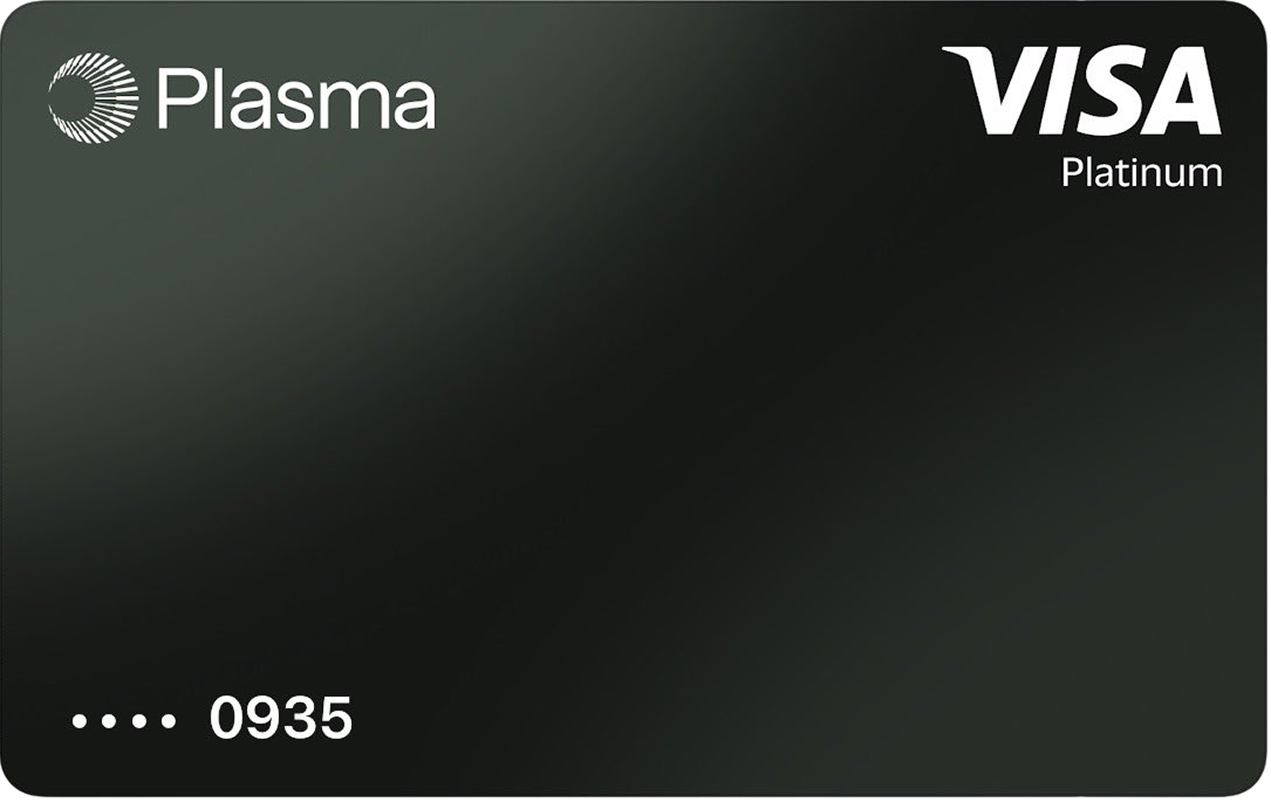
Plasma One is a strong contender for stablecoin spenders who want uncapped cashback at entry level. The 1% FX fee stings for frequent travelers. Best suited to USD-based users who spend heavily.
Get Plasma One CardAvailability
Rewards rate
Up to 4%
FX fee
1%
Savings
0.0
Availability
225 countries
Plasma One CardMain perks
Bonus offers
Rewards
Pros
Cons
Options to Plasma One Card




FAQs
Questions, answered
The Plasma One Card is a Visa card connected to Plasma One, a stablecoin-focused money app built on the Plasma network. It lets eligible users spend stablecoin-backed balances at ordinary Visa merchants while keeping the underlying digital assets under user control.
Plasma One currently offers virtual and physical card access, Apple Pay and Google Pay, cashback and optional on-chain earning features. The exact benefits depend on the user's Lite, Core or Platinum tier.
Yes. Plasma states that it does not custody the stablecoin assets in a Plasma One account. The user owns and custodies the balance backing the card.
This is one of Plasma One's main differences from exchange-issued crypto cards. The Visa payment itself still uses regulated partners, but the underlying stablecoin balance remains under the user's ownership rather than sitting in a conventional custodial exchange account.
The Plasma One Card is issued by Rain, a Visa Principal Member, under licence from Visa. Plasma provides the app, stablecoin experience and connection to the Plasma network.
Global account services are powered by Bridge. Plasma says US residents are served by Bridge Building Inc., EEA residents by Bridge Building Sp. z o.o., and other supported users by Bridge Building Limited.
Plasma One currently offers tier-based cashback in XPL on qualifying purchases. Lite lists 2% base cashback, Core 3% base cashback and Platinum 4% base cashback.
Core and Platinum also advertise higher cashback rates for eligible AI spending, currently 5% and 10% respectively. Reward rates and qualifying transactions are subject to the Plasma One rewards terms.
Plasma One currently offers Lite, Core and Platinum. Lite is the entry tier with a free card and 2% base cashback.
Core adds 3% base cashback, up to 5% on eligible AI spending, reduced fees and more virtual cards. Platinum increases base cashback to 4%, offers up to 10% on eligible AI purchases, travel benefits, VIP support and up to three free virtual cards.
Plasma One Lite currently lists a $0 card cost and includes one free virtual card. It is the lowest-cost way to access the Plasma One card programme.
Plasma does not add its own extra card fee to ordinary use, but partner charges can still apply to certain services such as foreign exchange or bank withdrawals. Those costs are shown in the app before confirmation.
Plasma says it does not add additional fees to the Plasma One card itself, while some partner-powered transactions can include charges. Examples include certain foreign exchange or bank withdrawal routes.
Transfers over supported Plasma routes are advertised at $0, although third-party fees can still apply. The app displays applicable partner costs before the user confirms a transaction.
Plasma One offers an optional Earn feature with variable rates that currently reach up to 6% depending on tier and market conditions.
The yield comes from third-party DeFi lending opportunities rather than a bank savings account. Plasma explicitly states that returns are not guaranteed and that users face smart-contract, protocol, liquidity and market risks.
Yes. Plasma One officially supports both Apple Pay and Google Pay where the mobile-wallet provider allows the card in the user's region.
This makes the virtual card usable for compatible in-store contactless purchases shortly after approval. The card can also be used online without waiting for a physical card.
Yes. Plasma One supports both virtual and physical cards. Eligible users can generate a virtual card quickly and request a physical card through the app.
Physical-card availability, delivery and any tier-specific benefits can depend on the user's region and membership. The virtual card remains the fastest way to begin spending.
Plasma says the card can be used online and in stores wherever Visa is accepted, covering more than 180 countries under the current programme.
Merchant acceptance is still subject to Visa, regional and compliance restrictions. A country where an issued card works is not necessarily a country where every resident can open a Plasma One account.
Yes. Plasma One supports bank off-ramps directly inside the app. The specific local rails, timing and any partner fees depend on the user's region.
Plasma also lets users withdraw to a wallet. This is consistent with its self-custodial design, where users retain ownership of the stablecoin balance rather than locking funds permanently into the card programme.
No. Plasma explicitly states that it is a financial technology company, not a bank, regulated financial institution, money services business or investment adviser.
The card and account features rely on regulated partners such as Rain and Bridge. Stablecoin balances are not bank deposits and are not covered by deposit-insurance schemes such as the FDIC or FSCS.
Download Plasma One, create an account and complete the required identity verification. Once approved, add supported funds and generate the virtual card from the app.
The virtual card can then be added to Apple Pay or Google Pay where supported. Users who want a physical card can request one from the card section if it is available for their region and tier.
Plasma One says its support team is available 24/7 for account, stablecoin, card and transaction issues. The official product and support entry point is https://www.plasma.org/personal, and the app also provides account-specific help.
For a lost or compromised card, freeze it immediately from the app before contacting support. Plasma says its team can assist with unauthorised transaction disputes and card replacement.