


Utorg Crypto Card
#98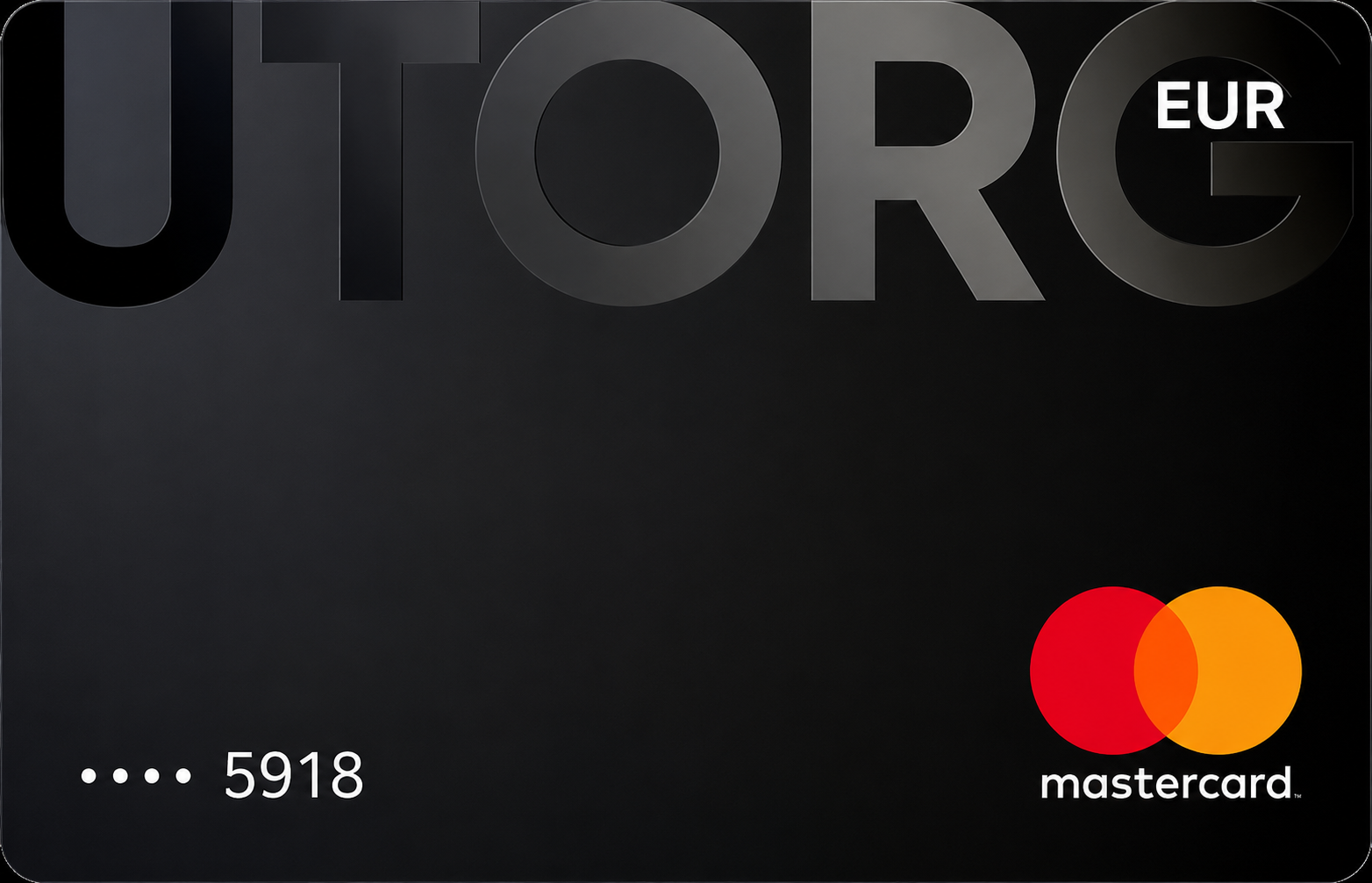
Utorg's crypto card is a free virtual card issued in about five minutes from a non-custodial wallet, with no payment fees, no FX markup and monthly limits up to €50,000. It works with Apple Pay and Google Pay across 29 European countries. The catch: the zero-fee pricing is explicitly for a limited time, and Utorg never states which card network it runs on.
Get Utorg Crypto CardAvailability
Rewards rate
None
FX fee
0%
Savings
0.0
Availability
29 countries
Utorg Crypto CardMain perks
Bonus offers
Rewards
Pros
Cons
Options to Utorg Crypto Card


FAQs
Questions, answered
The Utorg Card is a virtual Visa crypto card integrated with Utorg's self-custodial wallet. It is designed to let eligible users top up the card with USDC and spend at ordinary Visa merchants while keeping the wider wallet under their own control.
The current consumer product is virtual and can be added to Apple Pay and Google Pay. Utorg advertises issuance in minutes after identity verification and a monthly card limit of up to €50,000.
The merchant receives fiat through the card network. Users fund the card from crypto, so it bridges a self-custodial wallet with conventional everyday payments.
Utorg's wallet is self-custodial. The company says users hold their own keys and that Utorg does not custody the assets stored in the wallet.
The card adds a separate regulated payment layer. Utorg's current terms state that Utorg itself does not issue cards, hold fiat or operate the card scheme. Those services are provided through third parties, including card and payment partners.
This means the wallet can remain self-custodial while card top-ups and merchant settlement use regulated external infrastructure. It is more accurate to describe Utorg as a self-custodial wallet with an integrated card than to say every stage of the Visa transaction is self-custodial.
Utorg's current consumer card is primarily funded with USDC. The company says users can top up with USDC on Ethereum, Polygon, Arbitrum, Solana or BNB Smart Chain.
This multi-chain support is useful because users do not need to bridge everything onto one network before card funding. However, the correct token and chain must match the deposit route shown in the app.
A wallet asset being supported by Utorg does not automatically mean it can fund the card. The wider wallet supports more than 170 assets across multiple blockchains, while the card top-up route is currently centred on USDC.
Utorg currently advertises no payment fees, no FX markup and no monthly card charge for its consumer card. Its card page also describes the zero-fee pricing as promotional or available for a limited time.
That distinction matters because users should not assume the current 0% pricing is permanent. Blockchain network fees can also apply when moving USDC into the wallet or card funding route.
Utorg's terms state that third-party card and payment providers can apply their own fees, limits or exchange rates. For a large purchase, check the live app and card disclosure rather than relying only on the headline zero-fee message.
Utorg currently advertises a monthly card limit of up to €50,000 for its consumer crypto card. This is the headline programme limit shown on the public card page.
The amount available to a specific user can still depend on KYC status, card-partner controls, account history and compliance checks. A monthly ceiling also does not guarantee that every individual purchase up to that amount will be approved.
For unusually large purchases, confirm the live account limit before moving USDC specifically for the transaction. Utorg's terms allow third-party payment partners to apply additional risk and transaction restrictions.
Yes. Utorg officially advertises both Apple Pay and Google Pay support for eligible virtual cards. This allows the card to be used for contactless in-store payments without a physical card.
Mobile-wallet payments still use the same card balance, limits and pricing as the underlying Utorg Visa card. Adding the card to Apple Pay or Google Pay does not change the USDC funding model or make the payment happen on-chain at the merchant.
Availability can depend on country, device and the issuing partner. If the card cannot be added, check Utorg's support channels before assuming every wallet-supported country is automatically eligible.
Utorg's current consumer onboarding focuses on a virtual Visa card issued after verification. The public card page says users receive the virtual card once KYC is complete and does not present a generally available physical consumer card as the standard option.
For everyday in-store use, Utorg instead promotes Apple Pay and Google Pay. That makes the card practical for contactless payments but less useful for situations that require physical plastic or a traditional ATM card.
If a physical option appears inside the app later, follow the live card flow. Until then, MyCardCompare treats the current consumer Utorg Card as virtual-first.
Utorg's current consumer product is virtual-first, and its public card pages do not present ATM withdrawals as a core supported feature. The product is positioned around online and mobile-wallet spending rather than cash access.
Because card services are provided through third-party issuers and payment partners, functionality can change by programme or jurisdiction. If an ATM or PIN option appears in the live app, the applicable limits and fees should be checked there.
For now, users who need reliable cash withdrawals should keep a separate physical card rather than assuming the Utorg virtual card provides universal ATM access.
Utorg's consumer card page currently says card issuance is available in EEA countries and lists supported European jurisdictions. The wider Utorg wallet and crypto-purchase service has broader global availability, so wallet access should not be confused with card eligibility.
This distinction is important because a user may be able to create a self-custodial wallet or buy crypto through Utorg from a country where the Visa card cannot be issued.
The card application inside the app is the final eligibility check. Residence, sanctions screening, KYC and the issuing partner's rules can all affect whether a card can be activated.
Yes. Utorg requires identity verification for card issuance. The company says users upload identity documents and complete a liveness check before the virtual Visa card is issued.
This does not make the underlying Utorg wallet custodial. Self-custody applies to the wallet and its private keys, while KYC is required because the card connects that wallet to regulated payment infrastructure.
Utorg says the process can be completed in a few minutes for eligible users. The exact documents and approval outcome can depend on residence and compliance checks. Complete verification only through the official Utorg app or website.
Utorg's current terms make clear that Utorg Labs itself does not issue the card, hold fiat or operate the payment scheme. Card and payment services are provided through third parties.
The terms reference partners including Chain Valley, Wirex Pay and Wirex Limited in connection with card services, while Value Bridge Single Member Investment Services S.A. can be involved in crypto-related execution and conversion services.
This partner structure matters because the wallet provider and regulated card issuer perform different roles. Limits, disputes, settlement and some fees can therefore be controlled by the relevant payment partner rather than by Utorg alone.
Utorg's regulatory position has been changing during the MiCA transition. One legacy Utorg Card site states that Utrg UAB temporarily suspended crypto-asset services while seeking authorisation from the Bank of Lithuania. Utorg's current consumer terms instead describe newer service-provider arrangements for crypto and card functions.
Because of that transition, it is safer not to describe the entire Utorg product as covered by one simple MiCA licence. Different entities and third-party providers can perform different regulated services.
Users who care about regulatory status should review the current legal entity named in the live terms for the specific service they use.
Utorg's current consumer site says cashback is coming, rather than presenting a stable live cashback percentage as a standard card benefit.
That means users should not compare Utorg today using an unlaunched or promotional cashback figure. The current value proposition is more clearly based on self-custody, USDC funding, zero-fee promotional card spending, up to €50,000 monthly limits and Apple Pay or Google Pay support.
If cashback becomes active, check the reward rate, eligible purchases, monthly cap and reward currency in the live terms before treating it as a permanent feature.
Download the Utorg app, create the self-custodial wallet and securely back up the recovery information. Open the card section, complete the required identity and liveness checks, then request the virtual Visa card if your EEA residence is supported.
Utorg says eligible users can complete the process in around five minutes. Once issued, the card can be added to Apple Pay or Google Pay.
To fund it, send or acquire supported USDC and use one of the card-compatible networks shown in the app. Always confirm the exact chain before transferring funds.
Utorg provides support through its official Help Centre, live support channels and support@utorg.com. The company says support is available seven days a week, and its current consumer site also promotes 24/7 live human support.
For a card issue, keep the merchant, amount, date and any decline message available. For a crypto funding issue, keep the transaction hash, USDC network and destination details.
Because the wallet is self-custodial, legitimate support should never need your seed phrase or private keys. Use only official utorg.com channels and avoid unsolicited messages claiming they can recover or activate the card for you.