


1inch Card
#141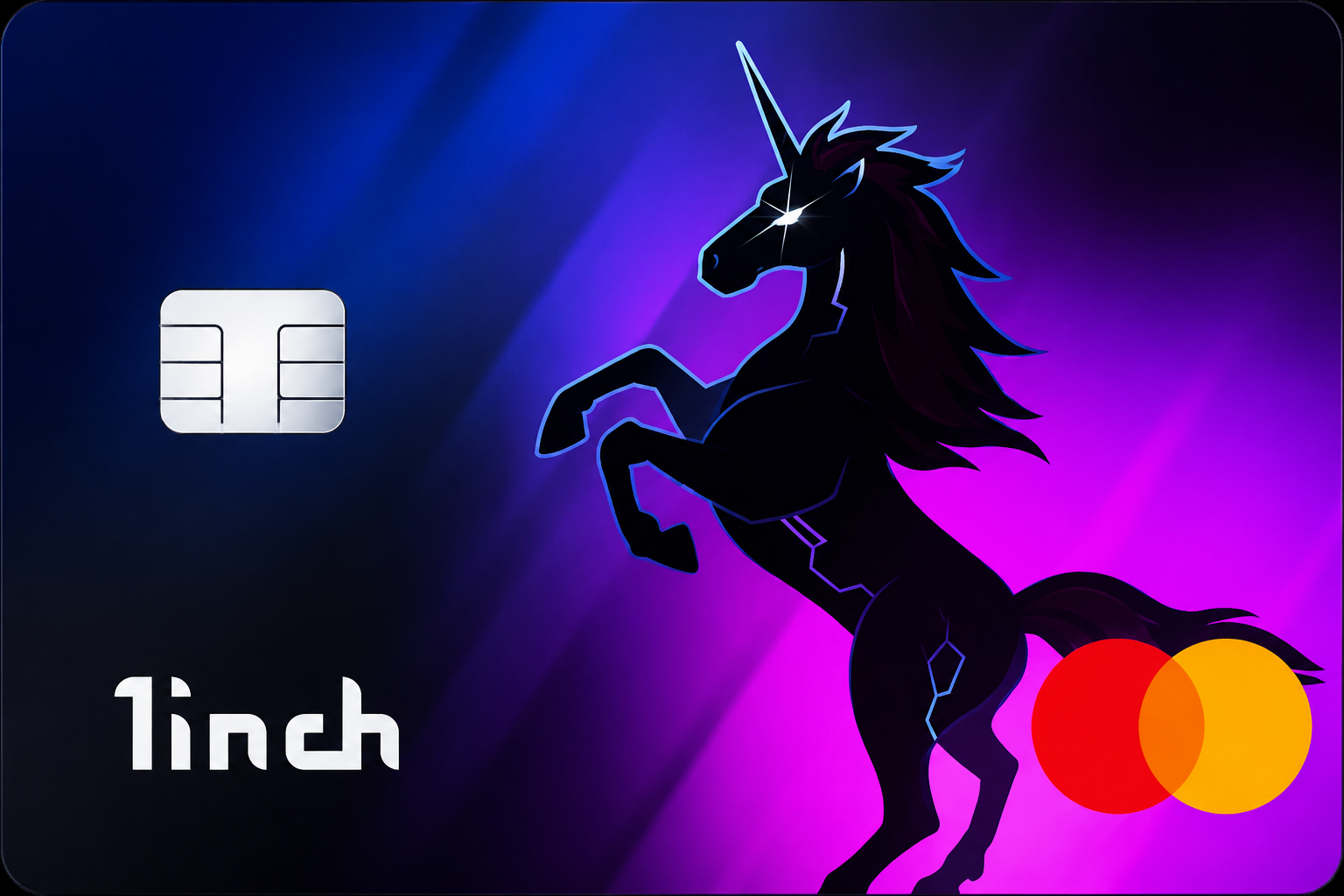
A solid European crypto card with a genuine flat 2% cashback rate and a generous 4,800 EUR monthly cap, but the 2.1% conversion cost and custodial setup are real trade-offs. Best for active European spenders who hold BXX.
Get 1inch CardAvailability
Rewards rate
Up to 2%
FX fee
0%
Savings
0.0
Availability
31 countries
1inch CardMain perks
Bonus offers
Rewards
Pros
Cons
Options to 1inch Card



FAQs
Questions, answered
The 1inch Card is a prepaid Mastercard that lets eligible users spend cryptocurrency for everyday purchases. It is powered by Crypto Life (CL), developed with Baanx and issued by Monavate. When you pay, supported crypto is converted into fiat so the merchant receives a normal Mastercard payment.
The card is available in virtual and physical form and can be used online, in stores and at supported ATMs wherever Mastercard is accepted. It also supports Apple Pay and Google Pay.
The important distinction is that the card is a separate payment service within the wider 1inch ecosystem. 1inch itself is best known for its DeFi aggregation and self-custodial wallet products, while the card infrastructure and related services are provided by third parties. For users already using 1inch, the card provides a practical route from on-chain assets to everyday spending without having to use a conventional crypto exchange card.
The 1inch Card works like a prepaid payment card, but its spending balance is funded with supported crypto assets. When you make a purchase, the required crypto is converted into fiat at the point of sale and the merchant is paid through the Mastercard network.
This means shops do not need to accept cryptocurrency themselves. From the merchant's perspective, the transaction looks like an ordinary card payment. Users can pay online, in person, through Apple Pay or Google Pay, and withdraw cash at compatible ATMs.
The card is integrated with the wider 1inch experience, but card funds and card services should not be confused with simply holding assets in the self-custodial 1inch Wallet. The card is powered by Crypto Life and its third-party financial infrastructure. That distinction matters if custody is important to you, because using the payment card involves a different service model from simply keeping assets in a self-custodial wallet.
The 1inch ecosystem includes a self-custodial wallet, but the 1inch Card itself relies on third-party card infrastructure provided through Crypto Life and Baanx. You should therefore distinguish between holding crypto in the 1inch Wallet and moving assets into the card service for spending.
The 1inch Wallet is non-custodial, meaning users control their wallet credentials and 1inch does not operate it like a centralised exchange account. The card, however, is a third-party service under 1inch's terms and is provided in the EU and UK through Crypto Life-related entities, with Monavate issuing the prepaid Mastercard.
This hybrid setup is useful for users who want to manage assets through a DeFi-focused wallet while still accessing conventional card payments. However, if your requirement is that every stage of card spending remains entirely self-custodial, you should read the current Crypto Life card terms carefully before funding the card.
The 1inch Card is powered by Crypto Life and developed in partnership with Baanx. According to 1inch's current terms, the card and related services are provided by Frozen Time UNIPESSOAL LDA in the EU and Baanx Group Ltd in the UK. The prepaid Mastercard is issued by Monavate Limited.
Monavate is authorised by the UK's Financial Conduct Authority as an Electronic Money Institution and is a principal member of Mastercard. This regulatory structure applies to the card and payment infrastructure rather than making 1inch itself a bank.
For users, this distinction helps explain who is responsible for different parts of the product. 1inch provides the ecosystem and integration, while specialist financial partners handle card issuance and payment services. When reviewing protections, complaints procedures or card terms, use the documentation applicable to the card provider and your country rather than assuming that the rules governing 1inch's DeFi products are identical.
The 1inch Card supports a selection of major cryptocurrencies rather than every token available through the wider 1inch ecosystem. 1inch currently highlights assets including 1INCH, USDT, BTC, LTC, XRP and BXX among the supported card currencies, and the available list can change as the card service develops.
When you spend, the selected supported asset is converted into fiat for settlement through Mastercard. This is different from using 1inch Swap, where users can access a much broader range of tokens and networks.
If you hold a token that is not directly supported by the card, you may need to swap it into a supported spending asset before using it. This is worth checking before transferring funds because 1inch's DeFi interface supports far more assets than the card itself. The current card dashboard or official product page should be treated as the final source for the assets available to your account.
Yes. The 1inch Card currently advertises up to 2% back in crypto on eligible card purchases. The rewards programme allows cashback to be paid in cryptocurrency, with 1inch documentation highlighting reward options such as 1INCH, USDT, BTC and BXX.
The exact reward rate can depend on the reward asset and the current Crypto Life programme, so the headline 2% should be read as a maximum rather than assuming every purchase earns 2% in every supported token. Cashback terms, exclusions and reward assets can also change.
This makes the rewards programme particularly relevant for users who already want to remain within the crypto ecosystem after spending. However, cashback should be assessed alongside any conversion or card-related costs. A high headline reward does not automatically make a card cheaper overall, so check the current card fee schedule and reward terms together before deciding how much value the cashback provides for your spending pattern.
The 1inch Card is promoted as a free card without a recurring subscription, but using a crypto card can involve more than an issuance or monthly fee. Costs may arise from crypto conversion, card transactions, ATM withdrawals, replacement cards or other services provided through Crypto Life.
The exact fee schedule is controlled by the card service and can vary by jurisdiction and account configuration. For that reason, we recommend checking the fee information shown during onboarding and inside the current card dashboard before funding or making a large transaction.
This is especially important because 1inch's DeFi services and the 1inch Card do not share one universal fee model. Network gas, swap costs and card conversion costs are different types of charges. When comparing the 1inch Card with another crypto card, calculate the cost of the actual route you intend to use, from acquiring or transferring the crypto through to conversion, card spending and ATM use.
The 1inch Card is available only in supported jurisdictions and is currently focused primarily on eligible European countries. 1inch states that cardholders must live in a supported region and satisfy the card provider's eligibility requirements.
Availability is not the same as the global reach of Mastercard. Once an eligible user has the card, it can generally be used internationally wherever Mastercard is accepted, subject to merchant, sanctions and card-network restrictions. However, living in a country where Mastercard works does not automatically mean you can apply for the card there.
Because card programmes can expand or withdraw from individual markets, check the current eligibility list during application rather than relying on an older country list. You should also expect identity verification and residency checks as part of onboarding. If the card application option is unavailable for your residence, using other 1inch products does not by itself make you eligible for the card.
Yes. The 1inch Card supports both Apple Pay and Google Pay, allowing eligible cardholders to add the card to a compatible smartphone or smartwatch and make contactless payments without carrying the physical card.
This is particularly useful because the 1inch Card is also available virtually. Once your card is active and supported by your device and region, you can use the digital version for online purchases and mobile-wallet payments while waiting for, or without relying on, the physical card.
Apple Pay and Google Pay do not change how the underlying transaction is funded. Your supported crypto is still converted as required by the card service, while the merchant receives a normal Mastercard payment. Digital-wallet availability can depend on the country, device and card configuration, so if enrolment fails, check the current card support documentation rather than assuming the underlying 1inch Wallet is the issue.
Yes. The 1inch Card can be used for cash withdrawals at supported ATMs that accept Mastercard. This gives cardholders a way to convert supported digital assets into spendable cash without first sending funds to a conventional bank account.
The withdrawal is processed through the card infrastructure, so ATM limits and fees are separate from ordinary crypto transfers or swaps on 1inch. The ATM operator may also impose its own surcharge, and currency conversion can affect the final cost when withdrawing in a currency different from the card's settlement currency.
Before relying on the card for travel cash, check the current withdrawal limits and fee schedule in your card account. ATM terms can change and may vary by region. It is also sensible to decline an ATM's optional dynamic currency conversion when the offered rate is poor, although the best choice depends on the currencies involved and the card's current pricing.
The current 1inch Card proposition includes access to crypto-backed borrowing through Crypto Life, allowing eligible users to unlock spending power against digital assets instead of necessarily selling them first. The card provider advertises borrowing of up to 50% loan-to-value and 0% interest for the applicable product.
Credit features are not available in every country, and eligibility, collateral requirements and repayment conditions are separate from ordinary prepaid card spending. Users should therefore review the borrowing agreement carefully before using this feature.
The practical advantage is that a holder may be able to access liquidity while keeping exposure to the crypto used as collateral. The trade-off is that collateralised borrowing introduces additional risks that normal card spending does not, including collateral requirements and potential action if the value of pledged assets changes. Treat the borrowing feature as a financial product in its own right, not simply as another card setting.
Yes. Applying for the 1inch Card requires you to meet the card provider's eligibility and identity-verification requirements. This is different from simply using parts of the 1inch DeFi ecosystem, where users can interact with non-custodial services through their own wallet.
Card issuance involves regulated payment infrastructure, so applicants should expect to provide personal information and evidence needed for identity and residency checks. The exact documents and onboarding steps can vary by country and may be updated by the card provider.
This distinction is important for users attracted to 1inch because of its permissionless DeFi tools. A payment card that connects crypto to the Mastercard network operates under a different compliance framework. Using 1inch Swap or holding a 1inch Wallet does not automatically qualify you for the card, and an existing wallet does not remove the card provider's KYC obligations.
Yes. Once issued, the 1inch Card is designed for international use wherever Mastercard is accepted, including online and in-person purchases and supported ATM withdrawals. Your crypto is converted for card settlement, so the merchant does not need to accept digital assets.
International acceptance does not mean every transaction will always work. Mastercard restrictions, sanctions rules, merchant categories, offline terminals and local card regulations can affect acceptance. Foreign-currency transactions may also involve conversion costs depending on the card's current fee schedule.
For travellers, the main benefit is being able to access crypto-funded spending through the same payment network used by conventional cards. Before travelling, check your available balance, card limits, ATM pricing and any foreign-exchange charges. It is also sensible to carry a backup payment method because crypto card authorisations can still be declined for the same operational reasons that affect ordinary debit and prepaid cards.
To get a 1inch Card, open the official 1inch Card page and start the application through the Crypto Life-powered card service. You will need to live in a supported country, satisfy the eligibility rules and complete the required identity verification.
Eligible users can access virtual and physical card options. The card is also integrated into the 1inch Wallet interface, which provides a route to the card website for users who want to apply or sign in.
Use only the official 1inch website, Wallet app or Help Centre when starting the application. Crypto card launches are frequently imitated by phishing sites, so check the domain carefully before entering personal information or connecting a wallet. If you encounter an onboarding problem, 1inch maintains a dedicated card support channel in addition to its general Help Centre.
For card-specific questions, start with the official 1inch Help Centre and its 1inch Card documentation. 1inch also provides a dedicated card support email through the Help Centre for issues involving card availability, onboarding and usage.
For questions about the wider 1inch ecosystem, such as Wallet, Swap or Portfolio, use 1inch's general support channels instead. Separating card issues from DeFi product issues is useful because the card is a third-party service powered by Crypto Life, while other 1inch products operate differently.
Official resources include the 1inch Help Centre at https://help.1inch.com and the card page at https://1inch.com/card. For security, do not provide a private key or recovery phrase to anyone claiming to be support. 1inch explicitly warns users to verify official domains and channels, particularly because fake support accounts and phishing websites commonly target crypto users.