


Based Card
#139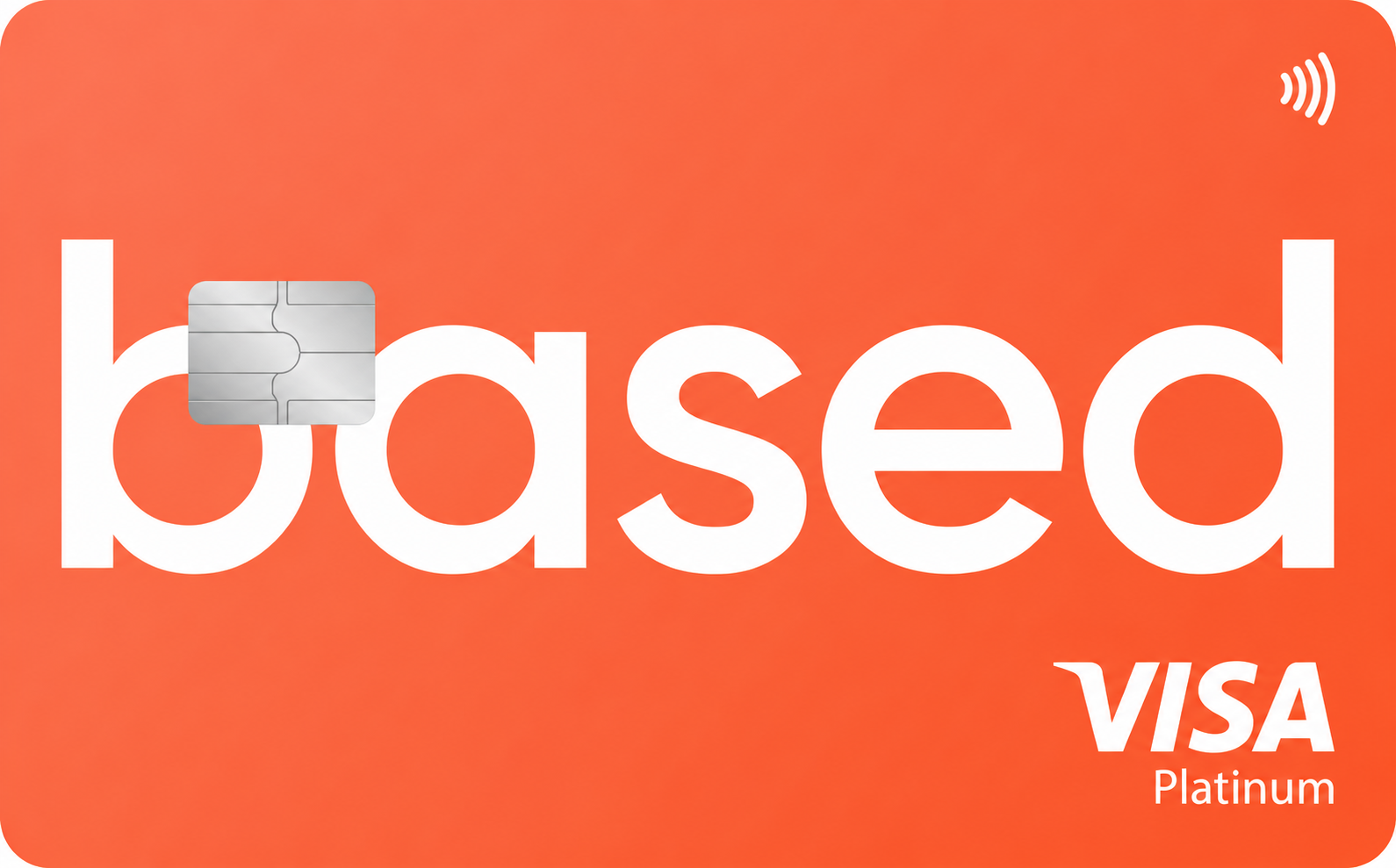
Based Card suits Solana-ecosystem users who can stake $BASED tokens for cashback. The non-custodial setup is its clearest strength. ATM withdrawals are unavailable and staking requirements are steep.
Get Based CardAvailability
Rewards rate
Up to 2%
FX fee
1.5%
Savings
0.0
Availability
175 countries
Based CardMain perks
Bonus offers
Rewards
Pros
Cons
Options to Based Card




FAQs
Questions, answered
The Based Card is a Visa credit card connected to Based, an on-chain finance app that combines crypto-backed spending with financial account features. Based describes the card as an on-chain credit card that lets users spend against assets held in the Based ecosystem rather than relying on a traditional unsecured bank credit line.
The wider Based product includes a self-custodial wallet, stablecoin balances and payment features, so the card is designed as part of an on-chain account rather than as a standalone exchange card.
Based is particularly focused on users who want to keep assets on-chain while accessing conventional card acceptance. The exact card features, collateral mechanics and availability can evolve quickly because Based is a newer product. Users should therefore treat the live Based documentation and card dashboard as the final source for supported regions, limits and the assets that can currently back spending.
The Based Card uses an on-chain credit model. Instead of requiring a merchant to accept cryptocurrency, Based connects your available on-chain spending power to a Visa card and the merchant receives a normal card payment.
Users manage assets through the Based app and wallet. Depending on the current product configuration, supported collateral or balances determine how much can be spent through the card. This allows users to keep more of their financial activity inside an on-chain account rather than transferring funds through a conventional exchange before every purchase.
The key point is that card settlement and the underlying wallet are different layers. Based can use self-custodial on-chain infrastructure while Visa and financial partners still handle the merchant payment. Before using the card heavily, check the current collateral, repayment and liquidation rules because those are more important for a crypto-backed credit card than for a simple prepaid card.
Based positions its wider account and wallet around self-custodial, on-chain finance. That means users can retain direct control over assets in the Based wallet rather than simply depositing everything into a conventional centralised exchange account.
The Visa card itself still depends on payment and credit infrastructure outside the blockchain. Self-custody therefore applies to the wallet and supported on-chain assets, not to every stage of a merchant card transaction.
This distinction matters when comparing Based with exchange-issued cards. A self-custodial wallet can reduce reliance on a centralised custodian while assets are held, but using assets as collateral for credit can introduce smart-contract, collateral and liquidation risks. Users should read the current Based documentation for the exact contracts and permissions involved before depositing a significant amount solely to obtain card spending power.
Based describes its product as an on-chain Visa credit card rather than a standard debit card. Spending power is tied to the assets and credit mechanics available through the Based account instead of simply deducting every purchase from a traditional bank current-account balance.
This is an important distinction because credit backed by crypto behaves differently from an ordinary debit card. Users need to understand the collateral ratio, repayment process and what can happen if the value of supporting assets falls.
The Visa label describes the payment network used at the merchant, while Based's on-chain system determines how the credit is funded and managed. If you want a card that only spends a prefunded stablecoin balance with no borrowing component, check the current Based card settings carefully. Product mechanics can evolve, and the live account should be treated as authoritative for your available credit mode.
Based's card is built around on-chain assets and stablecoin liquidity, but the exact list of assets that can support card credit should be checked in the current Based app and documentation. A token being available in the wider Based wallet does not automatically mean it is eligible card collateral.
Collateral quality matters because volatile assets can change the amount of borrowing capacity available. Stablecoins generally reduce price volatility, while crypto assets can expose the user to changing collateral ratios and possible liquidation rules.
For that reason, do not transfer a token into Based solely because you expect it to increase your card limit. Confirm that the asset is currently supported for the credit product, check its loan-to-value or collateral treatment and understand any liquidation threshold first. These mechanics are more important to the total cost and risk of the card than the Visa payment itself.
Based's total cost can include more than the card transaction itself because the product combines Visa spending with on-chain credit. Users should consider card fees, foreign-exchange pricing, blockchain gas, borrowing costs and any costs associated with collateral management or repayment.
The exact fee schedule should be checked in Based's current card interface and documentation before opening a large credit position. New on-chain card products can change pricing as issuers, networks and supported markets expand.
For comparison purposes, separate payment fees from financing costs. A card can advertise inexpensive merchant transactions while the underlying credit position still has borrowing or collateral costs. Likewise, blockchain transfers can require network fees even when the card provider does not add a purchase fee. MyCardCompare recommends calculating the full path from depositing collateral through spending and repayment rather than comparing only one headline percentage.
Based has promoted card rewards as part of its on-chain finance product, but users should verify the current reward rate, eligible transactions and reward asset in the live card documentation before treating a promotional percentage as permanent.
Reward programmes for newer crypto cards can change as a product moves between launch phases, waitlists and broader availability. They may also depend on account status, campaigns or specific merchant categories.
For that reason, MyCardCompare treats cashback as a secondary feature unless Based publishes a stable ongoing schedule. The card's more distinctive proposition is its on-chain credit and self-custodial account model. If rewards are important to your decision, check whether there is a monthly cap, whether repayments or financial transactions are excluded and whether the reward is paid in a stablecoin, points or another crypto asset.
Based Card availability depends on the countries and regions supported by its current card and financial partners. Users also need to satisfy the identity-verification and eligibility requirements shown during onboarding.
This can be narrower than access to Based's on-chain wallet. A decentralised wallet may be usable from many locations, while a Visa credit product has additional compliance, residency and sanctions obligations. Having a Based wallet therefore does not automatically mean you can obtain the card.
Because Based is still expanding, check the live card page before depositing funds specifically for card use. If your country is not currently supported, joining a waitlist or using the wallet does not guarantee a future approval date. Applicants should use accurate residency information and official identification rather than attempting to bypass geographic restrictions.
Yes. A Visa credit card requires identity and eligibility checks even when the wallet and collateral layer use on-chain infrastructure. Users should expect to complete the KYC process presented by Based and its card partners before the card can be activated.
This is a common distinction in self-custodial card products. Holding crypto in a wallet can be permissionless, while connecting that wallet to regulated payment and credit services requires personal information and residency verification.
The exact documents can depend on the applicant's country and the issuer serving that market. If the card option is unavailable after creating a Based wallet, check the current eligibility rules rather than assuming wallet access is sufficient. Use only Based's official onboarding flow when submitting identity documents, and never send private keys or wallet recovery credentials to anyone claiming to perform KYC.
Mobile-wallet support can depend on the Based Card issuer, region and current rollout. Users should verify Apple Pay and Google Pay availability in the live Based card interface before applying specifically for mobile-wallet use.
When a card programme supports Apple Pay or Google Pay, the digital wallet simply becomes another way to present the Visa credential at checkout. It does not change the underlying on-chain collateral, available credit or repayment obligations.
This distinction is useful because self-custodial wallet technology and consumer mobile wallets are separate systems. A crypto wallet being available on iOS or Android does not automatically mean its Visa card can be added to Apple Pay or Google Pay. If contactless phone payments are essential, confirm the option for your country and device before relying on Based as your primary spending card.
The Based Card uses the Visa network, so an issued card is designed for use at eligible Visa merchants, including international purchases, subject to the restrictions of the card programme and issuer.
International use can involve costs beyond the ordinary merchant transaction. Foreign-exchange pricing, network charges and the currency of the underlying account can affect the final amount. Based's on-chain collateral also continues to determine the available credit regardless of where the merchant is located.
Global Visa acceptance should not be confused with global card eligibility. A card can work while travelling in a country where residents cannot currently apply for it. Before travelling, check your available credit, current FX terms and any regional restrictions. Carrying a backup card is sensible because merchant category rules, offline terminals and compliance controls can still cause individual transactions to be declined.
ATM availability depends on the current Based Card configuration and whether the issued card supports cash withdrawals in your region. Users should check the card controls and live fee schedule before relying on Based for cash access.
A crypto-backed credit card can treat ATM withdrawals differently from normal purchases. Cash advances may have separate limits, fees or financing rules, and an ATM operator can add its own surcharge or currency conversion.
For that reason, MyCardCompare does not recommend assuming that Visa merchant acceptance automatically means unrestricted ATM access. If cash withdrawals are important to you, verify the withdrawal limit, fee and whether the transaction is treated as an ordinary card purchase or a cash advance before using an ATM. The card's main proposition is on-chain spending, so ATM functionality should be considered a separate feature rather than assumed.
A fall in collateral value can reduce the safety margin supporting a crypto-backed credit position. Depending on Based's current loan-to-value and liquidation rules, users may need to add collateral, repay part of the balance or face liquidation if the position becomes under-collateralised.
This is one of the biggest differences between an on-chain credit card and a normal debit card. With a debit card, market movements in unrelated assets do not normally affect whether an existing cash balance can cover a purchase. With crypto-backed credit, volatile collateral can change the risk of the position after spending.
Before using volatile assets to support card credit, review the current liquidation threshold and any warning system in the Based app. Stablecoin collateral can reduce price volatility but still carries smart-contract and issuer risks. Never assume that a card purchase eliminates the need to monitor the collateral afterwards.
Start through the official Based website or app and create the required Based account or wallet. If the card is available in your region, follow the card onboarding flow, complete identity verification and review the current credit and collateral terms before activating it.
Because Based is an on-chain product, funding the wallet and establishing card spending power can involve blockchain transactions in addition to the normal card application. Verify the supported network and asset before transferring funds so you do not send collateral to an unsupported route.
Use only official Based domains and applications. Crypto card launches are common phishing targets, particularly when a product has a waitlist or limited rollout. If the card option is not available for your account, check the current eligibility documentation rather than sending assets to someone offering unofficial access.
For account, wallet or card issues, start with Based's official documentation and the support route provided inside the Based app or website. This is particularly important for a product that combines self-custodial wallet technology with third-party Visa and credit infrastructure, because the correct support path can depend on the problem.
If a card payment fails, keep the merchant, amount, date and error details available. For an on-chain issue, keep the transaction hash and network information, but never send anyone your private key, seed phrase or passkey credentials.
The official Based website is https://based.one and its documentation is available through the Based docs linked from the product. Use those official channels rather than social-media accounts that contact you first. Legitimate support can help investigate transactions without asking for the secrets that control a self-custodial wallet.