
RedotPay Card Review: Is This Crypto Debit Card Worth It in 2026?
RedotPay charges a $10 virtual card fee and $100 for a physical card, with no monthly fee and a combined 2.2% transaction cost on non-USD purchases (1% crypto conversion + 1.2% FX markup). It is a Hong Kong-based crypto debit card that lets you spend stablecoins and major crypto at 130+ million Visa merchants worldwide. The card suits stablecoin holders who want a straightforward way to spend crypto, especially in Asia-Pacific and Latin America where fewer alternatives operate. However, zero cashback on the base card and a custodial model mean users pay to spend without earning anything back, which puts RedotPay behind several reward-focused competitors.
We compared RedotPay against more than 200 crypto and traditional cards on MyCardCompare, evaluating fees, rewards, availability, and security to help you decide whether this card deserves a spot in your wallet. This review covers every fee, the KYC process, real user complaints, and how RedotPay stacks up against Wirex, Bybit Card, and Crypto.com, so you can make an informed call.
RedotPay scores on accessibility, but how does it compare on fees and rewards? See how it ranks against 200+ cards, updated weekly. View card →
1. Quick Verdict: RedotPay Card Pros and Cons Scorecard
RedotPay is a functional crypto-to-fiat spending tool, not a rewards card. It earns its place through broad geographic availability and industry-leading spending limits, but it costs more per transaction than most competitors and gives nothing back on base-tier purchases.
Pros:
- Virtual card costs $10; physical card costs $100, no monthly fee
- Supports 10 primary assets: USDT, USDC, BTC, ETH, BNB, SOL, XRP, SUI, TRX, and S, with over 20 additional cryptocurrencies accessible via the multi-currency wallet
- Accepted by 130M+ merchants worldwide on the Visa network
- $1,000,000 daily spending limits and $100,000 per-transaction limits
- Crypto top-up is free; Binance Pay is 1%
- Available in 92 countries as of July 2026
- Apple Pay and Google Pay compatible (following the January 2026 card upgrade)
Cons:
- Every transaction carries a combined 2.2% fee (1% crypto conversion + 1.2% FX markup) on non-USD purchases
- Zero cashback, zero staking rewards, and zero loyalty programs on the base cards
- Physical card costs $100, 10x the virtual card fee
- Negative reviews consistently highlight account freezes, fund holds, slow support response, and unexplained transaction declines
- Your crypto sits in RedotPay's custody once deposited, not in a wallet you control
- No free ATM tier, ATM withdrawals cost 2% on the first $10,000 each month and 3% above that, plus the conversion and FX fees
Who should consider RedotPay: Stablecoin holders in Asia-Pacific, Latin America, or the Middle East who need a reliable Visa card with very high spending limits and broad geographic reach. Digital nomads and freelancers paid in USDT or USDC who prioritize access over rewards will find it functional.
Who should look elsewhere: Users who want cashback or rewards on every purchase, anyone who needs frequent ATM withdrawals (the all-in ATM cost is approximately 4.2%), and cardholders in the EEA or US who have access to lower-fee alternatives like Bybit or Wirex.
2. Platform Overview: What Is RedotPay and Who Is It For?
Company Background and History
Founded in 2023, RedotPay offers stablecoin-based cards, wallets, and payout services aimed at cutting the cost and settlement time of cross-border payments, particularly in emerging markets. The founders of RedotPay are Jonathan Chan and Michael Gao, with Michael Gao serving as CEO.
RedotPay holds a Money Services Business (MSB) registration in Canada, a FinCEN MSB in the U.S., and a Virtual Asset Service Provider (VASP) license in Argentina. It also obtained a VASP registration from Lithuania's Financial Crime Investigation Service. Visa authorized the card directly, which means Visa's own compliance team vetted the issuer before granting a BIN.
In terms of funding, RedotPay, a Hong Kong-based stablecoin payments fintech, has raised $107 million in its latest Series B funding round led by Goodwater Capital. Other notable investors include Pantera Capital, Blockchain Capital, Circle Ventures, alongside the continued backing from HSG. With the latest investment, RedotPay has now landed a total of $194 million in 2025. As of November 2025, RedotPay has registered more than six million users worldwide, spanning over 100 markets.
Supported Cryptocurrencies and Stablecoins
Funding supports USDT, USDC, BTC, ETH on TRC20, ERC20, BEP20, Polygon, Arbitrum, Solana, and Bitcoin networks. The primary funding assets are USDT and USDC, this is by design, as RedotPay positions itself as a stablecoin spending card rather than a volatile-asset trading tool. Keep in mind that crypto values fluctuate; volatile assets like BTC and ETH carry price risk between the moment you deposit and the moment you spend.
Primary settlement currencies are US Dollars (USD) and Hong Kong Dollars (HKD). From January 21, 2026, all newly issued RedotPay cards are denominated in USD.
Target User Demographics and Supported Countries
RedotPay is available in 92 countries as of July 2026. Key supported regions include:
- Asia-Pacific: Hong Kong, India, Pakistan, Bangladesh, Singapore, Thailand, Vietnam, Indonesia, Australia
- Europe: Most EU nations, United Kingdom
- Americas: United States (limited), Canada, Brazil, Mexico, Argentina
- Middle East and Africa: UAE, Egypt, Nigeria, and select others
RedotPay's stablecoin-based payment services are not available for registration in certain countries or regions, based on local regulations and sanction policies. The unsupported list changes as regulations evolve, always verify eligibility in the app before signing up.
RedotPay tends to fit people who already hold stablecoins and want a simple way to spend them. Ideal profiles include freelancers paid in crypto, remittance users, travelers in regions where competitors have limited presence, and crypto-native individuals who want to avoid the traditional exchange-to-bank-to-card pipeline.
3. Card Features: Virtual vs. Physical, ATM Access, and Global Spending
RedotPay Virtual Card
The virtual card activates instantly after payment of the $10 USDT one-time fee. The virtual card activates within seconds of paying the 10 USDT fee. Card number, expiry date, and CVV are delivered in-app, ready for online purchases and subscription payments.
The virtual card can be added to Apple Pay and Google Pay for contactless payments. Cards issued after August 22, 2025 initially could not link to Apple Pay directly, but RedotPay rolled out a free card upgrade starting January 15, 2026 that restores Apple Pay compatibility.
The virtual card shares the same $1,000,000 daily spending limits and $100,000 per-transaction limits as the physical card. However, it cannot be used for ATM withdrawals.
RedotPay Physical Card
The physical card requires a mailing address, ships via standard international mail, and lands in 5–30 days depending on location. The 100 USDT fee includes shipping.
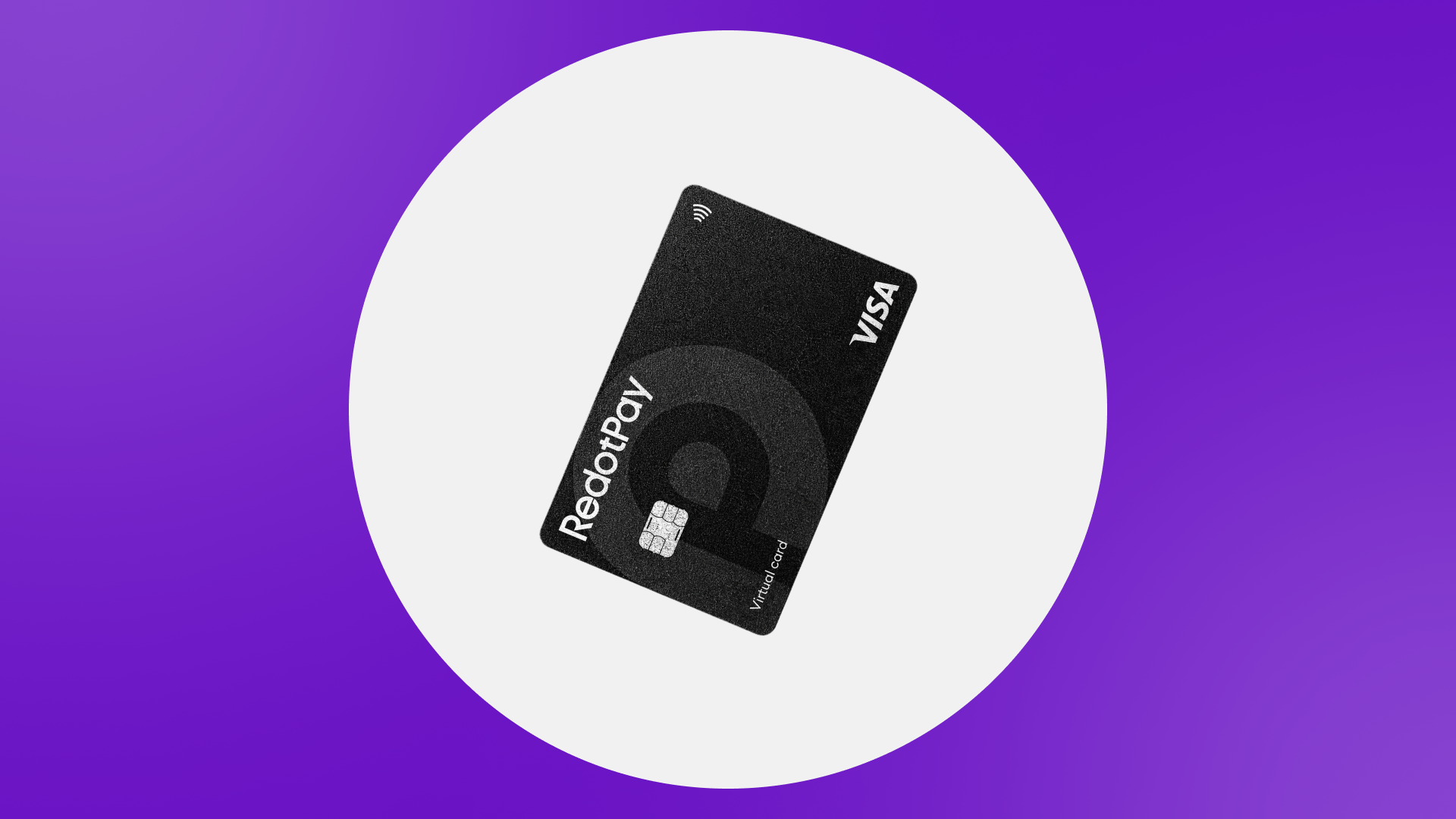
The Physical Card adds two things the Virtual cannot provide: ATM cash withdrawals and chip-and-pin payments at terminals that do not accept contactless. The card is a plastic Visa with EMV chip and contactless NFC capability.
ATM Withdrawals
ATM access is physical-card-only. ATM access supports up to $50,000 per month ($3,750 per day), with a 2% ATM fee on the first $10,000 of monthly withdrawals and 3% above that.
The all-in cost is significant. A non-local withdrawal runs about 4.2% all-in (2% ATM + 1% conversion + 1.2% FX), or about 3% on a local-currency withdrawal. Third-party ATM fees charged by the local ATM operator (typically $3–$8 per withdrawal) are separate from RedotPay's fees.
Global Spending Controls and Card Management
The RedotPay app provides in-app card controls including the ability to freeze and unfreeze the card instantly, set spending limits, and receive real-time transaction notifications. Multi-layered protection includes 2FA, passkeys, anti-phishing codes, and gesture passwords.
RedotPay applies a 1.2% foreign-exchange fee on any transaction in a currency other than your card's currency. Spending in USD (or your card's base currency) avoids it. This means any purchase in EUR, GBP, JPY, THB, or any non-USD currency triggers the 1.2% FX fee.
4. Fees, Limits, and Hidden Costs
Complete RedotPay Fee Breakdown
Fee Category | Amount |
|---|---|
Virtual card issuance | $10 USDT (one-time) |
Physical card issuance | $100 USDT (one-time, shipping included) |
Monthly/annual fee | $0 |
Crypto top-up (on-chain) | Free |
Binance Pay top-up | 1% |
Credit/debit card top-up | 3% (minimum $1) |
Crypto conversion fee | 1% per transaction |
FX markup (non-USD) | 1.2% per transaction |
ATM withdrawal (first $10K/month) | 2% |
ATM withdrawal (above $10K/month) | 3% |
Card replacement | Varies |
Inactivity fee | Not publicly stated, verify in-app |
A small transaction fee kicks in from the fifth swipe of the month, at $0.20 per transaction. This is one of the less-discussed costs that can affect light users.
Tier Structure and Spending Limits
RedotPay does not use traditional card tiers. RedotPay charges a virtual card issuance fee of $10 and a physical card fee of $100, with no monthly fee. There are no paid subscription tiers.
However, RedotPay offers an optional RedotPay Pro membership:
Feature | Base Card | Pro Monthly ($12.90/mo) | Pro Annual ($129/yr) |
|---|---|---|---|
Virtual card fee | $10 | Waived | Waived |
Physical card fee | $100 | $100 | Waived |
Cashback | 0% | 3% (Apple Pay / Google Pay only) | 3% (Apple Pay / Google Pay only) |
Cashback cap | N/A | Up to $18 per month | Up to $18 per month |
Fee-free ATM | None | None | Up to $1,000 monthly |
Earn APY boost | None | None | Additional +1% APY on RedotPay Earn |
The 3% only applies to Apple Pay and Google Pay, only on the first $600 you spend each month, and the rewards land in USDs that expire 30 days after you earn them.
RedotPay Fees Comparison Table
Provider | Card Issuance | FX Fee | ATM Fee | Base Cashback | Monthly Fee |
|---|---|---|---|---|---|
RedotPay | $10 virtual / $100 physical | 1.2% + 1% conversion | 2–3% | 0% (3% with Pro) | $0 ($12.90 Pro) |
Wirex | Free | 0% (spreads apply on crypto) | Free up to $200/month, then 2% | 2% (Cryptoback, up to 8% with paid plan + WXT lock) | Free to €29.99/month (Elite) |
Bybit Card | Free virtual; physical $5 | 0.5% FX + 0.9% crypto conversion (EEA) | Free up to €100/month, then 2% | 2–10% (tier-dependent) | $0 |
Crypto.com Visa | Free | 0% FX on most tiers | $200–$1,000/month free by tier, 2% after | Up to 5% (CRO staking required) | $0 Basic; $49.90/yr Plus (Ruby) |
All figures verified as of June–July 2026. Fees may change, always confirm with the issuer.
Hidden Costs to Watch Out For
The "invisible fee" that catches most users is the crypto-to-fiat conversion spread. The crypto-to-fiat conversion when you spend uses the network rate at the time of the transaction, but the exact rate applied may differ slightly from mid-market, this is the spread. On-chain gas fees when topping up from self-custody wallets also apply and vary by network. Solana is fastest at 15–30 seconds. TRC20 USDT averages 3–5 minutes. ERC20 varies with gas, usually under 10 minutes but can stretch during mainnet congestion.
Avoid dynamic currency conversion (DCC) at international POS terminals, always choose to pay in the local currency to prevent the merchant from applying its own markup on top of RedotPay's 1.2% FX fee.
RedotPay's fee structure totals 2.2% on international spending. See how it compares to lower-fee options across 200+ cards, updated weekly. View card →
5. Wallet, Funding, and Account Structure
RedotPay Wallet Architecture
RedotPay is custodial, so the spendable balance and any Earn balance sit with the company rather than in your own wallet. The wallet works as the base account: users can keep value inside the app, the wallet supports different forms of value including digital assets and local-currency balances, and it sits underneath card usage, transfers, swaps, and credit functions.
This is an important distinction. Unlike self-custodial cards where you retain control of private keys, RedotPay holds your funds on your behalf. The platform is not FDIC-insured. It is a payment service, not a bank. If RedotPay suffers a hack or insolvency, your balance is not protected by federal deposit insurance.
How to Fund Your RedotPay Card
There are several funding paths:
- Crypto deposit (on-chain): Free. Send supported assets directly from any wallet. Minimum 1 USDT on TRC20, landed in about 5 minutes.
- Binance Pay: 1% fee. Convenient for Binance users.
- Credit/debit card or PayPal: 3% fee. Convenient for emergencies but expensive as a regular habit.
- P2P transfer: Within the RedotPay ecosystem, between users.
Deposit times run 2–15 minutes depending on the network. Solana is fastest at 15–30 seconds. TRC20 USDT averages 3–5 minutes. After funding lands, your card balance updates instantly and you can spend right away.
Stablecoin Utility: Why USDT and USDC Users Choose RedotPay
RedotPay employs a real-time conversion model at point of purchase rather than a pre-loaded balance system. This means you hold your stablecoins in the wallet until the moment of purchase, minimizing time in fiat. For USDT and USDC holders, this eliminates one step, you do not need to manually sell to an exchange and withdraw to a bank first.
The trade-off is the 1% conversion fee on every transaction. For purely USD-denominated purchases, this is the only fee. For non-USD purchases, the 1.2% FX markup brings the total to 2.2%. Keep in mind that all cryptocurrency values fluctuate, though stablecoins are designed to maintain parity with the US dollar.
6. Transfers and Cross-Border Payments
Bank and E-Wallet Transfers
Bank and e-wallet payouts, plus instant internal transfers, make RedotPay function as more of a payments bridge than a simple card product. The platform supports transfers to external bank accounts and e-wallets in multiple corridors. Transfer fees and processing times vary by corridor and currency. Some regions face restrictions where transfers are blocked entirely.
RedotPay supports EUR currency accounts for European operations and GBP currency accounts for UK operations.
P2P Transfers Within RedotPay
Internal transfers between RedotPay users can be used for splitting bills, sending remittances, or paying contacts. The P2P marketplace feature, launched in 2026, allows direct crypto-to-fiat trades between users. RedotPay P2P currently supports 74 local currencies.
Global Remittance Use Case
RedotPay positions itself as a remittance tool, particularly for regions with expensive traditional wire transfer costs. RedotPay positions itself as a better option than traditional wire transfers for international payments. However, the 2.2% combined fee on international transactions can add up quickly for heavy cross-border spenders.
For context, a €1,000 remittance through RedotPay costs approximately €22 in combined fees, less than typical wire transfer fees in many corridors (which can run €25–€50), but more than some purpose-built remittance services. The value proposition depends on the specific corridor and your existing options.
7. Credit, Earn, Swap, and P2P Features
Crypto-Backed Credit
RedotPay offers a Loan feature, crypto-backed lending. Details on LTV ratios, supported collateral, and interest rates are shown in the app and may vary by region. As with any crypto-backed loan, there is a risk of liquidation if the value of collateral drops below a threshold. This feature is available in select regions only.
Earn and Yield Features
Earn is a feature provided by RedotPay Panama for growing crypto holdings, where users can generate returns by depositing digital assets for flexible periods of time. Currently, only USDC and USDT are supported. The interest rate can change based on market conditions, and RedotPay does not publish a fixed APY.
For RedotPay Pro annual members, an additional +1% APY boost applies. Compared to dedicated yield platforms, RedotPay's earn rates are modest, this is supplementary to the card, not a core yield product. Keep in mind that crypto values fluctuate, and yield is not guaranteed.
In-App Swap
RedotPay allows in-app crypto swaps between supported assets. This is useful for converting volatile assets like BTC to USDT before spending. Swap fees and spreads are displayed in-app at the time of the transaction.
RedotPay Cashback Program
Base RedotPay cards have no built-in cashback. The optional RedotPay Pro membership ($12.90/month or $129/year) adds 3% cashback on Apple Pay and Google Pay purchases, capped at up to $18 per month.
The honest assessment: The headline rate reads well until you find the ceiling. The 3% only applies to Apple Pay and Google Pay, only on the first $600 you spend each month, and the rewards land in USDs that expire 30 days after you earn them.
At the monthly plan ($12.90/month), you need to spend at least $430 via mobile wallets just to break even on the membership fee. RedotPay Pro is a fair deal for a specific user and a poor one for everyone else. The capped, expiring cashback will not carry the membership on its own for most people.
8. Safety, Regulation, and Compliance
Is RedotPay Legit? Licensing and Regulatory Status
RedotPay holds a Hong Kong financial services license and is registered as a US Money Services Business (MSB) with FinCEN. Additional registrations include:
- MSB registration in Canada
- VASP license in Argentina
- VASP registration from Lithuania's Financial Crime Investigation Service
- ISO/IEC 27001 certification achieved in March 2026
Visa authorized the card directly, meaning Visa's own compliance team vetted the issuer before granting a BIN. The $194 million in institutional funding from Goodwater Capital, Pantera Capital, and Blockchain Capital provides additional legitimacy signals, though funding does not guarantee safety of individual user deposits.
Verdict: RedotPay shows meaningful regulatory effort across multiple jurisdictions. It is not a bank and deposits are not insured. The licensing, Visa authorization, and institutional backing collectively indicate a legitimate operation, but the custodial model means users accept counterparty risk.
KYC and AML Compliance
Identity verification is mandatory for all RedotPay users. This process confirms your legal identity, keeps your account secure, and ensures compliance with global financial regulations.
The KYC process:
- Sign up with email and phone number
- The collection of essential documents, such as passports, driver's licenses, ID cards, or residence permits, including full name, date of birth, photograph, document number, and validity period
- A selfie for liveness detection, which performs facial biometric checks by prompting the applicant to slowly turn their head in a circle
- Proof of address (for enhanced verification or higher tiers)
KYC runs through Sumsub in the background. The review typically takes 5–10 minutes. If your ID photo is blurry or the angle cuts off a corner, KYC fails silently and sits in review for hours.
KYC is not a one-time process. RedotPay continuously monitors through periodic reviews, trigger event assessments, and transaction monitoring. This ongoing monitoring is what triggers some of the account freeze complaints discussed later.
Asset Custody and Fund Security
User funds are held in RedotPay's custody. The platform has not published a public Proof of Reserves audit. RedotPay prioritizes security with bank-level encryption and full regulatory compliance. Specific details on cold/hot wallet splits and segregated account policies are not publicly disclosed.
Practical advice: keep only as much on the card as you plan to spend within 1–2 months. Long-term crypto holdings belong in a self-custody wallet.
Data Security and Privacy
Multi-layered protection includes 2FA, passkeys, anti-phishing codes, and gesture passwords. The app supports biometric login. RedotPay's privacy policy addresses data handling, though readers should review it directly for GDPR-specific commitments relevant to EEA users.
9. User Experience, App Design, and Onboarding
Sign-Up and Onboarding Process
The sign-up flow is app-based:
- Download RedotPay on iOS or Android
- Register with email or phone number
- Complete KYC (typically 5–10 minutes)
- Choose virtual or physical card
- Pay the issuance fee ($10 virtual, $100 physical)
- Fund your wallet and start spending
For the virtual card, the total time from sign-up to first purchase can be under 15 minutes in ideal conditions. The physical card ships via standard international mail and lands in 5–30 days.
App Design and Navigation
RedotPay has a 4.8-star App Store rating from 2,600+ reviews. RedotPay is backed by a $107M Series B.
Notable issues include no dark mode (or limited), transaction export difficulties, and the app occasionally showing available balance as "0" when payment settings are misconfigured. The app covers wallet management, card controls, transaction history, swaps, P2P, and Earn from one dashboard.
Customer Support Quality
Customer support operates via in-app chat, email, and Help Center articles. Simple queries are resolved within hours, but complex issues like refunds, account restrictions, and card declines can take days to weeks.
In-app chat is the primary channel, with email backup. Response times run same-day for simple questions and 1–3 business days for complex ones like KYC disputes or unauthorized transactions.
The RedotPay community is active on Telegram, Discord, and various social media channels. A Help Center knowledge base covers common issues.
10. Real User Complaints: Account Freezes, Fund Holds, and Trust Issues
Aggregated User Sentiment
RedotPay holds a 3.1 Trustpilot rating across 744 reviews, with 54% five-star, 7% four-star, 3% three-star, 3% two-star, and 33% one-star ratings. The polarized distribution suggests many users have smooth experiences, while a significant minority encounter serious problems.
On the App Store, RedotPay has a 4.8-star rating from 2,600+ reviews, a significant gap from the Trustpilot score. This gap is common in crypto card products: app store reviews tend to reflect the initial experience, while Trustpilot captures post-issue frustration.
Most Common Complaints Identified
- Account freezes: The complaints follow a pattern: larger deposits and transactions trigger compliance reviews, which lead to fund holds that last days to weeks.
- Fund holds: Users report funds stuck in "pending" or "pending refund" states with limited communication on resolution timelines.
- KYC re-verification: Some users are required to provide additional source-of-funds documentation after extended use, which is standard AML practice but feels intrusive.
- Customer support delays: The biggest complaint is that users with frozen funds or declined cards receive generic responses and are told to "buy a new card" instead of getting root-cause resolution.
- Card declined incidents: Some merchant categories or specific POS terminals may reject prepaid Visa cards.
Risk Assessment and Who Should Be Cautious
Users who frequently make large transactions (above $5,000 per deposit) face higher risk of triggering compliance reviews. Users in jurisdictions with enhanced AML scrutiny may experience additional friction.
Practical advice if you use RedotPay: keep only as much on the card as you plan to spend within a month or two. Maintain complete documentation of all deposits and their sources.
RedotPay's official stance emphasizes that fund holds are part of regulatory compliance, not arbitrary, but the user experience during holds is widely criticized. Start with small deposits and test the card before committing larger balances.
Weighing RedotPay's trade-offs? Compare it directly against Wirex across fees, cashback, and availability. Compare cards →
11. RedotPay vs. Top Crypto Card Alternatives
RedotPay vs. Wirex
Wirex offers 0% foreign transaction fees, while RedotPay charges 2.2% on non-USD purchases. Wirex Cryptoback rewards start at 2% for the free account, compared to RedotPay's 0% on base cards. Wirex charges no issuance fee, while RedotPay charges $10–$100.
However, Wirex's headline 8% Cryptoback rate demands an Elite plan at €29.99/month plus 7.5 million locked WXT, so the realistic free-tier rate is much lower. Wirex is not available in USA, Canada, China, Japan, South Korea, Philippines, or Russia, whereas RedotPay serves several of those markets.
RedotPay wins when: You need coverage in Asia-Pacific or Latin America, or require very high spending limits ($1M/day). Wirex wins when: You're in the EEA/UK and want 0% FX fees with built-in rewards.
RedotPay vs. Bybit Card
Bybit offers 2–10% cashback with 0.9% conversion and 0.5% FX (EEA). RedotPay's base cards offer no cashback with a 2.2% total fee. Bybit's virtual card is free and physical card costs just $5.
However, EEA countries are not supported for the main Bybit rewards program. Bybit's card is not available in as many markets as RedotPay.
RedotPay wins when: You're in Southeast Asia, the Middle East, or parts of Africa where Bybit has no presence, or you need $1M daily limits. Bybit Card wins when: You're in a supported Bybit region, already trade on Bybit, and want cashback with lower fees.
RedotPay vs. Crypto.com Visa Card
Crypto.com charges no annual fees, no FX fees, and no interest charges. Up to 5% CRO rewards via staking or subscription cashback are available. However, higher rewards require staking CRO, which freezes capital and restricts the flow of funds.
RedotPay has no staking requirement at all, the trade-off is zero rewards. RedotPay's $1M daily and $100K per-transaction limits dwarf Crypto.com's caps.
RedotPay wins when: You want no staking commitment, need very high spending limits, or are in a region Crypto.com does not serve. Crypto.com wins when: You want rewards-earning and are willing to lock CRO, or need a zero-FX-fee card.
Comprehensive Crypto Card Comparison Table
Provider | Card Network | FX Fee | ATM Fee | Base Cashback | KYC Required | Stablecoin Top-Up |
|---|---|---|---|---|---|---|
RedotPay | Visa | 1.2% (+ 1% conversion) | 2–3% | 0% | Yes | Yes (USDT, USDC) |
Wirex | Mastercard | 0% (spreads apply) | Free up to $200/mo, then 2% | 2% (WXT) | Yes | Yes |
Bybit Card | Mastercard | 0.5% + 0.9% conversion | Free up to €100/mo, then 2% | 2–10% | Yes | Yes |
Crypto.com | Visa | 0% (most tiers) | Free up to $200–$1K/mo by tier, then 2% | 1–5% (CRO staking) | Yes | Yes |
Figures verified June–July 2026. Fees, cashback rates, and availability vary by region and may change.
RedotPay sits at the utility end of the crypto card spectrum, it prioritizes access and high limits over rewards. On MyCardCompare's comparison data, it ranks well for coverage and limit size but trails competitors on per-transaction cost efficiency and cashback.
FAQ: Your RedotPay Questions Answered
Is RedotPay legitimate and safe to use in 2026?
RedotPay holds a Hong Kong financial services license and is registered as a US Money Services Business (MSB) with FinCEN. It holds additional VASP registrations in Lithuania and Argentina. Visa authorized the card directly. These are meaningful legitimacy signals.
That said, RedotPay is not a bank, deposits are not insured, and funds are held in the company's custody. For large holdings, self-custody remains safer. Keep only spending money on the card.
What are RedotPay's fees, and are there any hidden charges?
The fee structure totals 2.2% on international transactions (1% crypto conversion + 1.2% FX markup), with a virtual card costing $10 and a physical card costing $100, with no monthly fee. The most commonly overlooked costs are the crypto-to-fiat conversion spread (embedded in the exchange rate), the $0.20 per-transaction fee from the 5th swipe each month, and blockchain gas fees when depositing from self-custody wallets.
Which countries does RedotPay support, and can US residents use it?
RedotPay is available in 92 countries as of July 2026. US residents can use the card with limited functionality, RedotPay is registered as a US MSB with FinCEN. However, RedotPay's services are not available in certain countries due to local regulations and sanction policies, and the unsupported list updates periodically. Always verify current eligibility in the app.
Does RedotPay offer cashback, and how does it compare to competitors?
Base RedotPay cards have no built-in cashback. The optional RedotPay Pro membership ($12.90/month or $129/year) adds 3% cashback on Apple Pay and Google Pay purchases, capped at up to $18 per month. The cashback expires after 30 days if unused.
By comparison, Wirex offers 2% base cashback (in WXT) with no paid plan, and Bybit offers 2–10% depending on tier, both without monthly subscription fees. RedotPay's cashback is not competitive at the base tier and only marginally useful with Pro.
What cryptocurrencies can I use to fund my RedotPay card?
Funding supports USDT, USDC, BTC, ETH on TRC20, ERC20, BEP20, Polygon, Arbitrum, Solana, and Bitcoin networks. The platform emphasizes stablecoin utility, USDT and USDC are the primary spending assets. Volatile assets are converted at the time of purchase, meaning the value you receive depends on market price at that moment. Keep in mind that crypto values fluctuate.
How does RedotPay's KYC process work, and how long does it take?
Users must provide personal details, government-issued ID, and biometric confirmation to complete onboarding. KYC runs through Sumsub in the background and typically takes 5–10 minutes. In some cases, enhanced due diligence may require additional documentation (proof of address, source of funds), extending the process to 1–3 days. If KYC is rejected, you will get a notification explaining the reason and can resubmit correct documents.
Conclusion: Is the RedotPay Card Right for You?
RedotPay is a stablecoin spending utility, not a rewards card. It wins on highest spending limits in the market ($1M daily, $100K per-transaction), wide global availability (APAC, LATAM, Africa), and physical-card ATM access in markets many competitors do not serve. It loses on no cashback on the base cards, paired with 2.2% combined fees, a custodial model with no published Proof of Reserves, and no yield on idle balances.
Choose RedotPay if: You hold stablecoins, want quick virtual card access, live in a supported region where competitors like Wirex or Bybit are absent, need very high spending limits, and value simplicity over rewards.
Look elsewhere if: You are in the EEA with access to lower-fee options, want meaningful cashback without a paid subscription, need frequent ATM access (4.2% all-in is expensive), or prefer self-custodial solutions.
The crypto card market has matured significantly. Before committing, compare RedotPay's actual costs against your spending profile, 200+ cards on MyCardCompare are updated weekly with verified fee data. Compare cards on MyCardCompare →
This article provides comparative information only. MyCardCompare is not a financial advisor and does not recommend any specific card. Fees, features, and availability are subject to change, always verify current terms with the issuer before applying.