
StartseiteKartenvergleich

Beste Kreditkarten

Zu flexiblen Konditionen Kredit aufnehmen — mit Karten im direkten Vergleich.

Kreditkarten

Zu flexiblen Konditionen Kredit aufnehmen — mit Karten im direkten Vergleich.

UNSERE TOP-EMPFEHLUNGEN

9 Karten werden angezeigt

DeCard Karte
DeCard logo

DeCard

3.8· 0 BewertungenKredit
Diese Karte holen

auf der sicheren Website von DeCard

Jahresgebühr

388 $

Prämienrate

Bis zu 10%

Monatsgebühr

0 $

Aufladung

USDT · USDC

Fazit

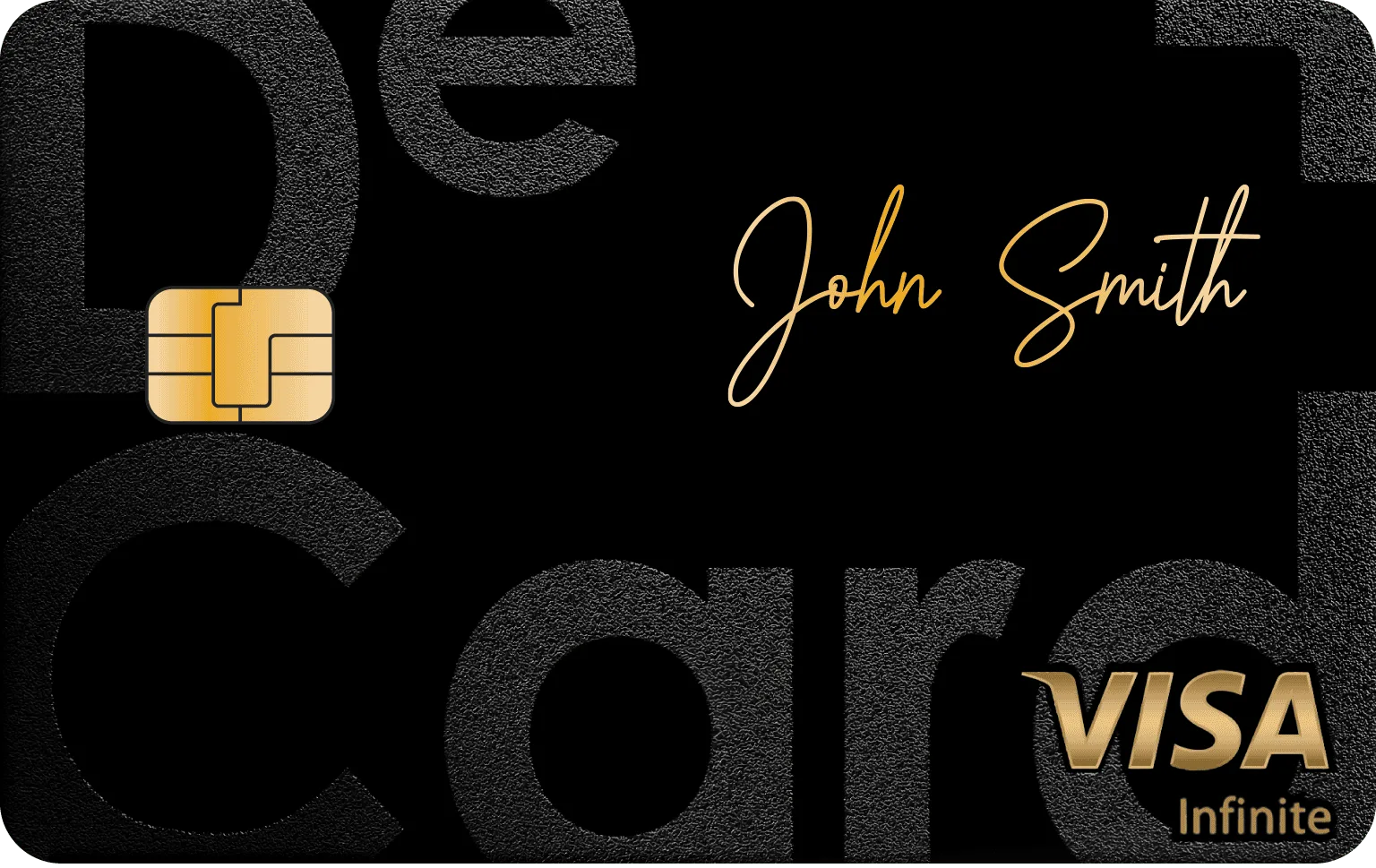
DeCard Luminaries is a metal stablecoin credit card from DCS Card Centre, the former Diners Club Singapore, spending USDT and USDC with 0% FX fees worldwide. Cashback runs from 2% to 10% by monthly spend, alongside lounge access at over 1,400 airports and up to US$1,000,000 of travel insurance. The catch: US$388 a year plus US$100 for the card, and cashback is capped at US$200 a month.

The 10% headline barely exists in practice. Cashback caps at US$200 a month, which you reach at about US$5,700 of spending, so the 10% band only covers roughly US$700 before it stops paying. Judge this card on the lounge access, insurance and 0% FX instead.

DeCard is issued by DCS Card Centre Pte Ltd in Singapore, which evolved from Diners Club Singapore and carries over fifty years of card-issuing heritage. Luminaries is the premium tier: a metal card with a credit limit powered by D-Vault, an account handling reconciliation, payment tracking and repayments. Benefits include 24/7 Visa concierge, lounge access at more than 1,400 airports, travel insurance to US$1,000,000 and Umy Diamond Membership giving 5% off hotels globally.

Each month you choose cashback or DePoints in-app before the 1st, Singapore time. Cashback pays 2% on the first US$2,000 of monthly spend, 3% on the next US$3,000 and 10% above US$5,000, capped at US$200 a month. DePoints pay 6, 10 and 30 per US dollar across the same bands, capped at 66,000 monthly and valid two years. Scan-and-Pay transactions earn neither. Rewards are credited by the 10th of the following month.
Jahresgebühr

0 $

Prämienrate

Bis zu 3%

Monatsgebühr

0 $

Aufladung

USD

Fazit

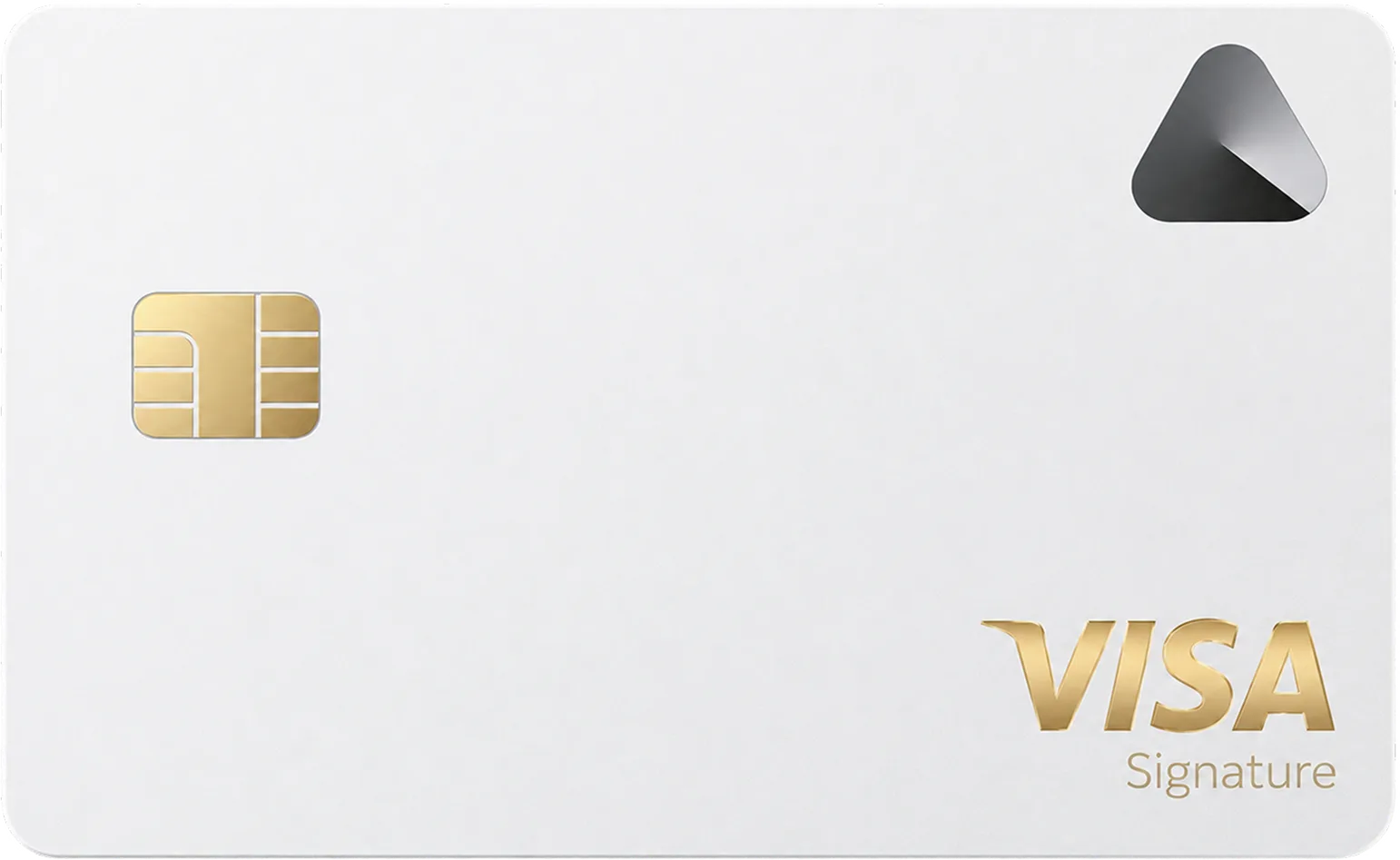
Die Venmo Credit Card zahlt 3% in der Kategorie mit dem höchsten Monatsumsatz zurück, 2% in der zweithöchsten und 1% auf alles Übrige, ohne Jahresgebühr und ohne Gebühr auf internationale Transaktionen. Das Cashback landet automatisch im Venmo-Guthaben und lässt sich kostenlos in Kryptowährungen umwandeln. Der Haken: sie ist nur in den Vereinigten Staaten verfügbar, setzt ein Venmo-Konto voraus, und der Kauf von Kryptowährungen mit der Karte selbst gilt als Bargeldvorschuss.

Die meisten gestaffelten Cashback-Karten verlangen die Wahl einer Kategorie oder das Verfolgen eines Kalenders. Venmo wählt selbst, jeden Monat, anhand der tatsächlichen Ausgaben. Zusammen mit dem Wegfall von Jahresgebühr und Gebühr auf internationale Transaktionen ergibt das eine starke Alltagskarte. Der Krypto-Bezug ist real, aber klein: kostenlose Umwandlung des Cashbacks, mehr nicht.

Die Venmo Credit Card wird von der Synchrony Bank im Visa-Netz ausgegeben, je nach Bewilligung als Visa oder Visa Signature. Antragsteller müssen mindestens 18 Jahre alt sein, in den Vereinigten Staaten oder deren Territorien leben und ein seit mindestens 30 Tagen bestehendes Venmo-Konto haben. Der jährliche Sollzins (APR) auf Käufe beträgt je nach Bonität 18.74%, 27.74% oder 30.74%, Bargeldvorschüsse liegen bei 30.74% und der Verzugssatz bei 34.24%. Die Sätze galten zum 1. Januar 2026 und schwanken mit dem Prime Rate. Papierauszüge kosten $1.99 im Monat.

Das Cashback wird je Abrechnungszeitraum über acht Kategorien berechnet: Gastronomie und Nachtleben, Reisen, Rechnungen und Nebenkosten, Gesundheit und Beauty, Lebensmittel, Kraftstoff, Verkehr und Unterhaltung. Die umsatzstärkste Kategorie bringt 3%, die zweitstärkste 2% und alles Übrige 1%, ohne Mindestumsatz und ohne Obergrenze auf den Stufen mit 3% und 2%. Die Prämien wandern automatisch ins Venmo-Guthaben, wo sie ausgegeben, versendet oder abgehoben werden können. Ihre Verwendung für den automatischen Kauf von Kryptowährungen ist gebührenfrei, wenngleich der Wechselkurs eine Spanne enthält.

Avici Signature Karte
Avici logo

Avici Signature

2.6· 0 BewertungenKredit
Diese Karte holen

auf der sicheren Website von Avici Signature

Jahresgebühr

20 $

Prämienrate

Bis zu 0%

Monatsgebühr

0 $

Aufladung

USD

Fazit

Avici Signature is the upper tier of Avici's secured Visa credit card, backed by crypto you hold in self-custody. It waives every ATM charge, carries Visa Signature travel benefits, and applies no transaction fees or currency markup. The catch: $30 for the first year and $20 annually after, plus $75 for the physical card, and Europe is not covered.

Signature earns its fee in one place: ATM withdrawals are free, where Platinum charges $1 plus 0.65% and $0.60 for declines. If you take cash out regularly the $20 a year pays for itself; if you never do, Platinum does the same job for nothing.

Avici Signature is the higher tier of Avici's secured Visa credit card, funded by crypto held in a self-custody smart wallet with passkeys. The virtual card costs $30 for the first year and $20 annually after; the physical card is $75 with $20 a year from the second year. Delivery is free and untracked in three to four weeks, or priority for $50 internationally and $15 in the US.

There is no cashback. Avici charges no transaction fees and no currency markup, though Visa may add 0.4% to 1% on non-USD spending. Signature's advantage over Platinum is at the cash machine: no withdrawal fee, no declined transaction fee and no balance enquiry fee, against $1 plus 0.65% and $0.60 charges on Platinum. Daily ATM limits are the same at $250 across three withdrawals.

Avici Platinum Karte
Avici logo

Avici Platinum

2.6· 0 BewertungenKredit
Diese Karte holen

auf der sicheren Website von Avici Platinum

Jahresgebühr

0 $

Prämienrate

Bis zu 0%

Monatsgebühr

0 $

Aufladung

USD

Fazit

Avici Platinum is a secured Visa credit card backed by crypto you keep in self-custody, with no transaction fees and no markup on currency conversion. There are no spending limits, and you can create separate cards for subscriptions, groceries or travel. The catch: the card costs $15 virtual or $50 physical up front, ATM withdrawals cost $1 plus 0.65%, and Europe is not covered.

Avici's distinction is self-custody credit: your collateral stays under your control through passkeys and account abstraction rather than sitting with an exchange. Platinum is the cheaper entry point with no annual fee. Pay once, spend without markup, and accept the ATM charges that Signature waives.

Avici Platinum is a secured Visa credit card from Avici Inc of San Francisco, funded by crypto held in a self-custody smart wallet using account abstraction and passkeys. Cards are issued in about two minutes and work with Apple Pay and Google Pay. Virtual cards cost $15 for the first and $10 thereafter with no recurring fee; the physical card is $50 one-time. Free untracked delivery takes three to four weeks.

There is no cashback. Avici charges no transaction fees and applies no foreign exchange markup, though Visa may add 0.4% to 1% on non-USD transactions. The card carries Visa network benefits including airline miles, auto rental insurance, travel protection and emergency assistance rather than a cash rewards rate. ATM withdrawals cost $1 plus 0.65%, capped at $250 daily across three withdrawals, with $0.60 charges for declines and balance enquiries.

Jahresgebühr

30 $

Prämienrate

Bis zu 0%

Monatsgebühr

0 $

Aufladung

USD · USDT · USDC

Fazit

OrbitX Lux is the upper tier at $30 a year, a Visa Signature card with a metal option, halving the foreign exchange fee to 1% and the conversion charge to 10 cents. Add-on cards are unlimited and daily spending is uncapped. The catch: OrbitX gives conflicting prices for the metal card, quoting both $350 and included.

For $18 more than Neo, Lux halves the FX fee to 1%, removes the daily spending cap and doubles the ATM limit. If you spend more than about $1,800 a year in foreign currency it pays for itself. The Signature tier perks are a bonus rather than the reason.

OrbitX Network Group Pte Ltd is registered in Singapore under UEN 202448623M and states it is a financial technology company, not a bank, with regulated services provided by unnamed partner banks. Lux is Visa Signature with unlimited add-on cards and a metal card option. Replacement costs $199. Deposits accept USDT or USDC on Polygon and Base, with Solana and Tron planned. Delivery takes one to four weeks.

There is no cashback. Lux reduces costs rather than paying rewards: 10 cents per fiat conversion against 20 on Neo, 1% on non-USD spending against 2%, and a 5 cent declined transaction fee. Deposits are free, withdrawals cost $2, and ATM use adds the operator's charge plus 2% plus $2. Daily spending is unlimited with a $1,000 ATM ceiling.

Exa Karte
Exa logo

Exa

1.9· 0 BewertungenKredit
Diese Karte holen

auf der sicheren Website von Exa

Jahresgebühr

0 $

Prämienrate

Bis zu 0%

Monatsgebühr

0 $

Aufladung

USDC · ETH · wstETH · WBTC · OP

Fazit

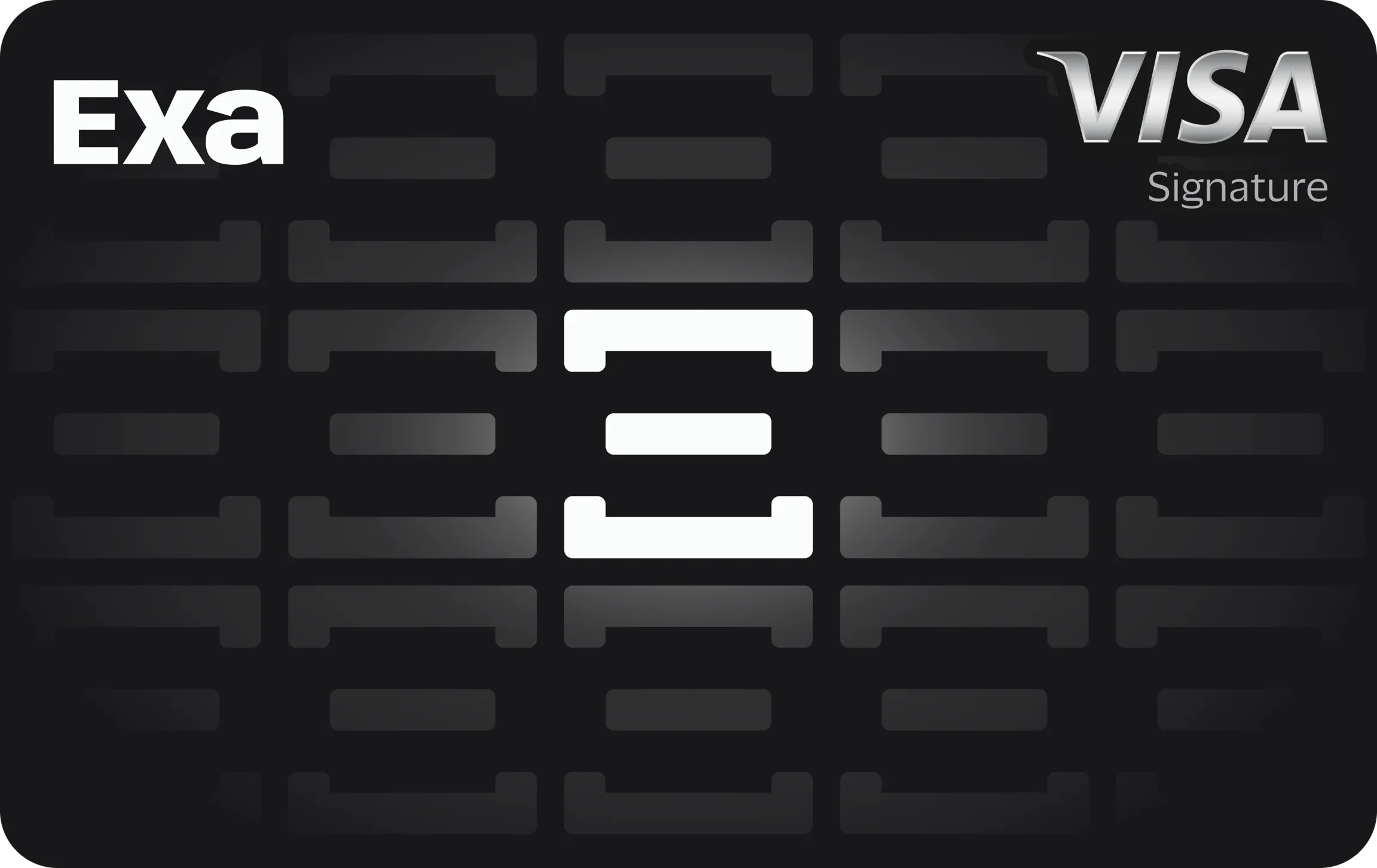
Die Exa Card ist eine Visa-Signature-Karte, die Kredit gegen die eigenen Kryptowährungen als Sicherheit ermöglicht, statt sie auszugeben. Man hinterlegt USDC, ETH, WBTC, wstETH oder OP, erhält darauf weiterhin Rendite und zahlt entweder sofort oder in Raten zu festem Zins, aufgenommen als Onchain-Darlehen im Moment des Kaufs. Der Haken: die Raten sind verzinst, mit einem im Moment des Kaufs festgelegten Zins, Käufe in Fremdwährung kosten 1.5%, und die Sicherheit ist dem Protokoll ausgesetzt.

Fast jede Kryptokarte verkauft die Coins des Karteninhabers an der Kasse. Exa nimmt stattdessen Kredit gegen sie auf, sodass die Position offen bleibt und weiter Rendite bringt, während man ausgibt. Das ist wirklich anders. Der Preis dafür sind Komplexität und Risiko: man nimmt im Moment des Kaufs ein Onchain-Darlehen auf, mit Zinsen und Risiko für die Sicherheit, statt Cashback zu erhalten.

Die Exa Card ist eine Visa-Signature-Karte von Exa Labs, betrieben über das Exactly Protocol auf nicht-custodialen Smart Contracts; Exa Labs gibt die Karte nicht selbst aus, das übernehmen lizenzierte Dritte. Die Konten nutzen Passkeys statt Seed Phrases, und das KYC dauert wenige Minuten. Hinterlegte USDC, ETH, wstETH, WBTC und OP bringen einen variablen Jahreszins (APR) auf den Kreditmärkten von Exactly und dienen zugleich als Sicherheit, die das Kreditlimit bestimmt. Käufe werden sofort aus dem Guthaben bezahlt oder zu festem Zins finanziert und alle 28 Tage zurückgezahlt. Apple Wallet und Google Wallet werden unterstützt.

Es gibt kein Cashback. Die Ökonomie läuft andersherum: Einlagen bringen einen variablen Jahreszins (APR) aus den Zinsen der Kreditnehmer im Exactly Protocol, während Ratenkäufe zu einem festen, im Moment des Kaufs fixierten Zins finanziert werden. Der effektive Nettosatz kann positiv, neutral oder negativ ausfallen, je nachdem, ob die Einlagenrendite den Darlehenszins übersteigt. Auf Darlehen kann eine Bearbeitungsgebühr anfallen, eingerechnet in die Ratenzinsen. Käufe in Fremdwährung tragen eine Wechselgebühr von 1.5%, die im angewandten Wechselkurs enthalten ist.

Jahresgebühr

12 $

Prämienrate

Bis zu 0%

Monatsgebühr

0 $

Aufladung

USD · USDT · USDC

Fazit

OrbitX Neo is a Visa Platinum card linked to a stablecoin balance, costing $12 a year with a personal IBAN for receiving local payments and no deposit fees. Ten add-on cards are included and daily transaction counts are unlimited. The catch: 2% on non-USD spending, $100 for the plastic card, and ATM withdrawals cost base charges plus 2% plus $2.

At $12 a year with a named IBAN and zero deposit fees, Neo is cheap to hold. The cost lands when you spend abroad: 2% foreign exchange, plus ATM withdrawals that stack the operator's charge, 2% and a flat $2. Lux halves the FX for $18 more.

OrbitX Network Group Pte Ltd is registered in Singapore under UEN 202448623M and states it is a financial technology company, not a bank, with regulated services provided by unnamed partner banks. Neo is Visa Platinum with a virtual card and up to ten add-on cards; the plastic card costs $100 and is not included, arriving in one to four weeks. Deposits accept USDT or USDC on Polygon and Base, with Solana and Tron planned.

There is no cashback. OrbitX charges on conversion and spending instead: 20 cents per fiat conversion, 2% on non-USD spending, $2 per withdrawal, and 10 cents for a declined transaction. Deposits are free. Daily spending caps at $50,000 with a $500 ATM limit, and daily transaction counts are unlimited. OrbitX advertises yield on USDC balances through on-chain strategies but publishes no rate.

Jahresgebühr

0 $

Prämienrate

Bis zu 0%

Monatsgebühr

0 $

Aufladung

USDT · USDC · BTC · ETH

Fazit

The BloFin Wallet Card is a Visa credit card issued by Rain, drawing a credit line against digital assets you deposit as collateral so your position stays open. There is no annual, issuance, dormancy or cancellation fee, and spending costs between 0% and 1% depending on VIP level. The catch: you cannot currently withdraw funds from the card, a feature BloFin says is still in development.

The fee structure is genuinely light and the collateral model keeps your assets invested. But money you put on this card cannot come back out yet: BloFin states withdrawals are unavailable while the feature is developed. Treat anything you load as committed to spending.

The card is issued by Rain, a Visa Principal Member, and operates on the Visa network. You create a mnemonic wallet first, then apply by selecting your country of residence, with identity verification possibly required. Deposited assets serve as collateral supporting a credit line in Credit mode, or facilitate transactions in Direct Pay mode. Top-ups work across multiple blockchain networks. There is no fixed spending limit; your available balance matches what you deposit.

There is no cashback or rewards programme. BloFin's pricing is unusually light instead: no annual fee, no dormancy fee, no cancellation fee and no issuance or replacement fee, with a spending fee ranging from 0% to 1% depending on your VIP level. No foreign exchange rate or ATM charge is published. Set against that, withdrawals from the card are currently unavailable, so deposited funds can only be spent.

Jahresgebühr

0 $

Prämienrate

Bis zu 0%

Monatsgebühr

0 $

Aufladung

+ 6 Währungen

Fazit

Hyperbeat Pay is a Visa card attached to a self-custodial account on HyperEVM, letting you spend directly from USDC and USDT or borrow against your portfolio so your holdings keep earning. Vault strategies advertise up to 8% APY. The catch: Hyperbeat publishes no card fees, no interest rate for Credit mode, and no list of supported countries.

The idea is strong: keep your position, spend against it, and let the collateral earn while you do. But this is a credit product with no published interest rate, which makes it impossible to judge what borrowing actually costs. Treat the numbers as unknown until you are inside the app.

Hyperbeat Pay is part of Hyperbeat's Liquid Banking stack, built on Hyperliquid and HyperEVM. Accounts are self-custodial smart wallets created with an email and a passkey, and you can deposit native BTC, ETH or SOL without a centralised exchange. The card runs in two modes: Direct Pay spends USDC or USDT balances, while Credit borrows against your portfolio. Virtual and physical cards work anywhere Visa is accepted. Hyperbeat publishes audits and proof of solvency for its vaults.

There is no cashback programme. The earning side comes from collateral rather than spending: Hyperbeat advertises vault strategies paying up to 8% APY with auto-compounding, and the card's pitch is that these keep running while you spend against them. Against that sits an unpublished cost of credit. No interest rate, borrowing fee, liquidation threshold or card fee appears on Hyperbeat's website or documentation, so the net economics cannot be calculated from public information.

Neu bei uns CardIQ

Genehmigungschancen ansehen und personalisierte Angebote in Sekunden vergleichen.

Die passende Karte finden